


This article was automatically translated from the original Turkish version.
+2 More
Location | Gülşehir Nevşehir (3 km from Gülşehir) | ||||||||
|---|---|---|---|---|---|---|---|---|---|
Historical Period | Roman and Byzantine (9th–11th centuries) | ||||||||
Characteristic | Rock-cut tombs, churches, multi-level dwellings and monastery structures | ||||||||
Notable Structures | Boğalı Church, Small Palace, Church of the Twelve Columns, Four-Column Monastery | ||||||||
Current Use | Trekking route, cultural and tourist visit area | ||||||||
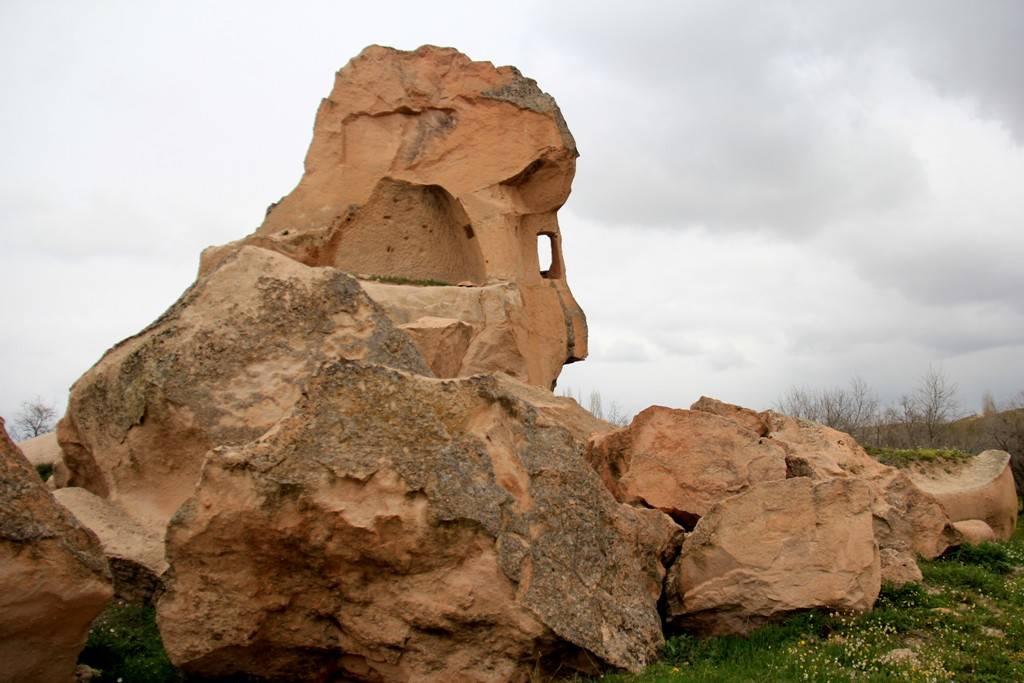
The Açıksaray Ruins are located 3 kilometers north of the district center of Gülşehir, which is under the province of Nevşehir, along the Nevşehir–Gülşehir road. This archaeological site near Gülşehir, known in antiquity as Zoropassos, is notable for its spaces carved into tuff rock, rock churches, burial structures, and multi-level underground settlements. It is also recognized for the fairy chimneys, unique natural formations characteristic of the Cappadocia region and found only here.
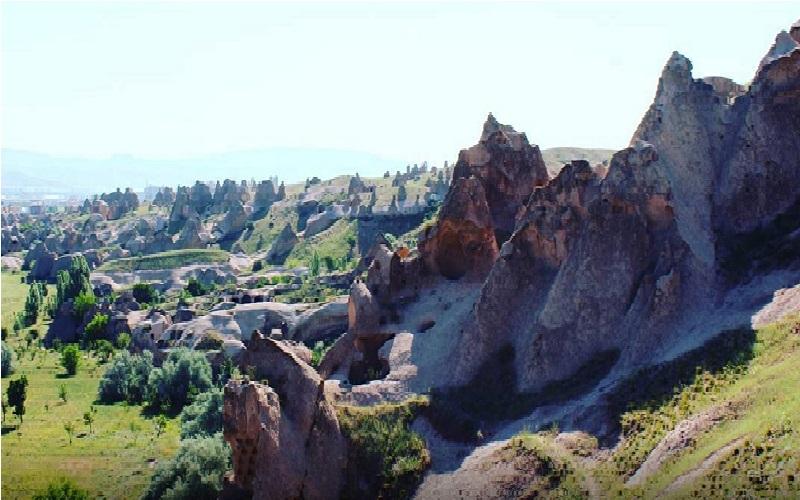
Açıksaray Ruins (Gülşehir Subdistrict Governorship)
The history of the Açıksaray Ruins extends back to the Roman period, during which rock tombs have been identified in the area. The settlement became a significant bishopric center particularly during the Byzantine period (9th–11th centuries). Research indicates that the site was used as a monastic settlement. Açıksaray consists of two distinct main sections separated by a stream.
The first section, located alongside the road, contains mostly animal stables, with religious structures appearing rarely. This area is believed to have been used as a lodging site by the army of Byzantine Emperor Nikephoros Phokas in 964–965. The second section, on the opposite side of the stream, is estimated to have been constructed as a multi-level settlement in the middle or second half of the 10th century. The churches and other structures in this section indicate that the area served as a lodging and transit point for religious figures of the time.
The Açıksaray Ruins stand out for their decorated facades, large halls, horse stables, and multi-level carved structures. Notable architectural examples in the area include the Boğalı Church, the Monastery, the Tavla (Horse Stable), the Small Palace (multi-level settlement), the Four-Column Monastery, the Cradle Vaulted Structure, the Twelve-Column Church, and the Staircase Dwelling.
Among the multi-level structures extending downward into the rock, defensive stone barriers and communication holes have been identified. These barriers weigh between 200 and 500 kilograms and can only be opened from the inside. The holes in their centers facilitate both the opening of the entrance and the observation of the exterior for security purposes. Communication holes between levels, with diameters not exceeding 5–10 centimeters, aided coordination during defensive emergencies.
Kitchens and wine cellars are located in the upper levels of the underground spaces, while the lower levels were used as animal shelters. This structural system provided adaptation to climatic conditions and a functional living environment. However, the sanitation systems within the underground structures have not yet been fully clarified. Only in the underground cities of Tatlarin and Güzelyurt (Gelveri) have traces of latrines been found.
Erol Şaşmaz, “Gülşehir – Açık Saray – Nevşehir,” Türkiye’nin Tarihi Eserleri. Accessed June 13, 2025. https://www.turkiyenintarihieserleri.com/?oku=2322.
Ministry of Culture and Tourism of the Republic of Turkey. "Nevşehir Müze Müdürlüğüne Bağlı Müze ve Ören Yerleri." Accessed June 13, 2025. https://nevsehir.ktb.gov.tr/TR-225524/nevsehir-muze-mudurlugune-bagli-muze-ve-oren-yerleri.html.
T.C.Gülşehir Açık Governorship. *Gülşehir Open Palace Archaeological Site*. Accessed June 13, 2025. http://www.gulsehir.gov.tr/icerik1.
Türkiye Kültür Portalı. "Açıksaray Harabeleri - Nevşehir." Accessed June 13, 2025. https://kulturportali.gov.tr/turkiye/nevsehir/gezilecekyer/aciksaray-harabeleri.

Location | Gülşehir Nevşehir (3 km from Gülşehir) | ||||||||
|---|---|---|---|---|---|---|---|---|---|
Historical Period | Roman and Byzantine (9th–11th centuries) | ||||||||
Characteristic | Rock-cut tombs, churches, multi-level dwellings and monastery structures | ||||||||
Notable Structures | Boğalı Church, Small Palace, Church of the Twelve Columns, Four-Column Monastery | ||||||||
Current Use | Trekking route, cultural and tourist visit area | ||||||||
No Discussion Added Yet
Start discussion for "Open Palace Archaeological Site" article
History
Architectural Features