+2 More

Doğum tarihi | 1842-12-30 | ||||||||
|---|---|---|---|---|---|---|---|---|---|
Ölüm tarihi | 1910-02-24 | ||||||||
Notable Works | Woman with Mimosa Women at the Türbe Gate Âbıhayat Çeşmesi Exit from the Mosque Prayer at the Yeşil Türbe Two Musicians Dervish in the Şehzade Türbesi Arms Dealer (Seyf-i Katı / Keskin Kılıç) Carpet Seller The Turtle Trainer (L’homme aux tortues) | ||||||||
Major Publications | Contribution to the studies Usûl-i Mi‘mârî-i Osmânî ve Elbise-i Osmâniyye at the 1873 Vienna Exhibition Une Nécropole Royale de Sidon (1892 - with Theodor Reinach) Les Ruines d’Arslan-Tasch (1889) Le Tumulus de Nemroud-Dagh (1883 - with Y. Oskan) | ||||||||
Archaeological Activities | Excavations in Western Anatolia Excavations at Sayda Excavations at Nemrut Dağı | ||||||||
Important Positions | Administrator of the Sanayii Nefise Mektebi 1881: Appointed to the Directorate of the Müze-i Hümâyûn 1867: Ottoman Empire commissioner at the International Exhibition in Paris 1869: Directorate of Foreign Affairs in Baghdad | ||||||||
Professions and Titles | Bureaucrat Painter Archaeologist Director of the Müze-i Hümâyûn (1881–1910) | ||||||||
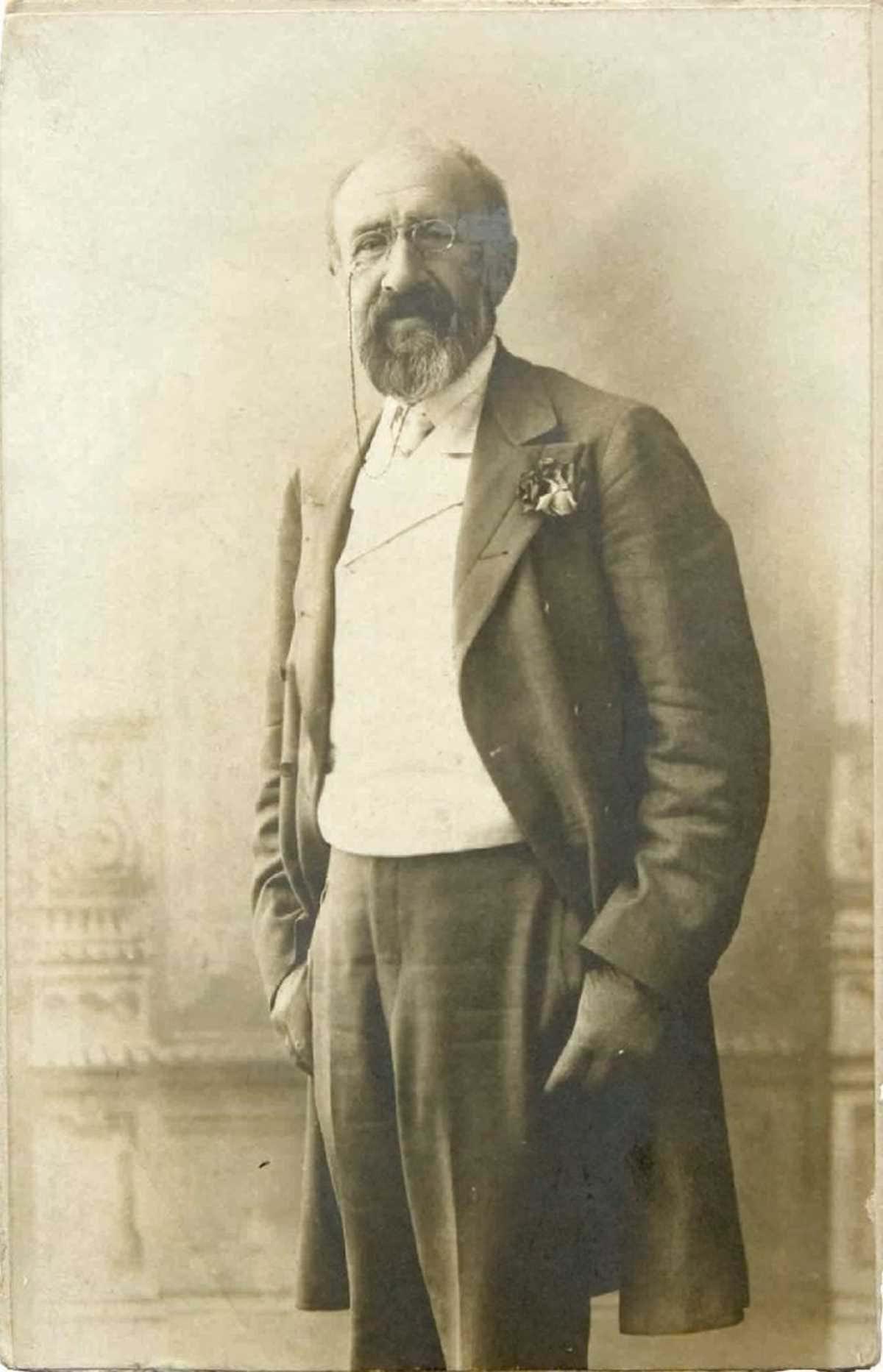
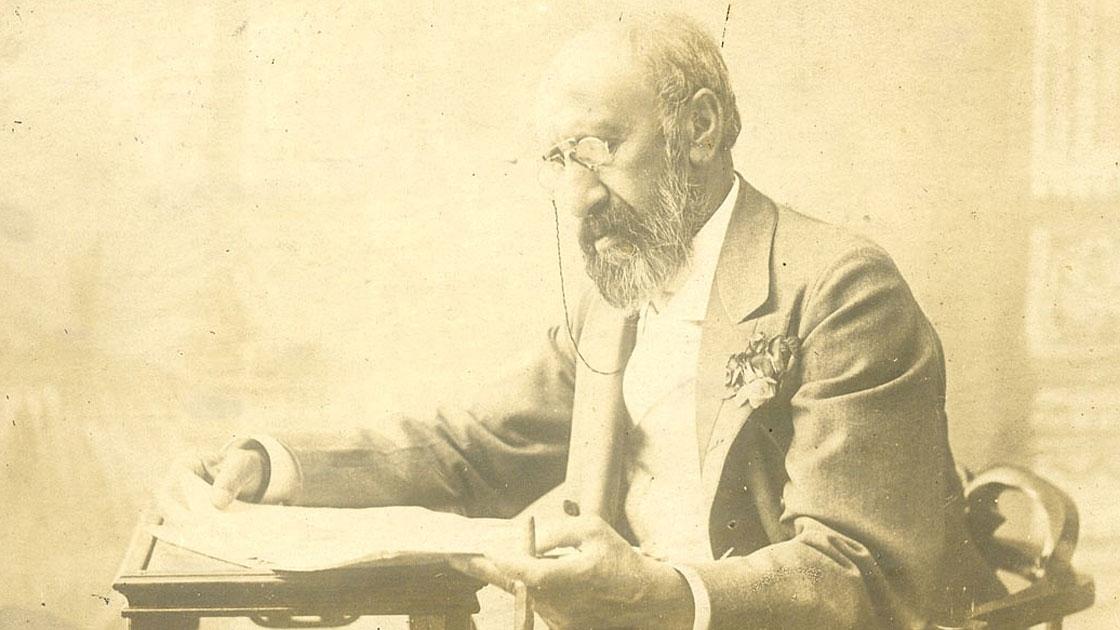
Osman Hamdi Bey (30 December 1842, Istanbul – 24 February 1910, Istanbul) was a statesman, archaeologist and painter who served in the fields of museology, archaeology and fine arts within the Ottoman State. He played a key role in the formation of Ottoman cultural institutions through his directorship of the Müze-i Hümâyûn (Istanbul Archaeology Museums), the founding of the Sanayii Nefise Mektebi, and his efforts to regulate the preservation of ancient artifacts.
Osman Hamdi Bey was born on 30 December 1842 in Istanbul. His father was İbrâhim Edhem Paşa, who held military and civil posts in the Ottoman State, rose to the rank of vizier and eventually attained the position of grand vizier. Edhem Paşa was among the Ottoman statesmen educated in Europe; he served as ambassador in Berlin and Vienna and held various ministerial positions over different periods.
Osman Hamdi Bey, İz Bırakanlar Belgeseli (TRT Arşiv)
His family played a decisive role in Osman Hamdi Bey’s upbringing. Edhem Paşa placed great importance on his children receiving education within a Western cultural framework, sending them to Europe to learn foreign languages and pursue higher education. This approach formed the primary reason for Osman Hamdi Bey’s early departure to Europe.
Osman Hamdi Bey was the elder brother of Halil Edhem (Eldem) and İsmâil Galib. His brothers also engaged in activities in the fields of science and culture. Their father, İbrahim Edhem Paşa, held various ministerial posts during the reigns of Abdülmecid, Abdülaziz and Abdülhamid, served as ambassador in Berlin and Vienna, and rose to the rank of grand vizier.【1】 This environment laid the foundation for the roles Osman Hamdi Bey would later assume in both art and museology.
In 1857, Osman Hamdi Bey was sent to Paris to study law. During his approximately twelve-year stay in Paris, he continued his legal education. This period enabled him to closely observe the political and cultural environment of Europe.
In 1858 he traveled to Serbia and Vienna to study museums and art exhibitions. While in Paris, he developed an interest in archaeology.
In Paris he established connections with artistic circles and turned his focus to painting. In exhibition catalogues he was introduced as “a student of Boulanger.” It has been documented that he maintained a close relationship with Gustave Boulanger. However, there is no definitive record confirming his enrollment at the École des Beaux-Arts or his status as a student of Jean-Léon Gérôme.【2】 Given Gérôme’s prominent position in Parisian artistic circles during this period, indirect influence is considered possible, but no direct teacher-student relationship has been documented.
In the 1865 Paris Salon, he posed as the model for Boulanger’s painting titled “Portrait of Hamdi Bey.” In subsequent years he participated in Salon exhibitions with his own works.
During his time in Paris he married a French woman; the marriage produced two daughters. The marriage later ended, and Osman Hamdi Bey returned to Istanbul in 1869.
After returning from Paris to Istanbul in 1869, Osman Hamdi Bey was appointed to the position of Director of Foreign Affairs for the Baghdad Vilayet. He carried out his duties under the supervision of Governor Midhat Paşa of Baghdad.
He remained in Baghdad for approximately two years, responsible for administrative matters concerning foreigners under the Directorate of Foreign Affairs.
During his years in Baghdad he continued his painting activities. He also established contact with local intellectual circles, developing relationships with Ahmed Midhat Efendi, Hamdi Simavi Bey and Köse Raif Paşa. He also interacted with a deposed Indian princess in exile and various local communities in the region.
The natural and cultural environment of Baghdad and its surroundings influenced his artistic identity. Desert landscapes, sunrise and sunset scenes, and nocturnal depictions found their way into his later narratives and artistic memory. Some of his recollections from this period were recorded in a work published in German by the German writer Rudolf Lindau.【3】
Osman Hamdi Bey returned to Istanbul in 1871 and assumed duties within the imperial court apparatus. The period between 1871 and 1881 constituted a professional phase during which he held various administrative posts, served in diplomatic and municipal services, and continued his painting activities.
Upon his return to Istanbul he was appointed as deputy director of Teşrifât-ı Hâriciyye, responsible for implementing protocol in relations with foreign states. This position was closely linked to the language skills and European cultural experience he had acquired during his years in Paris.

Mannequins in Traditional Attire, Elbise-i Osmâniyye (LOC)
In 1875 he became Kâtib of the Foreign Affairs Department, a role encompassing correspondence and administrative procedures related to foreign relations. He was removed from this position following the deposition of Sultan Abdülaziz in 1876.
In 1873 he was appointed as the Ottoman Commissioner to the International Exhibition in Vienna. This appointment was made directly by the sultan.【4】 A Turkish pavilion, designed in the form of the III. Ahmed Çeşmesi outside the Babıhümayun, was constructed for the exhibition, and the organization of the Ottoman representation was carried out.
He contributed to the preparation of the publication Usûl-i Mi‘mârî-i Osmânî issued in connection with the exhibition. He also authored the French-language text of the publication Elbise-i Osmâniyye, a photographic album documenting the diversity of clothing across the Ottoman territories.
Following the political changes of 1876 he was appointed director of Matbûât-ı Ecnebiyye, overseeing foreign press affairs during a period marked by the proclamation of the First Constitutional Era and intensified press activity. During this time he was also selected as a member of a commission sent to investigate events in Bulgaria.
In 1877 he was appointed director of the Sixth Department of Beyoğlu Municipality. He held this position until the end of the Russo-Turkish War of 1877–1878. During the war he initiated efforts to form a volunteer unit and joined it as a soldier.【5】
After the war ended he left public service. From 1879 onward he devoted himself more intensely to painting. He participated in exhibitions held in Istanbul in 1880 and 1881. In 1877 he served as one of the eight members of a museum commission established under the Ministry of Education.
The administrative experience he gained, the relationships he established with international circles, and his experience in cultural representation formed the foundation for the institutional transformation that began with his appointment as director of the Müze-i Hümâyûn in 1881.
Following the death of the director of the Müze-i Hümâyûn, Philipp Anton Dethier, Osman Hamdi Bey was appointed director of the museum in 1881.【6】
The museum had originated from a collection of antiquities gathered since the mid-19th century at Aya İrini. In 1875 the collection was moved to the Çinili Köşk in the grounds of Topkapı Sarayı and named “Müze-i Hümâyûn.” However, the collection had not yet been organized according to scientific classification and display principles. During the tenure of foreign directors, the museum had not developed a systematic institutional identity; artifacts had not been cataloged systematically or classified according to modern museological standards.

Istanbul Archaeology Museum, 2025 (pexels)
Upon assuming office, Osman Hamdi Bey confronted the museum with these structural challenges. As director, he initiated efforts to organize the collection according to scientific methods, preserve the artifacts, and enrich the museum through new excavations. He also participated in the process of drafting legal regulations for the protection of antiquities.
Appointed director of the Müze-i Hümâyûn in 1881, Osman Hamdi Bey held this position for approximately thirty years, during which he worked on organizing the museum’s collections, conducting archaeological excavations, and developing legislation related to Asâr-ı Atîka.
Osman Hamdi Bey first focused on organizing the collection according to scientific principles. He sought to establish a system based on European museological practices for the classification, preservation and display of artifacts. He initiated cataloging projects with the assistance of foreign experts. He established contact with the French archaeologist Salomon Reinach; later, experts such as A. Joubin and Gustave Mendel who served at the museum prepared the collection catalogs. Mendel’s three-volume catalog of Greek, Roman and Byzantine sculpture, published between 1912 and 1914, was a product of this process.【7】
A geographical and cultural classification system was adopted for museum displays. Pre-Islamic artifacts spanning from the Sumerians to the Greek world were exhibited to illustrate the historical development of the empire’s territories.
Following the first Âsâr-ı Atîka Nizamnâmesi of 1874, a new regulation came into effect in 1884 declaring antiquities state property and prohibiting their export abroad. This regulation aimed to ensure that artifacts uncovered during excavations were transferred to the museum. Although this regulation did not completely halt antiquities exports, it succeeded in ensuring that a significant portion of artifacts remained in Istanbul, provoking criticism among European archaeologists.
Through the 1884 regulation, the Ottoman State preserved its archaeological heritage within its borders; this authority was further codified by the 1906 revision.
As the Sayda sarcophagi could no longer be accommodated in the Çinili Köşk, a new museum building in classical style was constructed according to the plans of architect Alexandre Vallaury. Opened in 1892, this structure was known as the “Sarcophagus Museum.” It soon proved inadequate; a second extension was built to the north between 1899 and 1903. A third extension was completed to the south between 1904 and 1907. Thus, a monumental museum complex approximately 190 meters in length emerged opposite the Çinili Köşk.
Over time, the Çinili Köşk was dedicated to Islamic artifacts, while archaeological finds were concentrated in the new building. In 1908 a separate museum arrangement was established for Islamic and Ottoman artifacts.
During his directorship of the Müze-i Hümâyûn, excavations were conducted at Nemrut, Myrina, Kyme, Lagina, Alabanda, Tralles and Sayda; the 1887–1888 Sayda excavation was conducted directly under Osman Hamdi Bey’s supervision.
The excavation at Nemrut Mountain is among the earliest archaeological research projects conducted during Osman Hamdi Bey’s directorship of the Müze-i Hümâyûn. The 1883 expedition is recognized as one of the first systematic excavations and research efforts undertaken on behalf of the Ottoman State.

Nemrut Mountain Excavations (flickr)
Osman Hamdi Bey participated in the investigations at Nemrut Mountain. This research was carried out with direct Ottoman participation during a period when foreign archaeologists were intensifying their activities in Anatolia. The data collected from the study was published as a scientific report.
The Nemrut Mountain investigation is regarded as one of the initial phases of Osman Hamdi Bey’s active involvement in archaeology. This initiative was part of the process by which the Müze-i Hümâyûn evolved from a mere artifact-collecting institution into a center for excavation and scientific research.
The excavations conducted in Western Anatolia during Osman Hamdi Bey’s directorship of the Müze-i Hümâyûn played a decisive role in expanding the museum’s collection. These efforts, carried out in the 1880s, represent systematic archaeological activities within the borders of the Ottoman State.

Osman Hamdi Bey with French Archaeologists at Lagina (Pamukkale Üniversitesi)
Myrina and Kyme are necropolis sites in the Aeolia region. Excavations at these centers uncovered burial structures and various archaeological finds. The aim of these studies was to add the recovered artifacts to the Müze-i Hümâyûn collection and document ancient settlements in Western Anatolia. The artifacts recovered were transported to Istanbul and incorporated into the museum’s displays.
Lagina is one of the sites where Osman Hamdi Bey personally participated in and directed excavation activities. Excavations were carried out at Lagina near Milas as part of research in the Aydın region. The Lagina excavations contributed to the documentation of sacred areas and architectural remains in Western Anatolia.
Alabanda and Tralles excavations were other Western Anatolian investigations conducted under Osman Hamdi Bey’s supervision. Work at Tralles (Aydın) and Alabanda uncovered various architectural remains and stone artifacts. These finds were added to the Müze-i Hümâyûn collection.
These efforts were carried out in accordance with the 1884 Âsâr-ı Atîka Nizamnâmesi policy of collecting antiquities as state property and preserving them in Istanbul. The recovered artifacts were incorporated into the display arrangements of the newly constructed museum buildings, contributing to its institutional expansion.
The Sayda excavation is one of the most important archaeological initiatives undertaken by Osman Hamdi Bey during his directorship of the Müze-i Hümâyûn. Excavations were initiated in 1887 after reports emerged of a subterranean necropolis belonging to the Phoenician kings in the Ayâ region near Sayda.

Osman Hamdi Bey’s Plans and Sections from the Sayda Excavation (Photo: Nazlı Kemerkaya)
Osman Hamdi Bey personally directed the excavation alongside museum official Dimosten Baltacı Bey. During the work, a subterranean necropolis was uncovered and numerous sarcophagi were brought to light. Among these finds were artifacts known as the “Alexander Sarcophagus” and the “Sarcophagus of the Weeping Women.” Technical measures were implemented to prevent damage during removal; the process of extracting the sarcophagi from underground to the surface was carried out with great care. The artifacts were then transported by sea to Istanbul.
The Phoenician inscription on the Tabnit Sarcophagus discovered during the excavation was communicated to scholarly circles in Europe. A copy of the inscription was sent to Ernest Renan; the translation was telegraphed to Osman Hamdi Bey.【8】
Osman Hamdi Bey’s work in archaeology and museology extended beyond excavation; he placed great importance on the scientific dissemination of findings. Publication activities became one of the primary tools for strengthening the Müze-i Hümâyûn’s relations with international scholarly circles.
In 1883 he published with Y. Oskan the work Le Tumulus de Nemroud-Dagh, a scientific report on the Nemrut Mountain research conducted on behalf of the Ottoman State.【9】
In 1889 the work Les Ruines d’Arslan-Tasch was published, aiming to present the results of excavations and studies to the European scientific community.
Following the Sayda excavation, the comprehensive work Une Nécropole Royale de Sidon, prepared with Theodor Reinach, was published in 1892. The sarcophagi and other finds from the Phoenician royal necropolis were described in detail in this publication. The work became part of the archaeology literature of the period and ensured international recognition of the Sayda finds.
Osman Hamdi Bey did not limit his publications to archaeological excavations; he also contributed to works on Ottoman art and architecture. He participated in the preparation of Usûl-i Mi‘mârî-i Osmânî, published in connection with the 1873 Vienna Exhibition.
During his directorship, new finds were regularly communicated to European academies. He established contact with the Académie des Inscriptions et Belles-Lettres in Paris and was elected a corresponding member in 1893. An attempt was made to launch a periodical publication titled “Archives Orientales” within the museum; however, the project was abandoned due to financial constraints.
Osman Hamdi Bey is also recognized as a painter alongside his identities as an archaeologist and museum director. His paintings most frequently feature figurative compositions. He also produced portraits, landscapes, still lifes and genre scenes. He frequently employed female figures in his figurative compositions.【10】 He portrayed women not only as portraits but also within everyday life, depicted as equals to men. He used his own photographs as models for male figures; examples exist of him appearing in the same painting in different costumes and poses.
Osman Hamdi Bey’s paintings are often categorized within the Orientalist style; however, they differ from the European Orientalist tendency to construct the East through exotic and imaginary imagery. In his compositions he depicted Ottoman architecture, Turkish art and daily life. Tiles, calligraphy plaques, inscriptions, tomb and mosque doors, sarcophagi, tiled stoves, lecterns, candelabras, incense burners, weapons, fabrics and traditional clothing are central elements in his paintings.
His paintings exhibit a clear and comprehensible spatial arrangement, with sharpness and widespread use of light. Light and shadow were employed to define form, while objects retained their natural colors. In his compositions he sometimes used architecture as a background to foreground the figure, and at other times positioned the figure within the architectural whole.
It is known that he photographed his figures in advance and used these photographs as references.【11】 Examples exist of the same figure appearing in different paintings with similar poses and proportions. Compositions also feature architectural elements from different structures combined into a single spatial construction.
His portraits outnumber his narrative paintings. He mostly painted family members and people from his circle. Oil painting was his dominant technique; he also produced charcoal portraits from his youth. His only known still life is “Flowers in a White Vase.”【12】
His works are held in museums and collections both within and outside Türkiye. Major paintings include “The Turtle Trainer,” “Leaving the Mosque,” “Quran Recitation in the Green Mosque,” “The Carpet Seller,” “The Âbıhayat Fountain,” “The Bath,” “Women Before the Tomb Door,” “Dervish in the Prince’s Tomb” and “Woman with Mimosa.”
His painting practice continued in parallel with his museological and archaeological activities. Although the time he devoted to painting decreased after assuming the directorship of the museum, he continued producing works until the end of his life.
Osman Hamdi Bey’s paintings focus on figurative compositions, portraits, interior scenes and architectural themes. His works combine Ottoman architecture, traditional crafts and figurative narratives.

The Turtle Trainer (Pera Museum)
The work created by Osman Hamdi Bey in 1906 and 1907, originally titled L’homme aux tortues (The Man with Turtles), depicts a male figure observing several turtles in an interior setting. The 1906 version measures 222 × 122 cm; the 1907 version measures 136 × 87 cm. The differences between the two compositions are limited; variations include the number of turtles and the presence of a pot before the window.
In the painting, a man slightly bent forward, observing turtles feeding on greenery, is placed in a room on the upper floor of the Bursa Green Mosque. The interior has cracked plaster and damaged tiles. The figure wears a red entari with ornate edges, a colorful turban on his head and yemeni on his feet. A small drum (nakkare or kudüm) hangs on his back, a ney is in his hands, and a wooden staff-like object hanging from his neck is interpreted as a musical instrument. As in many of Osman Hamdi Bey’s paintings, the figure represents the artist himself.
Interpretations of the painting suggest it is an allegorical composition in which Osman Hamdi Bey portrays himself as an educator. According to this view, the figure represents teaching through the ney, discipline through the object around his neck, and the turtles symbolize students resistant to education, slow and closed to change.【13】
The Carpet Seller is an 1888 oil painting by Osman Hamdi Bey. Executed on canvas, the work is currently held at the Berlin State Museum. It is one of the examples in which traditional motifs and Anatolian carpet art are depicted within a painting composition.

The Carpet Seller (Turkey Culture Portal)
The composition features a carpet seller alongside two distinct carpets. The carpet hanging on the wall is identified as a 19th-century Anatolian Yörük carpet; the one held by the seller is identified as a 19th-century Caucasian carpet.【14】 These carpets are not merely decorative elements but are rendered as detailed cultural objects with specific patterns, motifs and color characteristics.
The large carpet on the wall features stylized animal motifs. Additionally, leaf, flower and rose motifs appear along the borders. Small squares containing stylized bird motifs repeat in a single-row border on a yellow ground. Zigzag rows composed of small triangles and thin blue bands are also present in the borders. The motif and color arrangement reflect the characteristic features of Anatolian carpet art.

The Weapon Seller (Ankara Museum of Painting and Sculpture)
The Weapon Seller, also known as Seyf-i Katı (Sharp Sword), is an 1908 work by Osman Hamdi Bey. It is currently held in the collection of the Ankara Museum of Painting and Sculpture.
The method frequently employed by Osman Hamdi Bey in his paintings is evident here: figures were photographed in advance, posed accordingly, and these photographs served as the basis for constructing the composition. The artist sometimes reused his own image in different positions.
In this work, although the figures are depicted at nearly life-size proportions, they do not establish direct eye contact with the viewer. The figures are positioned inward, absorbed in their own world; the viewer is not drawn into the composition but remains an external observer.【15】
The Weapon Seller is one of two different versions of a series created through design and detail repetition.
Dervish in the Prince’s Tomb is one of Osman Hamdi Bey’s 1908 works. The composition is centered on a single-figure scene set within the interior of a tomb characteristic of Ottoman architecture. The tomb space is rendered in meticulous detail.

Two Musicians (Turkey Culture Portal)
The figure in the painting is depicted in traditional attire. The turban on his head and the garments he wears are interpreted as elements identifying him as a dervish. As in some of Osman Hamdi Bey’s other works, it is generally accepted that this figure represents the artist himself.
Dervish in the Prince’s Tomb is regarded as one of the compositions from the artist’s 1900s output that centers on architectural space and traditional identity elements.
Two Musicians is an 1880 oil painting by Osman Hamdi Bey. Executed on canvas, the painting measures 58 × 39 cm and is currently held at the Pera Museum in Beyoğlu, Istanbul.
The setting of the painting is the prayer hall of the Bursa Green Mosque. The composition depicts two young women playing traditional Turkish musical instruments. One figure is seated playing the def, while the other stands playing the tambur. The standing figure wears a blue yemeni in her hair and a cream-colored dress with gold-patterned embroidery and matching trousers. The seated figure wears a gold yemeni and three skirts with blue grounds and gold stripes.
The female figures in the painting are rendered in accordance with the fashion of the period.
In 1906, Osman Hamdi Bey completed his twenty-fifth year of service as director of the Müze-i Hümâyûn. He was honored with congratulations from domestic and foreign scholarly circles, universities and official institutions. Articles about him were published in the Istanbul press, and he received honors and decorations from various states. The German Emperor Wilhelm II sent him a two-volume work on paintings in the Prussian palaces. His work was also covered in European and American press.
After the proclamation of the Second Constitutional Era in 1908, he was offered the position of Minister of Education, but declined the appointment and chose to continue his work in museology.【16】 During these years he continued his roles as director of the museum, head of the Sanayii Nefise Mektebi and in various financial institutions. His positions as representative of Ottoman creditors at Düyun-ı Umumiye and on the governing boards of several banks and institutions helped improve his financial situation.

After Receiving an Honorary Doctorate (Salt Research)

Osman Hamdi Bey’s Grave (TDV Islamic Encyclopedia)
During a European trip in 1909 he was received with ceremonial honors at various centers; he was awarded an honorary doctorate by Oxford University.【17】
Osman Hamdi Bey died on 24 February 1910 in his yalı in Kuruçeşme, Istanbul, following a brief illness. His funeral was attended by state officials, local and foreign scholars and friends. In accordance with his will, he was buried on a hill behind the mansion in the garden of his estate in Eskihisar, Gebze.【18】 His grave is located among pine and cypress trees, with two tombstones in Seljuk style at the head and foot ends.
Anadolu Ajansı. "‘Osman Hamdi Bey girişimci kimliğiyle de öne çıkıyor’." Accessed February 23, 2026. https://www.aa.com.tr/tr/kultur-sanat/osman-hamdi-bey-girisimci-kimligiyle-de-one-cikiyor/1401431
Ankara Resim ve Heykel Müzesi. "Silah Taciri." ARHM. Accessed February 23, 2026. https://arhm.ktb.gov.tr/artworks/detail/11/silah-taciri
Beckman, Gary. *Journal of the American Oriental Society* 124, no. 1 (2004): 203–203. Accessed February 23, 2026. https://doi.org/10.2307/4132199
Eldem, Edhem. *Osman Hamdi Bey Sözlüğü*. İstanbul: T.C. Kültür ve Turizm Bakanlığı Kütüphaneler ve Yayımlar Genel Müdürlüğü, 2010. https://arhm.ktb.gov.tr/repo/uploads/Catalog/28062021145650-e424c8ba-862d-42b1-9904-46f007445a5c.pdf
Eldem, Edhem. “Osman Hamdi Bey’in ‘Karanlık’ Yılları (1871-1881)”. *Milli Saraylar Sanat Tarih Mimarlık Dergisi*, no. 17 (2019): 53-75. Accessed February 23, 2026. https://izlik.org/JA53NH92PF
Enstwitle, Damian. “Istanbul Pera Museum Osman Hamdi Bey at Nemrut Dag (2).” Flickr. Accessed February 23, 2026. https://flic.kr/p/bbQ2me
Gündüz, Filiz. "OSMAN HAMDİ BEY." TDV İslâm Ansiklopedisi. Accessed February 23, 2026. https://islamansiklopedisi.org.tr/osman-hamdi-bey
Kısacık, Yıldız Sibel. “OSMAN HAMDİ RESİMLERİNDE ETNOĞRAFİK KÜLTÜR VARLIKLARI.” *Cappadocia Journal of History and Social Sciences* 12, (2019): 259-269. Accessed February 23, 2026. Accessed Adresi
Library of Congress. “[Studio portrait of models wearing traditional clothing from the province of Hodavindiguar (Hüdavendigar), Ottoman Empire] color film copy transparency.” LOC. Accessed February 23, 2026. https://www.loc.gov/resource/cph.3g11736/
Mansel, Arif Müfit. “Osman Hamdi Bey.” *BELLETEN* 24, no. 94 (1960): 291-302. Accessed February 23, 2026. https://doi.org/10.37879/ttkbelleten.1262468
Pamukkale Üniversitesi. "OSMAN HAMDİ BEY'İN LAGINA ÇALIŞMALARI." *pau.edu.tr.* Accessed February 23, 2026. https://www.pau.edu.tr/lagina/tr/sayfa/osman-hamdi-beyin-lagina-calismalari
Pera Müzesi. "Kaplumbağa Terbiyecisi." *peramüzesi.org.tr*. Accessed February 23, 2026. https://www.peramuzesi.org.tr/eser/kaplumbaga-terbiyecisi/1/40
Salt Araştırma. "Osman Hamdi Bey İngiltere'de Oxford Üniversitesi'nde kendisine fahri doktorluk payesi verildikten sonra." Salt Research. Accessed February 23, 2026. https://archives.saltresearch.org/handle/123456789/99265
Shaw, Wendy M.K. *Possessors and Possessed: Museums, Archaeology, and the Visualization of History in the Late Ottoman Empire*. İngiltere: University of California Press, 2003.
TRT Archive. "İz Bırakanlar - Osman Hamdi Bey | TRT Arşiv." YouTube, 23:42. Accessed February 23, 2026. https://www.youtube.com/watch?v=PkDL5xXLKgc
Türkiye Kültür Portalı. "Osman Hamdi Bey (1842-1910)." T.C. Kültür ve Turizm Bakanlığı. Accessed February 23, 2026. https://www.kulturportali.gov.tr/portal/osman-hamdi-bey
Tüybek, Aslı., Baysal, Ali Fuat., and Ayşe Zehra Sayın. “Osman Hamdi Bey’in Resimlerinde Geleneksel İzler.” *Konya Sanat Dergisi* 4, (2021): 52–65. Accessed February 23, 2026. https://dergipark.org.tr/en/download/article-file/2038292
Yıldırım, Tuğba. “Historic Museum Building with Classical Columns.” Pexels. Accessed February 23, 2026. https://www.pexels.com/photo/historic-museum-building-with-classical-columns-32872727/
[1]
Arif Müfit Mansel, “Osman Hamdi Bey,” BELLETEN 24, no. 94. (1960): syf 291, https://doi.org/10.37879/ttkbelleten.1262468
[2]
Edhem Eldem, Osman Hamdi Bey Sözlüğü, İstanbul: T.C. Kültür ve Turizm Bakanlığı Kütüphaneler ve Yayımlar Genel Müdürlüğü, 2010. syf, 114, https://arhm.ktb.gov.tr/repo/uploads/Catalog/28062021145650-e424c8ba-862d-42b1-9904-46f007445a5c.pdf
[3]
Edhem Eldem, Osman Hamdi Bey Sözlüğü, İstanbul: T.C. Kültür ve Turizm Bakanlığı Kütüphaneler ve Yayımlar Genel Müdürlüğü, 2010. syf, 39, https://arhm.ktb.gov.tr/repo/uploads/Catalog/28062021145650-e424c8ba-862d-42b1-9904-46f007445a5c.pdf
[4]
Arif Müfit Mansel, “Osman Hamdi Bey,” BELLETEN 24, no. 94. (1960): syf 292, https://doi.org/10.37879/ttkbelleten.1262468
[5]
A.e., syf 293-294.
[6]
Edhem Eldem, Osman Hamdi Bey Sözlüğü, İstanbul: T.C. Kültür ve Turizm Bakanlığı Kütüphaneler ve Yayımlar Genel Müdürlüğü, 2010. syf, 44, https://arhm.ktb.gov.tr/repo/uploads/Catalog/28062021145650-e424c8ba-862d-42b1-9904-46f007445a5c.pdf
[7]
Arif Müfit Mansel, “Osman Hamdi Bey,” BELLETEN 24, no. 94. (1960): syf 297, https://doi.org/10.37879/ttkbelleten.1262468
[8]
Edhem Eldem, Osman Hamdi Bey Sözlüğü, İstanbul: T.C. Kültür ve Turizm Bakanlığı Kütüphaneler ve Yayımlar Genel Müdürlüğü, 2010. syf 448-449, https://arhm.ktb.gov.tr/repo/uploads/Catalog/28062021145650-e424c8ba-862d-42b1-9904-46f007445a5c.pdf
[9]
A.e., syf 48
[10]
Aslı Tüybek, Ali Fuat Baysal, ve Ayşe Zehra Sayın. “Osman Hamdi Bey’in Resimlerinde Geleneksel İzler,” Konya Sanat Dergisi 4, (2021): syf 58, https://dergipark.org.tr/en/download/article-file/2038292
[11]
Ankara Resim ve Heykel Müzesi, “Silah Taciri,” ARHM, Son erişim 23 Şubat 2026, https://arhm.ktb.gov.tr/artworks/detail/11/silah-taciri
[12]
Sibel Yıldız Kısacık, “OSMAN HAMDİ RESİMLERİNDE ETNOĞRAFİK KÜLTÜR VARLIKLARI,” Cappadocia Journal of History and Social Sciences 12, (2019): syf 263, Erişim Adresi
[13]
Shaw, Wendy M.K. Possessors and Possessed Museums, Archaeology, and the Visualization of History in the Late Ottoman Empire. United Kingdom: University of California Press, 2003. p. 124.
[14]
Aslı Tüybek, Ali Fuat Baysal, ve Ayşe Zehra Sayın. “Osman Hamdi Bey’in Resimlerinde Geleneksel İzler,” Konya Sanat Dergisi 4, (2021): syf 61-62, https://dergipark.org.tr/en/download/article-file/2038292
[15]
Ankara Resim ve Heykel Müzesi, “Silah Taciri,” ARHM, Son erişim 23 Şubat 2026, https://arhm.ktb.gov.tr/artworks/detail/11/silah-taciri
[16]
Arif Müfit Mansel, “Osman Hamdi Bey,” BELLETEN 24, no. 94. (1960): syf 300, https://doi.org/10.37879/ttkbelleten.1262468
[17]
A.e., 301
[18]
Filiz Gündüz, "OSMAN HAMDİ BEY,” TDV İslâm Ansiklopedisi, Last accessed 23 February 2026, https://islamansiklopedisi.org.tr/osman-hamdi-bey

Doğum tarihi | 1842-12-30 | ||||||||
|---|---|---|---|---|---|---|---|---|---|
Ölüm tarihi | 1910-02-24 | ||||||||
Notable Works | Woman with Mimosa Women at the Türbe Gate Âbıhayat Çeşmesi Exit from the Mosque Prayer at the Yeşil Türbe Two Musicians Dervish in the Şehzade Türbesi Arms Dealer (Seyf-i Katı / Keskin Kılıç) Carpet Seller The Turtle Trainer (L’homme aux tortues) | ||||||||
Major Publications | Contribution to the studies Usûl-i Mi‘mârî-i Osmânî ve Elbise-i Osmâniyye at the 1873 Vienna Exhibition Une Nécropole Royale de Sidon (1892 - with Theodor Reinach) Les Ruines d’Arslan-Tasch (1889) Le Tumulus de Nemroud-Dagh (1883 - with Y. Oskan) | ||||||||
Archaeological Activities | Excavations in Western Anatolia Excavations at Sayda Excavations at Nemrut Dağı | ||||||||
Important Positions | Administrator of the Sanayii Nefise Mektebi 1881: Appointed to the Directorate of the Müze-i Hümâyûn 1867: Ottoman Empire commissioner at the International Exhibition in Paris 1869: Directorate of Foreign Affairs in Baghdad | ||||||||
Professions and Titles | Bureaucrat Painter Archaeologist Director of the Müze-i Hümâyûn (1881–1910) | ||||||||
Birth and Family Origins
Years in Paris (1857–1869)
Baghdad Assignment and First Administrative Experience (1869–1871)
Bureaucratic Roles in Istanbul (1871–1881)
Appointment as Director of Müze-i Hümâyûn (1881)
Institutional Transformation of Müze-i Hümâyûn
Scientific Organization of the Collection
Antiquities Policy and Legal Framework
New Museum Buildings and Spatial Expansion
Archaeological Excavations and Scientific Activities
Nemrut Mountain
Western Anatolia Excavations (Myrina, Kyme, Lagina, Alabanda, Tralles)
Sayda Excavation (1887–1888)
Publication Activities
Painter Identity
Notable Works
The Turtle Trainer
The Carpet Seller
The Weapon Seller (Seyf-i Katı / Sharp Sword)
Dervish in the Prince’s Tomb
Two Musicians
Final Years and Death