


This article was automatically translated from the original Turkish version.
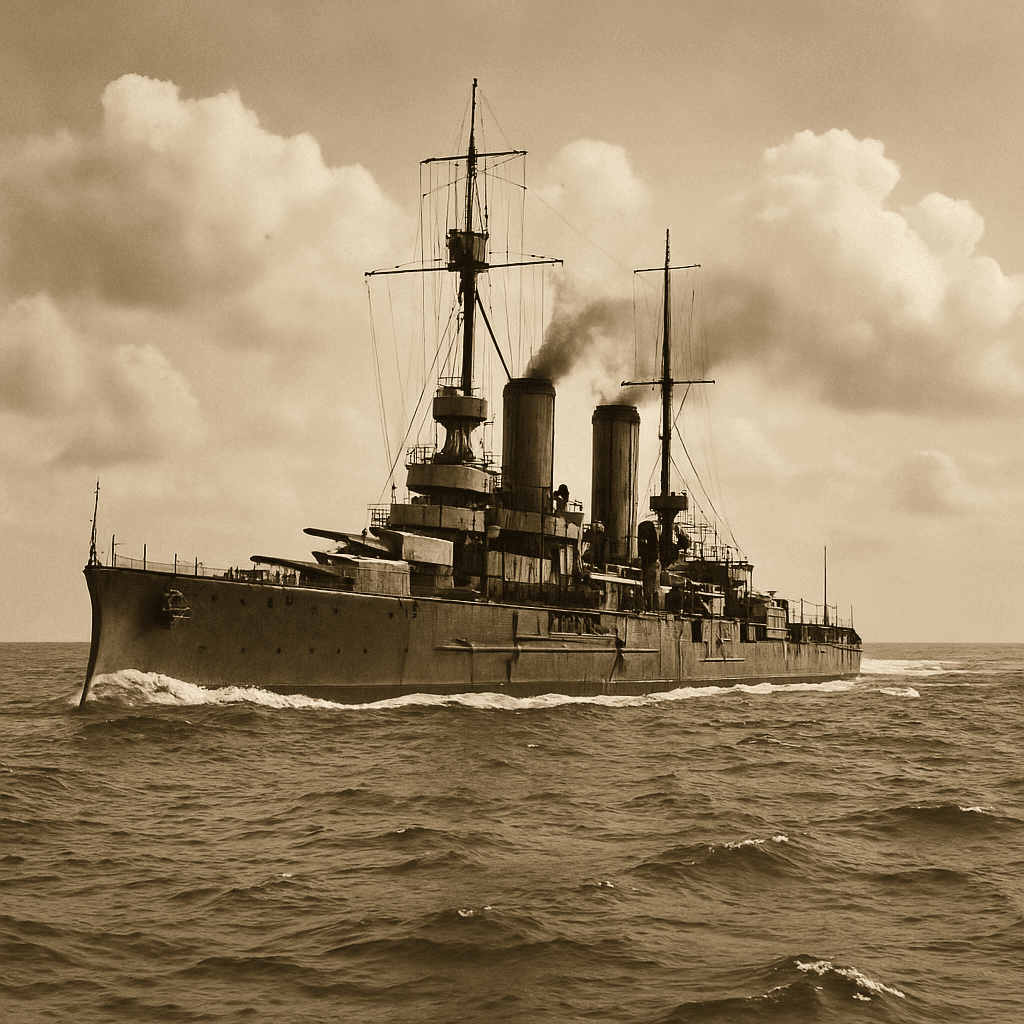
O is not possible to translate "Osmanlı Donanma Cemiyeti" into English as a direct equivalent because it is a proper noun referring to a specific historical organization. The correct form in English is: **Osmanlı Donanma Cemiyeti** This name refers to the Ottoman Naval Society, a historical organization in the Ottoman Empire. If context requires clarification, it may be presented as: **Osmanlı Donanma Cemiyeti (Ottoman Naval Society)** However, the original Turkish name must be preserved as the primary reference, per the guidelines for historical institutions.
Official Name(s) | Donanma-yı Osmanî Muavenet-i Milliye Cemiyeti | ||||||||
|---|---|---|---|---|---|---|---|---|---|
Foundation Date | 19 July 1909 | ||||||||
Place of Foundation | Istanbul Türkiye | ||||||||
Founding Period | Second Constitutional Era | ||||||||
Dissolution Date | 2 May 1919 | ||||||||
The Navy Society, officially known as Donanma-yı Osmanî Muavenet-i Milliye Cemiyeti, is a broad-based civil society organization established during the Second Constitutional Era to mobilize public voluntary support for strengthening and modernizing the Ottoman Navy.
The society was founded on 19 July 1909 (6 July 1325 in the Rumi calendar) in Istanbul by volunteers. Its establishment was influenced by the deep political social and economic crises facing the Ottoman State in the early twentieth century particularly separatist uprisings in the Balkans territorial losses in North Africa and power imbalances in the Mediterranean and Aegean Seas. In the face of state financial insufficiency the idea gained widespread traction that a strong navy could only be achieved through total national mobilization. This growing public awareness led to the launch of fundraising campaigns for the navy with the newspaper Tanin playing a key role in encouraging broad public participation.
The first concrete step toward the society’s founding occurred on 10 July 1909 when Dr Hafız İbrahim of the Istanbul Municipality Health Board Dr Petraki Papadopulo Ismail Hakkı and Chief Engineer Haşim Bey held a meeting to discuss the state of the navy and potential aid campaigns. These individuals agreed that aid efforts must be organized under a structured national campaign. Drawing inspiration from Germany’s “Flottenverein” (Navy Association) and considering the philanthropic spirit of the Ottoman population they set a target of collecting one kuruş per month from every thirty million people and forty para monthly dues from members. Calculations showed that collecting just one kuruş per month from ten million Ottoman citizens alone would yield 1 200 000 liras annually sufficient to purchase one dreadnought or two first-class cruisers per year. Achieving naval strength comparable to that of France within ten years was among the society’s stated goals.
During the preparatory phase the society sought support from Mehmet Sait Pasha President of the Senate and the newspaper Tercümân-ı Hakîkat took on the task of publicizing the society’s purpose to wider segments of the population. The society’s formal establishment took place on 19 July 1909 at a meeting held at the Etibbâ-yı Mülkiye Kulübü. Attendees included volunteer Muslim and non-Muslim merchants military personnel municipal representatives official societies clubs religious leaders and press members. At this meeting the society’s name was officially adopted as “Donanma-yı Osmanî Muâvenet-i Milliye Cemiyeti” and a 15-member Administrative Board was elected from among 28 volunteers under the temporary presidency of Bahriye Mirlivası Rasim Pasha.

Representative Navy Society Badge (generated by artificial intelligence)
The society gained legal standing and legitimacy through the “Societies Law” promulgated on 16 August 1909. Thanks to its close ties with the Committee of Union and Progress it received state support and acquired a quasi-official status. At its second meeting on 20 July 1909 Yağcızade Şefik Bey a merchant was elected Chairman of the General Assembly while Bahriye Mirlivası Rasim Pasha and Lawyer Kadri Bey were elected Vice Chairmen. The same meeting assigned the Administrative Board the task of drafting the society’s bylaws. A commission composed of individuals knowledgeable in law and society affairs examined the core statutes of the British “Navy League” and the German “Flottenverein” and on 2 August 1909 submitted to the government the main bylaws along with the “Usûl-ü Cibayet Talimatnâmesi” detailing procedures for collecting donations.
The bylaws consisting of 25 articles and translated into several languages to accommodate non-Muslim communities outlined the society’s founding purpose membership and administrative structure the duties of the General Assembly and Administrative Board methods of fundraising and provincial organization. The society’s founding purpose was stated as follows: “It was established for the purpose of creating a naval force commensurate with our needs to preserve the Ottoman State’s position among the Great Powers and to secure its general interests and commercial relations.”
There was no age limit for membership but members of the General Assembly and Executive Council had to be Ottoman citizens. In accordance with the society’s principle of transparency every member paying 40 para monthly dues was granted the right to examine the accounts.
Official state support began on 4 November 1909 with the approval of the bylaws and on 15 November 1909 the society came under the patronage of the Sultan who appointed Âyan Reisi Mehmet Sait Pasha as its president. With the approval of the bylaws organizational efforts accelerated rapidly. The number of branches increased from 122 in 1910 (29 provinces 28 districts 56 subdistricts and 9 neighborhoods) to 331 in 1911. The society established branches throughout the empire including in Edirne Erzurum Adana Ankara Aydın İzmit Bitlis Bursa Bolu Çatalca Diyarbakır Sivas Samsun Trabzon Kastamonu Konya Van and beyond its borders in Berlin Paris Basra Baghdad Beirut Thessaloniki Cyprus and Egypt. Provincial branches were managed by administrative boards of nine members in provincial centers seven in district centers and five in subdistrict centers.
The revenue sources of the Ottoman Navy Society were highly diverse and largely based on cash donations. Membership dues and fundraising campaigns held during exceptional periods such as the Tripolitanian War the Cretan Question and the declaration of the Holy War raised millions of kuruş. In the early years military personnel provided the largest contributions with many civilian and military officials donating one or two months’ salary to the society. Revenue collection activities were conducted transparently under an 11-article directive titled “Usul-i Cibâyet Tâlîmatnâmesi.” Following Italy’s attack on Tripolitania in 1911 the government imposed tax increases on land real estate and dividends in favor of the society and funds raised by the newspaper Tanin for the “Enver and Niyazi Cruisers” were transferred to the society by decision of the Ottoman Chamber of Deputies.
Other cash revenue sources included the donation of zakat contributions a share of park and museum admission fees and the voluntary donation of a day’s earnings by fishermen. The society achieved significant income from the sale of part of Sultan II Abdülhamit’s jewelry in Paris and London. Members of the Ottoman dynasty notably during the honorary presidencies of Sultan Mehmet Reşat and VI Mehmet Vahdettin provided substantial financial support. Proceeds from sporting events races and concerts organized under the patronage of Prince Yusuf İzzettin and Prince Abdülmecit were also transferred to the society’s treasury.
In addition to cash donations the society received in-kind contributions including various gifts weapons real estate animal hides horns and other objects. In-kind donations lacking historical value were sold at exhibitions to generate income. Agricultural products such as tobacco silk cocoons hazelnuts and grain were also significant in-kind contributions.
Under the “Mükellifât-ı Ziraîye Kanunu” enacted on 24 September 1916 idle lands were identified for public use and the Navy Society launched an agricultural mobilization campaign establishing production centers known as “harp tarlaları” or war fields. The sale of crops grown on these lands—including maize potatoes chickpeas beans wheat and barley—generated considerable income. The “Donanma Cemîyeti Ziraat Encümeni” established on 15 February 1915 was tasked with systematically managing agricultural activities.
The society also carried out cultural and social activities aimed not only at generating revenue but also at contributing to public life:
The society used its revenues to purchase warships transport vessels and military supplies in coordination with the Ministry of War and the Ministry of the Navy.
The Navy Society regularly published its income and expenditure statements in contemporary newspapers and in the Donanma Mecmuası to inform the public. The bylaws granting members the right to examine accounts were a key indicator of the society’s transparency. Its internal oversight system and the selection of members from respected and popular local figures helped prevent misuse of authority. Every complaint from the public was taken seriously and when necessary referred to judicial authorities. Branches in the Black Sea region (Trabzon Gümüşhane Rize Giresun Ordu etc.) were found to be more active and collected higher donations proportionate to their economic wealth.
The Navy Society operated actively for approximately ten years and raised approximately 607 753 650 kuruş playing a major role in the acquisition of numerous warships. It continued its activities until the end of World War I. Following the Armistice of Mudros on 30 October 1918 negative propaganda and allegations of corruption against society members accelerated its dissolution process. The Ottoman Navy Society changed its name to “Osmanlı Donanma Cemîyeti” on 17 February 1914 and on 2 February 1919 was subordinated to the Ministry of the Navy. It was formally dissolved by a decree issued on 2 May 1919. The society’s assets were transferred to the Ministry of Finance in April 1919.
The approximately 600 000 lottery bonds held by the society were also transferred to the Treasury by the decree of the Provisional Government of Damat Ferit Pasha dated 2 May 1919 dissolving the society.
During the Republican period the decree was annulled by Law No. 689 dated 12 December 1925 and all rights of the former Navy Society except those transferred to the Treasury were granted to the Turkish Aircraft Society (Third Tertip Düstur Volume 7 p. 218).
With the transfer of Itibar-ı Milli Bank to İş Bankası by Law No. 116 dated 21 June 1927 (Third Tertip Düstur Volume 6 p. 1734) the remaining 178 150 Navy Society bonds were transferred to İş Bankası. Until the adoption of Law No. 3672 on 5 July 1939 which abolished “Bonds Issued by the Abolished Navy Society” only 61 000 bonds were annually redeemed by the bank. Given that these bonds yielded little interest were not traded on the stock exchange and functioned essentially as long-term lottery tickets the law provided for immediate payment of their face value and their immediate cancellation.
The society’s correspondence documents were transferred to the Turkish Aircraft Society in 1928. The Turkish Aircraft Society (later Turkish Aeronautical Association) delivered all documents pertaining to the Navy Society to the Turkish Revolution History Institute Archives on 15 April 1942. The Ankara University Turkish Revolution History Institute (TİTE) Archives hold approximately 175 000 documents including the society’s founding bylaws correspondence directives declarations donation collection procedures receipts membership cards documents regarding ship purchases and record books. These documents have been analytically classified digitized and are accessible through the TİTE Archive Catalogs. The Navy Society occupies an important place in Turkish history as a symbol of the great effort and solidarity demonstrated by the Ottoman public during the empire’s final years to support the navy through patriotic sentiment.

O is not possible to translate "Osmanlı Donanma Cemiyeti" into English as a direct equivalent because it is a proper noun referring to a specific historical organization. The correct form in English is: **Osmanlı Donanma Cemiyeti** This name refers to the Ottoman Naval Society, a historical organization in the Ottoman Empire. If context requires clarification, it may be presented as: **Osmanlı Donanma Cemiyeti (Ottoman Naval Society)** However, the original Turkish name must be preserved as the primary reference, per the guidelines for historical institutions.
Official Name(s) | Donanma-yı Osmanî Muavenet-i Milliye Cemiyeti | ||||||||
|---|---|---|---|---|---|---|---|---|---|
Foundation Date | 19 July 1909 | ||||||||
Place of Foundation | Istanbul Türkiye | ||||||||
Founding Period | Second Constitutional Era | ||||||||
Dissolution Date | 2 May 1919 | ||||||||
No Discussion Added Yet
Start discussion for "Ottoman Navy Society" article
Founding and Objectives
Legal Status Organization and Bylaws
Revenue Sources and Activities
Cultural and Social Activities
Naval Acquisitions and Other Contributions
Transparency and Oversight
Dissolution and Legacy