

 Recently Added:
This article was automatically translated from the original Turkish version.
22 April 2025, in the Anantnag region of Jammu and Kashmir under Indian administration, an armed attack occurred at the Baisaran meadow near the town of Pahalgam.
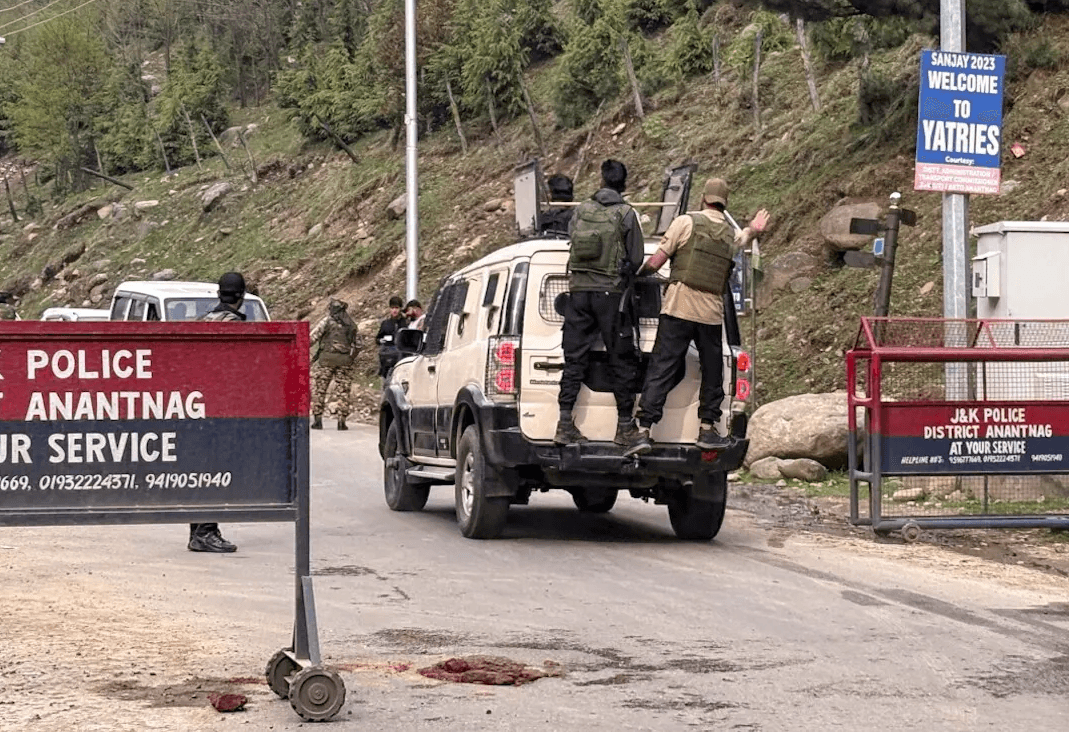
Saldırının gerçekleştiği bölgeden bir görüntü, 22 Nisan 2025 (NDTV)
The attack took place on April 22 2025 in the Baisaran meadow approximately five kilometers from the town of Pahalgam in the Anantnag region of Indian-administered Jammu and Kashmir. In this area accessible only on foot, tourists were randomly shot at. Following the incident, security forces, the army and medical teams were deployed to the area.
At least 26 people lost their lives in the attack. Initial assessments indicate that 13 others were injured; some received outpatient treatment while the critically wounded were transported to Srinagar. Among the deceased were Indian citizens from the states of Karnataka and Odisha. One of the victims was from the Balasore district of Odisha and another from the city of Shivamogga in Karnataka.
The responsibility for the attack was claimed online by a little-known group called “Kashmir Resistance” via social media. The group asserted that it carried out the attack targeting demographic changes in Kashmir. The source of the claim has not been independently verified. Following the attack, the Indian Army and security forces launched a large-scale search and sweep operation in the region. Lieutenant General M.V. Suchendra Kumar of the Northern Command traveled to Srinagar to meet with local units regarding the security situation.
Prime Minister Narendra Modi condemned the attack and stated that the perpetrators would be brought to justice. Home Minister Amit Shah traveled to Srinagar after the attack and convened an emergency meeting with security officials. Jammu and Kashmir Chief Minister Omer Abdullah described the incident as the largest attack on civilians in recent years. President Droupadi Murmu labeled the attack as inhumane. Various ministries and opposition leaders also issued statements condemning the attack.
The governments of Karnataka and Odisha dispatched support teams for their citizens in the region and initiated funeral transport arrangements. The Anantnag Police Directorate established emergency helplines to assist tourists. The Ministry of Health coordinated efforts across public hospitals in the region to ensure treatment for the injured.
Al Jazeera. “Gunmen Open Fire on Tourists in Indian-Administered Kashmir.” Al Jazeera. Accessed April 22, 2025.https://www.aljazeera.com/news/2025/4/22/gunmen-open-fire-on-tourists-in-indian-administered-kashmir
Anadolu Ajansı. "Many Feared Dead as Gunmen Open Fire on Tourists in Kashmir, Police Say." Accessed April 22, 2025.https://www.aa.com.tr/en/asia-pacific/many-feared-dead-as-gunmen-open-fire-on-tourists-in-kashmir-police-say/3545471
NDTV. "Jammu and Kashmir Terrorist Attack Live Updates: Gunmen Target Tourists in Pahalgam." NDTV. Accessed April 22, 2025.https://www.ndtv.com/india-news/jammu-and-kashmir-terrorist-attack-live-updates-pahalgam-anantnag-tourists-prime-minister-narendra-modi-amit-shah-terrorists-news-8227401
Reuters. “One Killed, Seven Injured in Militant Attack in India’s Kashmir, India Today TV Says.” Accessed April 22, 2025.https://www.reuters.com/world/india/one-killed-seven-injured-militant-attack-indias-kashmir-india-today-tv-says-2025-04-22/
The Indian Express. "Tourists Injured in Terror Attack in J&K’s Pahalgam." Indian Express. Accessed April 22, 2025.https://indianexpress.com/article/india/tourists-injured-terror-attack-jk-pahalgam-9958887/
The Pahalgam Terror Attack refers to an armed assault that took place on April 22, 2025, in the Baisaran meadow of Pahalgam town, located in the Anantnag district of Indian-administered Jammu and Kashmir.
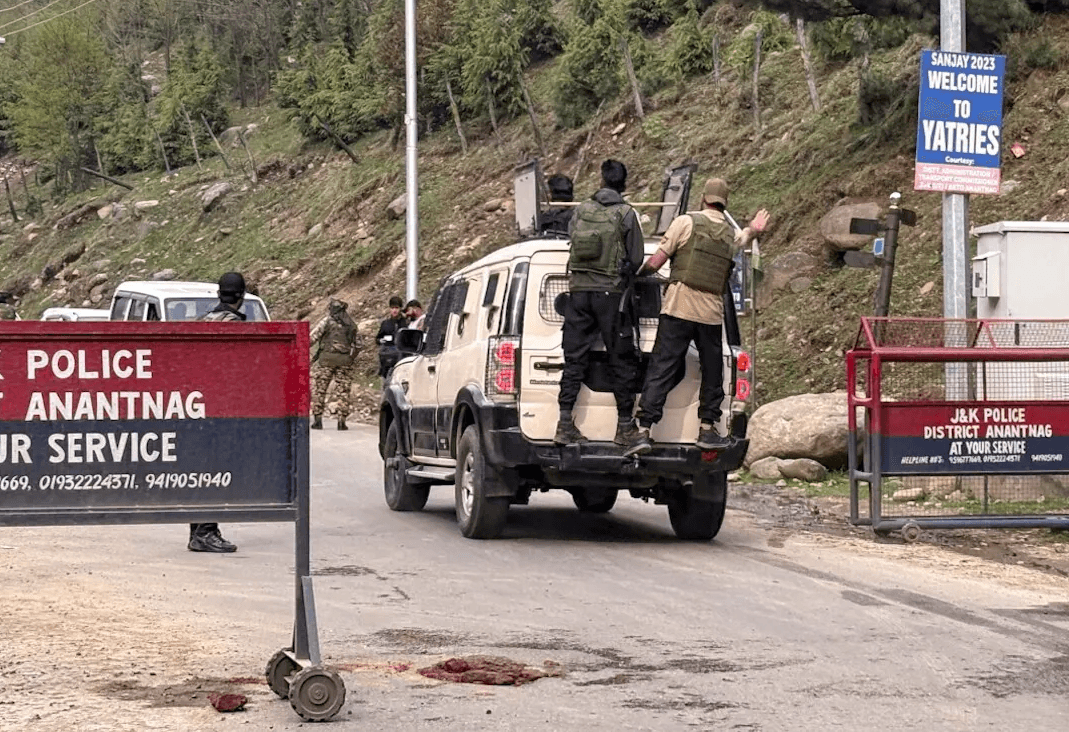
A view from the site of the attack, April 22, 2025 (NDTV)
The attack occurred on April 22, 2025, in the Baisaran meadow, situated in the upper areas of Pahalgam town in the Anantnag district of the Union Territory of Jammu and Kashmir, located in northern India. The site of the incident is a mountainous, vehicle-inaccessible area that can only be reached on foot or horseback. According to security sources, armed individuals opened fire at close range on a group of tourists gathered in the meadow. Following the attack, military, police, and medical teams were dispatched to the area.
Authorities have reported that 26 people were killed and more than a dozen others were injured in the attack. Among the deceased were Indian nationals as well as a Nepali citizen. The injured were transferred to hospitals in Anantnag and Srinagar. Horses and stretchers were used to transport the wounded out of the valley.
According to eyewitnesses, the assailants entered tents and opened fire, specifically targeting certain individuals. A member of a family from the city of Pune stated that while they were hiding inside a tent, the attackers interrogated them and then shot some of their relatives.
A group calling itself “The Resistance Front” claimed responsibility for the attack via social media. In its statement, the group referenced the demographic structure of the region. The authenticity of this claim has not been independently verified. Following the incident, Indian security forces launched operations in the area. Units of the Indian Army conducted search-and-sweep operations.
Prime Minister Narendra Modi issued a statement on social media following the attack and convened a security meeting with Home Minister Amit Shah. The Home Minister met with senior security officials at the scene. During his visit to India, U.S. Vice President J.D. Vance shared a message of condolence. U.S. President Donald Trump held a phone call with the Indian Prime Minister after the attack. Officials from Russia, Ukraine, Iran, Israel, Italy, France, and the United Arab Emirates also issued statements regarding the incident.
Protests were held in Srinagar following the attack. Demonstrators carried candles, banners, and chanted slogans. Airlines organized additional flights to facilitate the evacuation of tourists from the region.
Al Jazeera. “Gunmen Open Fire on Tourists in Indian-Administered Kashmir.” Al Jazeera. Accessed April 22, 2025. https://www.aljazeera.com/news/2025/4/22/gunmen-open-fire-on-tourists-in-indian-administered-kashmir.
Anadolu Agency. “Many Feared Dead as Gunmen Open Fire on Tourists in Kashmir, Police Say.” Anadolu Agency. Accessed April 22, 2025. https://www.aa.com.tr/en/asia-pacific/many-feared-dead-as-gunmen-open-fire-on-tourists-in-kashmir-police-say/3545471.
CNN. “Gunmen Open Fire on Tourists in Jammu and Kashmir.” CNN, April 22, 2025. Accessed April 23, 2025. https://edition.cnn.com/2025/04/22/asia/gunmen-open-fire-jammu-kashmir-intl/index.html
NDTV. “Jammu and Kashmir Terrorist Attack Live Updates: Gunmen Target Tourists in Pahalgam.” NDTV. Accessed April 22, 2025. https://www.ndtv.com/india-news/jammu-and-kashmir-terrorist-attack-live-updates-pahalgam-anantnag-tourists-prime-minister-narendra-modi-amit-shah-terrorists-news-8227401.
Reuters. “One Killed, Seven Injured in Militant Attack in India’s Kashmir, India Today TV Says.” Reuters. Accessed April 22, 2025. https://www.reuters.com/world/india/one-killed-seven-injured-militant-attack-indias-kashmir-india-today-tv-says-2025-04-22/.
The Indian Express. “Tourists Injured in Terror Attack in J&K’s Pahalgam.” Indian Express. Accessed April 22, 2025. https://indianexpress.com/article/india/tourists-injured-terror-attack-jk-pahalgam-9958887/.
Following the armed attack on 22 April 2025 in the town of Pahalgam in the Jammu and Kashmir region of India, which resulted in the deaths of 26 people, the Indian government declared that the attack had “cross-border links.” The Indian Ministry of External Affairs stated that assessments within the security cabinet indicated that the perpetrators had received support from Pakistan.
The attack was claimed by a group previously unknown to the public, identified as “Kashmir Resistance” or “The Resistance Front (TRF).” In a statement posted on social media, the group referenced settlement policies accused of causing demographic changes in the region. The statement asserted that more than 85,000 people had been relocated to the area and that this was the target of the attack.
Pakistan’s Ministry of Foreign Affairs, in a written statement issued after the attack, expressed “sorrow” over the tourist deaths in Jammu and Kashmir under Indian administration and extended condolences to the families of the deceased. Pakistan explicitly denied any connection to the attack. Senior officials in the country rejected India’s allegations.
On 23 April 2025, Indian Prime Minister Narendra Modi cut short his visit to Saudi Arabia and returned to New Delhi, stating in his address that those responsible for the attack would be brought to justice. Home Minister Amit Shah traveled to Srinagar on the day of the incident and conducted a security assessment with security forces. Pakistan Prime Minister Shehbaz Sharif convened the National Security Committee on 24 April 2025; the official statement issued affirmed the rejection of India’s accusations and stated that all necessary measures would be taken to safeguard the country’s sovereignty.
Following the attack that killed 26 people, India announced a series of diplomatic and administrative measures against Pakistan. On 23 April 2025, Indian Foreign Secretary Vikram Misri declared that India had officially downgraded its diplomatic relations with Pakistan and suspended various agreements.
One of the first measures was the declaration of Pakistani defense advisors operating on Indian soil as “undesirable persons” and their expulsion from the country. The same statement indicated that the number of personnel working at India’s embassy in Islamabad would be reduced from 55 to 30, and that the level of diplomatic representation would be mutually lowered. In accordance with decisions made by the security cabinet, the main land border crossing between India and Pakistan was closed indefinitely.
On the same day, India revoked visa exemptions granted to Pakistani citizens under the South Asian Association for Regional Cooperation (SAARC) framework and required all individuals in India holding existing SAARC visas to leave the country within 48 hours.
The Indian government also announced the suspension of the Indus Waters Treaty, signed in 1960 with the mediation of the World Bank, which governs the sharing of water resources from the Indus River system.
In response to India’s measures following the attack, the Pakistani government announced on 24 April 2025 a series of countermeasures. In accordance with decisions taken by the National Security Committee chaired by Prime Minister Shehbaz Sharif, all visas issued to Indian citizens were canceled, and all special travel documents under the SAARC Visa Exemption Program were suspended.
The Pakistan Civil Aviation Authority announced a ban on all airlines originating from or operated by India from using Pakistani airspace. This ban covers not only direct flights but also transit flights passing through third countries.
In addition, Pakistan’s Ministry of Commerce declared the suspension of all bilateral trade activities with India and the closure of all third-country-linked trade routes involving India. These measures apply across Pakistan’s maritime, land, and air borders. Pakistan characterized India’s unilateral suspension of its obligations under the Indus Waters Treaty as a violation of international agreements. A statement from the Prime Minister’s Office stated that if India were to halt or divert the flow of water, this would be considered a “cause for war.” Pakistan’s Minister for Energy Awais Leghari also stated that the water of the Indus River constitutes a right belonging to Pakistan and that this right would be defended by all possible means.
Al Jazeera. “India Downgrades Pakistan Ties after Attack on Kashmir Tourists.” Accessed April 24, 2025.https://www.aljazeera.com/news/2025/4/23/india-downgrades-pakistan-ties-after-attack-on-kashmir-tourists
Associated Press. “Kashmir Attack Sparks Tensions between India and Pakistan.” AP News. Accessed April 24, 2025.https://apnews.com/article/kashmir-india-pakistan-pahalgam-tourist-attack-tensions-242c7a600a51793f5484e4f620402fdd
BBC. “India-Pakistan Tensions Rise after Kashmir Tourist Attack.” BBC News. Accessed April 24, 2025.https://www.bbc.com/news/articles/ce8g2njm2d2o
CNN. "Explained: Pahalgam Attack and Why It Is Reigniting India-Pakistan Tensions." CNN, April 24, 2025. Accessed April 24, 2025.https://edition.cnn.com/2025/04/24/india/pahalgam-india-pakistan-attack-explainer-intl-hnk/index.html
Sky News. “India Revokes All Visas Issued to Pakistani Nationals after Deadly Kashmir Attack.” Accessed April 24, 2025.https://news.sky.com/story/india-revokes-all-visas-issued-to-pakistani-nationals-after-deadly-kashmir-attack-13354741
Following the armed assault on 22 April 2025 in the town of Pahalgam in Jammu and Kashmir, which resulted in the deaths of 26 individuals, the Government of India declared that the attack had “cross-border links.” The Ministry of External Affairs stated that assessments were being conducted within the national security cabinet regarding evidence suggesting the perpetrators had received support from Pakistan.
The attack was claimed by a previously unknown group referred to as “Kashmir Resistance” or “The Resistance Front (TRF).” In a statement released via social media, the group cited the region’s settlement policies, which they claimed were altering the area's demographic composition. The statement specifically referred to the resettlement of over 85,000 individuals as a motive behind the attack.
In a written statement issued shortly after the incident, Pakistan’s Ministry of Foreign Affairs expressed “sorrow” over the deaths of tourists in Indian-administered Jammu and Kashmir and extended condolences to the families of the victims. The statement firmly denied any involvement in the attack. Senior Pakistani officials rejected the accusations put forth by India.
On 23 April 2025, Indian Prime Minister Narendra Modi cut short his visit to Saudi Arabia and returned to New Delhi, where he pledged that those responsible would be brought to justice. That same day, Home Minister Amit Shah travelled to Srinagar to meet with security officials for an assessment of the situation. In response, Pakistani Prime Minister Shehbaz Sharif convened the National Security Committee on 24 April 2025. A subsequent official statement rejected India’s allegations and emphasized that all necessary measures would be taken to safeguard Pakistan’s sovereignty.
In response to the attack that claimed 26 lives, India announced a series of diplomatic and administrative actions against Pakistan. On 23 April 2025, Foreign Secretary Vikram Misri declared that India was officially downgrading its diplomatic relations with Pakistan and suspending several bilateral agreements.
One of the first steps taken was to declare Pakistani defense attachés stationed in India as “persona non grata” and expel them from the country. The same announcement included a reduction in staff at the Indian embassy in Islamabad from 55 to 30 personnel, alongside a reciprocal downgrading of diplomatic representation. In addition, India’s national security cabinet ordered the indefinite closure of the main land border crossing with Pakistan.
On the same day, India also revoked visa exemptions granted to Pakistani citizens under the South Asian Association for Regional Cooperation (SAARC) framework. All individuals in India on SAARC visas were instructed to leave the country within 48 hours.The Indian government further announced the suspension of the Indus Waters Treaty, a 1960 agreement brokered by the World Bank that governs the distribution of water resources from the Indus River system.
In response to India’s post-attack measures, the Government of Pakistan announced a set of counter-sanctions on 24 April 2025. These measures were enacted following a meeting of the National Security Committee chaired by Prime Minister Shehbaz Sharif. As per the decisions taken, all visas issued to Indian citizens were cancelled, and all special travel documents under the SAARC Visa Exemption Scheme were suspended.
The Pakistan Civil Aviation Authority issued a statement prohibiting all aircraft originating from or operated by India from using Pakistani airspace. This ban applies not only to direct flights but also to transit flights routed through third countries.
Additionally, the Pakistani Ministry of Commerce announced the suspension of all bilateral trade activities with India and declared that any third-country trade routes involving India—whether inbound or outbound—would be terminated. These measures have been enforced across Pakistan’s sea, land, and air borders.
Pakistan also criticized India’s unilateral suspension of its obligations under the Indus Waters Treaty, labeling it a violation of international agreements. A statement from the Prime Minister’s Office warned that any attempt by India to divert or halt water flow would be considered an “act of war.” In a related comment, Minister of Energy Awais Leghari asserted that Pakistan’s rights to the waters of the Indus River are non-negotiable and would be defended by all necessary means.
Al Jazeera. “India Downgrades Pakistan Ties after Attack on Kashmir Tourists.” Al Jazeera. Accessed April 24, 2025. https://www.aljazeera.com/news/2025/4/23/india-downgrades-pakistan-ties-after-attack-on-kashmir-tourists.
Associated Press. “Kashmir Attack Sparks Tensions between India and Pakistan.” AP News. Accessed April 24, 2025. https://apnews.com/article/kashmir-india-pakistan-pahalgam-tourist-attack-tensions-242c7a600a51793f5484e4f620402fdd.
BBC. “India-Pakistan Tensions Rise after Kashmir Tourist Attack.” BBC News. Accessed April 24, 2025. https://www.bbc.com/news/articles/ce8g2njm2d2o.
CNN. “Explained: Pahalgam Attack and Why It Is Reigniting India-Pakistan Tensions.” CNN, April 24, 2025. Accessed April 24, 2025. https://edition.cnn.com/2025/04/24/india/pahalgam-india-pakistan-attack-explainer-intl-hnk/index.html.
Sky News. “India Revokes All Visas Issued to Pakistani Nationals after Deadly Kashmir Attack.” Sky News. Accessed April 24, 2025. https://news.sky.com/story/india-revokes-all-visas-issued-to-pakistani-nationals-after-deadly-kashmir-attack-13354741.
On the night of 24 April 2025, a brief armed clash occurred along the Line of Control (LoC) in Jammu and Kashmir between the armed forces of India and Pakistan. The Indian military stated that Pakistani soldiers opened fire on an Indian position, prompting a return of fire. Both sides reported no casualties resulting from the incident. Pakistan’s Ministry of Foreign Affairs did not comment on the event.
In southern Kashmir, security operations were conducted targeting individuals linked to the attack. According to Indian security sources, the identities of two local individuals and two Pakistani nationals are under investigation. Explosive materials were reportedly found in some homes associated with these individuals. Several structures sustained damage from the explosions, and security officials confirmed that the operations are ongoing as part of the investigation.
On the same date, protests were held in Muzaffarabad, under Pakistani control, and in various settlements. The demonstrations targeted decisions made by the Indian government and featured various slogans. The Pakistani Senate issued a resolution condemning India’s suspension of the Indus Waters Treaty.
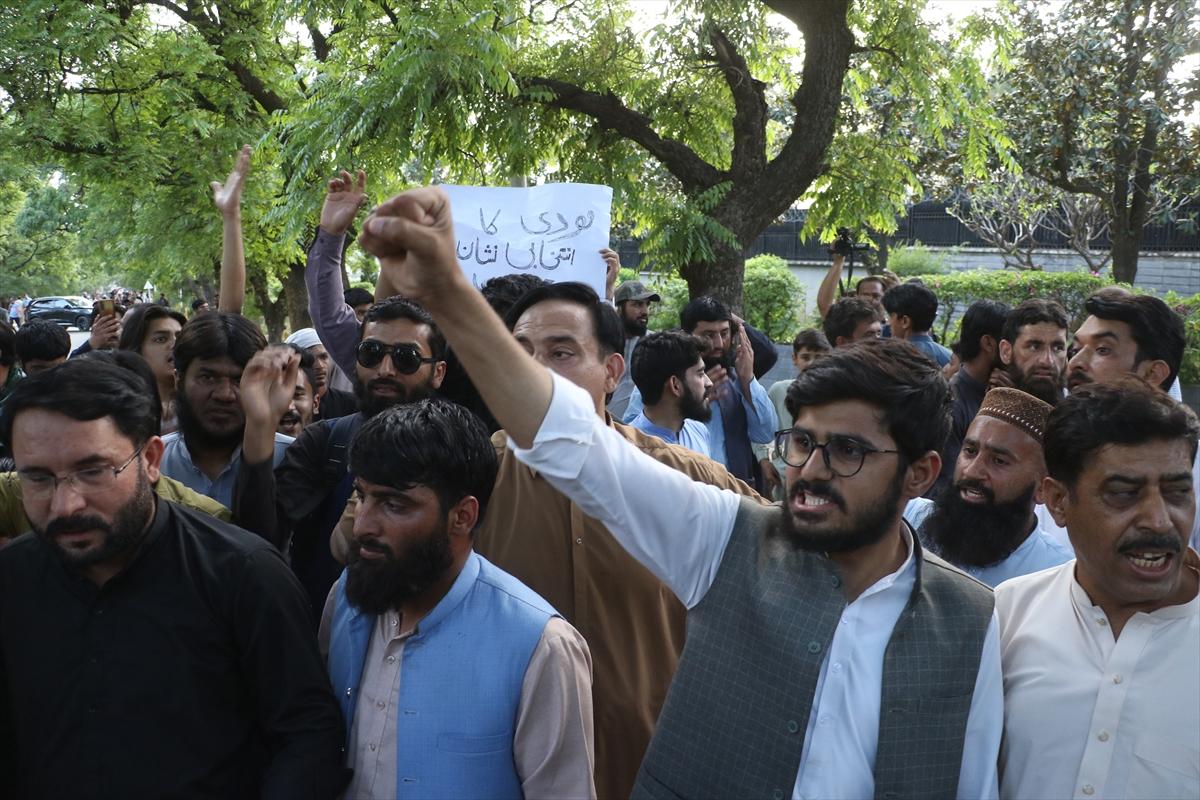
Protest demonstration held outside the Indian Embassy in Islamabad, 24 April 2025 – Anadolu Agency
On the same day, various protest actions also took place in New Delhi, India’s capital. In response to the attack, some merchants in certain areas closed their shops, and demonstrators marched holding placards.
United Nations Spokesperson Stephane Dujarric, during his daily press briefing, stated that both sides were urged to exercise maximum restraint and that it was essential to prevent further escalation of the situation.
Al Jazeera. “India-Pakistan Tensions Flare following Kashmir Tourist Attack.” Accessed April 25, 2025.https://www.aljazeera.com/news/2025/4/25/india-pakistan-tensions
Associated Press. “India-Pakistan Tensions Rise after Attack on Tourists in Kashmir.” AP News. Accessed April 25, 2025.https://apnews.com/article/kashmir-india-pakistan-pahalgam-tourist-attack-tensions-94de38a3c24137dcc25e77dffc4cc5f2
On 25 April 2025, a second brief armed clash occurred along the Line of Control (LoC) in Jammu and Kashmir between the armed forces of India and Pakistan. The Indian Army stated that after midnight, multiple positions of the Pakistan Army opened fire with small arms, and Indian units responded in kind. India reported no casualties resulting from the incident. The Pakistan Army did not comment on the event.
As of the morning of 26 April 2025, the Indian Army reported that Pakistan had continued limited firing for a second day. Indian sources announced that the firing had intensified after midnight.
On 25 April 2025, Indian security forces demolished the home of Ahsan ul Haq Sheikh in the Pulwama region of South Kashmir using explosives, alleging his involvement in the attack. On 26 April 2025, the home of Zakir Ahmad Ganie in the village of Thokerpora in the Kulgam region was similarly destroyed by security forces using explosives. On the same dates, two local individuals and two Pakistani nationals suspected of involvement in the attack were identified and brought under investigation.
On 26 April 2025, the Jammu and Kashmir Police announced that they had identified the identities of three suspects linked to the Pahalgam attack. According to the statement, two of the suspects were Pakistani nationals and one was a local Kashmiri.
On 26 April 2025, Pakistan Prime Minister Shehbaz Sharif called for a neutral international investigation into the Pahalgam attack. Sharif stated that Pakistan was open to any impartial and credible inquiry. Pakistan’s Defense Minister Khawaja Asif also emphasized that the incidents must be investigated by an independent international commission.
On 26 April 2025, former Pakistani Foreign Minister Bilawal Bhutto-Zardari criticized India’s decision to suspend the Indus Waters Treaty. Bhutto-Zardari stated, “Either water will flow from the Indus or blood will flow.” Prime Minister Shehbaz Sharif also declared that any interference with water resources would be met with a response.
On 26 April 2025, protest demonstrations were held outside the High Commission of Pakistan in London. Organized by groups from the Indian diaspora, the protests expressed outrage over the Pahalgam attack and featured various slogans.
U.S. President Donald Trump, in a statement regarding the tensions between India and Pakistan, stated that the two countries could resolve their dispute through direct negotiations.
In a statement issued by the United Nations Security Council, the Pahalgam attack was condemned in the strongest terms, and it was emphasized that the perpetrators, planners, and financiers of the attack must be brought to justice. The Council called on all states to cooperate in accordance with international law and UN Security Council resolutions.
Al Jazeera. “Kashmir Attack Live: India, Pakistan Trade Fire as Pahalgam Gunmen Hunted.” Accessed April 26, 2025.https://www.aljazeera.com/news/liveblog/2025/4/26/kashmir-attack-live-india-pakistan-trade-fire-as-pahalgam-gunmen-hunted
Ministry of Information and Broadcasting, Pakistan. “Pakistan Condemns India’s Baseless Allegations Regarding Pahalgam Attack.” Accessed April 26, 2025.https://www.moib.gov.pk/News/65374
Reuters. “India, Pakistan Exchange Gunfire 2nd Day, Ties Plummet after Attack.” Accessed April 26, 2025.https://www.reuters.com/world/india/india-pakistan-exchange-gunfire-2nd-day-ties-plummet-after-attack-2025-04-26/
The Times of India. "Jammu and Kashmir Pahalgam Terror Attack Live Updates." Accessed April 26, 2025.https://timesofindia.indiatimes.com/india/jammu-and-kashmir-pahalgam-terror-attack-live-updates-pakistan-terrorists-killed-tourist-pm-modi-amit-shah-omar-abdullah-attari-border-indus-water-treaty-simla-agreement/liveblog/120627768.cms
On 27 and 28 April 2025, it was reported that Indian and Pakistan forces exchanged small arms fire along the Line of Control (LoC) in the Jammu and Kashmir region. The Indian Army stated that Pakistani units had opened fire from multiple posts without provocation and that India responded accordingly. Mutual fire exchanges between Indian and Pakistani forces continued for four days. Local authorities described the clashes as “normal post-to-post firing” and emphasized that the incidents did not escalate into a major military confrontation.
The 2021 India-Pakistan ceasefire agreement has been confirmed as still in force; the recent armed incidents have not been classified as violations of the ceasefire.
Between 27 and 28 April 2025, Indian security forces launched comprehensive operations across Kashmir. Approximately 500 individuals were taken into custody for questioning. Around 1,000 homes and forested areas were searched, and at least nine homes were destroyed using explosives during the operations.
Authorities stated that the demolitions targeted properties belonging to individuals accused of aiding attacks or providing shelter. Some political leaders in Jammu and Kashmir called for caution to ensure that innocent civilians were not harmed during the operations.
The group known as Kashmir Resistance (The Resistance Front) claimed on the social media platform X that the earlier statement claiming responsibility for the Pahalgam attack had been published as a result of a “cyberattack.” The group asserted that it had no direct involvement in the attack.
On 26 April 2025, India released an unusually high volume of water into the Jhelum River, causing a sudden rise in water levels in Pakistan-administered Azad Kashmir. Local administrations in the Muzaffarabad region warned residents living near the riverbanks to move away from the flood-prone areas.
Local officials stated that the excess water release had caused a “moderate” flood but no significant material damage had been reported. The Jhelum River originates in Indian-administered Kashmir and flows through Pakistan’s Azad Kashmir and Punjab regions.
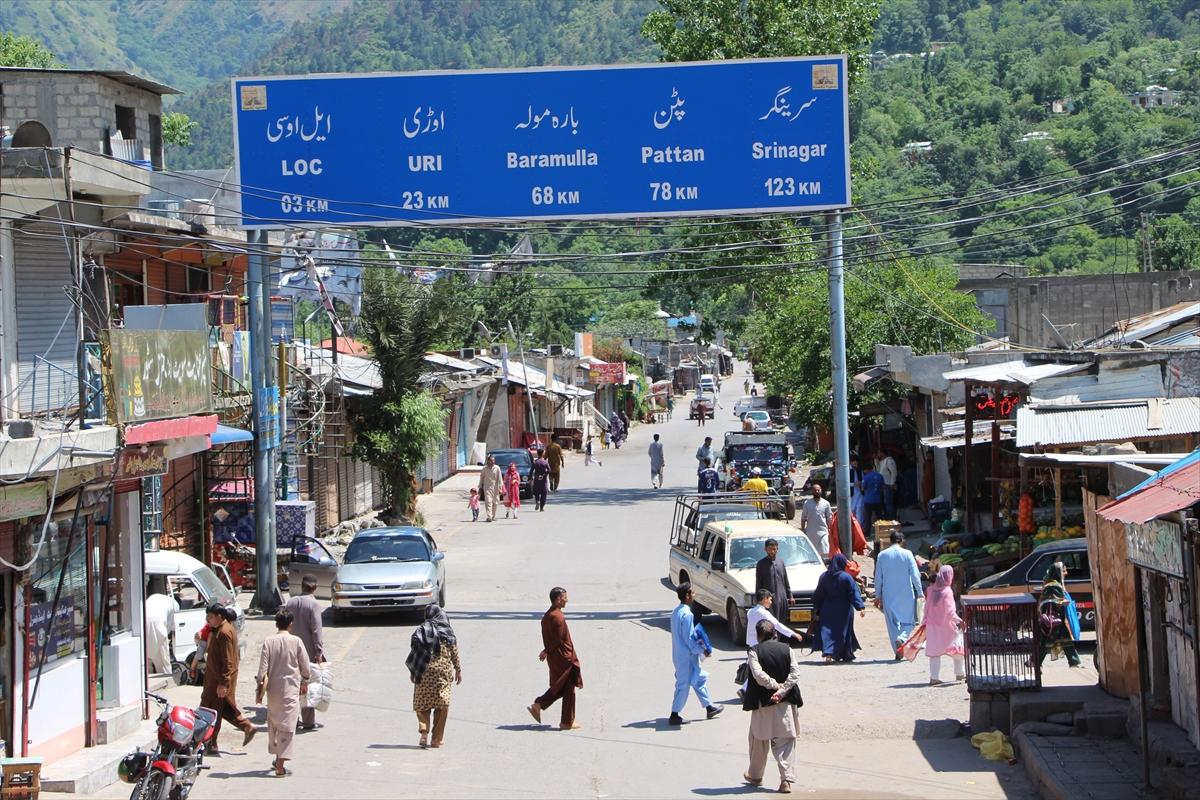
The town of Chakothi in Pakistan-administered Azad Kashmir, 28 April 2025 – Anadolu Agency
These developments occurred following renewed tensions over water sharing under the Indus Waters Treaty (1960) between India and Pakistan.
On 27 April 2025, the Indian Navy conducted test firings of long-range precision strike missiles in open sea. The Indian Navy stated that the tests were designed to verify the long-range precision strike capabilities of platforms, systems, and personnel.
The exact types of missile systems tested were not disclosed, but it was noted that the launches were intended to underscore India’s operational readiness. Indian Prime Minister Narendra Modi characterized this move as part of the “firm response” process to the Pahalgam attack.
In a statement from Pakistan, it was affirmed that the country’s nuclear weapons are maintained solely in readiness against India.
On 28 April 2025, the Ministry of Foreign Affairs of the People’s Republic of China called on India and Pakistan to exercise restraint and urged both sides to take steps to reduce tensions in the region.
The United States Department of State also confirmed that it had been in contact with both countries, stressing the need for the parties to work toward a “responsible solution” and indicating that it was closely monitoring the situation. The United States expressed support for India following the Pahalgam attack but did not issue direct criticism of Pakistan.
Al Jazeera. “India and Pakistan Continue to Trade Fire across Kashmir Border.” Al Jazeera. Accessed April 28, 2025.https://www.aljazeera.com/news/2025/4/28/india-and-pakistan-continue-to-trade-fire-across-kashmir-border.
Al Jazeera. “Kashmir Attack Live: India, Pakistan Troops Exchange Fire for Third Day.” Al Jazeera. Accessed April 28, 2025.https://www.aljazeera.com/news/liveblog/2025/4/27/kashmir-attack-live-india-pakistan-troops-exchange-fire-for-third-day.
Anadolu Ajansı. "Azad Kashmir River Flow Surges amid Tensions between India and Pakistan." Accessed April 28, 2025.https://www.aa.com.tr/en/asia-pacific/azad-kashmir-river-flow-surges-amid-tensions-between-india-and-pakistan/3549488#.
Anadolu Ajansı. "Ceasefire at Kashmir Border Holds despite Escalating Tensions between Pakistan, India." Accessed April 28, 2025.https://www.aa.com.tr/en/asia-pacific/ceasefire-at-kashmir-border-holds-despite-escalating-tensions-between-pakistan-india/3550583#.
Reuters. “India, Pakistan Exchange Small Arms Fire across Kashmir Border for Fourth Night.” Reuters. Accessed April 28, 2025.https://www.reuters.com/world/asia-pacific/india-pakistan-exchange-small-arms-fire-across-kashmir-border-fourth-night-2025-04-28/.
Reuters. “US in Touch with India, Pakistan, Urges Work toward Responsible Solution.” Reuters. Accessed April 28, 2025.https://www.reuters.com/world/us-touch-with-india-pakistan-urges-work-toward-responsible-solution-2025-04-27/.
The Guardian. “India Test-Fires Missiles as Tensions Rise with Pakistan over Kashmir Attack.” Accessed April 28, 2025.https://www.theguardian.com/world/2025/apr/27/india-test-fires-missiles-tensions-rise-pakistan-kashmir-attack.
The Guardian. “India and Pakistan Trade Gunfire across Kashmir Border after Deadly Attack.” The Guardian. Accessed April 28, 2025.https://www.theguardian.com/world/2025/apr/26/india-and-pakistan-trade-gunfire-across-kashmir-border-after-deadly-attack.
On the night of April 24, 2025, a brief exchange of gunfire occurred between Indian and Pakistani military forces along the Line of Control (LoC) in the disputed Jammu and Kashmir region. According to three Indian military officials, Pakistani troops initiated fire on an Indian military post, to which Indian forces responded. Both parties reported no casualties resulting from the incident. The Pakistani Ministry of Foreign Affairs has refrained from issuing a comment regarding the event.
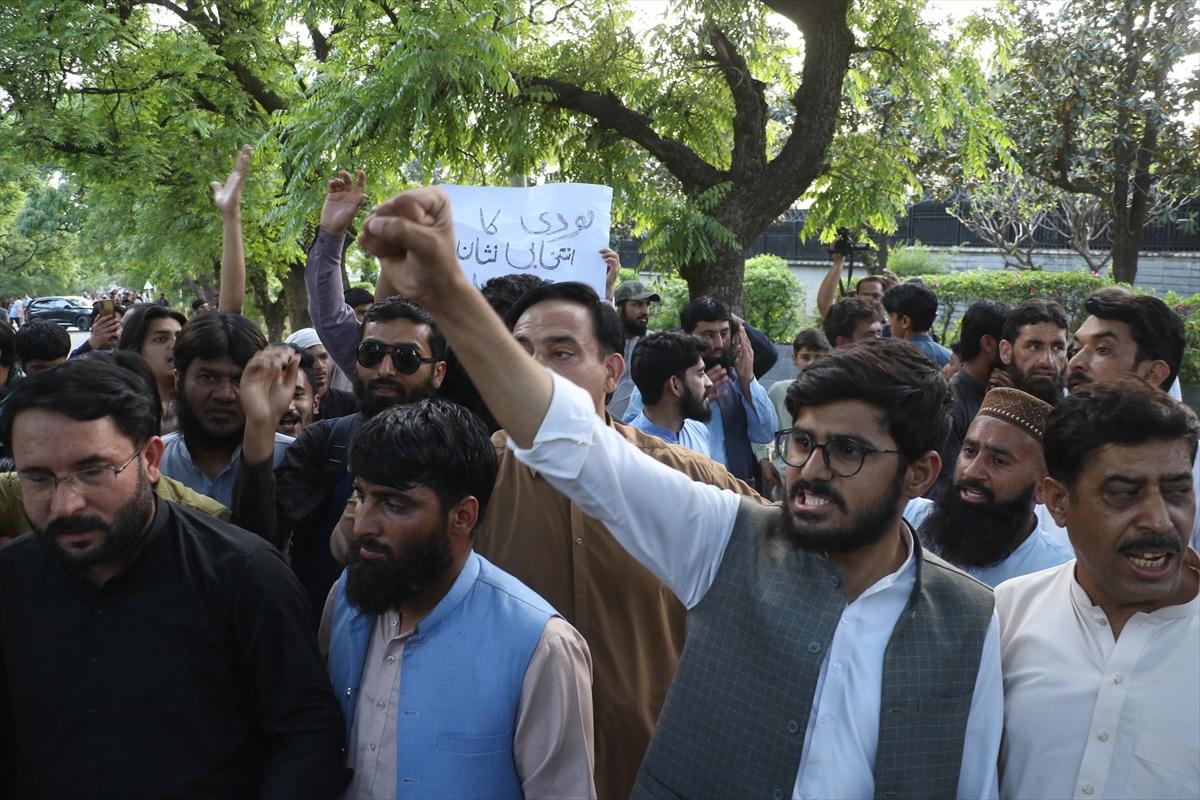
A protest demonstration was held in front of the Indian Embassy in Islamabad on April 24, 2025. — Anadolu Agency
Concurrently, Indian security forces launched targeted operations against individuals alleged to be connected to the recent attack. Investigations are reportedly focusing on two local residents and two Pakistani nationals. During the course of these operations, explosives were deployed in certain residential properties linked to the suspects, causing structural damage. Security authorities have confirmed that these operations are ongoing within the framework of a broader investigative process.
On the same date, protest demonstrations were held in Muzaffarabad and various other settlements within Pakistan-administered Kashmir. Demonstrators denounced recent measures taken by the Indian government, employing slogans critical of New Delhi’s actions. In parallel, the Senate of Pakistan adopted a resolution condemning India's suspension of the Indus Waters Treaty, characterizing the move as a violation of international law and warning that it could be construed as an act of war.
On the same day, various protest actions were also held in New Delhi, the capital of India. In response to the attack, some shopkeepers closed their businesses in protest, while demonstrators marched carrying placards. United Nations Secretary-General Spokesperson Stéphane Dujarric, during the daily press briefing, emphasized that both sides had been urged to exercise maximum restraint and stressed the importance of preventing any further escalation of tensions.
Al Jazeera. “India-Pakistan Tensions Flare following Kashmir Tourist Attack.” Al Jazeera. Accessed April 25, 2025. https://www.aljazeera.com/news/2025/4/25/india-pakistan-tensions.
Associated Press. “India-Pakistan Tensions Rise after Attack on Tourists in Kashmir.” AP News. Accessed April 25, 2025. https://apnews.com/article/kashmir-india-pakistan-pahalgam-tourist-attack-tensions-94de38a3c24137dcc25e77dffc4cc5f2.
On April 25, 2025, a second brief exchange of gunfire occurred between Indian and Pakistani armed forces along the Line of Control (LoC) in Jammu and Kashmir. According to a statement by the Indian Army, Pakistani troops opened fire with small arms from multiple positions after midnight, and Indian forces returned fire. No casualties were reported by the Indian side. The Pakistani military has not issued any comment regarding the incident.
By the morning of April 26, 2025, the Indian Army reported that sporadic small-arms fire from the Pakistani side had continued into the second consecutive night, with a noted increase in intensity after midnight.
On April 25, 2025, Indian security forces demolished the house of Ahsan ul Haq Sheikh, who was allegedly linked to the attack, using explosives in the Pulwama district of South Kashmir. On April 26, 2025, a similar operation was conducted in Thokerpora village in the Kulgam district, where the house of Zakir Ahmad Ganie was destroyed.
During the same period, authorities identified two local residents and two Pakistani nationals as suspects connected to the attack, and they were incorporated into the ongoing investigation.
On April 26, 2025, the Jammu and Kashmir Police announced that they had identified three suspects associated with the Pahalgam attack, confirming that two of the individuals were Pakistani nationals and one was a local resident of Kashmir.
On April 26, 2025, Pakistani Prime Minister Shehbaz Sharif called for an impartial international investigation into the Pahalgam attack. Sharif stated that Pakistan was open to any neutral and credible inquiry. Similarly, Pakistan's Defence Minister Khawaja Asif emphasized that the incident should be investigated by an independent international commission.
On April 26, 2025, former Pakistani Foreign Minister Bilawal Bhutto-Zardari criticized India’s decision to suspend the Indus Waters Treaty. In his remarks, he stated, "Either the Indus will flow with water, or it will flow with blood." Prime Minister Shehbaz Sharif also declared that any interference with Pakistan’s water resources would be met with a resolute response.
On April 26, 2025, protest demonstrations were organized outside the Pakistan High Commission in London. These protests, led by groups within the Indian diaspora, condemned the Pahalgam attack and featured the chanting of various slogans.
U.S. President Donald Trump commented on the rising tensions between India and Pakistan, expressing hope that both nations would resolve their differences through direct negotiations.
The United Nations Security Council issued a statement strongly condemning the Pahalgam attack, asserting that the perpetrators, planners, and financiers must be brought to justice. The Council further called on all states to cooperate fully in accordance with international law and relevant Security Council resolutions.
Al Jazeera. “Kashmir Attack Live: India, Pakistan Trade Fire as Pahalgam Gunmen Hunted.” Al Jazeera. Accessed April 26, 2025. https://www.aljazeera.com/news/liveblog/2025/4/26/kashmir-attack-live-india-pakistan-trade-fire-as-pahalgam-gunmen-hunted.
Ministry of Information and Broadcasting, Pakistan. “Pakistan Condemns India’s Baseless Allegations Regarding Pahalgam Attack.” Ministry of Information and Broadcasting, Government of Pakistan. Accessed April 26, 2025. https://www.moib.gov.pk/News/65374.
Reuters. “India, Pakistan Exchange Gunfire 2nd Day, Ties Plummet after Attack.” Reuters. Accessed April 26, 2025. https://www.reuters.com/world/india/india-pakistan-exchange-gunfire-2nd-day-ties-plummet-after-attack-2025-04-26/.
The Times of India. “Jammu and Kashmir Pahalgam Terror Attack Live Updates.” The Times of India. Accessed April 26, 2025. https://timesofindia.indiatimes.com/india/jammu-and-kashmir-pahalgam-terror-attack-live-updates-pakistan-terrorists-killed-tourist-pm-modi-amit-shah-omar-abdullah-attari-border-indus-water-treaty-simla-agreement/liveblog/120627768.cms.
On April 27 and 28, 2025, Indian and Pakistani forces continued to exchange small-arms fire along the Line of Control (LoC) in Jammu and Kashmir. According to the Indian Army, Pakistani troops initiated "unprovoked" fire from multiple posts after midnight, to which Indian forces responded appropriately. Reports indicated that exchanges of fire had persisted for four consecutive days. Local authorities described the incidents as "routine post-to-post firing," emphasizing that they had not escalated into a broader military confrontation.
It was confirmed that the ceasefire agreement between India and Pakistan, established in 2021, remains formally in effect. The exchanges of fire were not officially categorized as violations of the ceasefire.
Between April 27 and 28, 2025, Indian security forces launched extensive search operations across the Kashmir region. It was reported that approximately 500 individuals were detained for questioning. Around 1,000 houses and forested areas were searched, and at least nine houses were demolished using explosives during the operations.
Authorities stated that the demolitions targeted properties belonging to individuals accused of aiding and abetting the perpetrators of the attack. Some political leaders in Jammu and Kashmir called for heightened caution during operations to ensure that innocent civilians were not harmed.
The group known as Kashmir Resistance (The Resistance Front) issued a statement via the social media platform X, claiming that the previously published responsibility claim regarding the Pahalgam attack had been the result of a "cyberattack." The group asserted that it had no direct involvement in the incident.
On April 26, 2025, an unusual release of excess water by India into the Jhelum River caused a sudden rise in water levels in Pakistan-administered Azad Kashmir. Local authorities in the Muzaffarabad region warned residents living near the riverbanks to evacuate to safer areas.

The city of Chakothi, located in Pakistan-administered Azad Kashmir, April 28, 2025. — Anadolu Agency
Officials reported a "moderate level" flood resulting from the increased discharge, although no major material damages were recorded. The Jhelum River originates in Indian-administered Kashmir and flows into Pakistan’s Azad Kashmir and Punjab regions. The incident occurred amid renewed tensions between India and Pakistan over water-sharing issues under the 1960 Indus Waters Treaty.
On April 27, 2025, the Indian Navy conducted test launches of long-range precision strike missiles in open waters. The Indian Navy stated that the tests were intended to validate the long-range precision strike capabilities of its platforms, systems, and personnel.
Although the exact types of missiles tested were not disclosed, it was emphasized that the drills underscored India's operational readiness. Prime Minister Narendra Modi framed these tests as part of India’s broader response to the Pahalgam attack. Meanwhile, Pakistani authorities stated that their nuclear arsenal remains operationally deployed exclusively against India.
On April 28, 2025, the Ministry of Foreign Affairs of the People's Republic of China called on both India and Pakistan to exercise maximum restraint and to undertake measures to de-escalate tensions in the region.
Similarly, the United States Department of State announced that it had engaged with both governments, encouraging them to work toward a "responsible resolution" of the crisis. The United States expressed its support for India following the Pahalgam attack but refrained from directly criticizing Pakistan.
Al Jazeera. “India and Pakistan Continue to Trade Fire across Kashmir Border.” Al Jazeera. Accessed April 28, 2025. https://www.aljazeera.com/news/2025/4/28/india-and-pakistan-continue-to-trade-fire-across-kashmir-border.
Al Jazeera. “Kashmir Attack Live: India, Pakistan Troops Exchange Fire for Third Day.” Al Jazeera. Accessed April 28, 2025. https://www.aljazeera.com/news/liveblog/2025/4/27/kashmir-attack-live-india-pakistan-troops-exchange-fire-for-third-day.
Anadolu Agency. “Azad Kashmir River Flow Surges amid Tensions between India and Pakistan.” Anadolu Agency. Accessed April 28, 2025. https://www.aa.com.tr/en/asia-pacific/azad-kashmir-river-flow-surges-amid-tensions-between-india-and-pakistan/3549488#.
Anadolu Agency. “Ceasefire at Kashmir Border Holds despite Escalating Tensions between Pakistan, India.” Anadolu Agency. Accessed April 28, 2025. https://www.aa.com.tr/en/asia-pacific/ceasefire-at-kashmir-border-holds-despite-escalating-tensions-between-pakistan-india/3550583#.
Reuters. “India, Pakistan Exchange Small Arms Fire across Kashmir Border for Fourth Night.” Reuters. Accessed April 28, 2025. https://www.reuters.com/world/asia-pacific/india-pakistan-exchange-small-arms-fire-across-kashmir-border-fourth-night-2025-04-28/.
Reuters. “US in Touch with India, Pakistan, Urges Work toward Responsible Solution.” Reuters. Accessed April 28, 2025. https://www.reuters.com/world/us-touch-with-india-pakistan-urges-work-toward-responsible-solution-2025-04-27/.
The Guardian. “India Test-Fires Missiles as Tensions Rise with Pakistan over Kashmir Attack.” The Guardian. Accessed April 28, 2025. https://www.theguardian.com/world/2025/apr/27/india-test-fires-missiles-tensions-rise-pakistan-kashmir-attack.
The Guardian. “India and Pakistan Trade Gunfire across Kashmir Border after Deadly Attack.” The Guardian. Accessed April 28, 2025. https://www.theguardian.com/world/2025/apr/26/india-and-pakistan-trade-gunfire-across-kashmir-border-after-deadly-attack.
On 29 April 2025, for the fifth consecutive night, small arms fire was exchanged between the armed forces of India and Pakistan along the Line of Control (LoC) in the Jammu and Kashmir region. Sources affiliated with the Indian military stated that Pakistani troops opened fire from several locations during the latter part of the night and that Indian units responded to these attacks. No casualties or injuries have been reported following the clashes.
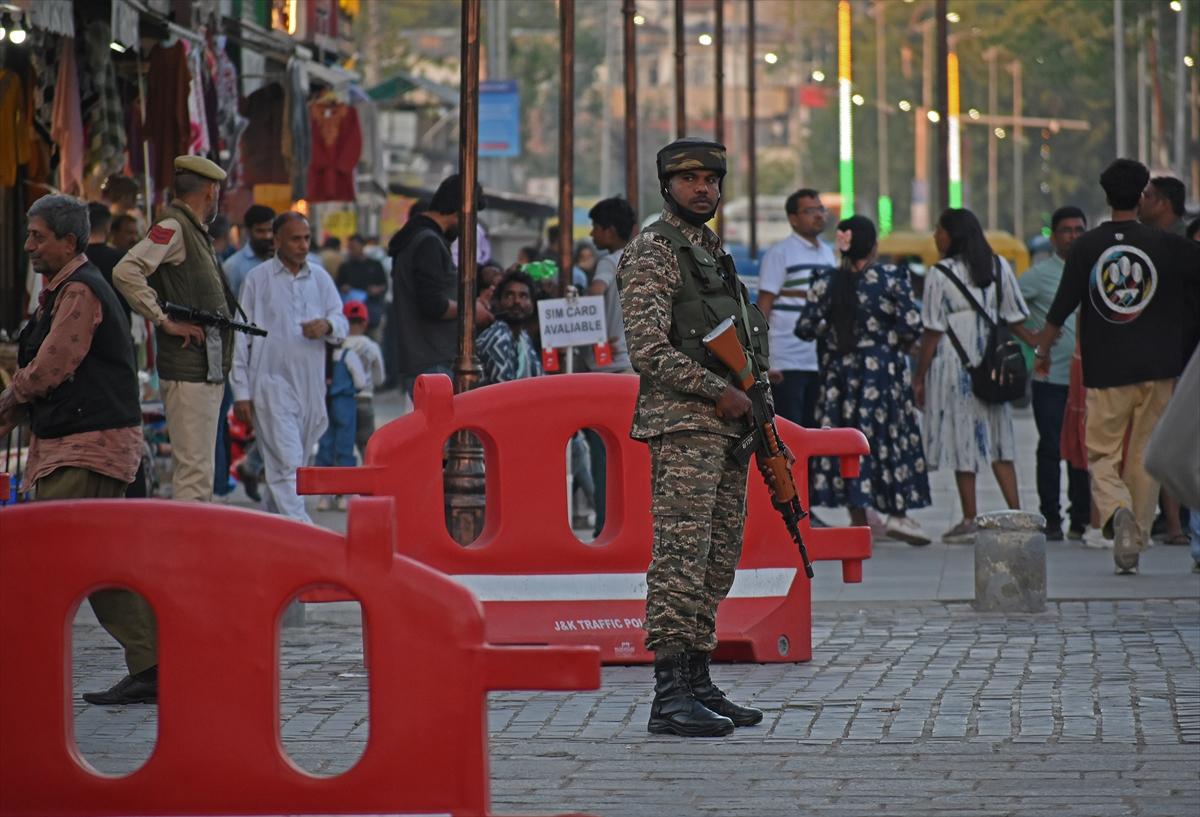
India administered Jammu and Kashmir state, in the city center of Lal Chowk, Srinagar, security forces, April 29, 2025 - Anadolu Agency
The Pakistan Armed Forces announced on 29 April 2025 that an Indian unmanned aerial vehicle (UAV) had violated its airspace and was subsequently shot down by Pakistani air defense units. No details were provided regarding the location of the incident or the model of the downed UAV. The Indian Ministry of Defense did not issue any confirmation or denial of this claim.
On 29 April 2025, Indian media sources reported on a meeting between Prime Minister Narendra Modi and his security advisors. According to these reports, Modi granted the Indian Armed Forces “full operational freedom” regarding the content timing and scope of the military response to the Pahalgam attack. Officials emphasized that this statement meant the military had the authority to make its own tactical decisions without political interference. It was stated that under this directive, land air and naval forces could coordinate their movements and that high flexibility would be permitted in operational planning.
On 29 April 2025 Pakistan’s Minister of Defense Khawaja Muhammad Asif announced that reliable intelligence indicated India might launch a cross-border military operation in the near future. Asif referenced Pakistan’s previous experience with India’s Balakot strike as a precedent and warned that a similar intervention could occur “in the near term.” The Defense Minister stated that the Pakistan Armed Forces were in a state of readiness and emphasized that troops around Jammu and Kashmir were on high alert.
On the morning of 29 April 2025 Pakistan’s Minister of Information and Broadcasting Attaullah Tarar informed the public that the country’s intelligence agencies had obtained information indicating that India planned to conduct a limited-scale operation within 24 to 36 hours. Tarar stated that India might use the Pahalgam attack as justification for such a move and that Pakistan had warned the international community about this possibility.
On 30 April 2025 the Pakistani Ministry of Foreign Affairs reiterated its call for an international investigation into the Pahalgam attack. The statement noted that discussions were ongoing regarding the potential participation of Russia and China as involved parties in such an inquiry. Officials indicated that they proposed the investigation be conducted under the auspices of the United Nations or the Organization of Islamic Cooperation and affirmed that all relevant parties were welcome to participate.
On 30 April 2025 the United States Department of State issued a statement urging India and Pakistan to avoid escalating tensions and called on all parties to exercise “strategic restraint.” The statement noted that the United States was in direct diplomatic contact with both countries and was actively working to reduce tensions.
The Chinese Ministry of Foreign Affairs in its statement emphasized that preserving peace and stability in South Asia was a priority for regional security and called on India and Pakistan to refrain from further military actions. China did not comment on Pakistan’s proposal for an international investigation.
On 30 April 2025 the Indian Ministry of Foreign Affairs delivered a formal note to Pakistan’s Embassy in New Delhi presenting allegations of ceasefire violations along the border attacks on civilian targets and Pakistan’s alleged indirect facilitation of “terrorist organizations.” The Pakistani Ministry of Foreign Affairs rejected these accusations asserting that India was attempting to shift blame for its own internal security shortcomings onto external actors.
According to Pakistani media reports dated 30 April 2025 the country’s air defense systems had been raised to alert status and military units near the Kashmir border were reportedly redeployed to more forward positions. Local sources indicated that aerial patrol flights had been intensified and that the Pakistan Air Force had increased its base-based readiness levels.
The Indian side has not released any public information regarding military troop movements. However as of 29 April 2025 security sources indicated that special operations units had been positioned near the border and that advanced reconnaissance activities were underway in certain areas.
Anadolu Ajansı. "Pakistan Savunma Bakanı’nın X Sosyal Medya Hesabı Hindistan’da Bloke Edildi." Accessed April 30, 2025.https://www.aa.com.tr/tr/dunya/pakistan-savunma-bakaninin-x-sosyal-medya-hesabi-hindistanda-bloke-edildi/3552958#.
Anadolu Ajansı. "Pakistan, Hava Sahasını İhlal Ettiği Gerekçesiyle Hindistan’a Ait Bir İHA’yı Düşürdü." Accessed April 30, 2025.https://www.aa.com.tr/tr/dunya/pakistan-hava-sahasini-ihlal-ettigi-gerekcesiyle-hindistana-ait-bir-ihayi-dusurdu/3552173#.
Anadolu Ajansı. "Pakistan, Hindistan’ın 24 ila 36 Saat İçinde Askeri Harekât Düzenleme Niyetine İlişkin İstihbarat Aldık." Accessed April 30, 2025.https://www.aa.com.tr/tr/dunya/pakistan-hindistanin-24-ila-36-saat-icinde-askeri-harekat-duzenleme-niyetine-iliskin-istihbarat-aldik/3552506#.
Anadolu Ajansı. "Pakistan, Rusya ve Çin Cammu Keşmir'deki Saldırıyla İlgili Uluslararası Soruşturmaya Katılabilir." Accessed April 30, 2025.https://www.aa.com.tr/tr/dunya/pakistan-rusya-ve-cin-cammu-kesmirdeki-saldiriyla-ilgili-uluslararasi-sorusturmaya-katilabilir/3549887#.
Anadolu Ajansı. “ABD Dışişleri Bakanlığı’ndan Pakistan ve Hindistan’a Gerginliğin Artırılmaması Çağrısı.” Accessed April 30, 2025.https://www.aa.com.tr/tr/dunya/abd-disisleri-bakanligindan-pakistan-ve-hindistana-gerginligin-artirilmamasi-cagrisi/3552474.
Anadolu Ajansı. “Hindistan’dan Cammu Keşmir’deki Terör Saldırısına Yanıt İçin 'Tam Operasyonel Özgürlük' Mesajı.” Accessed April 30, 2025.https://www.aa.com.tr/tr/dunya/hindistandan-cammu-kesmirdeki-teror-saldirisina-yanit-icin-tam-operasyonel-ozgurluk-mesaji/3552208.
Reuters. “Pakistan Defence Minister Says Military Incursion by India Is Imminent.” Reuters. Accessed April 30, 2025.https://www.reuters.com/world/pakistan-defence-minister-says-military-incursion-by-india-is-imminent-2025-04-28/.
Reuters. “Pakistan’s Minister Tarar Says India May Launch Military Strike within Next 24–36 Hours.” Accessed April 30, 2025.https://www.reuters.com/world/pakistans-minister-tarar-says-india-may-launch-military-strike-within-next-24-36-2025-04-29/.
Pursuant to a notice to airmen (NOTAM) issued by India’s Directorate General of Civil Aviation on 30 April 2025, all flights owned or operated by Pakistan have been prohibited from using Indian airspace until 23 May 2025. The ban applies to both civilian and military aircraft with no exceptions granted.
The measure came into effect following a similar decision taken by Pakistan on 24 April. On the same date, the Indian government blocked access to the X social media account of Pakistan’s Minister of Defence Khawaja Muhammad Asif across the country. In addition, access to YouTube channels of 16 Pakistani media outlets including Dawn and Geo News was also restricted. Authorities cited public order and national security concerns as justification for these access restrictions.
U.S. Secretary of State Marco Rubio held separate telephone conversations with Pakistan Prime Minister Shehbaz Sharif and Indian Foreign Minister Subrahmanyam Jaishankar. According to a statement by the U.S. Department of State, the discussions focused on reducing tensions in South Asia, restoring direct communication, and strengthening opportunities for regional cooperation following the Pahalgam attack. Rubio urged Pakistan to cooperate in the investigation of the attack.
In statements issued by United Nations Secretary-General António Guterres, Chinese Foreign Minister Wang Yi, Turkish President Recep Tayyip Erdoğan, Qatari Foreign Minister Mohammed bin Abdulrahman Al Thani, Iranian Foreign Minister Abbas Araghchi, and Egyptian Foreign Minister Badr Abdelatty, it was emphasized that the recent escalation in tensions between India and Pakistan must be brought under control. The statements particularly called for diplomatic channels to be prioritized and for direct conflict to be avoided.
Al Jazeera. “Rubio Urges De-Escalation in India-Pakistan Calls amid Soaring Tensions.” Al Jazeera, April 30, 2025. Accessed May 1, 2025.https://www.aljazeera.com/news/2025/4/30/rubio-urges-de-escalation-in-india-pakistan-calls-amid-soaring-tensions
Anadolu Ajansı. "ABD Dışişleri Bakanı Rubio’dan Pakistan ve Hindistan’a İşbirliği Çağrısı." Accessed May 1, 2025.https://www.aa.com.tr/tr/dunya/abd-disisleri-bakani-rubiodan-pakistan-ve-hindistana-isbirligi-cagrisi/3553857#
Anadolu Ajansı. "Cammu Keşmir’deki Terör Saldırısına İlişkin Dünya Liderlerinden Sükunet Çağrısı." Accessed May 1, 2025.https://www.aa.com.tr/tr/dunya/cammu-kesmirdeki-teror-saldirisina-iliskin-dunya-liderlerinden-sukunet-cagrisi/3553090
Anadolu Ajansı. "Hindistan Hava Sahasını Pakistan’a Ait Uçuşlara Kapattı." Accessed May 1, 2025.https://www.aa.com.tr/tr/dunya/hindistan-hava-sahasini-pakistana-ait-ucuslara-kapatti/3553729
Anadolu Ajansı. "Pakistan Savunma Bakanının X Sosyal Medya Hesabı Hindistan’da Bloke Edildi." Accessed May 1, 2025.https://www.aa.com.tr/tr/dunya/pakistan-savunma-bakaninin-x-sosyal-medya-hesabi-hindistanda-bloke-edildi/3552958

On April 22, 2025, an armed attack was carried out in the Baisaran meadow near the town of Pahalgam in the Anantnag district of the Jammu and Kashmir region of India. The attackers opened fire randomly on a tourist convoy in a pedestrian-only area; 26 people were killed and 13 were injured. A group known as “Kashmir Resistance” claimed responsibility for the attack, after which Indian security forces launched an operation in the region.
India asserted that the attack had cross-border links and that the perpetrators received support from Pakistan. Pakistan rejected these claims, stating it had no connection to the incident. In response, India downgraded diplomatic relations, expelled Pakistani officials, and suspended the Indus Waters Treaty. Pakistan canceled visas for Indian citizens, closed its airspace, and halted commercial relations with India.
No Discussion Added Yet
Start discussion for "Pahalgam Terror Attack (2025)" article
April 22, 2025
Course of the Attack
April 22, 2025
Perpetrators, Claims of Responsibility and Security Response
April 22, 2025
Official Reactions and Political Statements
April 24, 2025
Location, Date, and Course of the Incident
April 24, 2025
Casualties and the Injured
April 24, 2025
Eyewitness Accounts and the Moment of the Attack
April 24, 2025
Claim of Responsibility and Security Operations
April 24, 2025
Official Statements and Reactions
April 24, 2025
Initial Diplomatic Statements After the Attack
April 24, 2025
India’s Measures and Suspension of the Indus Waters Treaty
April 24, 2025
Pakistan’s Response and Countermeasures
April 25, 2025
Initial Diplomatic Statements Following the Attack
April 25, 2025
Measures Taken by India and Withdrawal from the Indus Waters Treaty
April 25, 2025
Pakistan’s Response and Retaliatory Measures
April 25, 2025
Clashes Along the Line of Control and Field Reactions
April 26, 2025
Developments on 25–26 April and Their Regional Implications
April 28, 2025
Ongoing Clashes Along the Line of Control
April 28, 2025
Search and Detention Operations in the Kashmir Region
April 28, 2025
Statement by the Kashmir Resistance Group
April 28, 2025
Water Flow and Flooding on the Jhelum River
April 28, 2025
India’s Missile Tests
April 28, 2025
Calls for Restraint from China and the United States
April 28, 2025
Border Engagements and Field Operations
April 28, 2025
Developments and Regional Repercussions on April 25–26
April 28, 2025
Ongoing Clashes along the Line of Control
April 28, 2025
Search and Detention Operations across Kashmir
April 28, 2025
Statement from the Kashmir Resistance Group
April 28, 2025
Water Discharge and Flooding on the Jhelum River
April 28, 2025
India’s Missile Tests
April 28, 2025
Calls for Restraint from China and the United States
April 30, 2025
Military and Diplomatic Developments
May 1, 2025
Airspace Restrictions, Media Blocks, and International Reactions