

 Recently Added:
This article was automatically translated from the original Turkish version.
Pakistan–Afghanistan Conflicts (February 2026) is a military escalation between Pakistan and the Taliban administration in Afghanistan that occurred between 22–27 February 2026. The escalation began on 22 February with aerial strikes by Pakistan against targets on Afghan soil, followed by mutual artillery fire and ground operations along the border.
The conflicts escalated after Pakistan announced it was targeting specific sites in Afghanistan in response to attacks within its territory, and the Afghan administration declared it would respond with retaliatory operations.
Security tensions between Pakistan and Afghanistan have intensified especially since the Taliban regained power in Afghanistan in August 2021, particularly concerning border security and armed group activities. The Pakistani government asserts that elements of the Tehreek-i-Taliban Pakistan (TTP), which it claims are based on Afghan soil, have launched attacks against Pakistan.
Islamabad has stated it demands concrete steps from the Taliban government against the TTP. The Taliban administration in Afghanistan, however, has stated that the TTP does not operate on its territory.
The central geographical issue in these security disputes is the border between the two countries. The Durand Line is the name given to the 2,640-kilometer border between Pakistan and Afghanistan. It functions as the de facto boundary between the two nations; however, it is not officially recognized by Afghanistan. The line was established by British authorities in the 1890s.
The border encompasses Pashtun tribal areas on both sides. Pakistani authorities indicate that the TTP exploits mobility within these regions and uses both sides of the border.
Following attacks in Pakistan in February 2026, military activity along the border increased. On 6 February 2026, a suicide attack targeted the Shia mosque Imam Bargah Khadijah-tul-Kubra in Islamabad, killing at least 36 people.
In the following days, a vehicle-borne explosive attack targeted a security post in the city of Bajaur in the Khyber Pakhtunkhwa province, killing 11 soldiers and one child. On 21 February 2026, an attack on a security convoy in the city of Bannu in Khyber Pakhtunkhwa killed two soldiers.
24 February 2026 saw a suicide attack on a checkpoint in the district of Bhakkar in Punjab province, killing two police officers; on the same day, an attack on a police vehicle in the Kohat region of Khyber Pakhtunkhwa killed at least five police officers and two civilians.
Pakistan’s Ministry of Information and Broadcasting reported that over 100 people have been killed in attacks across the country in recent weeks.
In response to these developments, Pakistan launched aerial strikes against targets on Afghan soil on 22 February 2026.
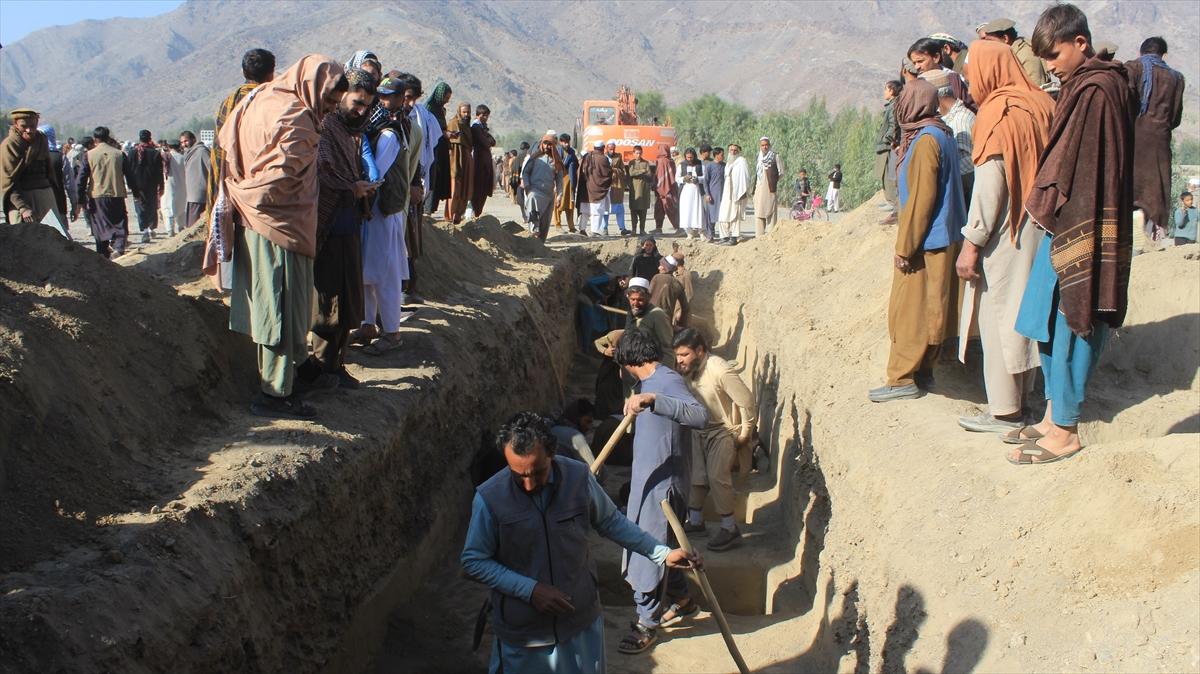
The Afghan Ministry of Defense stated that the strikes targeted civilian areas in Nangarhar province. The attacks particularly affected residential areas in the village of Girdi Kas in the Bihsud district.
Following the strikes, reports indicated that homes were destroyed and search operations were underway among the rubble. Local sources stated that the attack targeted a single family, of whom only five of the 23 members survived. Local Taliban spokesperson Sayed Taib Hamd confirmed that 18 members of that family were killed.
Afghan officials also reported that a religious center in the area was targeted. The Afghan Ministry of Defense stated that the strikes hit “a religious school and residential buildings.”

After the attack in Nangarhar region, Afghanistan, 22 February 2026 - (Anadolu Ajansı)
The strikes also affected Paktika province. Local sources speaking to Tolo News reported that Pakistani warplanes conducted aerial strikes on the Barmal area of Paktika. A guesthouse and a religious school in the districts of Bermal and Urgun were targeted. Local officials and residents stated that these buildings were empty at the time of the attack. Homes in the village of Balish, part of Urgun district, were also reported destroyed.
The Afghan Ministry of Defense confirmed that the attacks in Paktika targeted civilian areas and constituted a violation of Afghanistan’s airspace.
The Afghan Ministry of Defense stated that in the attacks on Nangarhar and Paktika provinces, “many civilians were killed and injured.”
Mevlevi Fazl Rahman Fayyaz, a representative of the Afghan Red Crescent in the Nangarhar regional office, stated that 18 people were killed and many others injured as a result of Pakistan’s strikes.
Sayed Taib Hamd, a local Taliban spokesperson speaking to the BBC, confirmed that 18 people from one family in Bihsud district of Nangarhar were killed.

After the attack in Nangarhar region, Afghanistan, 22 February 2026 - (Anadolu Ajansı)
Pakistan’s Deputy Interior Minister Talal Chaudhry claimed in an interview with Geo News that “at least 70 militants were killed” in the aerial strikes. No evidence has been presented to support Chaudhry’s claim.
Pakistan’s state media reported that the death toll had risen to 80, though no official confirmation of this figure was provided. According to a report in Dawn newspaper, 80 people were killed in the strikes.
Pakistan’s Parliamentary Secretary for Information and Broadcasting Barrister Danyal Chaudhry stated in his remarks that the operation had “successfully neutralized militants involved in attacks on Pakistani soil” and added that “all necessary measures were taken to protect innocent lives.”
The Afghan side has rejected Pakistan’s claims of high numbers of militants killed. Taliban government spokesperson Zabihullah Mujahid stated that Pakistan’s claim of 70 militants killed was “not consistent with the facts.”
In a statement on the X platform, Pakistan’s Ministry of Information and Broadcasting stated that Pakistan carried out “precision targeting based on intelligence to strike seven terrorist camps and hideouts”. The statement emphasized that the operation was a “retaliatory response”.
Pakistan’s Minister of Information, Attaullah Tarar, stated that the military had conducted “intelligence-based, targeted operations.”
Pakistan authorities stated that the strikes targeted Tehreek-i-Taliban Pakistan (TTP), elements designated by Pakistan as Fitna al Khawarij, and affiliated groups. The statement also indicated that members of Islamic State-Khorasan Province (ISKP) were among the targets.

After the attack in Nangarhar region, Afghanistan, 22 February 2026 - (Anadolu Ajansı)
Pakistan’s Ministry of Information and Broadcasting stated that the operation targeted “seven terrorist camps and hideouts belonging to the Pakistan Taliban, known as Fitna al Khawarij (FAK), and affiliated groups, as well as the Islamic State Khorasan Province.”
Pakistan authorities stated that the operation was conducted in response to recent suicide attacks within the country. The Ministry of Information claimed to possess “conclusive evidence” that the recent attacks were directed by leadership based in Afghanistan.
The ministry’s statement indicated that Pakistan expects the interim government in Afghanistan to “fulfill its obligations and prevent its territory from being used by Khawarij and terrorists against Pakistan”. The statement also emphasized that “the security and safety of the Pakistani people come first.”
Pakistan’s President Asif Ali Zardari stated that the aerial strikes were based on the “natural right to defend its population against terrorism.”
Khyber Pakhtunkhwa Governor Faisal Karim Kundi, in a post on X, stated, “The Pakistani people, especially the resilient population of Khyber Pakhtunkhwa, stand firmly alongside our armed forces and security institutions in defending our homeland.” Kundi also declared, “We will not allow forces operating beyond the Afghan border to destabilize our territory.”
The statement further included the assertion that “our sovereignty is non-negotiable, and the people of this country stand shoulder to shoulder with the state to protect it at any cost.”
Pakistan authorities stated that the aerial strikes of 22 February 2026 were linked to recent attacks within the country. Pakistan’s Ministry of Information and Broadcasting reported that over 100 lives were lost in attacks across Pakistan in recent weeks.
The Afghan Ministry of Defense described the attacks as “a blatant violation of national sovereignty, international law, principles of good neighborliness, and Islamic values.”
The ministry further stated, “We hold the Pakistani military responsible for targeting civilians and religious sites. We will respond appropriately and proportionately when the time comes.” The Afghan Ministry of Foreign Affairs summoned Pakistan’s Ambassador to Kabul to protest the attacks.
The ministry’s statement emphasized that protecting Afghan territory is a “Sharia responsibility” and that Pakistan will be held accountable for the consequences of such attacks.
24 February 2026 saw mutual fire exchanges between Pakistani and Afghan forces along the border. The clashes occurred in the Torkham and Tirah border regions. Pakistan’s Prime Minister’s spokesperson for foreign media, Mosharraf Zaidi, stated that the Afghan Taliban administration had “unprovokedly initiated fire” along the Pakistan-Afghanistan border in Torkham and Tirah.
Zaidi stated that “Pakistan’s security forces responded immediately and effectively to the fire and will respond promptly and decisively to any further provocation.” Wragha, Maro Sar, Shahkot and Zakhakhel border areas were reported to have experienced artillery and small arms fire.
A Pakistani official stated that there were no casualties on the Pakistani side but reported that five casualties were confirmed on the Afghan side. Taliban official Zabihullah Norani stated that Pakistani forces opened fire on the Shahkot area of Nazyan district in Nangarhar province, that Afghanistan responded in kind, and that the firing had ceased; he added that there were no casualties on the Afghan side.
24 February 2026 saw a suicide attack on a security checkpoint in the district of Bhakkar in Punjab province, killing two police officers. Three civilians were injured in the attack, including two health workers from a polio eradication team.
On the same day, an armed attack targeted a police vehicle in the Kohat region of Khyber Pakhtunkhwa province. Pakistan’s Interior Minister Mohsin Naqvi announced that at least five police officers and two civilians were killed. Kohat District Police Chief Shehbaz Elahi reported that three others were injured in the attack.
Afghan government spokesperson Zabihullah Mujahid announced on 26 February 2026 that in response to Pakistan’s recent attacks, comprehensive operations had been launched along the recognized border, the Durand Line. Mujahid stated that the operations targeted Pakistani military units. The operations were conducted in the provinces of Nangarhar, Nuristan, Kunar, Khost, Paktia and Paktika.
The statement claimed that control of 15 Pakistani military posts had been seized. It was also claimed that numerous Pakistani soldiers were killed and some captured during the operations.
In a statement on Pakistan’s Ministry of Information’s X account, it was reported that Afghanistan had opened fire on numerous positions along the border. The statement emphasized that “Pakistan’s security forces responded immediately and effectively,” and claimed that Afghan casualties occurred and military equipment was destroyed.
The statement affirmed that all necessary measures would be taken to safeguard Pakistan’s territorial integrity and citizen security. Pakistan’s Minister of Information, Attaullah Tarar, also stated on his X account that Pakistan would continue to respond to Afghanistan’s retaliation.
Tarar claimed that during the clashes, Pakistan’s military operations resulted in 36 Afghan casualties and many more injured. He also recorded that two Pakistani soldiers were killed and three wounded.
Tarar accused the Afghan government and certain Indian social media accounts of spreading “baseless propaganda.”
27 February 2026 saw reports that Pakistan conducted early morning aerial strikes on the Afghan cities of Kabul and Kandahar. A Taliban spokesperson stated that Pakistan had bombed Kabul, Kandahar, and at least one target in Paktia province.
At approximately 01:00 AST on 27 February, multiple explosions occurred in central Kabul. According to a report by Pakistan’s state television PTV News citing security sources, the Pakistani military allegedly destroyed several military installations in Kabul, Kandahar and Paktia.
Smoke rising from targeted areas in Afghanistan’s capital Kabul, 27 February 2026 - (Anadolu Ajansı)
Security sources reported that in the Kandahar airstrikes, a munitions depot and logistics base were destroyed.
On the same day, gunfire and bombardment were reported near Torkham border crossing, one of the key transit points between Afghanistan and Pakistan. Residents near Torkham were reportedly asked to evacuate the area for security reasons. It was announced that procedures for repatriating Afghan nationals had been suspended and border crossings closed due to the clashes.
27 February 2026 saw Pakistan’s Ministry of Information announce that Afghan Taliban forces had opened fire on Pakistan’s Chitral, Khyber, Mohmand, Kurram and Bajaur regions in Khyber Pakhtunkhwa province. The Taliban spokesperson claimed that 55 Pakistani soldiers were killed and 19 military posts captured. The Taliban side also reported that eight Taliban fighters were killed, 11 were injured, and 13 civilians were injured in Nangarhar province.
On the morning of 27 February, the Afghan Taliban administration announced it had conducted aerial strikes against certain military targets inside Pakistan. A Pakistani military official confirmed that drones belonging to the Taliban had targeted three locations.
The targeted locations were:
Pakistan stated that the drones were neutralized and no casualties occurred.
At a press briefing held on 27 February 2026 by Pakistan’s military media wing, it was reported that 274 Taliban elements were killed, over 400 were injured, and 115 tanks, armored personnel carriers and artillery systems were destroyed.
The same statement indicated that 22 different military targets were struck, 83 Taliban positions were destroyed, 17 positions were captured, 12 Pakistani soldiers were killed, and 27 were wounded.
Following reports of explosions in Kabul and ongoing border clashes, Pakistan’s Defense Minister Khawaja Asif declared that an “open war” now existed between Pakistan and the Taliban government in Afghanistan.
In his statement on X, Asif said:
“After the withdrawal of NATO forces, it was expected that peace would return to Afghanistan and that the Taliban would focus on the interests of the Afghan people and regional stability. Instead, the Taliban turned Afghanistan into India’s colony. They gathered terrorists from around the world in Afghanistan and began exporting terrorism. They deprived their own people of fundamental human rights. They stripped women of the rights granted to them by Islam.
Pakistan has made every effort, directly and through friendly nations, to restore normalcy. We pursued intensive diplomacy. But the Taliban have become India’s proxy. Now, as they attempt to make Pakistan the target of aggression, with God’s permission, our armed forces are delivering a firm response. In the past, Pakistan’s role has been positive. For 50 years we hosted five million Afghans. Today, hundreds of thousands of Afghans still make their livelihood on our soil. Our patience has reached its limit. There is now open war between us. There will be a strong response. Pakistan’s army is not a distant power. We are your neighbors; we know you and your strength.”
Pakistan’s Prime Minister Shehbaz Sharif stated that Pakistan has always sought peace but that its armed forces will respond decisively to any aggression. In his official statement, Sharif affirmed that the Pakistani people and armed forces are prepared to defend the country’s security, sovereignty and territorial integrity.
In his statement, he used the phrase: “There will be no slackness in defending the homeland, and every act of aggression will be met with a fitting response.”
In a post on X, Pakistan’s President Asif Ali Zardari stated that Pakistan’s response was “comprehensive and resolute,” and used the phrase “Pakistan will not compromise on peace or territorial integrity.”
He further stated, “Those who mistake our peace for weakness will face a powerful response, and no one will be exempt from this response.”
On 27 February 2026, United Nations Secretary-General Antonio Guterres expressed concern over developments in the border clashes between Afghanistan and Pakistan. In a statement by his spokesperson Stephane Dujarric, Guterres was reported to be closely monitoring reports of cross-border clashes between Afghan and Pakistani security forces.
Guterres called on the parties to comply with their obligations under international law, particularly international humanitarian law, and stressed the need to protect civilians. He also urged both sides to continue resolving their differences through diplomacy.
On 27 February 2026, Iran’s Foreign Minister Abbas Araghchi called on Afghanistan and Pakistan to resolve their differences through dialogue and the principles of good neighborliness. Araghchi emphasized that the month of Ramadan is a time for self-discipline and Islamic solidarity, and stated that Iran is ready to provide necessary support to facilitate constructive dialogue, deepen mutual understanding, and encourage cooperation between Kabul and Islamabad.
Russian Foreign Ministry Spokesperson Maria Zaharova expressed concern over the escalation of armed clashes between Afghanistan and Pakistan. Zaharova stated, “We are concerned about the sharp escalation of armed clashes between the Islamic Emirate of Afghanistan and the Islamic Republic of Pakistan, involving regular army units, air forces and heavy weaponry,” and added that casualties have been reported on both sides.
Russia called on both parties to “abandon this dangerous conflict” and return to negotiations to resolve all disputes through political and diplomatic means. Russia also stated it is prepared to mediate if requested by either side.
On 27 February 2026, Indian Ministry of External Affairs Spokesperson Randhir Jaiswal stated that India “strongly condemned” Pakistan’s aerial strikes on Afghan territory. Jaiswal noted that the attacks occurred during Ramadan and resulted in civilian casualties, including women and children.
In his statement, he used the phrase: “This is another attempt by Pakistan to externalize its internal failures.”
On 27 February 2026, Chinese Foreign Ministry Spokesperson Mao Ning expressed “deep concern” over the clashes along the Pakistan-Afghanistan border. Mao Ning stated that both countries must show restraint, resolve their differences through dialogue and consultation, and return to a ceasefire as soon as possible.
China stated it is engaged in mediation efforts through its own channels and is ready to play a constructive role in reducing tensions. China also called for the protection of the safety of Chinese personnel, projects and institutions in both countries.
Al Jazeera. "Afghanistan promises ‘appropriate response’ after deadly Pakistani strikes." Accessed February 23, 2026. https://www.aljazeera.com/news/2026/2/22/pakistan-carries-out-strikes-in-afghanistan-after-islamabad-suicide-attack
Al Jazeera. “Pakistan Claims at Least 70 Fighters Killed in Strikes Along Afghan Border.” Accessed February 23, 2026. https://www.aljazeera.com/news/2026/2/23/pakistan-claims-at-least-70-fighters-killed-in-strikes-along-afghan-border
Al Jazeera. “Pakistan-Afghanistan live: Islamabad says ‘open war’; jets attack Kabul.” Accessed February 27, 2026. https://www.aljazeera.com/news/liveblog/2026/2/27/live-kabul-bombed-as-pakistan-declares-open-war-on-afghanistan
Al Jazeera. “World Reacts to Eruption of Fighting Between Pakistan, Afghanistan.” Accessed February 27, 2026. https://www.aljazeera.com/news/2026/2/27/world-reacts-to-eruption-of-fighting-between-pakistan-afghanistan
Anadolu Ajansı. "Afganistan, Pakistan’ın Hava Saldırılarında 18 Kişinin Öldüğünü Açıkladı." Accessed February 23, 2026. https://www.aa.com.tr/tr/dunya/afganistan-pakistanin-hava-saldirilarinda-18-kisinin-oldugunu-acikladi/3836883/
Anadolu Ajansı. "Afghanistan Vows Appropriate and Measured Response to Pakistani Strikes." Accessed February 23, 2026. https://www.aa.com.tr/en/asia-pacific/afghanistan-vows-appropriate-and-measured-response-to-pakistani-strikes/3836889/
Anadolu Ajansı. “7 Pakistani Policemen Killed in Separate Attacks.” Accessed February 27, 2026. https://www.aa.com.tr/en/asia-pacific/7-pakistani-policemen-killed-in-separate-attacks/3838603/
Anadolu Ajansı. “Afganistan Yönetimi, Pakistan’ın Hava Saldırılarına Misilleme Yapıldığını Açıkladı.” Accessed February 27, 2026. https://www.aa.com.tr/tr/dunya/afganistan-yonetimi-pakistanin-hava-saldirilarina-misilleme-yapildigini-acikladi/3841173/
Anadolu Ajansı. “Pakistan-Afganistan Sınırındaki Çatışmalar Yatıştı.” Accessed February 27, 2026. https://www.aa.com.tr/tr/dunya/pakistan-afganistan-sinirindaki-catismalar-yatisti/3841407/
Anadolu Ajansı. “Pakistani, Afghan Forces Exchange Fire at Border.” Accessed February 27, 2026. https://www.aa.com.tr/en/asia-pacific/pakistani-afghan-forces-exchange-fire-at-border/3839216/
Associated Press. “Pakistan Launches Border Strikes in Afghanistan After Recent Militant Attack.” YouTube video. Accessed February 23, 2026. https://www.youtube.com/watch?v=LxY1EpDrh8s
BBC News. “Pakistan launches deadly strikes on Afghanistan.” Accessed February 23, 2026. https://www.bbc.com/news/articles/cdxgln3gnd6o
BBC News. “Pakistan strikes Afghan cities as cross-border attacks escalate.” Accessed February 27, 2026. https://www.bbc.com/news/articles/c0j5qx9n887o
Daily News. "Pakistan Launches Deadly Strikes on Afghanistan." Accessed February 23, 2026. https://dailynews.lk/2026/02/23/breaking-news/956057/pakistan-launches-deadly-strikes-on-afghanistan/
Dawn. “‘National security is non-negotiable’: Parliamentary secretary on Afghanistan strikes.” Accessed February 23, 2026. https://www.dawn.com/news/print/1975156
Pakistan–Afghanistan Conflicts (February 2026) is a military escalation between Pakistan and the Taliban government in Afghanistan that occurred between 22–27 February 2026. The escalation began on 22 February with aerial strikes by Pakistan against targets in Afghan territory, followed by mutual artillery fire and ground operations along the border.
The conflicts escalated after Pakistan announced it had targeted specific locations in Afghanistan in response to attacks within its territory, and the Afghan government declared it was responding with retaliatory operations.
Security tensions between Pakistan and Afghanistan have intensified since the Taliban regained power in Afghanistan in August 2021, particularly concerning border security and the activities of armed groups. The Pakistani government asserts that elements of the Tehreek-i-Taliban Pakistan (TTP), which it claims are based on Afghan soil, have carried out attacks against Pakistan.
Islamabad has stated that it has demanded concrete steps from the Taliban government to act against the TTP. The Taliban administration in Afghanistan, however, has stated that the TTP does not operate on its territory.
The central geographical issue in these security disputes is the border between the two countries. The Durand Line is the name given to the 2,640-kilometer border between Pakistan and Afghanistan. It functions as the de facto boundary between the two nations; however, it is not officially recognized by Afghanistan. The line was established by British authorities in the 1890s.
The border encompasses Pashtun tribal areas spread across both countries. Pakistani authorities indicate that the TTP operates within these regions and uses both sides of the border.
Military activity along the border increased following attacks in Pakistan in February 2026. On 6 February 2026, a suicide attack targeted the Imam Bargah Khadijah-tul-Kubra Shia mosque in Islamabad, killing at least 36 people.
In the following days, a vehicle-borne explosive attack targeted a security checkpoint in the city of Bajaur in the Khyber Pakhtunkhwa province, killing 11 soldiers and one child. On 21 February 2026, an attack on a security convoy in the city of Bannu in Khyber Pakhtunkhwa killed two soldiers.
24 February 2026 saw a suicide attack on a checkpoint in Bhakkar district of Punjab province, killing two police officers. On the same day, an attack on a police vehicle in the Kohat region of Khyber Pakhtunkhwa killed at least five police officers and two civilians.
Pakistan’s Ministry of Information and Broadcasting reported that over 100 people have been killed in attacks across the country in recent weeks.
In response to these developments, Pakistan launched aerial strikes against targets in Afghanistan on 22 February 2026.
The Afghan Ministry of Defense stated that the strikes targeted civilian areas in Nangarhar province. The attacks particularly affected residential areas in Girdi Kas village of Bihsud district.
Following the strikes, reports emerged of destroyed homes and search operations underway in the rubble. Local sources indicated that the attack targeted a single family, leaving only five of the 23 family members alive. Local Taliban spokesperson Sayed Taib Hamd confirmed that 18 members of that family were killed.
Afghan officials also reported that a religious center in the area was targeted. The Afghan Ministry of Defense stated that the strikes hit “a religious school and residential buildings.”
After the attack in Nangarhar region, Afghanistan, 22 February 2026 - (Anadolu Ajansı)
The strikes also affected Paktika province. Local sources speaking to Tolo News reported that Pakistani warplanes conducted aerial strikes on the Barmal area of Paktika. In the districts of Bermal and Urgun in Paktika, a guesthouse and a religious school were targeted. Local officials and residents stated that these buildings were unoccupied at the time of the attack. Homes in the village of Balish, part of Urgun district, were also reported destroyed.
The Afghan Ministry of Defense confirmed that the attacks in Paktika targeted civilian areas and constituted a violation of Afghanistan’s airspace.
The Afghan Ministry of Defense stated that in the strikes on Nangarhar and Paktika provinces, “numerous civilians were killed and injured.”
Mevlevi Fazl Rahman Fayyaz, a representative of the Afghan Red Crescent in the Nangarhar regional office, stated that 18 people were killed and many others injured as a result of Pakistan’s attack.
Sayed Taib Hamd, a local Taliban spokesperson speaking to BBC, confirmed that 18 people from a single family in Bihsud district of Nangarhar were killed.
After the attack in Nangarhar region, Afghanistan, 22 February 2026 - (Anadolu Ajansı)
Pakistan’s Deputy Interior Minister Talal Chaudhry claimed in an interview with Geo News that “at least 70 militants were killed” in the airstrikes. No evidence has been presented to support Chaudhry’s claim.
Pakistan’s state media reported that the death toll had risen to 80, although no official confirmation of this figure was provided. According to a report in Dawn newspaper, 80 people were killed in the strikes.
Pakistan’s Parliamentary Secretary for Information and Broadcasting Barrister Danyal Chaudhry stated in his remarks that the operation had “successfully neutralized militants involved in attacks on Pakistani soil” and added that “all necessary measures were taken to protect innocent lives.”
The Afghan side has rejected Pakistan’s claims of high numbers of militants killed. Taliban government spokesperson Zabihullah Mujahid stated that Pakistan’s claim of 70 militants killed was “not consistent with the facts.”
In a statement on the X platform, Pakistan’s Ministry of Information and Broadcasting stated that Pakistan had carried out “precision strikes based on intelligence targeting seven terrorist camps and hideouts”. The statement emphasized that the operation was a “retaliatory response”.
Pakistan’s Minister of Information, Attaullah Tarar, stated that the military had conducted “intelligence-based, targeted operations.”
Pakistani authorities stated that the strikes targeted the Tehreek-i-Taliban Pakistan (TTP), elements designated by Pakistan as Fitna al Khawarij, and affiliated groups. The statement also indicated that members of Islamic State-Khorasan Province (ISKP) were among the targets.
After the attack in Nangarhar region, Afghanistan, 22 February 2026 - (Anadolu Ajansı)
Pakistan’s Ministry of Information and Broadcasting stated that the operation targeted “seven terrorist camps and hideouts belonging to the Pakistan Taliban, known as Fitna al Khawarij (FAK), and affiliated groups, as well as the Islamic State Khorasan Province.”
Pakistani authorities stated that the operation was conducted in response to recent suicide attacks within Pakistan. Pakistan’s Ministry of Information claimed to possess “conclusive evidence” that the recent attacks were directed by leadership in Afghanistan.
The ministry’s statement indicated that Pakistan expects the interim government in Afghanistan to “fulfill its obligations and prevent its territory from being used by Khawarij and terrorists against Pakistan”. The statement also emphasized that “the security and safety of the Pakistani people come first.”
Pakistan’s President Asif Ali Zardari stated that the airstrikes were based on the “natural right to defend the population against terrorism.”
Khyber Pakhtunkhwa Governor Faisal Karim Kundi, in a post on X, stated, “The Pakistani people, especially the resilient population of Khyber Pakhtunkhwa, stand firmly alongside our armed forces and security institutions in defending our homeland.” Kundi also declared, “We will not allow forces operating beyond the Afghan border to destabilize our territory.”
The statement further included the assertion that “our sovereignty is non-negotiable, and the people of this country stand shoulder to shoulder with the state to protect it at any cost.”
Pakistani authorities stated that the 22 February 2026 airstrikes were directly linked to recent attacks within the country. Pakistan’s Ministry of Information and Broadcasting reported that over 100 lives had been lost in attacks across Pakistan in recent weeks.
The Afghan Ministry of Defense characterized the attacks as “a blatant violation of national sovereignty, international law, principles of good neighborliness, and Islamic values.”
The ministry further stated, “We hold the Pakistani military responsible for targeting civilians and religious sites. We will respond to these attacks with a measured and appropriate response when the time comes.” The Afghan Ministry of Foreign Affairs summoned Pakistan’s ambassador in Kabul to protest the strikes.
The ministry’s statement emphasized that protecting Afghan territory is a “Sharia obligation” and that Pakistan will be held accountable for the consequences of such attacks.
24 February 2026 saw mutual fire exchanged between Pakistani and Afghan forces along the border. The clashes occurred in the Torkham and Tirah areas of the Pakistan–Afghanistan border. Pakistan’s spokesperson for foreign media, Mosharraf Zaidi, stated that the Afghan Taliban government had “unprovokedly initiated fire” along the border in Torkham and Tirah.
Zaidi stated that “Pakistan’s security forces responded immediately and effectively to the fire and will respond promptly and decisively to any further provocation.” Wragha, Maro Sar, Shahkot and Zakhakhel border areas were reported to have experienced artillery and gunfire.
A Pakistani official stated that there were no casualties on the Pakistani side but indicated that reports suggested five casualties on the Afghan side. Taliban official Zabihullah Norani stated that Pakistani forces had opened fire on Shahkot area in Nazyan district of Nangarhar province, that Afghanistan had responded in kind, and that the firing had ceased, adding that there were no casualties on the Afghan side.
24 February 2026 saw a suicide attack on a security checkpoint in Bhakkar district of Punjab province, killing two police officers. Three civilians were injured in the attack, including two health workers from a polio eradication team.
On the same day, an armed attack targeted a police vehicle in the Kohat region of Khyber Pakhtunkhwa. Pakistan’s Interior Minister Mohsin Naqvi announced that at least five police officers and two civilians were killed. Kohat District Police Chief Shehbaz Elahi reported that three others were injured in the attack.
Afghan government spokesperson Zabihullah Mujahid announced on 26 February 2026 that in response to Pakistan’s recent attacks, comprehensive operations had been launched along the recognized border, the Durand Line. Mujahid stated that the operations targeted Pakistani military units. The operations were conducted in the provinces of Nangarhar, Nuristan, Kunar, Khost, Paktia and Paktika.
The statement claimed that control had been seized over 15 Pakistani military outposts. It was alleged that numerous Pakistani soldiers were killed and some captured during the operations.
In a statement on X by Pakistan’s Ministry of Information, it was reported that Afghanistan had opened fire on numerous points along the border. The statement emphasized that “Pakistan’s security forces responded immediately and effectively,” and claimed that Afghan casualties had occurred and military equipment had been destroyed.
The statement affirmed that all necessary measures would be taken to safeguard Pakistan’s territorial integrity and the safety of its citizens. Pakistan’s Minister of Information, Attaullah Tarar, also stated on X that Pakistan would continue to respond to Afghanistan’s retaliation.
Tarar claimed that during Pakistan’s operations, 36 people were killed on the Afghan side and many others were injured. He recorded that two Pakistani soldiers were killed and three were wounded during the clashes.
Tarar accused the Afghan government and certain Indian social media accounts of engaging in “baseless propaganda.”
27 February 2026 saw Pakistan launch early morning aerial strikes against Kabul and Kandahar in Afghanistan. A Taliban spokesperson stated that Pakistan had bombed Kandahar, Kabul and at least one target in Paktia province.
At approximately 01:00 AST on 27 February, multiple explosions occurred in central Kabul. According to a report by Pakistan’s state television PTV News citing security sources, Pakistan’s military allegedly destroyed several military facilities in Kabul, Kandahar and Paktia.
Smoke rising from targeted areas in Afghanistan’s capital Kabul, 27 February 2026 - (Anadolu Ajansı)
Security sources reported that in the Kandahar airstrikes, a munitions depot and logistics base were destroyed. On the same day, gunfire and bombardments were reported near Torkham border crossing, one of the key transit points between Afghanistan and Pakistan. Residents near Torkham were reportedly asked to evacuate the area for security reasons. It was announced that procedures for repatriating Afghan nationals had been suspended and crossings had been closed due to the clashes.
27 February 2026 saw Pakistan’s Ministry of Information announce that Afghan Taliban forces had opened fire on Pakistan’s Chitral, Khyber, Mohmand, Kurram and Bajaur regions in Khyber Pakhtunkhwa province. The Taliban spokesperson claimed that 55 Pakistani soldiers were killed and 19 military outposts captured. The Taliban side also stated that eight Taliban fighters were killed, 11 others were wounded, and 13 civilians were injured in Nangarhar province.
On 27 February 2026, the Afghan Ministry of Defense announced via social media that its air force had conducted “retaliatory” aerial strikes against various areas of Pakistan at 11:00 local time.
The ministry’s statement indicated that the strikes targeted a military camp near Pakistan’s Faisalabad city, a military barracks in the city of Nowshera, and areas of Jamrud and Abbottabad. The statement asserted that Pakistan’s military centers, facilities and installations were targeted in these strikes.
Pakistan’s Defense Minister Khawaja Asif, following reports of explosions in Kabul and ongoing clashes along the border, declared that an “open war” now existed between Pakistan and the Taliban government in Afghanistan.
In a post on X, Asif stated:
“After the withdrawal of NATO forces, it was expected that peace would return to Afghanistan and that the Taliban would focus on the interests of the Afghan people and regional stability. Instead, the Taliban turned Afghanistan into a colony of India. They gathered terrorists from around the world in Afghanistan and began exporting terrorism. They deprived their own people of fundamental human rights. They stripped women of the rights granted to them by Islam.
Pakistan has shown all efforts to maintain stability, directly and through friendly countries. We pursued intensive diplomacy. But the Taliban became a proxy for India. Now, when they attempt to make Pakistan the target of aggression, with God’s permission, our armed forces are delivering a firm response. Pakistan’s role in the past has been positive. For 50 years we hosted five million Afghans. Today, hundreds of thousands of Afghans still make their livelihood on our soil. Our patience has reached its limit. There is now open war between us. A strong response will follow. Pakistan’s military is not a distant power. We are your neighbor; we know you and your strength.”
Pakistan’s Prime Minister Shehbaz Sharif stated that Pakistan has always sought peace but that its armed forces will firmly resist any aggression. In his official statement, Sharif affirmed that the Pakistani people and armed forces are prepared to defend the country’s security, sovereignty and territorial integrity.
He added, “There will be no slackness in defending the homeland, and every act of aggression will be met with an appropriate response.”
Pakistan’s President Asif Ali Zardari, in a post on X, stated that Pakistan’s response was “comprehensive and resolute,” and added that “Pakistan will not compromise on peace or territorial integrity.”
He further stated, “Those who mistake our peace for weakness will face a strong response, and no one will be exempt from this response.”
According to The Express Tribune, on 27 February, Director General of the Pakistan Armed Forces’ Inter-Services Public Relations (ISPR), Lieutenant General Ahmed Sherif Chaudhry, issued a press statement regarding the attacks between the two countries. Chaudhry stated that 22 military targets were struck, 83 Taliban positions were destroyed, 17 positions were captured, 12 Pakistani soldiers were killed and 27 were wounded.
The same statement reported that 274 Taliban elements were killed, over 400 were injured, and 115 tanks, armored personnel carriers and artillery systems were destroyed.
Afghan government spokesperson Zabihullah Mujahid, in a press conference on 27 February, declared that “Pakistan is the initiator of war”, accusing Pakistan of “violating Afghan airspace” and “bombing settlements, including civilian targets, in Jalalabad and Paktika regions, triggering the latest escalation.”
Mujahid characterized Afghanistan’s counterattacks as “legitimate self-defense,” stating that Kabul “continues to support dialogue,” adding, “We have always insisted on a peaceful solution and still seek to resolve this issue through negotiations.”
Mujahid, noting that the “TTP issue” is Pakistan’s internal matter and that the conflict predates the Taliban’s return to power in Kabul, stated, “It is unreasonable for Pakistan to impose its internal problems on Afghanistan.”
Mujahid noted that Kabul’s administration aims to maintain peaceful relations with neighboring countries, including Pakistan and India, “without being under the control of any country,” adding, “Our good relations with India are not directed against Pakistan.”
On 27 February 2026, United Nations Secretary-General Antonio Guterres expressed concern over developments in the border clashes between Afghanistan and Pakistan. In a statement by Guterres’s spokesperson Stephane Dujarric, it was noted that Guterres was closely monitoring reports of cross-border clashes between Afghan and Pakistani security forces.
Guterres called on both parties to comply with their obligations under international law, particularly international humanitarian law, and stressed the need to protect civilians. He also urged both sides to continue resolving their differences through diplomacy.
On 27 February 2026, Iran’s Foreign Minister Abbas Araghchi called on Afghanistan and Pakistan to resolve their differences through dialogue and the principles of good neighborliness. Araghchi emphasized that the month of Ramadan is a period of spiritual discipline and Islamic solidarity, and stated that Iran is ready to provide necessary support to facilitate constructive dialogue, deepen mutual understanding and encourage cooperation between Kabul and Islamabad.
Russian Foreign Ministry Spokesperson Maria Zaharova expressed concern over the sharp escalation of armed clashes between Afghanistan and Pakistan. Zaharova stated, “We are concerned about the sharp escalation of armed clashes between the Islamic Emirate of Afghanistan and the Islamic Republic of Pakistan, involving regular military units, air forces and heavy weaponry,” and added that casualties had been reported on both sides.
Russia called on both parties to “abandon this dangerous conflict” and return to negotiations to resolve all disputes through political and diplomatic means. Russia also stated it was prepared to mediate if requested by either side.
On 27 February 2026, Indian Ministry of External Affairs Spokesperson Randhir Jaiswal strongly condemned Pakistan’s aerial strikes against Afghan territory. Jaiswal noted that the attacks occurred during the holy month of Ramadan and resulted in civilian casualties, including women and children.
In his statement, he added, “This is another attempt by Pakistan to externalize its internal failures.”
On 27 February 2026, Chinese Foreign Ministry Spokesperson Mao Ning expressed “deep concern” over the clashes along the Pakistan–Afghanistan border. Mao Ning stated that both countries must demonstrate calm and restraint, resolve their differences through dialogue and consultation, and return to a ceasefire as soon as possible.
China indicated that it is engaged in mediation efforts through its own channels and is ready to play a constructive role in de-escalating tensions. China also called for the protection of the safety of Chinese personnel, projects and institutions in both countries.
Al Jazeera. "Blasts Heard in Kabul as Pakistan-Afghanistan Conflict Continues." Al Jazeera, March 1, 2026. Accessed March 2, 2026. https://www.aljazeera.com/news/2026/3/1/blasts-heard-in-kabul-as-pakistan-afghanistan-conflict-continues
Anadolu Ajansı. "Afganistan Pakistan’a Yeni Hava Saldırıları Düzenledi." Anadolu Ajansı. Accessed March 2, 2026. https://www.aa.com.tr/tr/dunya/afganistan-pakistana-yeni-hava-saldirilari-duzenledi/3841407
Anadolu Ajansı. "Afganistan Yönetimi: Pakistan ile Karşılıklı Saldırılarda 13 Afganistan Askeri Hayatını Kaybetti." Anadolu Ajansı. Accessed March 2, 2026. https://www.aa.com.tr/tr/dunya/afganistan-yonetimi-pakistan-ile-karsilikli-saldirilarda-13-afganistan-askeri-hayatini-kaybetti/3842081
Anadolu Ajansı. "Afganistan Yönetimi: Pakistan ile Karşılıklı Saldırılarda 52 Kişi Hayatını Kaybetti." Anadolu Ajansı. Accessed March 2, 2026. https://www.aa.com.tr/tr/dunya/afganistan-yonetimi-pakistan-ile-karsilikli-saldirilarda-52-kisi-hayatini-kaybetti/3844610
Anadolu Ajansı. "Afganistan: Pakistan’daki Bazı Askeri Tesisler Hedef Alındı." Anadolu Ajansı. Accessed March 2, 2026. https://www.aa.com.tr/tr/dunya/afganistan-pakistandaki-bazi-askeri-tesisler-hedef-alindi/3845204
Anadolu Ajansı. "Afganistan: Pakistan’ın Bagram Hava Üssüne Yönelik Hava Saldırısı Engellendi." Anadolu Ajansı. Accessed March 2, 2026. https://www.aa.com.tr/tr/dunya/afganistan-pakistanin-bagram-hava-ussune-yonelik-hava-saldirisi-engellendi/3845031
Anadolu Ajansı. "Afghanistan-Pakistan Cross-Border Tensions Continue." Anadolu Ajansı, March 2, 2026. Accessed March 2, 2026. https://www.aa.com.tr/en/asia-pacific/afghanistan-pakistan-cross-border-tensions-continue/3846605
Anadolu Ajansı. "Pakistan-Afganistan Sınırındaki Çatışmalar Devam Ediyor." Anadolu Ajansı. Accessed March 2, 2026. https://www.aa.com.tr/tr/dunya/pakistan-afganistan-sinirindaki-catismalar-devam-ediyor/3842993
Anadolu Ajansı. "Pakistan: Operasyonlarda Afganistan Tarafında 435 Kişi Öldü, 630’dan Fazla Kişi Yaralandı." Anadolu Ajansı. Accessed March 2, 2026. https://www.aa.com.tr/tr/dunya/pakistan-operasyonlarda-afganistan-tarafinda-435-kisi-oldu-630dan-fazla-kisi-yaralandi/3846553
Daily Sabah. "Pakistan Says Airstrikes Inside Afghanistan Killed More Than 331 Afghan Forces." Daily Sabah, March 2, 2026. Accessed March 2, 2026. https://www.dailysabah.com/world/asia-pacific/pakistan-says-airstrikes-inside-afghanistan-killed-more-than-331-afghan-forces
Reuters. "Blasts Heard in Kabul Amid Clashes Between Afghan, Pakistani Forces." Reuters, March 1, 2026. Accessed March 2, 2026. https://www.reuters.com/world/asia-pacific/blasts-heard-kabul-amid-clashes-between-afghan-pakistani-forces-2026-03-01/
The Guardian. "Afghanistan-Pakistan Airstrikes: Bagram Airbase Targeted Amid Escalation." The Guardian, March 2, 2026. Accessed March 2, 2026. https://www.theguardian.com/world/2026/mar/02/afghanistan-pakistan-airstrikes-bagram-airbase
On 3 March 2026, mutual attacks occurred along the border between Pakistan and Afghanistan. Pakistan’s Minister of Information Attaullah Tarar stated in a social media announcement that the Taliban administration in Afghanistan had launched attacks on various points in the Khyber Pakhtunkhwa and Balochistan provinces.
Tarar said that Afghan Taliban elements had carried out attacks on 16 locations in northern Balochistan, specifically in the Killa Saifullah, Noshki and Chaman areas, while Pakistani security forces responded at 25 locations. The statement claimed that the attacks were repelled and that during the clashes, 27 people on the Afghan side were killed and many others were wounded.
Pakistani authorities also reported that a further 40 people lost their lives in 12 separate attacks in Khyber Pakhtunkhwa province. In total, Pakistan stated that 67 people on the Afghan side were killed during the day’s clashes. It was also reported that one Pakistani soldier was killed and five others were wounded.

In Landi Kotal, Khyber Pakhtunkhwa province, Pakistan, local residents and security forces conduct inspections after a short-range missile fired from Afghanistan struck a house in a village, 5 March 2026 - (Anadolu Agency)
On 3 March 2026, Pakistan updated its overall casualty and damage figures for operations conducted against Afghanistan. Pakistan’s Minister of Information Attaullah Tarar announced that, as part of these operations, a total of 464 people on the Afghan side were killed and the number of wounded exceeded 665.
The statement indicated that 188 checkpoints and 192 tanks, armored vehicles and artillery systems were destroyed. It was also noted that 56 locations in Afghanistan were targeted by air strikes.
On 3 March 2026, international media reported that Pakistan had targeted Afghanistan’s Bagram Air Base. According to a report by the New York Times based on satellite imagery, the Pakistani military conducted an air strike on the base on 1 March, resulting in the complete destruction of at least one aircraft hangar and two large storage facilities.
Local sources in Bagram town reported hearing two explosion sounds in the early morning hours. The Afghan government, however, previously stated that the attempted attack was thwarted by its air defense systems.
On 3 March 2026, diplomatic contacts continued. A telephone conversation was held between Türkiye President Recep Tayyip Erdoğan and Pakistan Prime Minister Shehbaz Sharif.
During the call, bilateral relations between Türkiye and Pakistan and regional developments were discussed. Erdoğan expressed his condemnation of the terrorist attacks in Pakistan and affirmed that Türkiye would continue to support Pakistan’s fight against terrorism. It was also stated that Türkiye was prepared to contribute to the re-establishment of the earlier agreed ceasefire through its initiatives.
Erdoğan emphasized the importance of resolving the ongoing conflict in the region through diplomacy and stated that Türkiye was ready to support efforts in this direction.
Pakistan Prime Minister Shehbaz Sharif, in his statement, noted that both sides had agreed on reducing tensions and encouraging dialogue. Sharif stated that contacts would continue with the aim of ensuring regional stability.

In Landi Kotal, Khyber Pakhtunkhwa province, Pakistan, local residents and security forces conduct inspections after a short-range missile fired from Afghanistan struck a house in a village, 5 March 2026 - (Anadolu Agency)
On 4 March 2026, the Afghan administration issued comprehensive statements regarding ongoing clashes with Pakistan. Deputy Afghan Government Spokesperson Hamdullah Fitrat, in a press statement, stated that conflict with Pakistan has never been a first option.
Fitrat announced that 110 people were killed and 123 were wounded as a result of Pakistan’s attacks. He also stated that 350 homes in Paktiya, Paktika, Host, Kabul, Nangarhar, Kunar and Kandahar provinces were partially or completely destroyed. As a result of these attacks, 8,400 families were displaced.
Afghan Ministry of Defense Spokesperson Enayatullah Khawarazmi, in his statement, said that approximately 150 Pakistani soldiers were killed and 35 security checkpoints were targeted. Khawarazmi also reported that 28 Afghan soldiers were killed and 42 were wounded during the clashes.
On 4 March 2026, Pakistan released new data regarding its operations against Afghanistan. Pakistan’s Minister of Information Attaullah Tarar announced that, as part of these operations, a total of 481 people on the Afghan side were killed and the number of wounded exceeded 696.
The statement indicated that 226 checkpoints and 198 tanks, armored vehicles and artillery systems on the Afghan side were destroyed. It was also stated that Pakistani forces had captured 35 checkpoints.

In Landi Kotal, Khyber Pakhtunkhwa province, Pakistan, local residents and security forces conduct inspections after a short-range missile fired from Afghanistan struck a house in a village, 5 March 2026 - (Anadolu Agency)
On 6 March 2026, Pakistan released the most recent casualty and damage figures for its operations against Afghanistan. Pakistan’s Minister of Information Attaullah Tarar, in his statement, said that, as part of these operations, a total of 527 people on the Afghan side were killed and the number of wounded exceeded 755.
The statement indicated that 237 checkpoints and 205 tanks, armored vehicles and artillery systems on the Afghan side were destroyed. It was also stated that Pakistani forces had captured 38 checkpoints.
On 6 March 2026, United Nations High Commissioner for Human Rights Volker Türk issued a written statement regarding the clashes between Afghanistan and Pakistan. Türk stated that the clashes had further worsened the humanitarian situation in the region.
The statement noted that since the intensification of clashes, a total of 56 Afghan civilians had been killed, including 24 children and six women, and 129 others were wounded. It was also reported that as a result of the latest developments, approximately 66,000 people had been displaced.
Türk emphasized that civilians on both sides of the border had been forced to abandon their homes due to airstrikes, heavy artillery fire and armed clashes. He called on both parties to reduce tensions, protect civilians and comply with international humanitarian law.
It was also stated that independent and comprehensive investigations into the violations were necessary and that difficulties in delivering humanitarian aid to the region were deepening the current crisis. Türk reported that approximately 22 million people, nearly half of Afghanistan’s population, required humanitarian assistance.
On 8 March 2026, Pakistan released updated casualty and damage figures for its operations against Afghanistan. Pakistan’s Minister of Information Attaullah Tarar, in his statement, said that, as part of these operations, a total of 583 people on the Afghan side were killed and the number of wounded exceeded 795.
The statement indicated that 242 checkpoints and 213 tanks, armored vehicles and artillery systems on the Afghan side were destroyed. It was also stated that 64 locations had been targeted by air strikes.
Tarar reiterated that, as previously stated, Pakistani forces had captured 38 checkpoints.
As of 8 March 2026, data on the humanitarian impact of the clashes were also updated. The Afghan administration announced that 110 people were killed and 123 were wounded as a result of Pakistan’s attacks.
According to United Nations data, approximately 66,000 people in Afghanistan have been displaced due to the clashes.
Al Jazeera. "Pakistan-Afghanistan Updates: Deadly Cross-Border Fighting Intensifies." Accessed March 10, 2026. https://www.aljazeera.com/news/liveblog/2026/2/27/live-kabul-bombed-as-pakistan-declares-open-war-on-afghanistan
Anadolu Ajansı. "Afganistan Yönetimi: Pakistan ile Çatışma Hiçbir Zaman İlk Seçeneğimiz Değil." Accessed March 10, 2026. https://www.aa.com.tr/tr/dunya/afganistan-yonetimi-pakistan-ile-catisma-hicbir-zaman-ilk-secenegimiz-degil/3849146#
Anadolu Ajansı. "Cumhurbaşkanı Erdoğan, Pakistan Başbakanı Şerif ile Telefonda Görüştü." Accessed March 10, 2026. https://www.aa.com.tr/tr/gundem/cumhurbaskani-erdogan-pakistan-basbakani-serif-ile-telefonda-gorustu/3848565#
Anadolu Ajansı. "Pakistan: Afganistan’ın Saldırılarında Karşı Taraftan 67 Kişi Öldürüldü." Accessed March 10, 2026. https://www.aa.com.tr/tr/dunya/pakistan-afganistanin-saldirilarinda-karsi-taraftan-67-kisi-olduruldu/3847859#
Anadolu Ajansı. "Pakistan: Operasyonlarda Afganistan Tarafında 481 Kişi Öldü." Accessed March 10, 2026. https://www.aa.com.tr/tr/dunya/pakistan-operasyonlarda-afganistan-tarafinda-481-kisi-oldu/3850077#
Anadolu Ajansı. "Pakistan: Operasyonlarda Afganistan Tarafında 527 Kişi Hayatını Kaybetti." Accessed March 10, 2026. https://www.aa.com.tr/tr/dunya/pakistan-operasyonlarda-afganistan-tarafinda-527-kisi-hayatini-kaybetti/3852779#
Anadolu Ajansı. "Pakistan: Operasyonlarda Afganistan Tarafında Toplam 464 Kişi Öldü." Accessed March 10, 2026. https://www.aa.com.tr/tr/dunya/pakistan-operasyonlarda-afganistan-tarafinda-toplam-464-kisi-oldu/3848299#
On 10 March 2026, it was alleged that the Afghan military launched attacks against Pakistani military posts along the Durand Line, which constitutes the de facto border with Pakistan. Reports based on sources in Kabul suggested that Afghan forces targeted Pakistani military positions along the border in Dand Patan district of Paktia province.
On the same day, reports indicated that a Pakistani artillery shell struck a house in the Kot area of Dand Patan district. It was claimed that one person was killed and many others were injured in the incident.

Afghanistan’s capital Kabul after Pakistan’s attacks, 13 March 2026 – (Anadolu Agency)
On 10 March 2026, United Nations (UN) officials conducted a comprehensive assessment of the humanitarian impact of the clashes. Tajudeen Oyewale, Representative of the United Nations Children’s Fund (UNICEF) in Afghanistan, stated that Afghan children returning from Iran are facing uncertainty and increasing humanitarian needs.
Oyewale emphasized that conflicts in the Middle East pose urgent risks to children beyond borders and highlighted the difficult conditions Afghan families encounter during their return to the country. He noted that many mothers arrive at reception centers exhausted and in urgent need of assistance with their children, and warned that the risks faced by children are increasing as returns rise.
According to available data, approximately 3 million Afghans have returned to the country from neighboring countries, primarily Iran and Pakistan, over the past year alone, with about 60 percent of this group being families with children.
Oyewale also stressed the need to protect and support children at every stage and affirmed that UNICEF is prepared to continue its support activities in this regard.
Arafat Jamal, Representative of the United Nations High Commissioner for Refugees (UNHCR) in Afghanistan, stated in his remarks that returns to Afghanistan have accelerated due to conflicts in the Middle East. Jamal noted that since the beginning of the year, approximately 110,000 Afghans have returned from Iran and that since the outbreak of hostilities, an average of 1,700 people per day have returned to the country.
It was also reported that over the past two years, more than 5 million Afghans have returned from neighboring countries, with approximately 1.9 million returning from Iran alone in 2025.

Afghanistan’s capital Kabul after Pakistan’s attacks, 13 March 2026 – (Anadolu Agency)
On 12 March 2026, the Afghan government announced that ongoing clashes with Pakistan had resulted in civilian casualties. Deputy Government Spokesperson Hamdullah Fitrat stated that in clashes in the Host (Khost) region of Afghanistan, four civilians were killed and three others injured.
On 13 March 2026, the Afghan government announced that Pakistan had launched widespread attacks across Afghanistan. Government Spokesperson Zabihullah Mujahid stated that Pakistan had bombed not only the capital Kabul but also various regions including Kandahar, Paktia, and Paktika.
The statement indicated that civilian residential areas were targeted, resulting in civilian casualties including women and children. According to local sources, at least four civilians were killed, 25 others were injured, and four homes were completely destroyed in these attacks.
The Afghan government condemned these attacks in the strongest terms and declared that these actions would not go unanswered.
On 13 March 2026, the Afghan government announced it had launched retaliatory operations against Pakistan. The Afghan Ministry of Defense stated that its air forces targeted strategic military facilities in the Kohat region of Pakistan’s Khyber Pakhtunkhwa province.
The statement further indicated that command centers along the Durand Line were targeted and that the attacks had caused heavy casualties and significant material losses.
The ministry also announced that a military facility in Islamabad, Pakistan’s capital, had been targeted by an unmanned aerial vehicle (UAV).
On 13 March 2026, Pakistan shared new data regarding its operations against Afghanistan. Information Minister Attaullah Tarar stated that during the operations, 663 armed elements of Afghan security forces were killed and more than 887 others were wounded.
The statement also claimed that 249 Afghan checkpoints and 224 tanks, armored vehicles, and artillery systems had been destroyed. Additionally, Pakistan forces reportedly captured 44 outposts.
On 13 March 2026, the United Nations Assistance Mission in Afghanistan (UNAMA) released updated figures on civilian casualties from the fighting. The statement reported that between 26 February and 13 March, 75 civilians were killed and 193 injured in Afghanistan.
UNAMA also noted that in Pakistan’s recent attacks on Kabul, four civilians were killed and 14 others injured. The United Nations called on both parties to end hostilities and prioritize the protection of civilians.

Afghanistan’s capital Kabul after Pakistan’s attacks, 13 March 2026 – (Anadolu Agency)
On 14 March 2026, the Pakistani military announced that unmanned aerial vehicles (UAVs) attributed to Afghanistan had been shot down across various regions of the country. The Pakistan Armed Forces’ Inter-Services Public Relations (ISPR) stated that several UAVs were neutralized in the Quetta, Kohat, and Rawalpindi areas.
The statement indicated that these UAVs failed to reach their intended targets. However, debris from the downed UAVs reportedly caused injuries to two children in Quetta and one civilian each in Kohat and Rawalpindi.
On 14 March 2026, the Afghan government announced it had launched retaliatory strikes against Pakistan. The Afghan Ministry of Defense stated that a Pakistani military outpost had been targeted. It was reported that 14 Pakistani soldiers were killed and 11 others wounded in these attacks.
On 15 March 2026, it was reported that the Pakistani military conducted nighttime airstrikes against Afghanistan’s Kandahar province. According to security sources, the strikes targeted shelters and military infrastructure linked to the Pakistani Taliban (TTP).
The statements indicated that shelters and military facilities were hit, and that a tunnel housing technical equipment had also been targeted. Pakistan emphasized that operations would continue until all targets were fully neutralized.
On 15 March 2026, Pakistan released the highest casualty figures to date from its operations against Afghanistan. Information Minister Attaullah Tarar announced that during the operations, 684 armed elements of Afghan security forces were killed and more than 912 others were wounded.
The statement further indicated that approximately 300 Afghan checkpoints and 229 tanks, armored vehicles, and artillery systems had been destroyed, and that 73 locations had been targeted from the air.
Al Jazeera. "Afghanistan Accuses Pakistan of Air Attacks on Homes in Kabul, Kandahar." Accessed March 17, 2026. https://www.aljazeera.com/news/2026/3/13/afghanistan-accuses-pakistan-of-air-attacks-on-homes-in-kabul-kandahar
Anadolu Ajansı. "Afganistan, Pakistan ile Yaşanan Yeni Çatışmalarda 4 Sivilin Öldüğünü Açıkladı." Accessed March 17, 2026. https://www.aa.com.tr/tr/dunya/afganistan-pakistan-ile-yasanan-yeni-catismalarda-4-sivilin-oldugunu-acikladi/3861533#
Anadolu Ajansı. "Afganistan, Sınır Çatışmalarında 14 Pakistan Askerinin Öldüğünü Açıkladı." Accessed March 17, 2026. https://www.aa.com.tr/tr/dunya/afganistan-sinir-catismalarinda-14-pakistan-askerinin-oldugunu-acikladi/3864702#
Anadolu Ajansı. "Afganistan: Pakistan, Başkent Kabil ve Diğer Bölgelerimizi Hedef Aldı." Accessed March 17, 2026. https://www.aa.com.tr/tr/dunya/afganistan-pakistan-baskent-kabil-ve-diger-bolgelerimizi-hedef-aldi/3862653#
Anadolu Ajansı. "Afganistan’ın Sınır Hattında Bulunan Pakistan Askeri Noktalarını Hedef Aldığı İddia Edildi." Accessed March 17, 2026. https://www.aa.com.tr/tr/dunya/afganistanin-sinir-hattinda-bulunan-pakistan-askeri-noktalarini-hedef-aldigi-iddia-edildi/3857577#
Anadolu Ajansı. "Pakistan ile Afganistan Arasında Süren Çatışmalarda Kayıp Sayısı Artıyor." Accessed March 17, 2026. https://www.aa.com.tr/tr/dunya/pakistan-afganistan-arasinda-suren-catismalarda-kayip-sayisi-artiyor/3863814#
Anadolu Ajansı. "Pakistan, Afganistan Tarafından Yollanan İnsansız Hava Araçlarının Düşürüldüğünü Açıkladı." Accessed March 17, 2026. https://www.aa.com.tr/tr/dunya/pakistan-afganistan-tarafindan-yollanan-insansiz-hava-araclarinin-dusuruldugunu-acikladi/3864466#
Norwegian Refugee Council. "Afghanistan-Pakistan: Civilians Paying Highest Price for Escalating Conflict." Accessed March 17, 2026. https://www.nrc.no/news/2026/afghanistan-pakistan-civilians-paying-highest-price-for-escalating-conflict
UNICEF UK. "Afghan Children Returning from Iran Face Uncertainty and Rising Humanitarian Needs." Accessed March 17, 2026. https://www.unicef.org.uk/press-releases/afghan-children-returning-from-iran-face-uncertainty-and-rising-humanitarian-needs/
Pakistan–Afghanistan Conflict is a series of cross-border military clashes that began on 22 February 2026 and continued throughout March 2026 between Pakistan and the Taliban government in Afghanistan. The conflict commenced when Pakistan launched air strikes against targets in Afghanistan in response to attacks it attributed to the Tehreek-i-Taliban Pakistan (TTP), and escalated after the Afghan government responded with retaliatory operations.
The clashes quickly evolved into mutual military activities involving air strikes, artillery fire, and unmanned aerial vehicle (UAV) operations, and have occurred in areas including Kabul, Kandahar, Nangarhar, and along the border region.
Security tensions between Pakistan and Afghanistan intensified especially after the Taliban regained power in Afghanistan in August 2021, particularly concerning border security and the activities of armed groups. The Pakistani government asserts that elements of the Tehreek-i-Taliban Pakistan (TTP), which it claims are based on Afghan soil, have carried out attacks against Pakistan.
Islamabad has stated that it has demanded concrete steps from the Taliban government against the TTP. The Taliban administration in Afghanistan, however, has stated that the TTP does not operate on its territory.
The central geographical issue in these security disputes is the border between the two countries. The Durand Line is the name given to the 2,640-kilometer border between Pakistan and Afghanistan. It functions as the de facto boundary between the two nations; however, it is not officially recognized by Afghanistan. The line was established by British authorities in the 1890s.
The border encompasses Pashtun tribal areas spread across both countries. Pakistani authorities state that the TTP operates within these areas and uses both sides of the border.
Military activity along the border increased following attacks in Pakistan in February 2026. On 6 February 2026, a suicide attack targeted the Shia mosque Imam Bargah Khadijah-tul-Kubra in Islamabad, killing at least 36 people.
In the days that followed, a vehicle-borne explosive attack was carried out against a security checkpoint in the city of Bajaur in the Khyber Pakhtunkhwa province, killing 11 soldiers and one child. On 21 February 2026, an attack on a security convoy in the city of Bannu in Khyber Pakhtunkhwa killed two soldiers.
24 February 2026 saw a suicide attack on a checkpoint in the district of Bhakkar in Punjab province, killing two police officers; on the same day, an attack on a police vehicle in the Kohat region of Khyber Pakhtunkhwa killed at least five police officers and two civilians.
Pakistan Ministry of Information and Broadcasting reported that over 100 people have lost their lives in attacks across the country in recent weeks.
In response to these developments, Pakistan launched air strikes against targets in Afghanistan on 22 February 2026.
The Afghan Ministry of Defense stated that the strikes targeted civilian areas in Nangarhar province. The attacks particularly affected residential areas in the village of Girdi Kas in the Bihsud district.
Following the strikes, reports emerged of destroyed homes and search operations underway amid the rubble. Local sources indicated that the attack targeted a single family, of whom only five of the 23 members survived. Local Taliban spokesperson Sayed Taib Hamd confirmed that 18 members of that family were killed.
Afghan officials also reported that a religious center in the area was targeted. The Afghan Ministry of Defense stated that the strikes hit “a religious school and residential buildings.”
After the attack in Nangarhar region, Afghanistan, 22 February 2026 - (Anadolu Ajansı)
The strikes also affected Paktika province. Local sources speaking to Tolo News reported that Pakistani warplanes conducted air strikes on the Barmal district of Paktika. A guesthouse and a religious school in the districts of Bermal and Urgun were also targeted. Local officials and residents stated that these buildings were unoccupied at the time of the attack. Homes in the village of Balish, part of Urgun district, were also reported destroyed.
The Afghan Ministry of Defense confirmed that the attacks in Paktika also targeted civilian areas and constituted a violation of Afghanistan’s airspace.
The Afghan Ministry of Defense stated that in the strikes on Nangarhar and Paktika provinces, “many civilians were killed and injured.”
Mevlevi Fazl Rahman Fayyaz, a representative of the Afghan Red Crescent in the Nangarhar regional office, stated that 18 people were killed and many others injured as a result of Pakistan’s attack.
Sayed Taib Hamd, a Taliban spokesperson speaking to the BBC, confirmed that 18 people from a single family in Bihsud district of Nangarhar were killed.
After the attack in Nangarhar region, Afghanistan, 22 February 2026 - (Anadolu Ajansı)
Pakistan’s Deputy Interior Minister Talal Chaudhry claimed in an interview with Geo News that “at least 70 militants were killed” in the air strikes. No evidence has been presented to support Chaudhry’s claim.
Pakistan’s state media reported that the death toll had risen to 80, though no official confirmation of this figure has been provided. According to a report in the Dawn newspaper, 80 people were killed in the strikes.
Pakistan’s Parliamentary Secretary for Information and Broadcasting Barrister Danyal Chaudhry stated in his remarks that the operation had “successfully neutralized militants involved in attacks on Pakistani soil” and that “all necessary measures were taken to protect innocent lives.”
The Afghan side has rejected Pakistan’s claims of high numbers of militants killed. Taliban government spokesperson Zabihullah Mujahid stated that Pakistan’s claim of 70 militants killed was “not consistent with the facts.”
In a statement on the X platform, Pakistan’s Ministry of Information and Broadcasting stated that Pakistan carried out “precision strikes based on intelligence targeting seven terrorist camps and hideouts”. The statement emphasized that the operation was a “retaliatory response”.
Pakistan’s Minister of Information, Attaullah Tarar, stated that the military had conducted “intelligence-based, targeted operations.”
Pakistan authorities stated that the strikes targeted Tehreek-i-Taliban Pakistan (TTP), elements designated by Pakistan as “Fitna al Khawarij,” and affiliated groups. The statement also indicated that members of Islamic State-Khorasan Province (ISKP) were among the targets.
After the attack in Nangarhar region, Afghanistan, 22 February 2026 - (Anadolu Ajansı)
Pakistan’s Ministry of Information and Broadcasting stated that the operation targeted “seven terrorist camps and hideouts belonging to the Pakistan Taliban, known as Fitna al Khawarij (FAK), and affiliated groups, as well as the Islamic State Khorasan Province.”
Pakistan authorities stated that the operation was conducted in response to recent suicide attacks within the country. Pakistan’s Ministry of Information claimed to possess “conclusive evidence” that the recent attacks were directed by leadership in Afghanistan.
The ministry’s statement indicated that Pakistan expects the interim government in Afghanistan to “fulfill its obligations and prevent its territory from being used by Khawarij and terrorists against Pakistan”. The statement also emphasized that “the security and safety of the Pakistani people come first.”
Pakistan’s President Asif Ali Zardari stated that the air strikes were based on the “natural right of the country to defend its people against terrorism.”
Governor of Khyber Pakhtunkhwa Faisal Karim Kundi, in a post on X, stated that “the people of Pakistan, especially the resilient population of Khyber Pakhtunkhwa, stand firmly alongside our armed forces and security institutions in defending our homeland.” Kundi added that “we will not allow forces operating beyond the Afghan border to destabilize our territory”.
The statement also included the assertion that “our sovereignty is non-negotiable and the people of this country stand shoulder to shoulder with the state to protect it at any cost.”
Pakistan authorities stated that the air strikes of 22 February 2026 were linked to recent attacks within the country. Pakistan’s Ministry of Information and Broadcasting reported that over 100 lives were lost in attacks across Pakistan in recent weeks.
The Afghan Ministry of Defense characterized the attacks as “a blatant violation of national sovereignty, international law, principles of good neighborliness, and Islamic values.”
The ministry also stated, “We hold the Pakistani military responsible for targeting civilians and religious sites. We will respond appropriately and proportionately when the time comes.” The Afghan Ministry of Foreign Affairs summoned Pakistan’s ambassador in Kabul to protest the attacks.
The ministry’s statement emphasized that protecting Afghan territory is a “Sharia responsibility” and that Pakistan will be held accountable for the consequences of such attacks.
24 February 2026 saw mutual fire exchanges between Pakistani and Afghan forces along the border. The clashes occurred in the Torkham and Tirah regions of the Pakistan-Afghanistan border. Pakistan’s Prime Minister’s spokesperson for foreign media, Mosharraf Zaidi, stated that the Afghan Taliban government “unprovokedly initiated fire” along the border in Torkham and Tirah.
Zaidi stated that “Pakistan’s security forces responded immediately and effectively to the fire and will respond promptly and decisively to any further provocation.” Wragha, Maro Sar, Shahkot and Zakhakhel border areas were reported to have experienced artillery and gunfire.
A Pakistani official stated that there were no casualties on the Pakistani side but that reports indicated five casualties on the Afghan side. Taliban official Zabihullah Norani stated that Pakistani forces opened fire on the Shahkot area in Nangarhar province’s Nazyan district, that Afghanistan responded, and that the firing had ceased, adding that there were no casualties on the Afghan side.
24 February 2026 saw a suicide attack on a security checkpoint in the district of Bhakkar in Punjab province, killing two police officers. Three civilians were injured in the attack, including two health workers from a polio eradication team.
On the same day, an armed attack targeted a police vehicle in the Kohat region of Khyber Pakhtunkhwa province. Pakistan’s Interior Minister Mohsin Naqvi stated that at least five police officers and two civilians were killed. Kohat District Police Chief Shehbaz Elahi reported that three others were injured in the attack.
Afghan government spokesperson Zabihullah Mujahid announced on 26 February 2026 that in response to Pakistan’s recent attacks, comprehensive operations had been launched along the Durand Line, recognized as the border between the two countries. Mujahid stated that the operations targeted Pakistani military elements. The operations were conducted in the provinces of Nangarhar, Nuristan, Kunar, Khost, Paktia and Paktika.
The statement claimed that control of 15 Pakistani military outposts had been seized. It was also alleged that numerous Pakistani soldiers were killed and some captured during the operations.
In a statement on Pakistan’s X account, the Ministry of Information stated that Afghanistan had opened fire on numerous points along the border. The statement emphasized that “Pakistan’s security forces responded immediately and effectively,” and claimed that Afghan casualties occurred and military equipment was destroyed.
The statement affirmed that all necessary measures would be taken to safeguard Pakistan’s territorial integrity and citizens’ security. Pakistan’s Minister of Information, Attaullah Tarar, also stated on X that Pakistan would continue to respond to Afghanistan’s retaliation.
Tarar claimed that in Pakistan’s operations, 36 Afghans were killed and many others injured, and recorded that two Pakistani soldiers were killed and three wounded during the clashes.
Tarar accused the Afghan government and certain Indian social media accounts of engaging in “baseless propaganda”.
27 February 2026 saw Pakistan launch early morning air strikes against Afghanistan’s Kabul and Kandahar cities. A Taliban spokesperson stated that Pakistan had bombed Kabul, Kandahar, and at least one target in Paktia province.
At approximately 01:00 AST on 27 February, multiple explosions occurred in central Kabul. According to a report by Pakistan’s state television PTV News citing security sources, the Pakistani military was alleged to have destroyed “certain military facilities in Kabul, Kandahar and Paktia.”
Smoke rising from targeted areas in Afghanistan’s capital Kabul, 27 February 2026 - (Anadolu Ajansı)
Security sources reported that in the Kandahar air strikes, a munitions depot and logistics base were destroyed. On the same day, gunfire and bombardment were reported near the Torkham border crossing, one of the key transit points between Afghanistan and Pakistan. Residents near Torkham were reportedly asked to evacuate the area for security reasons. It was announced that procedures for repatriating Afghan nationals had been suspended and crossings were closed due to the clashes.
27 February 2026 saw Pakistan’s Ministry of Information announce that Afghan Taliban forces had opened fire on Pakistan’s Chitral, Khyber, Mohmand, Kurram and Bajaur regions in Khyber Pakhtunkhwa province. A Taliban spokesperson claimed that 55 Pakistani soldiers were killed and 19 military outposts captured. The Taliban side also stated that eight Taliban fighters were killed, 11 others were wounded, and 13 civilians were injured in Nangarhar province.
On 27 February 2026, the Afghan Ministry of Defense announced via social media that its air force had conducted “retaliatory” air strikes against various regions of Pakistan at 11:00 local time.
The ministry’s statement indicated that the strikes targeted a military camp near Pakistan’s city of Faisalabad, an army barracks in the city of Nowshera, and areas of Jamrud and Abbottabad. The statement asserted that Pakistan’s military centers, facilities, and installations were targeted in these strikes.
Pakistan’s Defense Minister Khawaja Asif, following reports of explosions in Kabul and ongoing clashes along the border, declared that an “open war” now exists between Pakistan and the Taliban government in Afghanistan.
In a post on X, Asif stated:
“After the withdrawal of NATO forces, it was expected that peace would return to Afghanistan and that the Taliban would focus on the interests of the Afghan people and regional stability. Instead, the Taliban turned Afghanistan into a colony of India. They gathered terrorists from around the world in Afghanistan and began exporting terrorism. They deprived their own people of fundamental human rights and stripped women of the rights granted to them by Islam.
Pakistan has made every effort, directly and through friendly countries, to restore normalcy. We pursued intense diplomacy. But the Taliban became a proxy for India. Now, as they attempt to make Pakistan the target of aggression, with God’s permission, our armed forces are delivering a firm response. Pakistan’s role in the past has been positive. For 50 years, we hosted five million Afghans. Today, hundreds of thousands of Afghans still make their livelihood on our soil. Our patience has reached its limit. There is now open war between us. A strong response will follow. Pakistan’s military is not a distant overseas force. We are your neighbors; we know you and your strength.”
Pakistan’s Prime Minister Shehbaz Sharif stated that Pakistan has always sought peace but that its armed forces will respond decisively to any aggression. In his official statement, Sharif affirmed that the Pakistani people and armed forces are prepared to defend the country’s security, sovereignty and territorial integrity.
In his statement, he used the phrase: “There will be no slackness in defending the homeland, and every act of aggression will be met with an appropriate response.”
Pakistan’s President Asif Ali Zardari, in a post on X, stated that Pakistan’s response was “comprehensive and resolute,” and used the phrase: “Pakistan will not compromise on peace or territorial integrity.”
He further stated, “Those who mistake our peace for weakness will face a strong response, and no one will be left outside this response.”
According to The Express Tribune, on 27 February, the Director General of the Pakistan Armed Forces’ Inter-Services Public Relations (ISPR), Lieutenant General Ahmed Sherif Chaudhry, issued a press statement regarding the attacks between the two countries. Chaudhry stated that 22 different military targets were struck, 83 Taliban positions were destroyed, 17 positions were captured, 12 Pakistani soldiers were killed and 27 wounded.
The same statement reported that 274 Taliban elements were killed, over 400 people were injured, and 115 tanks, armored personnel carriers and artillery systems were destroyed.
Afghan government spokesperson Zabihullah Mujahid, in a press conference on 27 February, declared that “Pakistan started the war”, accusing Pakistan of “violating Afghan airspace” and “bombing settlements, including civilian targets, in Jalalabad and Paktika, triggering a chain reaction.”
Mujahid characterized Afghanistan’s counterattacks as “legitimate self-defense,” noting that “Kabul continues to support dialogue,” adding, “We have always insisted on a peaceful solution and still wish for this issue to be resolved through negotiations.”
Mujahid stated that the “TTP issue” is Pakistan’s internal matter and that the conflict predates the Taliban’s return to power in Kabul, asserting, “It is unreasonable for Pakistan to impose its internal problems on Afghanistan.”
Mujahid noted that the Kabul administration aims to maintain peaceful relations with neighboring countries, including Pakistan and India, “without being under the control of any country,” adding, “Our good relations with India are not directed against Pakistan.”
On 27 February 2026, United Nations Secretary-General Antonio Guterres expressed concern over developments in the border clashes between Afghanistan and Pakistan. In a statement by Guterres’s spokesperson Stephane Dujarric, it was noted that Guterres was closely monitoring reports of cross-border clashes between Afghan and Pakistani security forces.
Guterres called on both parties to comply with their obligations under international law, particularly international humanitarian law, and to ensure the protection of civilians. He also urged the parties to continue resolving their disputes through diplomacy.
On 27 February 2026, Iran’s Foreign Minister Abbas Araghchi called on Afghanistan and Pakistan to resolve their differences through dialogue and the principles of good neighborliness. Araghchi emphasized that the month of Ramadan is a period of spiritual discipline and Islamic solidarity, and stated that Iran is ready to provide necessary support to facilitate constructive dialogue, deepen mutual understanding and encourage cooperation between Kabul and Islamabad.
Russian Foreign Ministry Spokesperson Maria Zaharova expressed concern over the escalation of armed clashes between Afghanistan and Pakistan. Zaharova stated, “We are concerned about the sharp escalation of armed clashes between the Islamic Emirate of Afghanistan and the Islamic Republic of Pakistan, involving regular armed forces, air forces and heavy weaponry,” and added that casualties have been reported on both sides.
Russia called on both parties to “abandon this dangerous conflict” and return to negotiations to resolve all disputes through political and diplomatic means. Russia also indicated it is prepared to mediate if requested by either side.
On 27 February 2026, Indian Ministry of External Affairs Spokesperson Randhir Jaiswal stated that India “strongly condemned” Pakistan’s air strikes against Afghan territory. Jaiswal noted that the attacks occurred during the month of Ramadan and resulted in civilian casualties, including women and children.
In his statement, he used the phrase: “This is another attempt by Pakistan to externalize its internal failures.”
On 27 February 2026, Chinese Foreign Ministry Spokesperson Mao Ning expressed “deep concern” over the clashes along the Pakistan-Afghanistan border. Mao Ning stated that both countries must show restraint and calm, resolve their differences through dialogue and consultation, and cease hostilities at the earliest possible moment.
China indicated it is engaged in mediation efforts through its own channels and is ready to play a constructive role in de-escalating tensions. China also called for the protection of the safety of Chinese personnel, projects and institutions in both countries.
Al Jazeera. "Afghanistan Accuses Pakistan of Air Attacks on Homes in Kabul, Kandahar." Accessed March 17, 2026. https://www.aljazeera.com/news/2026/3/13/afghanistan-accuses-pakistan-of-air-attacks-on-homes-in-kabul-kandahar.
Anadolu Ajansı. "Afganistan, Pakistan ile Yaşanan Yeni Çatışmalarda 4 Sivilin Öldüğünü Açıkladı." Accessed March 17, 2026. https://www.aa.com.tr/tr/dunya/afganistan-pakistan-ile-yasanan-yeni-catismalarda-4-sivilin-oldugunu-acikladi/3861533#
Anadolu Ajansı. "Afganistan, Sınır Çatışmalarında 14 Pakistan Askerinin Öldüğünü Açıkladı." Accessed March 17, 2026. https://www.aa.com.tr/tr/dunya/afganistan-sinir-catismalarinda-14-pakistan-askerinin-oldugunu-acikladi/3864702#
Anadolu Ajansı. "Afganistan: Pakistan, Başkent Kabil ve Diğer Bölgelerimizi Hedef Aldı." Accessed March 17, 2026. https://www.aa.com.tr/tr/dunya/afganistan-pakistan-baskent-kabil-ve-diger-bolgelerimizi-hedef-aldi/3862653#
Anadolu Ajansı. "Afganistan’ın Sınır Hattında Bulunan Pakistan Askeri Noktalarını Hedef Aldığı İddia Edildi." Accessed March 17, 2026. https://www.aa.com.tr/tr/dunya/afganistanin-sinir-hattinda-bulunan-pakistan-askeri-noktalarini-hedef-aldigi-iddia-edildi/3857577#
Anadolu Ajansı. "Pakistan ile Afganistan Arasında Süren Çatışmalarda Kayıp Sayısı Artıyor." Accessed March 17, 2026. https://www.aa.com.tr/tr/dunya/pakistan-afganistan-arasinda-suren-catismalarda-kayip-sayisi-artiyor/3863814#
Anadolu Ajansı. "Pakistan, Afganistan Tarafından Yollanan İnsansız Hava Araçlarının Düşürüldüğünü Açıkladı." Accessed March 17, 2026. https://www.aa.com.tr/tr/dunya/pakistan-afganistan-tarafindan-yollanan-insansiz-hava-araclarinin-dusuruldugunu-acikladi/3864466#
Norwegian Refugee Council. “Afghanistan-Pakistan: Civilians Paying Highest Price for Escalating Conflict.” Accessed March 17, 2026. https://www.nrc.no/news/2026/afghanistan-pakistan-civilians-paying-highest-price-for-escalating-conflict.
TRT World. “Afghan Drones Intercepted in Multiple Pakistani Cities, Injuring at Least Four: Military.” Accessed March 17, 2026. https://www.trtworld.com/article/c75081306f15
UNICEF UK. “Afghan Children Returning from Iran Face Uncertainty and Rising Humanitarian Needs.” Accessed March 17, 2026. https://www.unicef.org.uk/press-releases/afghan-children-returning-from-iran-face-uncertainty-and-rising-humanitarian-needs/
Pakistan’s Minister of Information Attaullah Tarar, in a statement on 18 March 2026, announced that Pakistan’s military operations against Afghanistan had been temporarily suspended. The statement indicated that the decision was made in response to appeals conveyed by Saudi Arabia Qatar and Türkiye ahead of the upcoming Ramadan Eid.
Tarar stated that the suspension of operations would be effective from midnight between 18 March and 19 March until midnight between 23 March and 24 March. The statement further noted that military operations would be resumed if any attack or terrorist act occurred within Pakistan’s borders.
Speaking on behalf of the Afghan government spokesperson Zabihullah Mujahid announced on the same day that Afghanistan also accepted the temporary suspension. Mujahid said "This decision has been taken in response to the appeals of brotherly mediating Islamic countries including Saudi Arabia Türkiye and Qatar. Afghanistan expresses its gratitude to these friendly mediating countries for their good intentions and constructive efforts." The statement also affirmed that Afghanistan would respond "resolutely" to any threat against its territory.
The Ministry of Foreign Affairs of the Republic of Türkiye, in a written statement on 18 March 2026 expressed its satisfaction with the ceasefire declared by Afghanistan and Pakistan during the Ramadan Eid period ceasefire.
The statement noted that Afghanistan and Pakistan had positively responded to calls made by Türkiye Qatar and Saudi Arabia by declaring a ceasefire.
The ministry emphasized the importance of adhering to the ceasefire and expressed the hope that it would pave the way for lasting peace and prosperity for the people of Afghanistan and Pakistan.
On 20 March 2026 the Afghan government alleged in its statements that Pakistan had violated the ceasefire. Ziaur Rahman Spinghar Chief of the Information Department of the Kunar Province’s Information and Culture Directorate stated that Pakistan had launched a total of 72 rocket attacks against Kunar Province in eastern Afghanistan.
The statement indicated that the attacks targeted the districts of Nari and Marawara with 35 rockets hitting Nari and 37 hitting Marawara. No casualties were reported but local residents suffered material damage.
Spinghar emphasized that the attacks occurred despite the temporary ceasefire declared during the Ramadan Eid period and asserted that while Afghanistan had halted its military operations in response to the holy occasion and the appeals of mediating countries Pakistan had violated the ceasefire.
On the other hand Pakistani authorities rejected these allegations. In a statement from Pakistan’s Ministry of Information and Broadcasting it was stated "Pakistan has not committed any ceasefire violation."
Deputy spokesperson of the Afghan government Hamdullah Fitrat, in a statement on 29 March 2026 accused Pakistan of carrying out an attack on a settlement in the rural area of Asadabad city in Kunar Province Pakistan’s air strikes against Afghanistan.
Fitrat claimed that aerial and heavy munitions were used in the attacks and according to initial assessments one person was killed and 16 others were injured most of whom were women and children.
During the same period it was reported that mutual fire had been exchanged along the border. Clashes involving artillery fire and heavy weapons were reported in the area surrounding Kunar Province and Pakistan’s Bajur regionclashes.
Pakistani officials rejected these allegations stating that they had only responded to fire initiated by Afghanistan. No direct statement was issued by Pakistani military authorities on the matter.
Al Jazeera. "Pakistan and Afghanistan Agree to Temporary Eid al-Fitr 'Pause' in Conflict." Accessed March 30, 2026. https://www.aljazeera.com/news/2026/3/18/pakistan-and-afghanistan-agree-to-temporary-eid-al-fitr-pause-in-conflict
Anadolu Ajansı. "Afganistan, Pakistan’ı Kırsal Bölgedeki Bir Yerleşim Yerine Saldırı Düzenlemekle Suçladı." Accessed March 30, 2026. https://www.aa.com.tr/tr/dunya/afganistan-pakistani-kirsal-bolgedeki-bir-yerlesim-yerine-saldiri-duzenlemekle-sucladi/3884312
Anadolu Ajansı. "Pakistan, Suudi Arabistan, Katar ve Türkiye’nin Talebiyle Afganistan Operasyonlarını Geçici Durdurdu." Accessed March 30, 2026. https://www.aa.com.tr/tr/dunya/pakistan-suudi-arabistan-katar-ve-turkiyenin-talebiyle-afganistan-operasyonlarini-gecici-durdurdu/3870203
Anadolu Ajansı. "Türkiye, Afganistan ve Pakistan’ın Ramazan Bayramı Döneminde Ateşkes İlan Etmesinden Memnun." Accessed March 30, 2026. https://www.aa.com.tr/tr/gundem/turkiye-afganistan-ve-pakistan-in-ramazan-bayrami-doneminde-ateskes-ilan-etmesinden-memnun/3870511
BBC News. "The Fight to Control the Narrative in the Afghan-Pakistan Conflict." Accessed March 30, 2026. https://www.bbc.com/news/articles/c5yxkj8gnr2o
Republic World. "Pakistan Breaches Temporary Ceasefire With Afghanistan, Launches 72 Rockets on Kunar During Eid." Accessed March 30, 2026. https://www.republicworld.com/world-news/pakistan-breaches-temporary-ceasefire-with-afghanistan-launches-72-rockets-on-kunar-during-eid
Reuters. "Pakistan, Afghanistan Trade Fire as Islamabad Prepares to Host US-Iran Talks." Accessed March 30, 2026. https://www.reuters.com/world/asia-pacific/pakistan-afghanistan-trade-fire-islamabad-prepares-host-us-iran-talks-2026-03-30/
Following ongoing clashes between Pakistan and Afghanistan, the parties met in early April 2026 in Urumqi, the administrative center of China’s Xinjiang Uyghur Autonomous Region. Initial information about the talks was leaked to the media through unnamed officials, and on 2 April 2026, Pakistan’s Ministry of Foreign Affairs spokesperson Tahir Hussain Andrabi confirmed the contacts during a press briefing.
The diplomatic context for the talks was established by Pakistan’s Minister of Foreign Affairs Muhammad Ishaq Dar’s visit to Beijing on 31 March 2026. It was reported that Afghanistan had sought China’s support to include Pakistan in the negotiation process, and that China had subsequently engaged with Pakistan in this regard.
The Pakistani delegation consisted of officials from the Ministry of Foreign Affairs’ Afghanistan desk, led by a deputy secretary, along with military and intelligence representatives. The Afghan delegation included representatives from the Ministries of Foreign Affairs, Interior, and Defense, as well as the General Directorate of Intelligence. China did not issue an official statement regarding the talks.
During the talks, both sides exchanged assessments of the recent escalation in tensions. Pakistan raised security concerns regarding the presence of the Pakistan Taliban (TTP) on Afghan soil. Afghanistan acknowledged these concerns but maintained its position that the TTP’s activities in Pakistan are not directly under its responsibility.
The discussions also addressed China’s security concerns regarding the East Turkestan Islamic Movement (ETIM) within the framework of its own security priorities. In addition, the reopening of trade routes and opportunities for economic cooperation were among the topics discussed.
The talks served as “exploratory” contacts aimed at outlining the positions of both sides and setting the direction for future engagement. Pakistani officials stated that the process was not a direct mediation initiative. No concrete outcomes emerged in the short term, but diplomatic contacts between the parties, which had been interrupted, were reestablished.
Pakistan’s Ministry of Foreign Affairs spokesperson Tahir Hussain Andrabi announced that a five-point initiative calling for a ceasefire and the launch of peace negotiations had been introduced during the talks. Andrabi further stated that for the process to advance, Afghanistan must demonstrate “visible and verifiable actions” against groups operating from its territory targeting Pakistan.
Anadolu Ajansı. "Pakistan, Afganistan ile Çatışmaları Sonlandırmaya Yönelik Çin’de Görüştüklerini Açıkladı." Accessed April 2, 2026. https://www.aa.com.tr/tr/dunya/pakistan-afganistan-ile-catismalari-sonlandirmaya-yonelik-cinde-gorustuklerini-acikladi/3889247
Asia News Network. "Pakistan, Afghanistan Officials Meet in China’s Urumqi under Trilateral Mechanism." Accessed April 2, 2026. https://asianews.network/pakistan-afghanistan-officials-meet-in-chinas-urumqi-under-trilateral-mechanism/
Associated Press. "AP Exclusive: Pakistan and Afghan Taliban Officials Meet in China for Ceasefire Talks." Accessed April 2, 2026. https://apnews.com/article/china-host-talks-between-pakistan-afghanistan-ceasefire-207a599868bf4ba127c53b188e8e7769

Between 22 February 2026 and 27 February 2026, intense military clashes occurred between Pakistan and the Taliban administration in Afghanistan. On 22 February 2026, Pakistan launched air strikes on Afghanistan’s Nangarhar and Paktika provinces. Following this attack, mutual artillery fire and ground operations continued along the border. Pakistan stated that it targeted TTP and affiliated elements citing attacks within its territory, while the Afghan administration condemned the strikes as violations of sovereignty and announced retaliatory operations along the Durand Line on 26 February 2026. On 27 February 2026, the clashes expanded to include air strikes targeting Kabul, Kandahar and Paktia, as well as mutual operations in border regions.
No Discussion Added Yet
Start discussion for "Pakistan–Afghanistan Conflict (2026) " article
February 23, 2026
Background and Previous Tensions
February 23, 2026
Attacks of 22 February
February 23, 2026
Border Clashes and Attacks on 24 February 2026
February 23, 2026
Afghanistan’s Retaliatory Operations on 26 February 2026
February 23, 2026
Aerial Strikes and Escalation on 27 February 2026
February 23, 2026
“Open War” Statement and Political Declarations
February 23, 2026
International Reactions (27 February 2026)
March 2, 2026
Background and Previous Tensions
March 2, 2026
Attacks of 22 February
March 2, 2026
Border Clashes and Attacks on 24 February 2026
March 2, 2026
Afghanistan’s Retaliatory Operations on 26 February 2026
March 2, 2026
Aerial Strikes and Escalation on 27 February 2026
March 2, 2026
“Open War” Statement and Political Declarations
March 2, 2026
International Reactions (27 February 2026)
March 17, 2026
Developments as of 3 March 2026
March 17, 2026
Developments as of 4 March 2026
March 17, 2026
Developments as of 6 March 2026
March 17, 2026
Developments as of 8 March 2026
March 17, 2026
Developments as of 10 March 2026
March 17, 2026
Developments as of 12 March 2026
March 17, 2026
Developments as of 13 March 2026
March 17, 2026
Developments as of 14 March 2026
March 17, 2026
Developments as of 15 March 2026
March 17, 2026
Background and Previous Tensions
March 17, 2026
Attacks of 22 February
March 17, 2026
Border Clashes and Attacks of 24 February 2026
March 17, 2026
Afghanistan’s Retaliatory Operations of 26 February 2026
March 17, 2026
Air Strikes and Escalation of Clashes on 27 February 2026
March 17, 2026
“Open War” Statement and Political Declarations
March 17, 2026
International Reactions (27 February 2026)
March 30, 2026
Pakistan’s Temporary Suspension of Operations Against Afghanistan (18 March 2026)
March 30, 2026
Allegations of Ceasefire Violations and Mutual Statements (20 March 2026)
March 30, 2026
Allegations of Attack on Settlement in Kunar and Clashes Along the Border (29 March 2026)
April 2, 2026
Pakistan–Afghanistan Ceasefire Talks and Diplomatic Contacts in China