


This article was automatically translated from the original Turkish version.
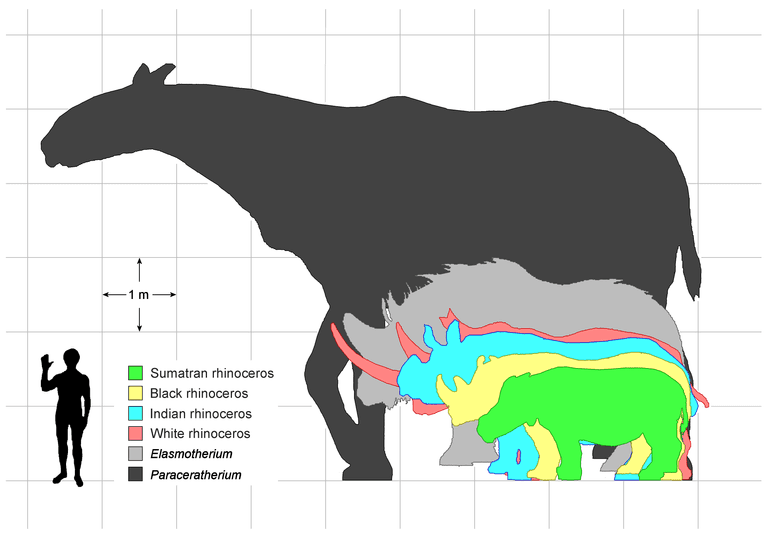
Paraceratherium is an extinct genus of perissodactyl (odd-toed) mammal that lived from the Early Miocene to the Late Oligocene. It is generally regarded as the largest mammal to have ever lived. Remains of this giant animal have been found particularly in Asia; China, Mongolia, Kazakhstan, Pakistan and Türkiye like regions. First described in 1911 by C. Forster-Cooper, Paraceratherium belongs to the subfamily Indricotheriinae and is classified within the superfamily Rhinocerotoidea.
Paraceratherium is the best-known genus of the family Paraceratheriidae. Known species within the genus include P. bugtiense, P. grangeri, P. huangheense, P. asiaticum, P. lepidum and the most recently described P. linxiaense place. Species are distinguished primarily by cranial and dental morphological characteristics. In particular, P. linxiaense has been identified as the most derived species discovered to date and shares an evolutionary relationship with P. lepidum close.
Although direct fossil evidence of Paraceratherium’s behavior is lacking, certain possibilities can be inferred from its cranial morphology, postcranial anatomy and the environmental conditions in which it lived:
Features such as a long neck, high skull structure and a dorsally positioned nose notch suggest that this animal fed on high tree branches and foliage. The flat and concave nasal structure implies the possible development of a trunk-like organ, which may have been functionally used to grasp leaves. This positions it as a browser, distinct from modern rhinoceroses, which are primarily grazers giraffe.
While no direct evidence of social structure exists, comparisons with modern large herbivores suggest that Paraceratherium likely lived either solitarily or in small small groups. The frequent discovery of isolated fossil remains may indicate the absence of large herd behavior common.
The postcranial skeleton, particularly its long and relatively lightweight limb bones and robust cervical vertebrae, suggests that Paraceratherium, despite its massive size, was capable of walking long distances. This situation supports the idea that it was adapted for extensive foraging across wide areas migration.
Its extreme body size was the primary defense mechanism against predators of its time. Adult individuals likely had few natural enemies, though juveniles may have been vulnerable to predation.
The body dimensions of Paraceratherium were enormous. Estimated shoulder height reached 4.8 meters and total length up to 7.4 meters. Its weight is estimated to have ranged between 15 and 20 tons. Long legs and an elongated neck enabled it to reach high plant vegetation.
The skull is characterized by its long and narrow shape. One of its most distinctive features is the forward-projecting and downward-curving incisors. In P. bugtiense, these teeth evolved into a pair of large, outward-projecting and downward-curving incisors. The dental formula is typically 1.0.3.3/1.0.3.3. In more derived species such as P. linxiaense, the nasal notch is significantly deeper and the nasal structure is flattened.
The elongated neck was supported by modified atlas and axis vertebrae. Neck flexibility, particularly evident in P. linxiaense, was enhanced. The limb bones are long and proportionally lightweight, which may have allowed the animal to maintain relative agility despite its massive size movement.
Fossils of Paraceratherium have been found primarily in China, Mongolia, Kazakhstan, Pakistan, Türkiye and the Caucasus. The Bugti region of Pakistan is the site of the best-preserved specimens of P. bugtiense. In Türkiye, bones attributed to this genus have been discovered in the Kağızman-Tuzluca Basin, indicating a wider geographic distribution than previously assumed limb.
Phylogenetic analyses indicate that Paraceratherium evolved from Juxia, which lived during the Eocene. Close relatives of the genus include Aralotherium, Dzungariotherium and Turpanotherium. Analyses among these genera suggest that Paraceratherium originated in Central Asia and spread southward through the Tibetan Plateau into South Asia.
During the time of Paraceratherium, Asia was covered by open woodlands and karma grasslands, habitats well suited for large herbivores. The fossil-bearing formations (e.g., Jiaozigou Formation and Güngörmez Formation) represent rich alluvial and river deltaic depositional environments. Fossils from the Tuzluca Basin in Türkiye indicate that the region had a temperate and humid climate during the late Oligocene.
The genus Paraceratherium became extinct toward the end of the Oligocene. Its last representatives are thought to have lived approximately 23 to 26 million years ago. Fossil records show that Paraceratherium was particularly widespread in northern Tibet and Central Asia during the late Oligocene. However, toward the end of this epoch, both species diversity and geographic range began to decline.
While the exact causes of its extinction remain uncertain, it is believed to have been associated with several possible environmental and ecological factors:
The dates of the latest fossil specimens indicate that these animals were already extinct by the late Oligocene and did not survive into the Neogene. No land mammals of comparable size evolved in subsequent periods, underscoring the fact that Paraceratherium occupied a uniquely specialized ecological niche.

Systematic Paleontology and Species
Behavioral Characteristics
Morphology and Anatomy
Distribution and Fossil Records
Evolutionary Relationships
Ecological and Paleogeographic Context
Extinction