This article was automatically translated from the original Turkish version.
Type of Geographical İndication | Mahreç Sign | ||||||||
|---|---|---|---|---|---|---|---|---|---|
Application Date | 13.03.2020 | ||||||||
Registration Number | 641 | ||||||||
Registration Date | 05.01.2021 | ||||||||
Product / Product Group(s) | Bakery and confectionery products sweets dough products | ||||||||
Province(s) | Kütahya | ||||||||
Applicant/Registrant(s) | Kütahya Chamber of Commerce | ||||||||
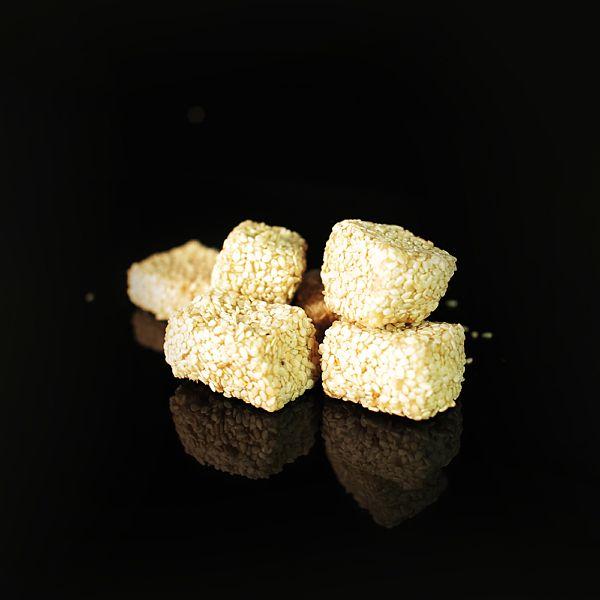
Paşa Helvası is a traditional Turkish dessert unique to the province of Kütahya and has a long history dating back to the Ottoman era. It was registered as a geographical indication under the Industrial Property Law No. 6769 by the Kütahya Chamber of Commerce on 5 January 2021. This dessert is an important part of Kütahya’s culinary culture and is especially widely consumed during the month of Ramadan.
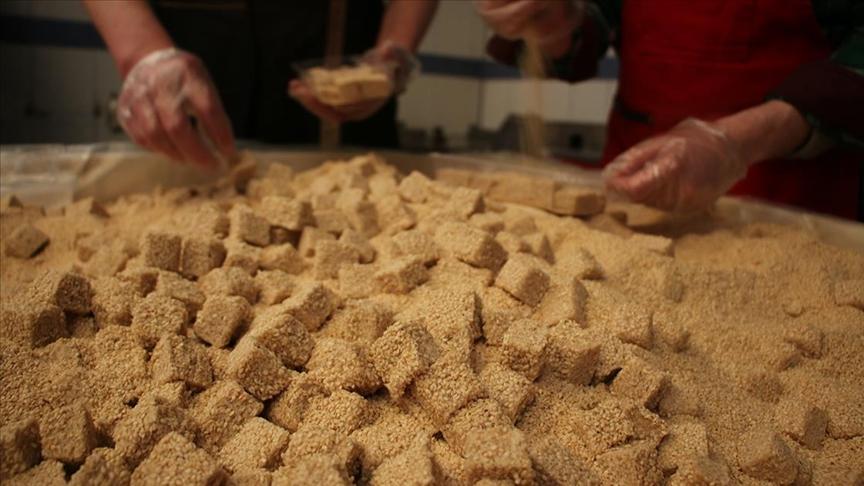
Paşa Helvası (AA)
The history of Paşa Helvası dates back to the 19th century Ottoman period. According to tradition, in 1898, confectioners in Kütahya sought to create a special dessert for Fuat Paşa, the Ottoman governor of the region at the time. To produce a helva unlike any previously made, they used tahini and sesame as the main ingredients, developing this unique sweet which won the governor’s approval and was named “Paşa Helvası.” The name underscores both the dessert’s prestige and its deep connection to the region.
Paşa Helvası is a dessert with a firm yet non-sticky texture, cut into small cube shapes. It is generously coated with sesame seeds, a feature that distinguishes it both visually and in taste. Its characteristic flavor and texture are preserved through traditional production methods, particularly using copper cauldrons. This dessert holds an important place in Kütahya’s culinary tradition and is prepared with local craftsmanship and meticulous care.
The production of Paşa Helvası takes place in the province of Kütahya using traditional methods. The process consists of delicate stages requiring skilled craftsmanship and involves the following ingredients:
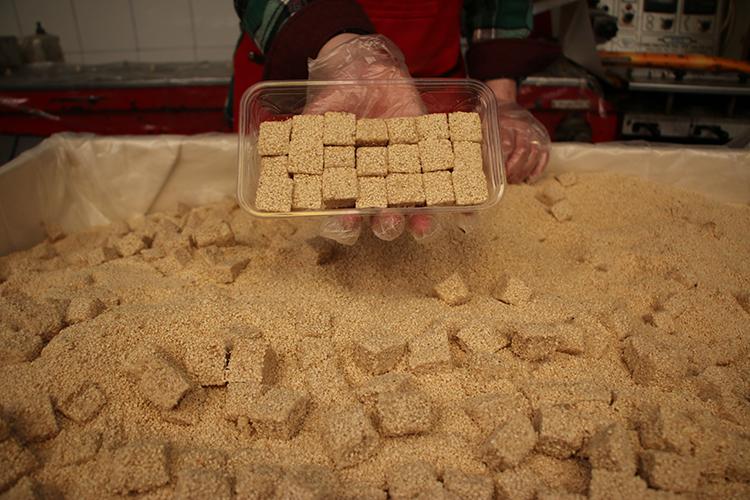
Paşa Helvası (AA)
All stages of Paşa Helvası production must take place within the province of Kütahya. The strong association with the region and the use of traditional production methods are the primary reasons for its registration as a geographical indication specific to Kütahya. These methods, passed down from generation to generation since the Ottoman era, preserve the dessert’s uniqueness and quality.
The production process of Paşa Helvası is regularly monitored by a four-member oversight body established jointly by the Kütahya Chamber of Commerce and the Kütahya Provincial Directorate of Agriculture and Forestry. Inspections are conducted at least once a year, and additional inspections are carried out within 15 days in the event of a complaint. During these inspections, the proportions of ingredients and compliance with production methods are strictly examined. The oversight body may seek expert support from public or private institutions when necessary.
The designation “Paşa Helvası” and its geographical indication emblem must appear on the product itself or its packaging. If this is not feasible, they must be prominently displayed at production sites for easy visibility. This emphasizes that the product is unique to Kütahya and provides consumers with a guarantee of quality.
Anadolu Ajansı. “Kütahya’nın Tescilli ‘Paşa Helvası’ Bayramda Misafirlerin Ağızlarını Tatlandıracak.” Anadolu Ajansı, April 19, 2023. Accessed August 17, 2025. https://www.aa.com.tr/tr/kultur/kutahyanin-tescilli-pasa-helvasi-bayramda-misafirlerin-agizlarini-tatlandiracak/2876223.
Turk Patent and Trademark Office. "Paşa Helvası." Geographical Indications Portal. Accessed August 17, 2025. https://ci.turkpatent.gov.tr/cografi-isaretler/detay/1815.
Turkish Patent and Trademark Office. "Paşa Helvası." Geographical Indications Portal. Accessed August 17, 2025. https://ci.turkpatent.gov.tr/Files/GeographicalSigns/9fdc9277-404d-408c-9a5c-8599147b0fcd.pdf.

Type of Geographical İndication | Mahreç Sign | ||||||||
|---|---|---|---|---|---|---|---|---|---|
Application Date | 13.03.2020 | ||||||||
Registration Number | 641 | ||||||||
Registration Date | 05.01.2021 | ||||||||
Product / Product Group(s) | Bakery and confectionery products sweets dough products | ||||||||
Province(s) | Kütahya | ||||||||
Applicant/Registrant(s) | Kütahya Chamber of Commerce | ||||||||
History and Origin
Characteristics
Production Process
Ingredients
Production Stages
Geographical Link
Monitoring and Quality Control
Usage and Promotion