


This article was automatically translated from the original Turkish version.
Pica eating disorder; a feeding disorder characterized by the persistent and regular consumption, over a specified period, of non-nutritive substances that are not considered food and that require clinical intervention. The name of the disorder is derived from the magpie bird, known in Latin for consuming a wide variety of non-food items, and was first described in medical literature by Hippocrates in 400 BCE. 【1】In previous editions of the Diagnostic and Statistical Manual of Mental Disorders published by the American Psychiatric Association, pica was classified only among disorders of infancy and childhood. With the current edition, DSM-5, it is now categorized under Feeding and Eating Disorders, allowing diagnosis across all age groups.
The substances consumed by individuals with pica syndrome vary widely. The most frequently reported forms in medical literature include geophagia, amylophagia, and pagophagia. In addition, cases of xylophagia, trichophagia, hyalophagia, coprophagia, and ingestion of substances such as chalk, paint, soap, ash, erasers, and fabric have also been documented. Pagophagia is particularly prominent in individuals with iron deficiency, where the craving for solid ice is a dominant feature.
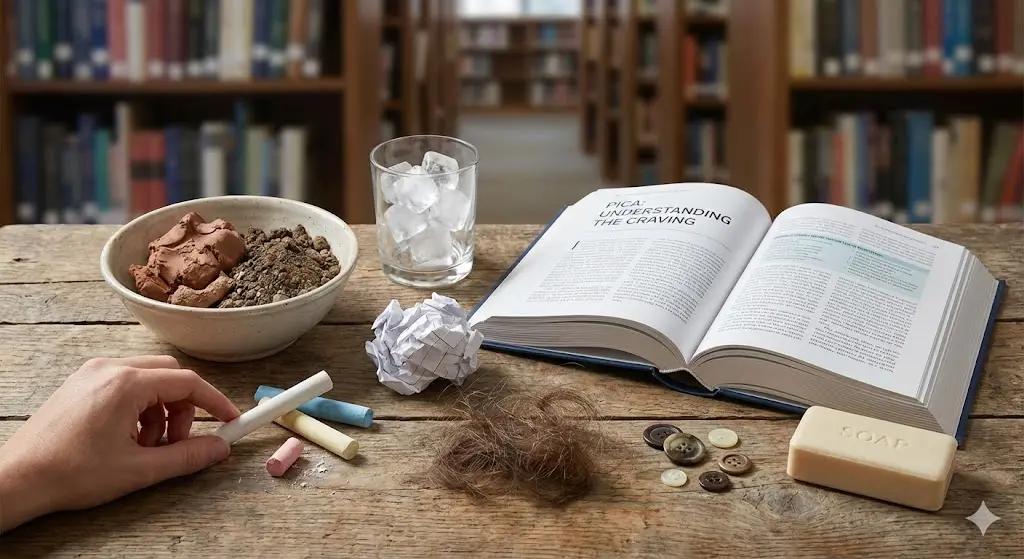
An image representing pica eating disorder. (Generated by artificial intelligence.)
Pica can occur at any age, gender, or sociocultural group, but it is significantly more prevalent among children aged 1 to 6 years, pregnant women, and individuals with intellectual or developmental disabilities. Epidemiological studies indicate that the prevalence of pica in children varies regionally between 3.8% and 14%. A global meta-analysis focusing on pregnant women reported a prevalence rate of 27.8%, with some countries in Africa reporting rates as high as 100%. In individuals with intellectual disabilities, pica is considered one of the most dangerous self-injurious behaviors, with prevalence rates rising up to 33% in parallel with decreased cognitive function. 【2】In Türkiye, geophagia in particular has been identified as a long-standing issue in rural and socioeconomically disadvantaged regions of Central Anatolia.
The exact cause of pica has not been fully elucidated and is generally accepted to be multifactorial. The mechanisms contributing to its development are examined under the following categories:
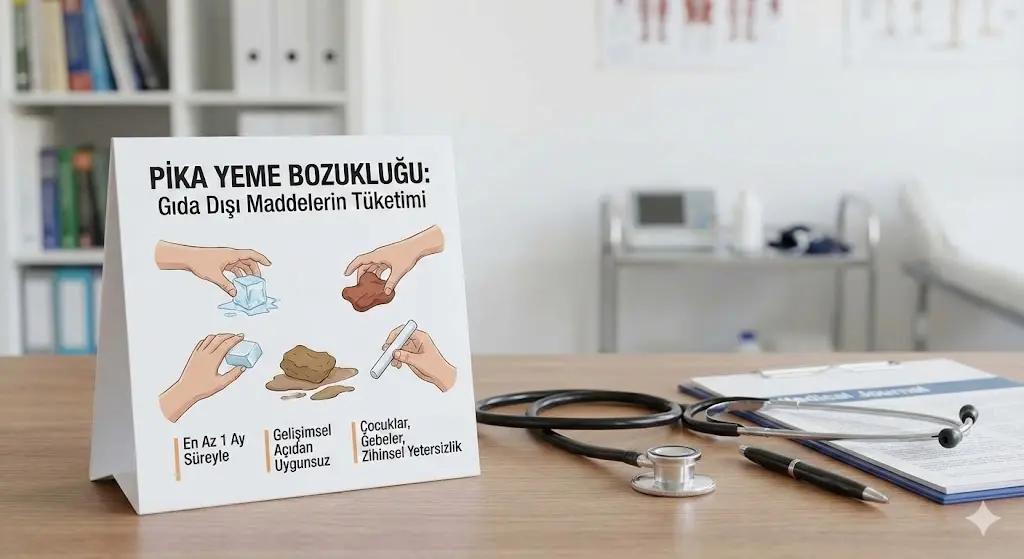
An image representing pica eating disorder. (Generated by artificial intelligence.)
Pica syndrome can lead to life-threatening complications depending on the physiological properties of the ingested substances. Obstructions and intestinal perforations due to accumulation of foreign bodies in the digestive tract are among the most serious emergencies. Additionally, heavy metal poisoning from ingestion of lead-containing paints, parasitic infections from soil consumption, anemia due to malnutrition, and growth retardation frequently accompany the clinical picture. Dental enamel erosion, broken teeth, gastritis, and colonic dilation are also common physical complications. The disorder also impairs psychosocial functioning by causing social stigma and isolation.
According to DSM-5 criteria, a diagnosis of pica requires that the eating behavior persist for at least one month and be developmentally inappropriate. Since the tendency of children under two years of age to explore the world orally is considered normal, the individual must be at least two years old for a diagnosis to be made. The diagnostic process includes a detailed clinical history, complete blood count, iron and ferritin tests, electrolyte panels, and fecal analysis for parasitic screening. Pica is assessed and its severity measured using semi-structured clinical interview tools such as ARFID and Rumination Disorder Interview. 【3】In differential diagnosis, exclusion of other disorders such as anorexia nervosa is critical. Consumption of non-food substances to suppress appetite or prevent weight gain is not classified as pica but rather as part of anorexia nervosa.
Currently, there is no specific pharmacological agent or universal evidence-based protocol for treating pica. Therefore, treatment strategies require a multidisciplinary approach focused on the underlying cause:
Warning: The content presented here is intended solely for general encyclopedic information. This information must not be used for diagnosis, treatment, or medical referral. Always consult a physician or qualified healthcare professional before making any health-related decisions. The author and KÜRE Encyclopedia assume no responsibility for any consequences arising from the use of this information for diagnostic or therapeutic purposes.
Erbaş, Damla, Havva Gül Kara, and Çiçek Hocaoğlu. "Bir Yeme Bozukluğu Olarak Pika: Genel Bakış." İstanbul Rumeli Üniversitesi Sağlık Bilimleri Dergisi 7, Accessed February 26, 2026. https://dergipark.org.tr/en/download/article-file/4278842.
Faraji, Haydeh and Burcu Fırat. "Yeme Bozuklukları ve Duygular." Fenerbahçe Üniversitesi Sosyal Bilimler. Accessed February 26, 2026. https://dergipark.org.tr/en/download/article-file/2428672
Kaçar, Murat, and Çiçek Hocaoğlu. "Pika, Geri Çıkarma Bozukluğu ve Kaçıngan/Kısıtlı Yiyecek Alımı Bozukluğu: Klinik Özellikler, Etiyoloji, Tanı ve Tedavi." Recep Tayyip Erdoğan Üniversitesi Tıp Fakültesi Dergisi. Accessed February 26, 2026. https://acikerisim.erdogan.edu.tr/server/api/core/bitstreams/8d196d2f-dd92-479d-a83d-aae5c7949bea/content
Tümen, Zeynep Çağıl. "Yeme Bozukluklarına Genel Bir Bakış." Çukurova Tıp Öğrenci Dergisi. Accessed February 26, 2026. https://dergipark.org.tr/tr/download/article-file/3506732.
[1]
Damla Erbaş, Havva Gül Kara ve Çiçek Hocaoğlu, "Bir Yeme Bozukluğu Olarak Pika: Genel Bakış," İstanbul Rumeli Üniversitesi Sağlık Bilimleri Dergisi 7, no. 1 (2024): 102, Erişim tarihi: 26 Şubat 2026)https://dergipark.org.tr/en/download/article-file/4278842
[2]
Damla Erbaş, Havva Gül Kara ve Çiçek Hocaoğlu, "Bir Yeme Bozukluğu Olarak Pika: Genel Bakış," İstanbul Rumeli Üniversitesi Sağlık Bilimleri Dergisi 7, no. 1 (2024): 102, Erişim tarihi: 26 Şubat 2026)https://dergipark.org.tr/en/download/article-file/4278842
[3]
Damla Erbaş, Havva Gül Kara ve Çiçek Hocaoğlu, "Bir Yeme Bozukluğu Olarak Pika: Genel Bakış," İstanbul Rumeli Üniversitesi Sağlık Bilimleri Dergisi 7, no. 1 (2024): 102, Erişim tarihi: 26 Şubat 2026)https://dergipark.org.tr/en/download/article-file/4278842


No Discussion Added Yet
Start discussion for "Pica Eating Disorder" article
Clinical Features and Common Types
Epidemiology and Demographic Distribution
Etiology and Pathophysiology
Medical Complications
Diagnosis and Differential Diagnosis
Treatment and Management Approaches