

This article was automatically translated from the original Turkish version.
Style | Progressive / Psychedelic Rock | ||||||||
|---|---|---|---|---|---|---|---|---|---|
Place and Time of Establishment | London 1965 | ||||||||
Group Members | Syd Barrett Roger Waters David Gilmour Rick Wright Nick Mason | ||||||||
Website(s) | www.pinkfloyd.com | ||||||||
Pink Floyd is an English rock band formed in London in 1965 by Roger 'Syd' Barrett, Roger Waters, David Gilmour, Nick Mason, and Rick Wright, all originally from Cambridge. The band gained recognition for its innovative work in the psychedelic and progressive rock genres. Its name was derived from two blues musicians who inspired Syd Barrett: Pink Anderson and Floyd Council.
The 1967 album The Piper at the Gates of Dawn is an iconic work of that era. The band attracted attention through its light shows and sound experiments during live performances. However, due to Barrett’s escalating mental health issues, David Gilmour joined the band in 1968 to take over live performances, and Barrett eventually left the group.

【1】
Pink Floyd’s identity as a progressive rock band became prominent in the 1970s. The 1970 album Atom Heart Mother drew attention for its symphonic rock elements and sonic experiments. The track "Echoes" from the 1971 album Meddle foreshadowed the band’s evolving style.
The 1973 album The Dark Side of the Moon propelled Pink Floyd to worldwide fame and has sold over 45 million copies. The album explores universal themes such as time, greed, mental illness, and mortality. The 1975 album Wish You Were Here, dedicated to Syd Barrett, presented a more musically mature building.
The 1977 album Animals, inspired by George Orwell’s Animal Farm, attracted attention for its social critique. The 1979 release The Wall dealt with themes of individual isolation and alienation, achieving legendary status through its staged enormous concerts and the film film adaptation directed by Alan Parker.

【2】
The 1980 live performances of The Wall in London, Los Angeles, and New York were among the most ambitious productions in rock history. The 1983 album The Final Cut, written entirely by Roger Waters, was shaped by critiques of the aftermath of World War II.
In 1985, Roger Waters announced his departure from the band and declared Pink Floyd at an end. However, David Gilmour, Nick Mason, and Rick Wright continued the band’s activities with the 1987 album A Momentary Lapse of Reason. The world tour supporting this album achieved major success with 5.5 million attendees.
The 1994 album The Division Bell became the band’s final studio album, featuring standout tracks such as "High Hopes." In 1995, the live album P•U•L•S•E was released, capturing the band’s stage performances.
In 2005, during the Live 8 concert in London, the band briefly reunited with the participation of Roger Waters. The deaths of Syd Barrett in 2006 and Rick Wright in 2008 eliminated any possibility of a future reunion.

【3】
In 2010, David Gilmour and Roger Waters performed together at a special concert for the Hoping Foundation. The same year, the album An Introduction to Syd Barrett was released. The year 2020 saw the postponement of planned concerts due to the COVID-19 pandemic.
Pink Floyd, while addressing themes of time, death, alienation, and social critique in their music, sought to expand the boundaries of rock through innovative live performances and technical experiments. Their musical legacy has significantly influenced the development of progressive rock.
Roger Waters (born 6 September 1943, Great Bookham, England) is one of Pink Floyd’s founding members. As the band’s bassist, word writer, and main concept developer, Waters played a pivotal role in the history of progressive rock. From 1968 onward, he shaped the band’s artistic and thematic direction, serving as the creative force behind the albums The Dark Side of the Moon (1973), Wish You Were Here (1975), Animals (1977), and The Wall (1979).
The 1983 album The Final Cut, Waters’s final work with Pink Floyd, is largely based on his personal narrative. After leaving the band in 1985, he pursued a solo career producing albums focused on political and social issues. He reunited with Pink Floyd for the Live 8 concert in 2005, though this was not permanent.
Waters’s contribution to Pink Floyd lay in shaping the band’s musical identity through concept albums and critical lyricism. He played a decisive role in transforming Pink Floyd from a musical entity into a political narrative vehicle.

【4】
David Gilmour has become one of rock music’s most influential figures as Pink Floyd’s lead guitarist, vocalist, and lyricist. Known for his distinctive guitar tone, melodic solos, and vocals, Gilmour has garnered acclaim both within the band and in his solo career.
David Gilmour ranks 14th on Rolling Stone magazine’s list of the greatest guitarists of all time. He was inducted into the Rock and Roll Hall of Fame in 1996, awarded the CBE in 2005, and received an honorary doctorate from the University of Cambridge in 2009. His contributions to Pink Floyd and his solo work have cemented his status as one of rock music’s most important figures.

【5】
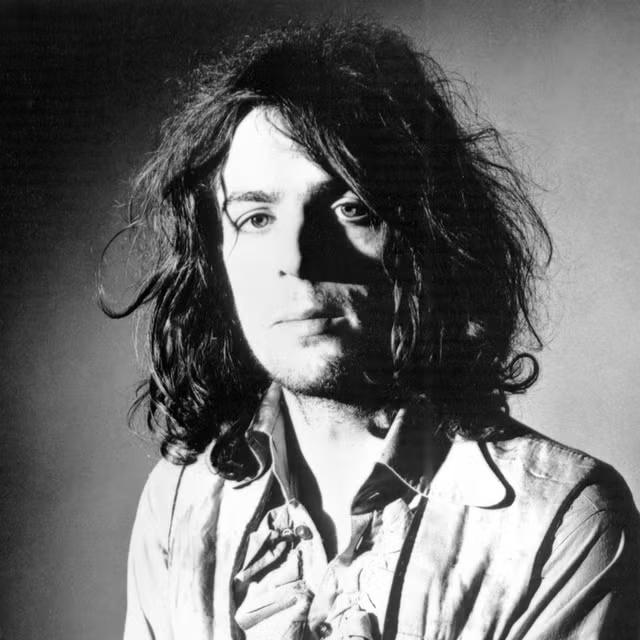
Syd Barrett (6 January 1946 – 7 July 2006) was one of Pink Floyd’s founding members and a central figure in the band’s early years. His unique song lyrics, experimental guitar techniques, and psychedelic style laid the foundation for the band’s debut album The Piper at the Gates of Dawn (1967).
Born and raised in Cambridge, Barrett began exploring music with childhood friend Roger Waters. In 1965, he co-founded Pink Floyd with Waters, Nick Mason, and Richard Wright, launching the band’s initial phase. Barrett wrote hit songs such as "Arnold Layne" and "See Emily Play," rapidly propelling the band to prominence in the psychedelic rock scene. However, his increasing mental health problems made his live performances increasingly unpredictable. With David Gilmour’s arrival in 1968, Barrett’s role diminished, and he soon left Pink Floyd.
After leaving Pink Floyd, Barrett released two solo albums, The Madcap Laughs (1970) and Barrett (1970), but withdrew from music and retreated into seclusion. Pink Floyd continued to feel his influence in subsequent albums. The 1975 album Wish You Were Here, particularly the song "Shine On You Crazy Diamond," serves as a tribute to him.
【6】
Nicholas Berkeley Mason (born 27 January 1944, Birmingham) is a founding member of Pink Floyd and the only member to have remained with the band from its inception to its conclusion. Mason appeared on all of the band’s albums and was not only a drummer but also an essential part of the band’s stage shows and historical archive.
Mason began playing in early bands such as Sigma 6 and The Abdabs with Roger Waters in 1965. From Pink Floyd’s 1967 debut album The Piper at the Gates of Dawn, he established the band’s rhythmic foundation. Tracks such as "Echoes," "Time," and "One of These Days" showcase his distinctive davul style.
During Pink Floyd’s legal disputes, Mason maintained neutrality and preserved good relations with both Roger Waters and David Gilmour. In 2002, he appeared as a guest on Waters’s tour, and in 2018, he revived Pink Floyd’s early period songs with his project Nick Mason’s Saucerful of Secrets.
Mason is also an avid car enthusiast and race driver. He competed in the film La Carrera Panamericana and participated in prestigious races such as Le Mans. Beyond music, he authored the memoir Inside Out: A Personal History of Pink Floyd and contributed to the band’s archival efforts. Mason is not only the rhythmic backbone of Pink Floyd but also one of the most important figures in preserving its legacy.

【7】
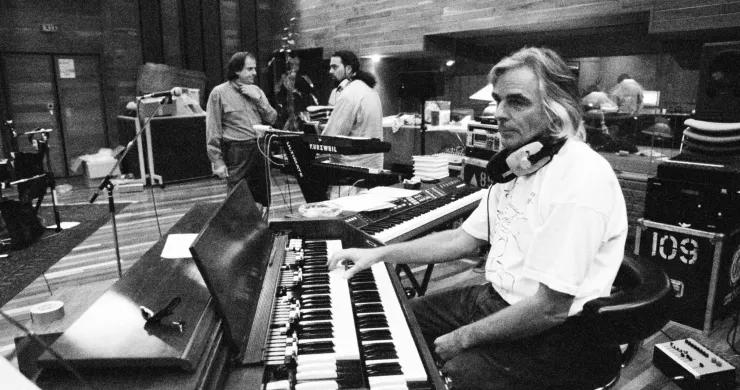
Rick Wright (Keyboards, Lyricist)
Richard William Wright (born 28 July 1943, London – died 15 September 2008) was a musician who played a vital role in shaping Pink Floyd’s atmospheric sound as the band’s keyboardist, pianist, and lyricist.
Wright began playing in pioneering groups such as Sigma 6 and The Architectural Abdabs with Roger Waters and Nick Mason in 1965. With the formation of Pink Floyd, he became one of the most important figures in defining the band’s musical structure. Wright’s piano and keyboard arrangements helped Pink Floyd establish a unique identity in the progressive rock world. Works such as "The Great Gig in the Sky" and "Us and Them" are among the most prominent examples of his contributions.
Forced to leave the band in 1982 under pressure from Roger Waters, Wright returned as a session musician for the 1987 album A Momentary Lapse of Reason. He officially rejoined Pink Floyd with the 1994 release of The Division Bell. In his solo career, Wright released the albums Wet Dream (1978) and Broken China (1996), always remaining a artist of Pink Floyd’s musical spirit.
Richard Wright died in 2008 from cancer. His contributions to music and his role in creating Pink Floyd’s distinctive atmosphere have made him one of rock history’s most important keyboardists.
【8】
This work, the band’s debut album, is considered one of the pioneers of psychedelic rock under Syd Barrett’s leadership. The album stands out for its experimental sounds and lyrical content.

【9】
Recorded following Syd Barrett’s departure and David Gilmour’s arrival, this album reflects the band’s transitional period. The tracks blend psychedelic and progressive rock elements.

【10】
This album was created as the soundtrack for Barbet Schroeder’s film of the same name and marked the band’s first foray into film music. It features a variety of styles.

【11】
This double album consists of live performances on the first disc and individual studio works by each band member on the second. Its experimental nature stands out.

【12】
Recorded with orchestra and choir, this album marks the band’s move toward symphonic rock. The opening long instrumental piece gives the album its name.

【13】
This album marks Pink Floyd’s full embrace of progressive rock, highlighted especially by the lengthy track "Echoes." The album is rich in atmospheric and experimental sounds.

This album, created for a film by Barbet Schroeder, consists of shorter, more structured songs. It showcases the band’s diverse musical directions.

【14】
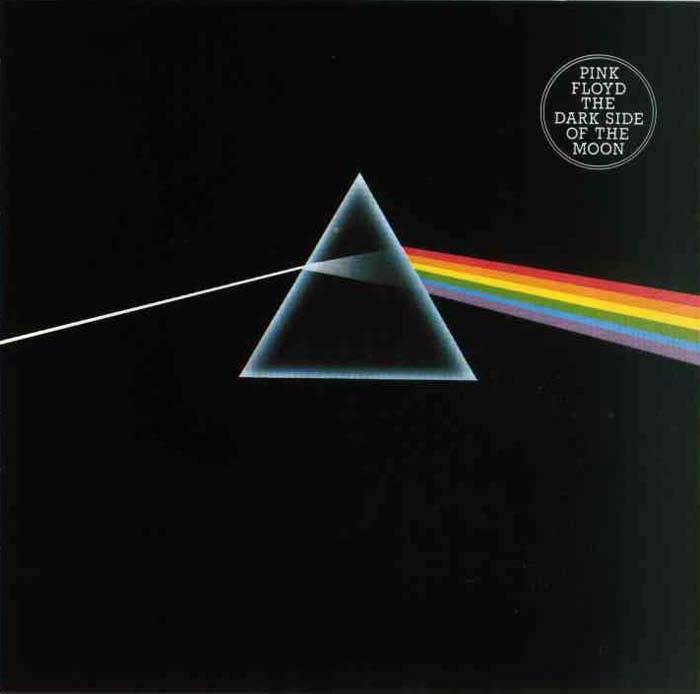
This work, one of Pink Floyd’s most iconic albums, explores various facets of the human experience. The prism design on the album cover is as famous as the music itself.
【15】
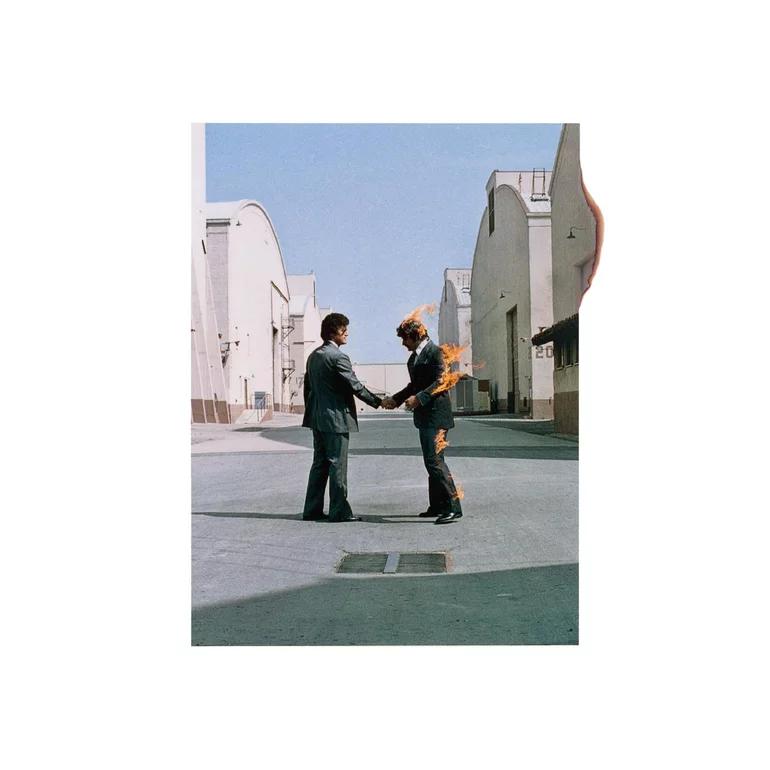
This album, a tribute to Syd Barrett, contains critiques of the music industry. The cover design depicts two businessmen shaking hands while one is on fire.
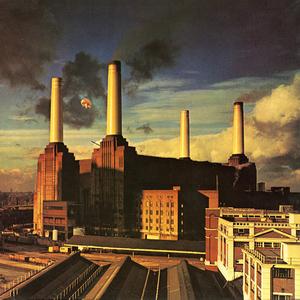
Inspired by George Orwell’s "Animal Farm," this album uses metaphors to depict social classes. The cover features a floating pig above the Battersea Power Station.
【16】
This rock opera tells the story of a musician’s isolation and mental collapse. The cover features a minimalist depiction of a brick wall.

【17】
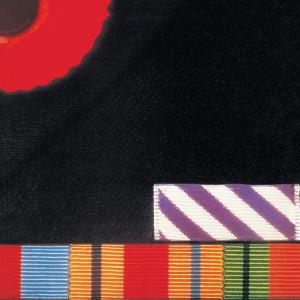
Recorded under the leadership of Roger Waters, this album addresses anti-war themes. The cover displays a military medal on a black background with on colorful strips.
【18】
Produced under David Gilmour’s leadership, this album symbolizes the band’s entry into a new era. The cover shows hundreds of hospital beds arranged along a shore.

【19】
Recognized as Pink Floyd’s final original studio album, The Division Bell explores themes of communication breakdown and discord. Songs such as High Hopes and Coming Back to Life best reflect the band’s melodic atmosphere.

【20】
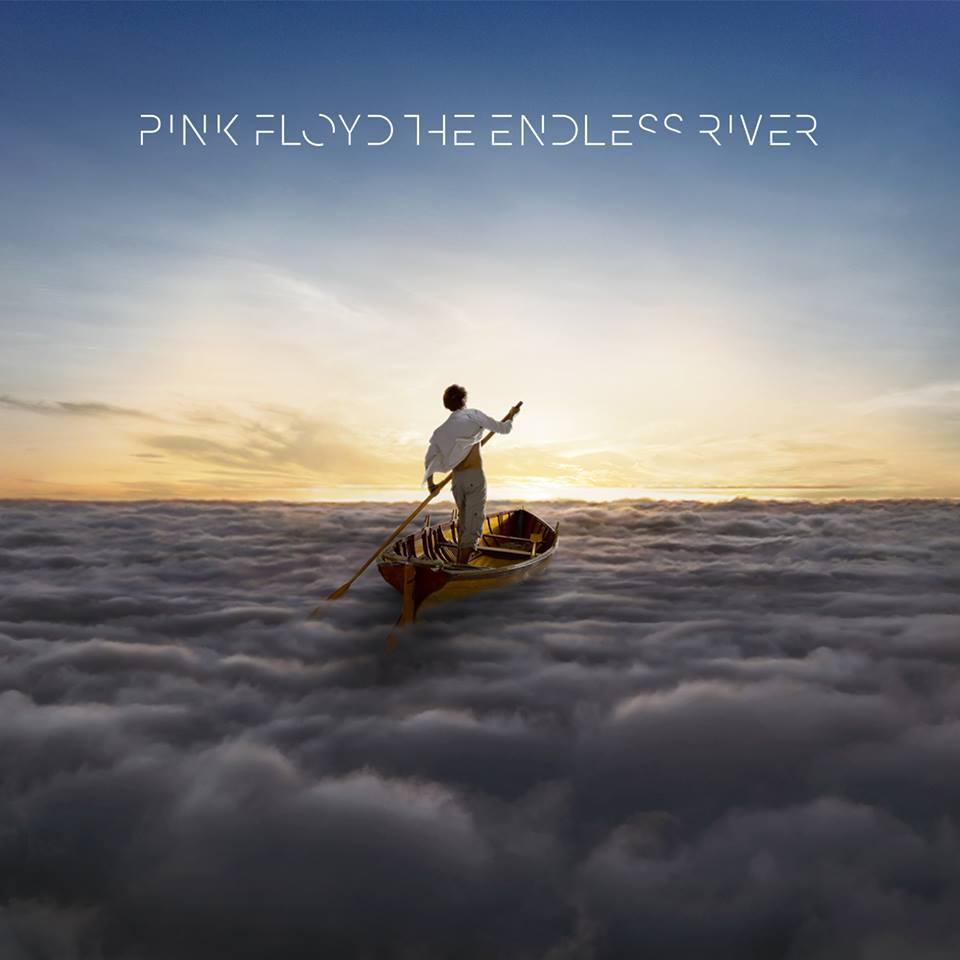
This album, dedicated to the memory of Richard Wright, consists largely of instrumental pieces. Louder Than Words, the album’s only vocal track, is a farewell work by Pink Floyd. The album is built around instrumental fragments left over from Wright’s recordings for The Division Bell, emphasizing the band’s atmospheric and experimental qualities.
【21】
Pink Floyd used music not merely as an artistic medium but also as a narrative, protest, and experimental art form. Beyond their contributions to progressive and psychedelic rock, the band left a lasting mark on the music world through album concepts, stage productions, and technological innovations. Pink Floyd pioneered the development of progressive rock and profoundly influenced the music industry through sound engineering, stage productions, and innovative album structures.
Pink Floyd emerged in the late 1960s as one of the pioneers of the psychedelic rock scene. Under Syd Barrett’s leadership, The Piper at the Gates of Dawn (1967) presented a psychedelic atmosphere shaped by experimental sounds and abstract lyrics. However, the transformative impact came after Barrett’s departure and the arrival of David Gilmour. The band retained psychedelic elements while evolving into progressive rock, gaining attention with long, atmospheric compositions.
During the 1970s, as album-based narratives gained prominence, Pink Floyd became one of the leading figures in progressive rock. Albums such as Meddle (1971), The Dark Side of the Moon (1973), and Wish You Were Here (1975) became among the genre’s most successful examples. The band redefined traditional song formats by developing extended solos, layered instrumentation, and conceptual themes.
Pink Floyd typically explored philosophical and social themes in their albums. The Dark Side of the Moon focused on universal subjects such as capitalism, the transience of time, madness, and human nature. The album is regarded as one of the most important works in music history due to its musical cohesion and philosophical depth, and it broke records by selling over 45 million copies.
The Wall (1979) is a rock opera that narrates a rock star’s alienation from society and his struggle against authoritarian systems. With its stage productions and the 1982 film adaptation, it presented a narrative unprecedented in music history up to that point. Animals (1977), inspired by Orwell’s Animal Farm, delivers a powerful political critique of social classes.
Pink Floyd made significant innovations in sound engineering and production techniques. Produced by Alan Parsons, The Dark Side of the Moon ushered in a new era in sound design through multitrack recording, synthesizer effects, and innovative mixing methods.
The band also used quadraphonic sound systems to create immersive audio effects during concerts. The "Azimuth Coordinator" system, developed in 1967, became a pioneer in spatial sound usage in music. In terms of stage shows, Pink Floyd became known for large-scale productions. During the The Wall tour, a massive wall was constructed on stage, while the Animals tour featured floating work inflatable pigs.
Pink Floyd’s music was viewed not only as an artistic vehicle but also as a form of protest and awareness. Roger Waters directed sharp critiques in his songs toward war, authoritarian regimes, capitalism, and human rights. The Final Cut (1983) contained critiques of the Falklands War, and Waters continued his anti-war stance throughout his solo career.
Pink Floyd has sold over 250 million albums, making them one of the best-selling bands of all time. The Dark Side of the Moon remained on the Billboard charts for 15 years and still holds a place among the best-selling albums ever. The band was inducted into the Rock and Roll Hall of Fame in 1996 and reunited for the Live 8 concert in 2005, delivering a historic performance.
Pink Floyd is renowned not only for their music but also for their stage productions and visual art. The band, which emphasized the theatrical aspects of progressive rock, elevated the visual dimension of rock music through large-scale stage productions, light shows, animations, and massive set designs. Pink Floyd was among the pioneering groups that transformed rock concerts into multidimensional artistic performances.
Today continue to serve as a reference point for the fusion of stage design and visual art with music. Pink Floyd’s stage productions are considered among the most important examples of how rock music’s visual dimension was transformed.
One of the most distinctive features of Pink Floyd’s stage shows is the powerful synchronized light and laser displays. From the late 1960s, the band used projections and light effects to create psychedelic atmospheres during live performances. Starting with the The Dark Side of the Moon tour, lasers, fog effects, and the most advanced lighting technology of the era were introduced to enhance the visual experience.
Especially during the 1970s, the light shows were fully integrated with the music. The band programmed lights according to the emotional spirit of each piece, making every performance visually unique. One of the most striking elements of Pink Floyd’s concerts was the use of massive set pieces. The band’s theatrical nature is clearly evident in these stage productions.
For the Animals (1977) tour, a massive inflatable pig was flown above the Battersea Power Station in London. This pig symbolized criticism of capitalist leaders, directly tied to the album’s concept.
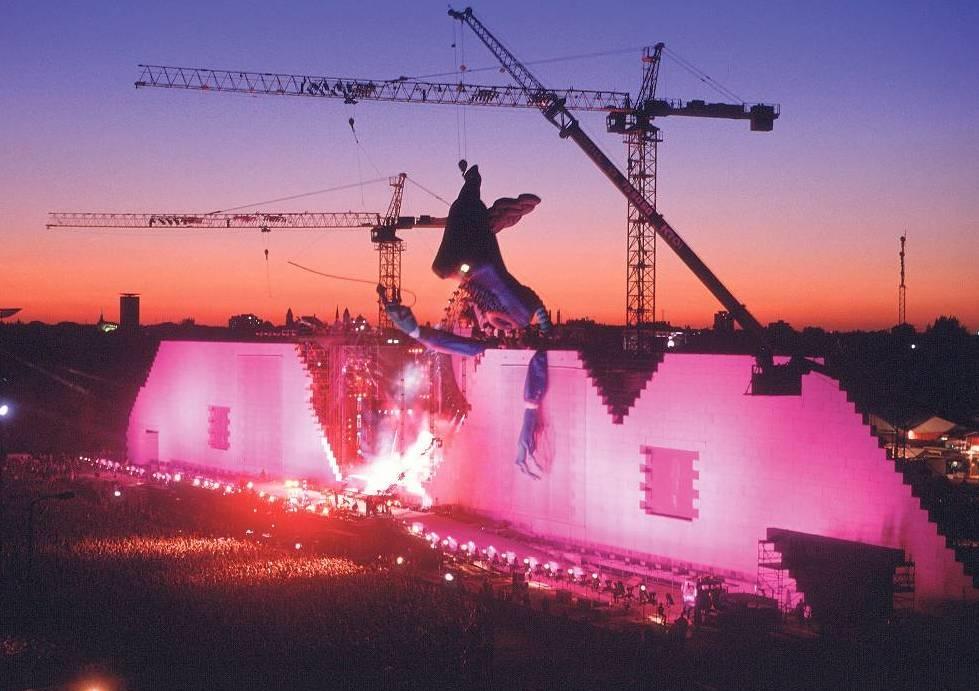
【22】
During the The Wall tour, a massive Stuka fighter plane was crashed onto the stage to create a powerful metaphor related to World War II.
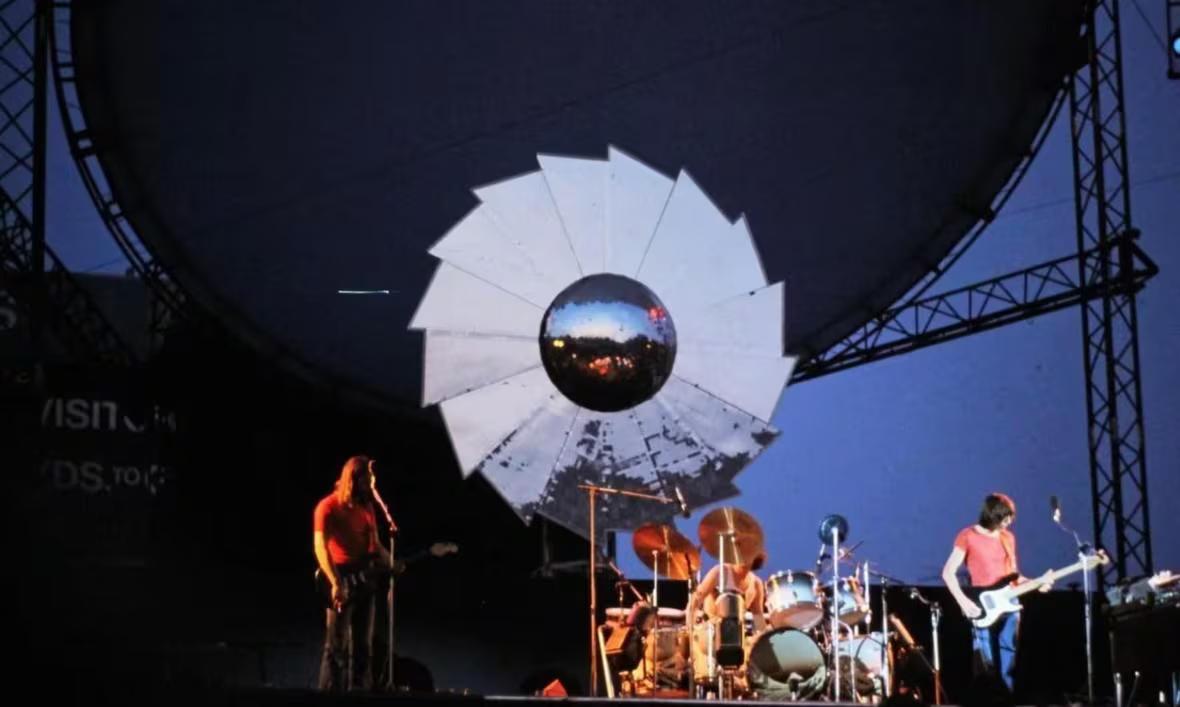
【23】
For the The Division Bell album concept, giant heads and statues were incorporated into the tour.
During The Wall concerts, a 10-meter inflatable teacher figure was used on stage in the performance of "Another Brick in the Wall," offering criticism of authoritarian education systems. Such stage effects transformed Pink Floyd’s concerts from ordinary musical events into visual theater spectacles.
The 1979 album The Wall evolved into Pink Floyd’s most ambitious stage production. During the tour, a massive wall was constructed on stage and later demolished in the latter part of the concert. The wall served as a metaphor for the album’s central theme.
Additionally, during concerts, a group called "The Surrogate Band" performed on stage while Waters and other members performed behind the wall. Animations featuring Gerald Scarfe’s drawings, created for the album, were projected onto large screens. The The Wall tour is regarded as one of the largest theatrical rock performances ever staged.
Pink Floyd was among the first bands to extensively use cinema and video technology in their concerts. Live at Pompeii (1972) is not merely a concert film but a cinematic documentary capturing the band’s creative process.
The 1982 film Pink Floyd: The Wall, directed by Alan Parker, is a striking production that translates the album’s themes into cinematic language, merging music and visual art. Additionally, during the 1994 The Division Bell tour, a massive circular screen displayed special videos, establishing the visual foundation for many concert shows in the 2000s.
Pink Floyd performed massive concerts attended by millions worldwide. Their most significant stage performances include:
Live at Pompeii (1972): This performance, recorded without an audience in the ancient Roman amphitheater of Pompeii, is one of the most unique concerts in music history.
Live 8 (2005): This concert, where Roger Waters reunited with the band after 24 years, was watched by millions and entered music history.
Pulse (1994): This concert series, a recording of the The Division Bell tour, is remembered for its laser displays and circular screen projections.
Roger Waters – The Wall Live (2010–2013): Roger Waters’s solo tour modernized the The Wall concept and reached millions across the globe.
The Dark Side of the Moon (1973) represents the pinnacle of Pink Floyd’s musical and conceptual album approach and is one of rock history’s best-selling albums. While exploring universal themes such as the passage of time, money, madness, death, and the fragility of human nature, the album achieves unity through its production, sound engineering, and seamless song transitions. Developed under Alan Parsons’s leadership, advanced studio techniques, sound effects, and experimental approaches imbue the album with a cinematic atmosphere, while David Gilmour’s lyric guitar solos and Roger Waters’s lyrics aim to deepen its emotional power. The critique of capitalism in "Money," reflections on life’s inevitable progression in "Time," and the death-themed vocal performance in "The Great Gig in the Sky" are among the album’s standout moments.
Pink Floyd’s album The Wall narrates, as a rock opera, an individual’s life conditions, fears, and alienation caused by social factors. The album functions as a life manifesto, revealing the psychological transformation, personal traumas, and fractured relationships of its main character (commonly referred to as Pink). At its core lies communication breakdown and the resulting isolation. Experiences such as oppressive educational systems, problems in social relationships, war, and critiques of gender roles weaken the individual’s bonds with their surroundings.
This process is symbolized over time by the construction of a as if wall. Each brick represents the inner feelings of fear, loneliness, and alienation formed within the person’s psyche. The album does not merely tell a story of personal collapse but also seeks to provide a universal message on how an individual’s behavior and choices affect those around them.
Initially rooted in Roger Waters’s personal experiences and inspired by the life stories of Syd Barrett and the rock world, the narrative of The Wall was later universalized in live performances to encompass international fears, inter-state communication failures, and anti-war messages. Bob Geldof’s portrayal of the anti-hero in the film version and Waters’s own performance in concerts are among the most significant examples of this transformation.
In summary, The Wall is an album that, through its exploration of loneliness and alienation, presents a critical perspective on the disconnect between the individual’s inner world and their environment, offering both musical and thematic innovations.
"Nick Mason ve Richard Wright’ın Pink Floyd’taki Rolleri." Rock & Roll Hall of Fame Archive. Accessed February 19, 2025. https://www.rockhall.com/inductees/pink-floyd.
"Pink Floyd - The Dark Side of the Moon Albüm İncelemesi." Ensoboun. Accessed February 19, 2025. https://www.ensoboun.com/post/pink-floyd-the-dark-side-of-the-moon-alb%C3%BCm-i%CC%87ncelemesi.
"Pink Floyd Diskografi ve Grup Üyeleri - Encyclopædia Britannica." Encyclopædia Britannica. Accessed February 19, 2025. https://www.britannica.com/topic/Pink-Floyd.
"Pink Floyd ve Billboard 200 Listesi." Billboard Charts Archive. Accessed February 19, 2025. https://www.billboard.com/charts/billboard-200.
"Pink Floyd." ProgArchives.com. Accessed February 19, 2025. https://www.progarchives.com/artist.asp?id=364.
"Roger Waters, David Gilmour, Nick Mason ve Richard Wright Hakkında Biyografik Bilgiler." Ultimate Classic Rock. Accessed February 19, 2025. https://ultimateclassicrock.com/pink-floyd- member.
"The Dark Side of the Moon Albüm Analizi ve Tarihsel Etkisi." Ultimate Classic Rock. Accessed February 19, 2025. https://ultimateclassicrock.com/dark-side-of-the-moon-analysis.
Pink Floyd Music Ltd. "Pink Floyd Resmi Web Sitesi." Accessed February 19, 2025. https://www.pinkfloyd.com/.
[1]
Pink Floyd, "The Early Years 1965–1972"
[2]
David Gilmour, London, 18th July 1970
[3]
David Gilmour is playing the slide guitar used in the final section of the song "High Hopes". https://more-relics.tumblr.com/post/720362954378379264/david-gilmour-on-lap-steel-guitar-jedson-blonde
[4]
[5]
David Gilmour and the Fender Stratacoaster Guitar
[6]
[7]
[8]
Rick Wright rehearsing before a concert.
https://liveforlivemusic.com/features/rick-wright-birthday-pink-floyd/
[9]
Album Cover of The Piper at the Gates of Dawn (1967)
[10]
Album Cover of A Saucerful of Secrets (1968)
https://www.discogs.com/release/3206367-Pink-Floyd-A-Saucerful-Of-Secrets/image/SW1hZ2U6NjQzMjYxNw==
[11]
[12]
Ummagumma (1969) Album Cover
https://www.discogs.com/release/1645802-Pink-Floyd-Ummagumma/image/SW1hZ2U6NTA4OTgwOA==
[13]
Atom Heart Mother (1970) Album Cover
https://www.discogs.com/release/2812630-Pink-Floyd-Atom-Heart-Mother/image/SW1hZ2U6NTAyODE0NA==
[14]
Obscured by Clouds (1972) Album Cover
[15]
Album Cover of The Dark Side of the Moon (1973)
https://www.discogs.com/master/10362-Pink-Floyd-The-Dark-Side-Of-The-Moon
[16]
Animals (1977) Album Cover
[17]
Album Cover of The Wall (1979)
https://www.discogs.com/release/27371856-Pink-Floyd-The-Wall
[18]
The Final Cut (1983) Album Cover
[19]
A Momentary Lapse of Reason (1987) Album Cover
[20]
The Division Bell (1994) Album Cover
[21]
The Endless River (2014) Album Cover
[22]
Use of giant figures in concerts
[23]
Pink Floyd at Ivor Wynne Stadium in 1975
https://www.cbc.ca/news/canada/hamilton/pink-floyd-ivor-wynne-stadium-1975-1.6899142

Style | Progressive / Psychedelic Rock | ||||||||
|---|---|---|---|---|---|---|---|---|---|
Place and Time of Establishment | London 1965 | ||||||||
Group Members | Syd Barrett Roger Waters David Gilmour Rick Wright Nick Mason | ||||||||
Website(s) | www.pinkfloyd.com | ||||||||
Founding and Early Years (1960s)
Progressive Era and Concept Albums (1970s)
Disintegration and Transition (1980s)
Reunion Era (1990s and 2000s)
Final Era Works (2010s and 2020s)
BAND MEMBERS
Roger Waters (Vocals, Bass Guitar, Lyricist)
David Gilmour (Vocals, Lead Guitar, Lyricist)
Syd Barrett (Vocals, Guitar)
Nick Mason (Drums)
Pink Floyd Studio Albums
The Piper at the Gates of Dawn (1967)
A Saucerful of Secrets (1968)
More (1969)
Ummagumma (1969)
Atom Heart Mother (1970)
Meddle (1971)
Obscured by Clouds (1972)
The Dark Side of the Moon (1973)
Wish You Were Here (1975)
Animals (1977)
The Wall (1979)
The Final Cut (1983)
A Momentary Lapse of Reason (1987)
The Division Bell (1994)
The Endless River (2014)
Pink Floyd’s Position and Significance in Music History
Role in the Development of Progressive and Psychedelic Rock
Concept Albums and Themes
Musical Innovations and Technological Advancements
Cultural and Political Impact
Commercial and Artistic Achievements
Pink Floyd’s Visual and Stage Productions
Light and Stage Displays
Animal Figures
Large Propellers and Flying Objects
Large Heads and Masks
Large Rats and Teacher Figures
The Wall: Rock History’s Greatest Stage Show
Cinema and Video Usage
Massive Concert Venues and Live Performances
The Dark Side of the Moon
The Wall