

This article was automatically translated from the original Turkish version.
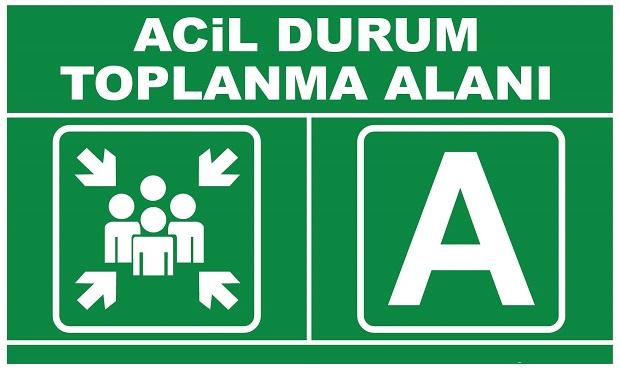
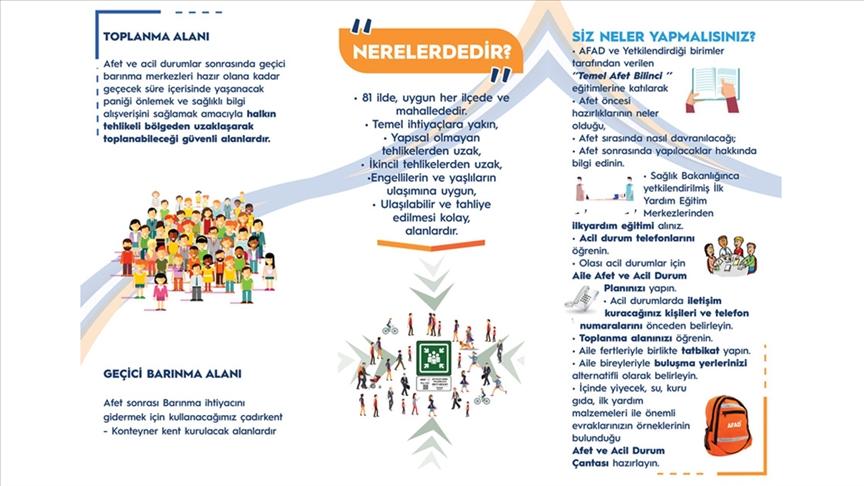
Post-Disaster Gathering Areas are temporary spaces designated for people to safely assemble after disasters such as earthquakes, floods, fires, and similar emergencies, where they can meet their basic needs and access information and assistance services.【1】 These areas are established to reduce panic and disorder following a disaster, ensure individual safety, and facilitate the process of directing people to temporary shelter facilities.【2】
Post-disaster gathering areas are planned spaces designed to enable individuals to quickly move away from hazardous zones and assemble in safe locations immediately after a disaster or emergency. These areas serve as one of the initial points of organized response, helping to control the uncertainty and chaos that arise in the immediate aftermath of a disaster.【3】
Post-Disaster Gathering Areas (Anadolu Agency)
The definition of these areas encompasses not only physical assembly spaces but also the coordination and directional functions integral to disaster management systems. Through these areas, individuals are directed to safe locations, provided with accurate information, and enabled to communicate with public institutions.
One of the primary purposes of post-disaster gathering areas is to mitigate the panic that emerges immediately after a disaster, ensuring that individuals assemble in a controlled and safe manner.【4】 This enables search and rescue and logistics operations to be conducted in a more orderly and effective manner.
Another objective is to enable the fulfillment of individuals’ basic needs, including communication, access to information, contact with family members, access to first aid, and participation in emergency support activities. Gathering areas function as temporary centers where these needs can be met.
Additionally, these areas serve as transitional points until temporary shelter centers are established.【5】 During this phase, individuals’ safety is ensured, their needs are assessed, and they are directed to appropriate shelter locations.
From a disaster management perspective, another purpose of gathering areas is to facilitate the coordination of response activities. These areas allow for the organized deployment of aid teams, distribution of supplies, and delivery of services in a structured manner.【6】
In conclusion, post-disaster gathering areas are not merely physical spaces where people congregate; they are essential components of disaster management that integrate functions of safety, communication, coordination, and direction.
Post-disaster gathering areas are typically open and spacious, selected from easily accessible locations such as parks, squares, and public lands.【7】 These areas must be located in positions that allow people to reach them quickly and safely.
When selecting locations, factors such as accessibility, safety, infrastructure availability, and distance from environmental hazards are considered. Proximity to infrastructure capable of providing basic needs such as electricity, water, and sanitation is a key criterion.【8】 Additionally, these areas are ideally flat, spacious, and located away from risks associated with built-up structures.
The selection of locations for post-disaster gathering areas is a critical stage in ensuring their functionality and safety. The criteria for site selection are based on a multidimensional assessment process that considers both physical environmental conditions and population and infrastructure characteristics.
One of the primary criteria is accessibility. Gathering areas are situated near residential zones and connected to transportation networks. The ability to reach these areas on foot within a short time is considered essential, particularly given the potential disruptions to transportation systems after a disaster. Simultaneously, connections to major roads are established to enable rapid and orderly evacuation.【9】
Population density is another important criterion in site selection. The capacity of gathering areas must correspond to the size of the population they are intended to serve. Therefore, area size and the amount of space allocated per person are calculated and determined during the planning process.
Under safety criteria, gathering areas are located away from primary and secondary hazards. Proximity to fault lines, flood risks, landslides, liquefaction, and other natural threats are taken into account during site selection.【10】 Additionally, risks posed by nearby structures, high building density, and other hazardous elements are included in the evaluation.
Topographic features are also decisive factors in site selection.【11】 The area should be as flat and level as possible, facilitating accessibility and providing a suitable surface for temporary use. Sloped or uneven terrain is considered unsuitable due to safety concerns.
Infrastructure availability is another essential criterion for effective use of gathering areas. Proximity to electricity, water, sewage, and communication infrastructure ensures that basic needs can be met.【12】 Access to healthcare services and emergency response units is also a key evaluation criterion.
Social and spatial compatibility are also considered during site selection. Preference is given to areas that align with existing land use, are publicly owned, and are suitable for multiple purposes. Open and green spaces, parks, and large public lands are therefore frequently designated as gathering areas.
In international approaches, standardized criteria such as walking distance, minimum area size, and space per person are emphasized. Under this framework, gathering areas are located within a specified distance, meet minimum size requirements, and provide sufficient space for the population.
In conclusion, the site selection of post-disaster gathering areas is a multi-criteria planning process requiring the integrated evaluation of accessibility, safety, capacity, infrastructure, and environmental suitability. Meeting these criteria is considered essential for the effectiveness of post-disaster response operations.
Post-disaster gathering areas are spaces designed to enable individuals to safely assemble immediately after a disaster and to provide a foundation for response operations. These areas play a functional role in reducing the uncertainty, panic, and communication breakdowns that emerge in the initial phase following a disaster.【13】
One of the primary uses of gathering areas is to enable individuals to evacuate hazardous zones and assemble in safe locations. During this process, individuals ensure their physical safety and protection from surrounding risks. Simultaneously, these areas facilitate organized movement, preventing chaotic and uncoordinated behavior.
Disaster and Emergency Gathering Area (Bucak Municipality)
These areas also serve as centers for information dissemination after a disaster. Individuals can receive official updates, learn about developments, and follow directives issued by authorities. This contributes to coordination within the disaster management process.
Another function of gathering areas is to enable the fulfillment of individuals’ basic needs. In the immediate aftermath of a disaster, these areas act as temporary service points to address urgent requirements such as shelter, water, food, healthcare, and communication. Individuals can receive aid, participate in relief activities, and benefit from social support mechanisms here.
From a health and emergency response perspective, gathering areas also play a critical role. Initial medical treatment for the injured, organization of medical teams, and planning of evacuation procedures can be carried out through these areas. In this regard, gathering areas are regarded as one of the primary contact points for post-disaster healthcare services.
Gathering areas are also used to coordinate logistics activities. Distribution of relief supplies, coordination of response teams, and planning of support services are organized through these locations. This ensures that post-disaster response operations are conducted in a more orderly and effective manner.
Another important function of these areas is to serve as an intermediate step in the transition to temporary shelter centers. Until permanent or semi-permanent shelter facilities are established, individuals remain in gathering areas and are subsequently directed to appropriate locations. This enables a planned and systematic sheltering process.【14】
Planning post-disaster gathering areas is a fundamental stage of disaster management, involving the pre-determination of their location, capacity, and functionality. This planning process is carried out as part of pre-disaster preparedness efforts and includes decisions aimed at reducing potential risks.
During this process, gathering areas are typically designated by relevant public institutions and local administrations at the neighborhood or district level. When selecting locations, population distribution, existing land use, transportation networks, and environmental hazards are taken into account. The goal is to ensure that each settlement unit has accessible areas with sufficient capacity.
The size and capacity of gathering areas are critical during the planning phase. The population to be served is considered when calculating the required space per person, and appropriate adjustments are made. However, rapid population growth and unplanned urbanization can lead to these areas becoming inadequate over time.
Another important aspect of planning is the evaluation of the physical and technical characteristics of the areas. Accessibility, transportation connections, infrastructure availability, and environmental safety are assessed during planning. Proximity to essential infrastructure such as electricity, water, and sewage is a key consideration for effective use.
During implementation, it is essential to inform the public and ensure accessibility to designated gathering areas.【15】 Information campaigns are conducted to ensure that individuals are aware of the locations of these areas. Through digital platforms and public information systems, users can identify the nearest gathering area based on their current location.
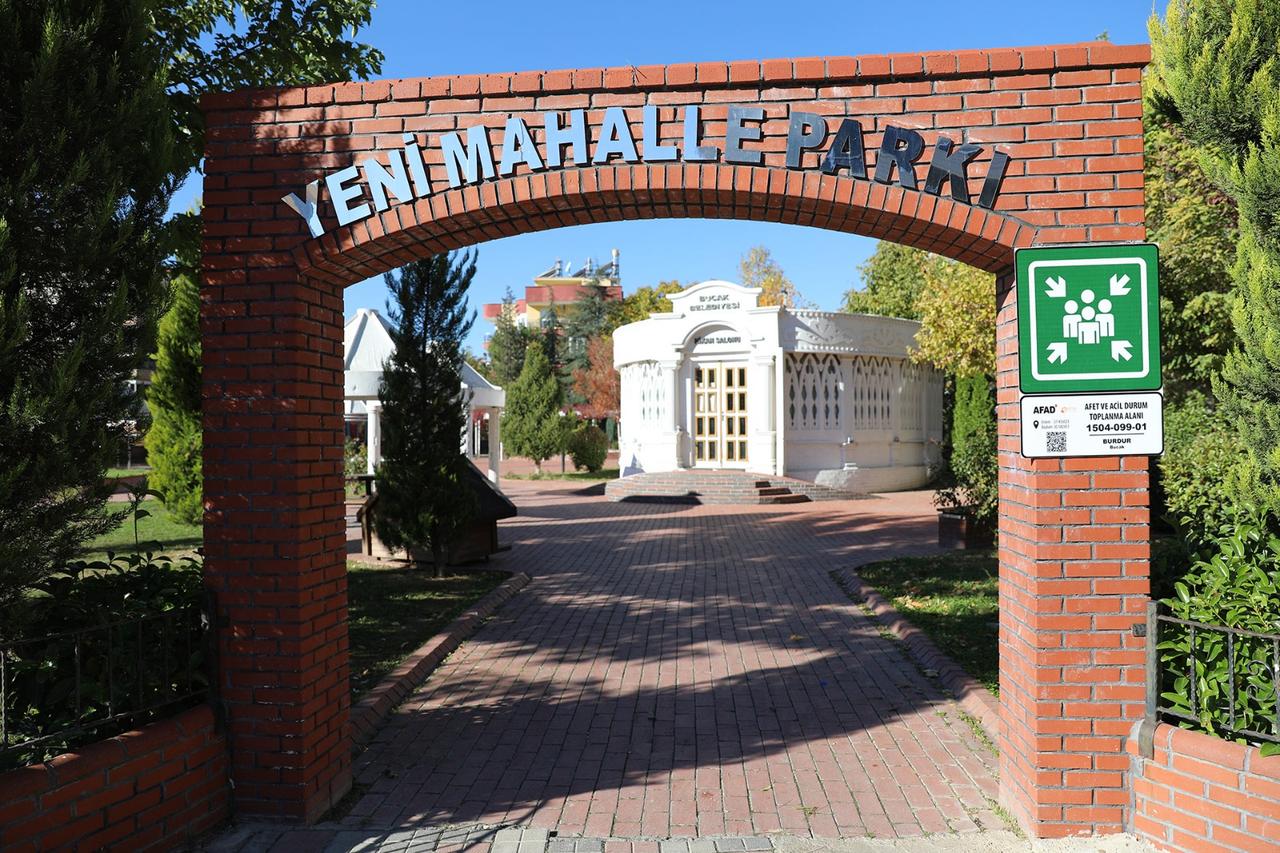
In practice, gathering areas are predominantly selected from open and green spaces or properties owned by public institutions. Parks, schoolyards, squares, and similar social infrastructure areas are used for this purpose. This preference stems from the fact that these areas are typically spacious, accessible, and available for public use.
However, various challenges arise during implementation. Urbanization, construction pressure, and changes in land use can lead to the reduction or loss of functionality of previously designated gathering areas. Additionally, some areas being repurposed for other uses create limitations for post-disaster deployment.
The effectiveness of the planning and implementation process depends on the regular evaluation and updating of these areas. Analyzing the adequacy of existing areas, identifying deficiencies, and planning new sites ensure the continuity of this system. This enables post-disaster response operations to be conducted in a more orderly and effective manner.
[1]
Gülten Kara and Kadir Kaan Yavruoğlu, “Analysis of Post-Disaster and Emergency Gathering Areas and Proposal of Potential Sites: The Case of Akçaabat, Trabzon,” Journal of Natural Disasters and Environment 11, no. 1 (2025): 340–353, https://doi.org/10.21324/dacd.1606775.
[2]
Disaster and Emergency Management Presidency (AFAD), “Learn the Gathering Area to Keep Yourself Safe,” accessed 23 March 2026, https://www.afad.gov.tr/toplanma-alanini-ogren-ki-canin-sag-olsun.
[3]
Ardahan University, “Post-Disaster Gathering and Shelter Areas,” accessed 23 March 2026, https://aadk.ardahan.edu.tr/tr/page/afet-sonrasi-toplanma-ve-barinma-alanlari/17514.
[4]
Disaster and Emergency Management Presidency (AFAD), “Learn the Gathering Area to Keep Yourself Safe,” accessed 23 March 2026, https://www.afad.gov.tr/toplanma-alanini-ogren-ki-canin-sag-olsun.
[5]
Disaster and Emergency Management Presidency (AFAD), “Learn the Gathering Area to Keep Yourself Safe,” accessed 23 March 2026, https://www.afad.gov.tr/toplanma-alanini-ogren-ki-canin-sag-olsun.
[6]
Ardahan University, “Post-Disaster Gathering and Shelter Areas,” accessed 23 March 2026, https://aadk.ardahan.edu.tr/tr/page/afet-sonrasi-toplanma-ve-barinma-alanlari/17514.
[7]
Gülten Kara and Kadir Kaan Yavruoğlu, “Analysis of Post-Disaster and Emergency Gathering Areas and Proposal of Potential Sites: The Case of Akçaabat, Trabzon,” Journal of Natural Disasters and Environment 11, no. 1 (2025): 340–353, https://doi.org/10.21324/dacd.1606775.
[8]
Karabağlar Municipality, “Post-Disaster Gathering Areas,” accessed 23 March 2026, https://www.karabaglar.bel.tr/sayfa/afet-sonrasi-toplanma-alanlari.
[9]
Gülten Kara and Kadir Kaan Yavruoğlu, “Analysis of Post-Disaster and Emergency Gathering Areas and Proposal of Potential Sites: The Case of Akçaabat, Trabzon,” Journal of Natural Disasters and Environment 11, no. 1 (2025): 340–353, https://doi.org/10.21324/dacd.1606775.
[10]
Gülten Kara and Kadir Kaan Yavruoğlu, “Analysis of Post-Disaster and Emergency Gathering Areas and Proposal of Potential Sites: The Case of Akçaabat, Trabzon,” Journal of Natural Disasters and Environment 11, no. 1 (2025): 340–353, https://doi.org/10.21324/dacd.1606775.
[11]
Gülten Kara and Kadir Kaan Yavruoğlu, “Analysis of Post-Disaster and Emergency Gathering Areas and Proposal of Potential Sites: The Case of Akçaabat, Trabzon,” Journal of Natural Disasters and Environment 11, no. 1 (2025): 340–353, https://doi.org/10.21324/dacd.1606775.
[12]
Gülten Kara and Kadir Kaan Yavruoğlu, “Analysis of Post-Disaster and Emergency Gathering Areas and Proposal of Potential Sites: The Case of Akçaabat, Trabzon,” Journal of Natural Disasters and Environment 11, no. 1 (2025): 340–353, https://doi.org/10.21324/dacd.1606775.
[13]
Disaster and Emergency Management Presidency (AFAD), “Learn the Gathering Area to Keep Yourself Safe,” accessed 23 March 2026, https://www.afad.gov.tr/toplanma-alanini-ogren-ki-canin-sag-olsun.
[14]
Gülten Kara and Kadir Kaan Yavruoğlu, “Analysis of Post-Disaster and Emergency Gathering Areas and Proposal of Potential Sites: The Case of Akçaabat, Trabzon,” Journal of Natural Disasters and Environment 11, no. 1 (2025): 340–353, https://doi.org/10.21324/dacd.1606775.
[15]
Gülten Kara and Kadir Kaan Yavruoğlu, “Analysis of Post-Disaster and Emergency Gathering Areas and Proposal of Potential Sites: The Case of Akçaabat, Trabzon,” Journal of Natural Disasters and Environment 11, no. 1 (2025): 340–353, https://doi.org/10.21324/dacd.1606775.

No Discussion Added Yet
Start discussion for "Post-Disaster Gathering Areas" article
Definition and Purpose
Characteristics
Site Selection Criteria
Use and Functions
Planning and Implementation