


This article was automatically translated from the original Turkish version.
+1 More
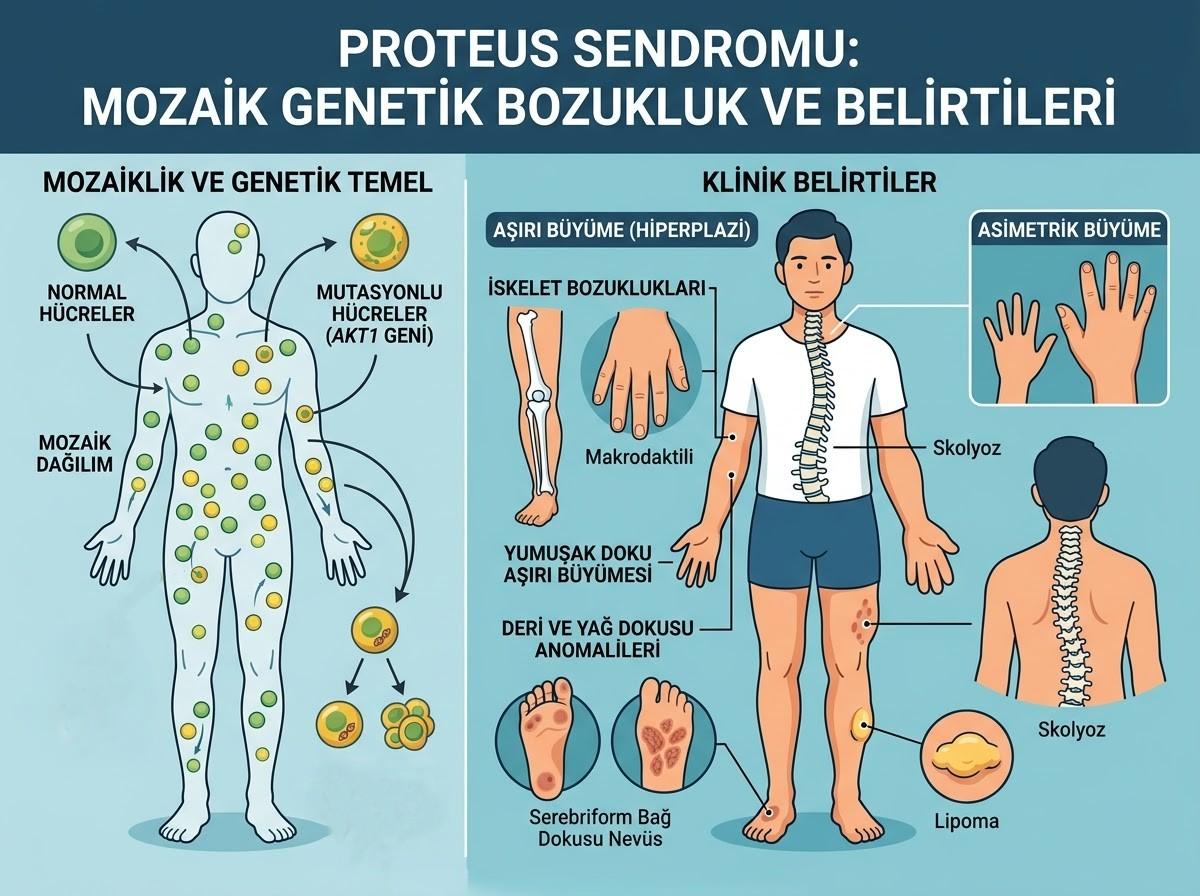
Proteus Syndrome (Generated with Artificial Intelligence).
Diagnosis | genetic testing of affected tissue Specific clinical criteria | ||||||||
|---|---|---|---|---|---|---|---|---|---|
Clinical Findings | cerebriform skin lesions macrodactyly Irregular bone growth | ||||||||
Treatment | There is no definitive cure | ||||||||
Tumor Susceptibility | Regional predominance of mostly benign tumors | ||||||||
Frequency | Very rare (~120 known living cases) | ||||||||
Inheritance | Not hereditary | ||||||||
Genetic Cause | Somatic mutation in the AKT1 gene | ||||||||
Three Comparative Hand Sculptures Representing Tissue Overgrowth and Mosaic Structure in Proteus Syndrome (Generated by Artificial Intelligence)." image-element-format="right" image-height="896" image-source="https://cdn.t3pedia.org/media/uploads/2026/03/13/yjshmDowVvwJSq7ZXx3t1KWvEBMqvq0D.jpg" image-width="1200">
Proteus syndrome is a mosaic genetic disorder characterized by asymmetric, disproportionate, and progressive overgrowth of various tissues. This syndrome affects the skeletal system, skin, adipose tissue, and central nervous system. The disease typically presents at birth with no symptoms or only mild findings and progresses during infancy and early childhood, leading to structural deformities in tissues. Growth abnormalities exhibit a patchy distribution across the body.
The disease was first described as a distinct clinical entity in 1979【1】. The name was assigned in 1983, and the term "Proteus syndrome" was coined in reference to Proteus, the sea god of Greek mythology known for his ability to change shape【2】. Joseph Carey Merrick, who lived in 19th-century England and was known as the "Elephant Man," is one of the most recognized historical and cultural examples of this condition【3】.
Proteus syndrome is classified as a rare disease in medical literature. Since its description, approximately 200 to 250 confirmed cases have been reported worldwide, with an estimated 120 of these patients currently alive.【4】 The genetic basis of the disorder—a postzygotic somatic mutation occurring during embryogenesis and not inherited from parents—prevents its transmission across generations and is the primary reason for its low case incidence.
The cellular basis of Proteus syndrome lies in a somatic mutation occurring in a subset of cells during embryonic development. This mutation is caused by the c.49G>A (p.Glu17Lys) variant in the AKT1 gene【5】. This mutation leads to constitutive activation of the PI3K/AKT/mTOR signaling pathway, which regulates cell proliferation and survival. Because the mutation does not affect germ cells and arises after embryogenesis, the disorder is not inherited from parents to offspring.
The clinical presentation varies among individuals and progresses over time. Asymmetric and disproportionate overgrowth is observed throughout the body.
Skeletal abnormalities include gigantism of the extremities (arms, legs, hands, and feet) and cranial anomalies (macrocephaly). The bone overgrowth caused by the syndrome is irregular and calcified. Asymmetric macrodactyly (excessive digit growth) is commonly observed.
Cutaneous manifestations include cerebriform connective tissue nevus (CCTN). Analysis of clinical reports indicates that these lesions appear on the soles of the feet in 80% of patients and on the palms in 20%【6】. These lesions consist of grooved connective tissue resembling the convolutions of the brain. Patients also frequently exhibit epidermal nevi and vascular malformations of capillary, venous, or lymphatic origin.
The syndrome causes regional variations in adipose tissue distribution. Some areas of the body develop lipomas and fat accumulations, while other regions in the same patient show failure of adipose tissue development (lipohipoplasia).
class=\
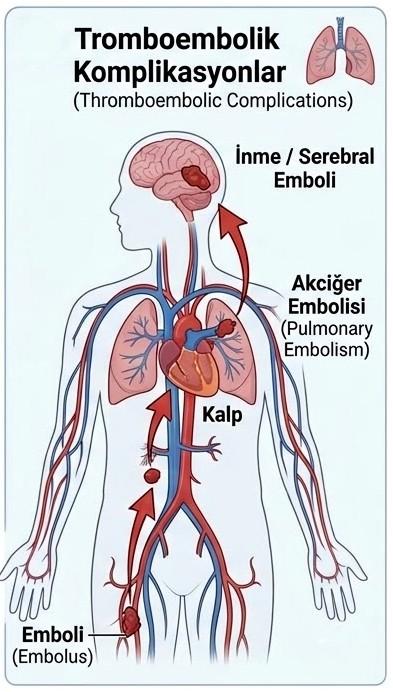
In Proteus syndrome, vascular malformations of capillary, venous, and lymphatic origin are observed. During the course of the disease, deep vein thrombosis (DVT) and pulmonary thromboembolism (PE) may develop. DVT is characterized by slowed blood flow and clot formation in the deep veins of the legs. Pulmonary thromboembolism occurs when these clots travel through the bloodstream and obstruct the pulmonary arteries, increasing pressure on the right ventricle of the heart and leading to respiratory and circulatory failure.
The persistent activation of the cell proliferation signaling pathway increases the risk of neoplasia and tumor formation. Reported neoplastic lesions in patients include bilateral ovarian cystadenomas, monomorphic adenomas of the parotid gland, testicular tumors, and meningiomas【7】. These neoplastic growths also follow the mosaic distribution pattern of the syndrome and develop regionally.
In some patients, neuromotor and cognitive development remains within normal limits. However, structural brain malformations such as hemimegalencephaly—where one cerebral hemisphere is abnormally enlarged—have been reported, along with intellectual disability and epileptic seizures【8】.
Respiratory abnormalities include cystic or bullous lung changes. Disorganized growth also affects internal organs, leading to asymmetric enlargement or cystic formations in the kidneys, spleen, and tonsils【9】.
The diagnosis of Proteus syndrome is based on a combination of clinical findings and genetic testing results.
To suspect the diagnosis, all three general criteria must be met: mosaic distribution of lesions, sporadic occurrence, and progressive nature of findings. In individuals meeting these general criteria, clinical evaluation involves scoring specific signs categorized as A, B, and C. Category A includes cerebriform connective tissue nevus (CCTN); categories B and C include asymmetric overgrowth, tumors, and vascular malformations. For a definitive diagnosis, individuals with a confirmed AKT1 mutation must score at least 10 points on the specific criteria; those without a detected mutation must score at least 15 points【10】.
Following clinical assessment, diagnosis is confirmed by molecular testing at the cellular level. Genetic analysis of biopsy samples from affected tissues must detect the c.49G>A (p.Glu17Lys) mutation in the AKT1 gene to complete the diagnostic process【11】. Because mutant cells are rarely detectable in blood samples, genetic testing must be performed directly on affected lesion tissues.
Other syndromes presenting with asymmetric overgrowth and tissue anomalies resemble Proteus syndrome clinically. The leading condition in differential diagnosis is the PIK3CA-Related Overgrowth Spectrum (PROS). CLOVES syndrome, which falls under the PROS umbrella and is characterized by congenital lipomatous overgrowth, vascular malformations, and skeletal anomalies, must be considered. Although both syndromes arise from defects in the PI3K/AKT/mTOR pathway, they are distinguished by the mutated gene: PIK3CA in PROS, rather than AKT1.
Other conditions excluded in differential diagnosis include Bannayan-Zonana syndrome, caused by mutations in the PTEN gene; Klippel-Trenaunay syndrome, marked by vascular malformations; and isolated hemihyperplasia.
There is currently no curative treatment for Proteus syndrome. Management requires a multidisciplinary approach involving orthopedics, dermatology, genetics, and surgery.
Orthopedic surgery is used to control asymmetric growth and deformities of the skeletal system. Epiphysiodesis (closure of growth plates) and corrective surgeries are preferred to address limb length discrepancies, scoliosis, or macrodactyly. Local mass excisions and liposuction are employed for skin and adipose tissue overgrowth; however, postoperative recurrence of tumor-like structures and hypertrophic scarring are common. Airway deformities and vascular anomalies increase the risks associated with anesthesia during surgical procedures.
The pan-AKT inhibitor miransertib (MK-7075), administered orally and targeting the PI3K/AKT/mTOR pathway, has been included in clinical trials to halt tissue overgrowth. Phase 1/2 MOSAIC clinical trials are evaluating the safety profile of miransertib. In these trials, the initial dose is 15 mg/m² daily for the first three 28-day cycles, followed by 25 mg/m² daily【12】. For PROS caused by mutations at a different step in the same biological pathway, alpelisib-containing medications have been approved for clinical use.
Prophylactic anticoagulant therapy is administered before and after surgical interventions to reduce the risk of deep vein thrombosis and pulmonary embolism. Strengthening patient communication and improving health literacy among caregivers through public media campaigns to ensure accurate information dissemination are supportive measures in medical management.
The prognosis in Proteus syndrome varies depending on the distribution of mutant cells and the tissues affected. Clinical reports indicate a life expectancy ranging from 9 months to 29 years【13】. Major causes of death include severe neurological involvement, progressive respiratory failure, and pulmonary thromboembolism.
Warning: The content in this article is provided solely for general encyclopedic informational purposes. The information here should not be used for diagnosis, treatment, or medical advice. Always consult a physician or qualified healthcare professional before making any health-related decisions. The author and KÜRE Digital Encyclopedia assume no responsibility for any consequences arising from the use of this information for diagnostic or therapeutic purposes.
Ansbro, Katelyn. "The Elephant Man: The Representation of Joseph Carey Merrick and His Disabilities and Deformities in Film and Society." Bachelor's thesis, Institute of Art Design & Technology, 2023. Accessed March 13, 2026. https://archive.onshow.iadt.ie/wp-content/uploads/sites/6/2023/04/The_Elephant_Man_The_Representation_Of_Joseph_Carey_Merrick_and_His_Disabilities_and_Deformities_in_Film_and_Society.pdf
Aster, Jon C., Abul K. Abbas, Vinay Kumar, Jayanta Debnath, and Abhijit Das. Robbins, Cotran, & Kumar Pathologic Basis of Disease. 11th ed. International ed. Philadelphia: Elsevier, 2026.
Biesecker, Leslie G. "The Challenges of Proteus Syndrome: Diagnosis and Management." *European Journal of Human Genetics* 14, no. 11 (2006): 1151–1157. Accessed March 13, 2026. https://doi.org/10.1038/sj.ejhg.5201638
Biesecker, Leslie G., and Julie C. Sapp. "Proteus Syndrome." In *GeneReviews*, ed. M. P. Adam, S. Bick, G. M. Mirzaa et al. Seattle: University of Washington, 1993–2026. Date Published August 9, 2012, updated May 25, 2023. Accessed March 13, 2026. https://www.ncbi.nlm.nih.gov/books/NBK99495/
Bolognia, Jean L., Jonathan S. Leventhal, and Irwin M. Braverman. "Skin Manifestations of Internal Disease." In Harrison’s Principles of Internal Medicine, 22nd ed., ed. J. Loscalzo et al., 392-409. New York: McGraw Hill, 2022.
ClinicalTrials.gov. "MK-7075 (Miransertib) in Proteus Syndrome." NCT04316546. Accessed March 13, 2026. https://clinicaltrials.gov/study/NCT04316546
Cohen, M. Michael Jr. "Proteus Syndrome Review: Molecular, Clinical, and Pathologic Features." *Clinical Genetics* 85, no. 2 (2014): 111–119. Accessed March 13, 2026. https://doi.org/10.1111/cge.12266
Dockienė, I., M. Čiuplinskas, R. Zagorskis, and E. Kontrimavičiūtė. "Proteus Syndrome with Late Diagnosis Confirmation: A Case Report." *Frontiers in Pediatrics* 13 (2025): 1568806. Accessed March 13, 2026. https://doi.org/10.3389/fped.2025.1568806
Duarte, Márcio Luís, Lucas Ribeiro dos Santos, Élcio Roberto Duarte, Fábio Peluzo de Abreu, and Jael Brasil de Alcantara Ferreira. "Proteus Syndrome-a Rare Disease." *International Journal of Radiology & Radiation Therapy* 4, no. 5 (2017): 448-449. Accessed March 13, 2026. https://doi.org/10.15406/ijrrt.2017.04.00113
Eng, Whitney, Ionela Iacobas, Jonathan Perkins, Giuseppe Zampino, Chiara Leoni, Paola Sabrina Buonuomo, Alessandra Simonetti et al. "Safety Findings from the Phase 1/2 MOSAIC Study of Miransertib for Patients with PIK3CA-Related Overgrowth Spectrum or Proteus Syndrome." *Orphanet Journal of Rare Diseases* 20, no. 1 (2025): 375. Accessed March 13, 2026. https://doi.org/10.1186/s13023-025-03831-z
Food and Drug Administration (FDA). "Resources for Information | Approved Drugs." Accessed March 13, 2026. https://www.fda.gov/drugs/drug-approvals-and-databases/resources-information-approved-drugs.
Goldhaber, Samuel Z. "Deep-Venous Thrombosis and Pulmonary Thromboembolism." In Harrison’s Principles of Internal Medicine, 22nd ed., ed. J. Loscalzo et al., 2154-2165. New York: McGraw Hill, 2022.
Information Resources Management Association, ed. Research Anthology on Improving Health Literacy through Patient Communication and Mass Media. Hershey, PA: Medical Information Science Reference, 2022.
Klimeczek-Chrapusta, Maria K., Marek Kachnic, and Anna Chrapusta. "Proteus Syndrome: Case Report and Updated Literature Review." *Archives of Plastic Surgery* 51, no. 4 (2024): 423–431. Accessed March 13, 2026. https://doi.org/10.1055/a-2300-7002
Lindhurst, Marjorie J., Julie C. Sapp, Jamie K. Teer, Jennifer J. Johnston, Erin M. Finn, Kathryn Peters, Joyce Turner et al. "A Mosaic Activating Mutation in AKT1 Associated with the Proteus Syndrome." *The New England Journal of Medicine* 365, no. 7 (2011): 611-619. Accessed March 13, 2026. https://doi.org/10.1056/NEJMoa1104017
Monteleone, Giovanni, Paola Sinibaldi, Maria Michela D’Aloia, and Maurizio Alimandi. "Proteus Syndrome: A Brief Review." *Journal of Pathology of the Locomotor Apparatus* 13, no. 1 (2014): 12-19. Accessed March 13, 2026. https://doi.org/10.12920/jopola.2014.02
Wiedemann, H.-R., G. R. Burgio, P. Aldenhoff, J. Kunze, H. J. Kaufmann, and E. Schirg. "The Proteus Syndrome: Partial Gigantism of the Hands and/or Feet, Nevi, Hemihypertrophy, Subcutaneous Tumors, Macrocephaly or Other Skull Anomalies and Possible Accelerated Growth and Visceral Affections." *European Journal of Pediatrics* 140, no. 1 (1983): 5–12. Accessed March 13, 2026. https://doi.org/10.1007/BF00661895
Özkınay, Ferda, Özgür Çoğulu, Nuri Bayram, Cumhur Gündüz, and Cihangir Özkınay. "Proteus Sendromu (Olgu Sunumu)." Ege Tıp Dergisi 39, no. 3 (2000): 213–215. Accessed March 13, 2026. https://izlik.org/JA57ZN39EG
[1]
Ferda Özkınay et al., "Proteus Syndrome (Case Report)", Ege Tıp Dergisi 39, no. 3 (2000): 213, accessed 13 March 2026, https://izlik.org/JA57ZN39EG.
[2]
H.-R. Wiedemann et al., "The Proteus Syndrome: Partial Gigantism of the Hands and/or Feet, Nevi, Hemihypertrophy, Subcutaneous Tumors, Macrocephaly or Other Skull Anomalies and Possible Accelerated Growth and Visceral Affections", European Journal of Pediatrics 140, no. 1 (1983): 5, accessed 13 March 2026, https://doi.org/10.1007/BF00661895.
[3]
Katelyn Ansbro, "The Elephant Man: The Representation of Joseph Carey Merrick and His Disabilities and Deformities in Film and Society" (Bachelor’s thesis, Institute of Art Design & Technology, 2023), 1, accessed 13 March 2026, https://archive.onshow.iadt.ie/wp-content/uploads/sites/6/2023/04/The_Elephant_Man_The_Representation_Of_Joseph_Carey_Merrick_and_His_Disabilities_and_Deformities_in_Film_and_Society.pdf.
[4]
Márcio Luís Duarte et al., "Proteus Syndrome—a Rare Disease", International Journal of Radiology & Radiation Therapy 4, no. 5 (2017): 448, accessed 13 March 2026, https://doi.org/10.15406/ijrrt.2017.04.00113; Maria K. Klimeczek-Chrapusta, Marek Kachnic and Anna Chrapusta, "Proteus Syndrome: Case Report and Updated Literature Review", Archives of Plastic Surgery 51, no. 4 (2024): 423, accessed 13 March 2026, https://doi.org/10.1055/a-2300-7002.
[5]
Marjorie J. Lindhurst et al., "A Mosaic Activating Mutation in AKT1 Associated with the Proteus Syndrome", The New England Journal of Medicine 365, no. 7 (August 2011): 611, accessed 13 March 2026, https://doi.org/10.1056/NEJMoa1104017; M. Michael Cohen Jr., "Proteus Syndrome Review: Molecular, Clinical, and Pathologic Features", Clinical Genetics 85, no. 2 (February 2014): 111, accessed 13 March 2026, https://doi.org/10.1111/cge.12266.
[6]
Olivia M. Rostagni et al., "Tumour Spectrum in AKT1-related Proteus Syndrome: A Systematic Review of Clinical Reports and Series", Journal of Medical Genetics 62, no. 2 (February 2025): 74, accessed 13 March 2026, https://doi.org/10.1136/jmg-2024-110173.
[7]
Rostagni et al., "Tumour Spectrum in AKT1-related Proteus Syndrome", 74; Cohen, "Proteus Syndrome Review", 111.
[8]
Cohen, "Proteus Syndrome Review", 111.
[9]
Wiedemann et al., "The Proteus Syndrome", 5; Rostagni et al., "Tumour Spectrum in AKT1-related Proteus Syndrome", 74.
[10]
Leslie G. Biesecker and Julie C. Sapp, "Proteus Syndrome", in GeneReviews, ed. M. P. Adam et al. (Seattle: University of Washington, 1993–2026), 1, published 9 August 2012, updated 25 May 2023, accessed 13 March 2026, https://www.ncbi.nlm.nih.gov/books/NBK99495/.
[11]
Lindhurst et al., "A Mosaic Activating Mutation", 611; Biesecker and Sapp, "Proteus Syndrome".
[12]
Whitney Eng et al., "Safety Findings from the Phase 1/2 MOSAIC Study of Miransertib for Patients with PIK3CA-Related Overgrowth Spectrum or Proteus Syndrome", Orphanet Journal of Rare Diseases 20, no. 1 (2025): 375, accessed 13 March 2026, https://doi.org/10.1186/s13023-025-03831-z.
[13]
Márcio Luís Duarte et al., "Proteus Syndrome—a Rare Disease", International Journal of Radiology & Radiation Therapy 4, no. 5 (2017): 448, accessed 13 March 2026, https://doi.org/10.15406/ijrrt.2017.04.00113.


Proteus Syndrome (Generated with Artificial Intelligence).
Diagnosis | genetic testing of affected tissue Specific clinical criteria | ||||||||
|---|---|---|---|---|---|---|---|---|---|
Clinical Findings | cerebriform skin lesions macrodactyly Irregular bone growth | ||||||||
Treatment | There is no definitive cure | ||||||||
Tumor Susceptibility | Regional predominance of mostly benign tumors | ||||||||
Frequency | Very rare (~120 known living cases) | ||||||||
Inheritance | Not hereditary | ||||||||
Genetic Cause | Somatic mutation in the AKT1 gene | ||||||||
History and Nomenclature
Prevalence
Genetic Basis and Etiology
Clinical Signs and Findings
Skeletal System and Bone Growth
Skin and Subcutaneous Tissue Findings
Adipose Tissue Abnormalities
Vascular Anomalies and Thromboembolic Complications
Tumor Susceptibility and Neoplastic Development
Neurological, Pulmonary, and Visceral Findings
Neurological Findings
Pulmonary and Visceral Findings
Diagnostic Criteria and Medical Evaluation
General and Specific Criteria
Molecular Confirmation
Differential Diagnosis
Treatment and Management Approaches
Surgical Interventions and Orthopedic Management
Targeted Medical Therapies
Complication Prevention and Psychosocial Support
Prognosis