

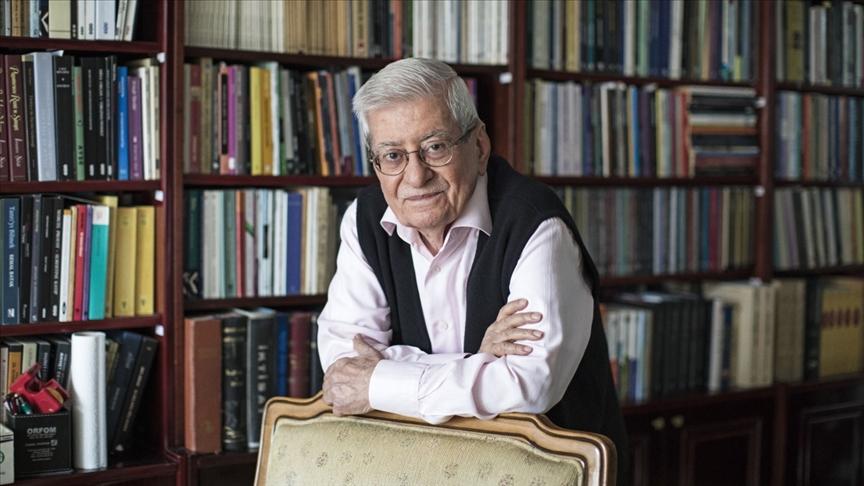

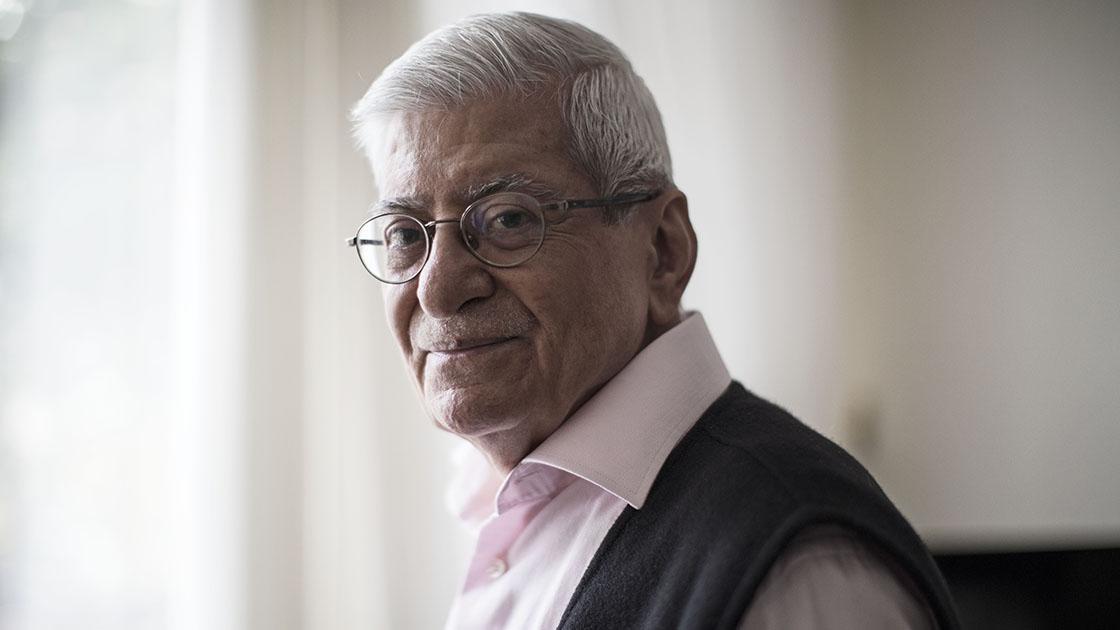
Rasim Özdenören
Doğum tarihi | 1940-05-20 | ||||||||
|---|---|---|---|---|---|---|---|---|---|
Eş | Ayşe Çalkaya | ||||||||
Place of Birth | Kahramanmaraş, Türkiye | ||||||||
Profession(s) | bureaucrat essayist Short story writer | ||||||||
Award(s) | TBMM Outstanding Service Award (2009) Presidency Culture and Art Grand Award (2015) | ||||||||
Ölüm tarihi | 2022-07-23 | ||||||||
Rasim Özdenören (1940–2022), a prominent member of the “Yedi Güzel Adam” group, made significant contributions to Turkish literature through his short stories and essays. Known for his Islamic sensibility, focus on the human soul, and emphasis on indigenous thought, Özdenören enriched Turkish literature with detailed descriptions and a poetic style. The twin brother of poet Alaeddin Özdenören, he explored themes such as cultural alienation, the conflict between modernity and tradition, and individual loneliness.
Rasim Özdenören was born on 20 May 1940 in Kahramanmaraş to Ayşe Nezahat Hanım and engineer Hakkı Özdenören. Due to his father’s posting as a state engineer, his childhood was spent in Kahramanmaraş, Malatya, and Tunceli. He grew up in an artistic and intellectual environment alongside his twin brother Alaeddin and developed an interest in literature at an early age.
He attended primary school at Sakarya, Cumhuriyet, and Gazi Primary Schools in Kahramanmaraş and Malatya. He completed middle school in Tunceli and graduated from Kahramanmaraş High School in 1958. He earned his law degree from Istanbul University Faculty of Law in 1967 and graduated from the Institute of Journalism in 1964. Between 1970 and 1971, he pursued postgraduate studies in “Development Economics” at the University of New Mexico in the United States but returned without completing his thesis. His education shaped his analytical thinking and literary production.
During his high school years, he formed a literary circle with Cahit Zarifoğlu, Erdem Bayazıt, Mehmet Âkif İnan, and Nuri Pakdil, republished the journal Hamle, and curated art sections in local newspapers. His first short story, “Akarsu,” was published in 1957 in the journal Varlık. His meeting with Sezai Karakoç in 1962 significantly influenced his literary and intellectual world. He published stories in the newspaper Yeni İstiklâl and wrote articles for the journals Edebiyat, Mavera, and Yedi İklim. He served as a columnist for the newspapers Yeni Devir, Zaman, and Yeni Şafak. In 1975, he was appointed as an advisor to the Ministry of Culture, and between 1977 and 1978, he worked as an inspector. He held various positions at the State Planning Organization (DPT), including expert, head of the publication and representation department, deputy general secretary, and advisor, retiring in 2005 as general secretary. Since 2015, he served as the general director of the journal Hece.
Özdenören received numerous awards for his works:
Özdenören created a unique voice in Turkish literature by blending Islamic sensitivity with modern literary forms. In his stories, he examined the human soul, cultural alienation, and the tension between modernity and tradition. In his essays, he interpreted concepts such as science, democracy, and freedom from an Islamic perspective. Through the “Yedi Güzel Adam” group, he strengthened indigenous thought and inspired younger writers. He skillfully harmonized Ottoman Turkish, pure Turkish, and Western-derived vocabulary, using the stream-of-consciousness technique to convey feelings of confinement and despair.
Özdenören’s works primarily focused on the genres of short story, novel, and essay:
Çok Sesli Bir Ölüm and Çözülme were adapted into television films; Çok Sesli Bir Ölüm won the Special Jury Prize at the 1978 International Prague Television Film Competition.
Özdenören was deeply interested in literature, Sufism, history, and cultural issues. He led a life centered on reading, writing, and literary discussions with friends. In his stream-of-consciousness stories, he reflected his artistic sensitivity through themes of confinement and loneliness.
In 1971, he married Ayşe Çalkaya; the couple had two children, Ömer Ümran and Merve. He maintained a close relationship with his twin brother Alaeddin Özdenören. He completed his military service between 1972 and 1974 as a reserve officer in Bursa and Şırnak.
After retirement, he continued writing and assumed the role of general director of the journal Hece in 2015. He remained active in literary circles, mentoring younger writers.
He passed away on 23 July 2022 at Ankara University Faculty of Medicine Hospital due to COPD. His funeral prayer was held on 24 July 2022 at Eyüp Sultan Camii in Istanbul, after which he was buried.
Özdenören left behind a legacy that fused Islamic sensitivity and indigenous thought with modern literature. His writings on cultural identity and modernity continue to be debated in literary and intellectual circles. The documentary Hayat ve Ben ve Kelimeler on TRT Türk introduced his legacy to a broad audience.
Through the “Yedi Güzel Adam” group, he inspired young writers and thinkers. The literary circle he formed with Sezai Karakoç, Cahit Zarifoğlu, and Nuri Pakdil played a key role in shaping the indigenous thought movement in Türkiye.
Türkiye Yazarlar Birliği. "Rasim Özdenören Vefat Etti." Accessed May 30, 2025. https://www.tyb.org.tr/rasim-ozdenoren-vefat-etti-56147h.htm.
Özdenören, Rasim. Müslümanca Düşünme Üzerine Denemeler. İstanbul: İz Yayıncılık, 1985.
“Rasim Özdenören.” Türk Edebiyatı İsimler Sözlüğü. Accessed May 30, 2025. https://teis.yesevi.edu.tr/madde-detay/ozdenoren-rasim.
“Usta Kalem Rasim Özdenören Son Yolculuğuna Uğurlandı.” T.C. Kültür ve Turizm Bakanlığı Basın ve Halkla İlişkiler Müşavirliği. Accessed May 30, 2025. https://basin.ktb.gov.tr/TR-325066/usta-kalem-rasim-ozdenoren-son-yolculuguna-ugurlandi.html.

Rasim Özdenören
Doğum tarihi | 1940-05-20 | ||||||||
|---|---|---|---|---|---|---|---|---|---|
Eş | Ayşe Çalkaya | ||||||||
Place of Birth | Kahramanmaraş, Türkiye | ||||||||
Profession(s) | bureaucrat essayist Short story writer | ||||||||
Award(s) | TBMM Outstanding Service Award (2009) Presidency Culture and Art Grand Award (2015) | ||||||||
Ölüm tarihi | 2022-07-23 | ||||||||
Childhood and Youth Years
Educational Life
Career Path
Notable Achievements
Key Works and Contributions
Works and Projects
Hobbies and Interests
Personal Life
Final Years and Death
Legacy and Influence
Sources of Inspiration