


This article was automatically translated from the original Turkish version.
+2 More
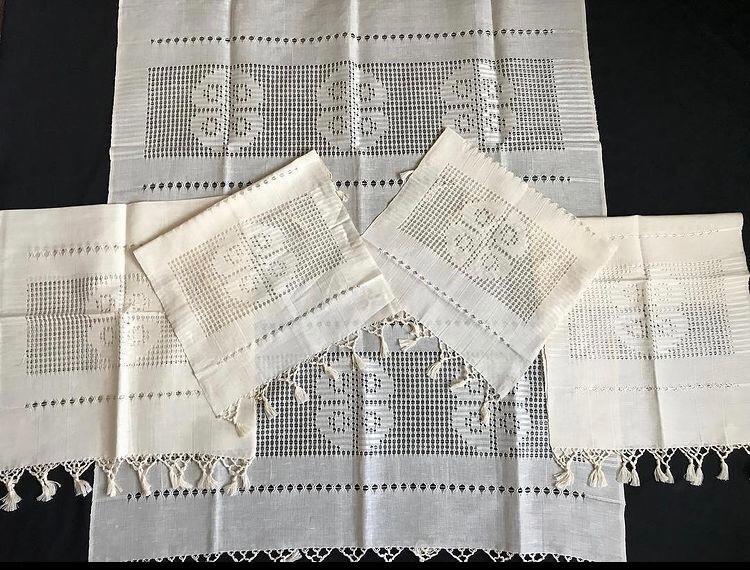
Rize Cloth (Feretiko Hand Weaving)
Registration Number | 98 | ||||||||
|---|---|---|---|---|---|---|---|---|---|
Application Date | 31.03.2005 | ||||||||
Application Number | C2005/006 | ||||||||
Publication Date | 27.12.2007 | ||||||||
Type(s) | Mahreç İşareti | ||||||||
Applicant | Rize Valiliği | ||||||||
Applicant’s Address | Rize Valiliği | ||||||||
Product Name | El Dokuması | ||||||||
Geographical Indication | Rize Bezi (Feretiko El Dokumaları) | ||||||||
Usage Format | Markalama | ||||||||
Geographical Boundary | Rize İl Sınırları | ||||||||
Rize Bezi, a traditional handwoven fabric also known as “Feretiko” and registered with geographical indication number 98, is made primarily from yarn derived from the natural flax plant. Flax yarn has a single-layered, twisted structure. If desired, the natural color of the yarn can be bleached to achieve a white hue and can be dyed using various dyeing techniques. Rize Bezi is distinguished from other flax fabrics by its fiber structure, production process, and characteristics shaped by climatic conditions.

Rize Bezi (Feretiko) (Ministry of Culture and Tourism of the Republic of Türkiye)
The raw material of Rize Bezi, the hemp plant, has a gray-yellow, straight, matte appearance with fiber bundles longer and coarser than those of flax. Bundle length can reach up to two meters. Fiber length varies between 1.5 cm and 4.5 cm. Hemp fibers exhibit a notably robust structure among plant fibers. The fiber is resistant to decay but lacks elasticity. When subjected to a burn test, it emits a cellulose odor; under microscopic examination, it displays a knotted or irregular fiber structure.
The fiber bundles, measuring 1.8 to 2.4 meters in length, are separated from the hemp plant using techniques similar to those employed for flax. Due to Rize’s low sunlight exposure and high rainfall, the fibers receive minimal sunlight compared to those from other regions, making it necessary that Rize Bezi be produced exclusively from hemp grown in this area. Female plants are separated from male plants, which are removed one week before harvest. Male plants are soaked in water pools to soften them.
The hemp plant required for Rize Bezi is cultivated throughout Rize province. Humus-rich clay soils, a humid climate, and abundant rainfall are the primary factors influencing the yield and quality of the fibers. The highest quality fibers are obtained in Rize’s humid, low-sunlight climate, which averages 100 sunny days per year. This condition prevents starch formation in the fibers, resulting in a softer, finer, and more durable material.
The production of Rize Bezi relies entirely on traditional handcrafting, from cultivation to weaving. The process consists of the following steps:
The fabric known as Feretiko typically has a matte finish. Its color can be bleached to white. Thanks to the natural twist in the yarn structure, the fabric is soft and finely woven. It contains 18 warp threads and 20 weft threads per square centimeter. This density enhances the fabric’s durability and lifespan.

Rize Bezi (Feretiko) (Ministry of Culture and Tourism of the Republic of Türkiye)
Rize Bezi is traditionally used for undergarments, particularly favored for its moisture-absorbent and cooling properties. Additionally, blended yarns combining cotton or silk are used to produce household textiles such as tablecloths, towels, bed sheets, and similar items. Those decorated with colored or patterned motifs may also serve decorative purposes.
The production of Rize Bezi is monitored under the framework of its geographical indication protection. Oversight is conducted by a five-member commission comprising representatives from Rize Girls’ Vocational High School, Rize Public Education Center, İyidere Public Education Center, the Provincial Directorate of Agriculture, and private sector experts in the field. Inspections are carried out twice annually; additional inspections may be conducted as needed.
Ministry of Culture and Tourism of the Republic of Türkiye. "Rize Bezi Görseli 1." *Kültür Portalı*. Accessed May 20, 2025. https://www.kulturportali.gov.tr/repoKulturPortali/large/26022013/aed4b645-cd1a-4831-9e41-3a0f4cb97483.jpg?format=jpg&quality=50.
Ministry of Culture and Tourism of the Republic of Türkiye. “Rize Bezi Görseli 2.” *Kültür Portalı*. Accessed May 20, 2025. https://www.kulturportali.gov.tr/repoKulturPortali/large/26022013/394d3f4f-8977-49db-9bac-783081c2c322.JPG?format=jpg&quality=50.
Turk Patent and Trademark Office. "Coğrafi İşaret Tescil Belgesi – Rize Bezi." Accessed May 20, 2025. https://ci.turkpatent.gov.tr/Files/GeographicalSigns/98.pdf.
Turk Patent and Trademark Office. "Rize Bezi – Geographical Indication Details." *Geographical Indications and Traditional Product Name Database*. Accessed May 20, 2025. https://ci.turkpatent.gov.tr/cografi-isaretler/detay/37953.

Rize Cloth (Feretiko Hand Weaving)
Registration Number | 98 | ||||||||
|---|---|---|---|---|---|---|---|---|---|
Application Date | 31.03.2005 | ||||||||
Application Number | C2005/006 | ||||||||
Publication Date | 27.12.2007 | ||||||||
Type(s) | Mahreç İşareti | ||||||||
Applicant | Rize Valiliği | ||||||||
Applicant’s Address | Rize Valiliği | ||||||||
Product Name | El Dokuması | ||||||||
Geographical Indication | Rize Bezi (Feretiko El Dokumaları) | ||||||||
Usage Format | Markalama | ||||||||
Geographical Boundary | Rize İl Sınırları | ||||||||
No Discussion Added Yet
Start discussion for "Rize Cloth (Feretiko)" article
Characteristics and Fiber Structure of the Hemp Plant
Extraction Process
Production Area and Climatic Conditions
Production Process
Structural Properties
Applications
Monitoring and Protection