This article was automatically translated from the original Turkish version.
+2 More

Rize Simidi
Registration Number | 410 | ||||||||
|---|---|---|---|---|---|---|---|---|---|
Registration Date | 24.01.2019 | ||||||||
Application Number | C2017/196 | ||||||||
Application Date | 15.11.2017 | ||||||||
Name of the Geographical Indication | Rize Simidi | ||||||||
Product / Product Group(s) | Simit / Baking and Confectionery Products Dough Products | ||||||||
Type of Geographical Indication | Mahreç Mark | ||||||||
Applicant/Registrant(s) | Rize Municipality | ||||||||
Address of the Registrant | Piriçelebi Mah. Menderes Bulvarı No: 182 Merkez 53020 RİZE | ||||||||
Geographical Boundary | Rize Province | ||||||||
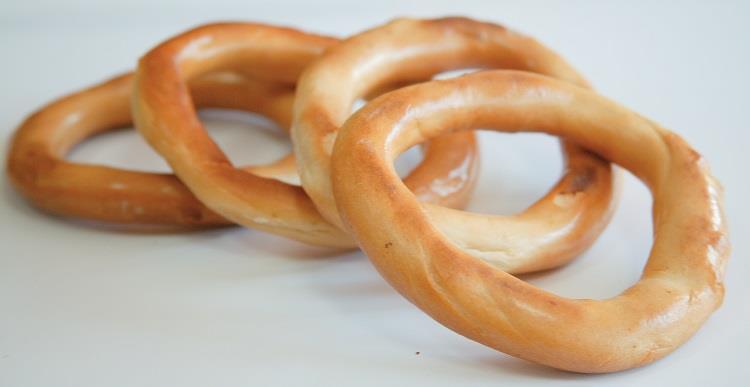
Rize Simidi is a sesame-free variety of bread ring specific to the city of Rize in Türkiye’s Black Sea Region, classified among bakery and confectionery products. This product has been registered as a geographical indication under the type of “geographical indication,” with official registration granted on 24 January 2019 under number 410. The registration application was submitted on 15 November 2017 under reference number C2017/196. The registered holder is the Rize Municipality.
Rize Simidi is a dough product made from flour, fresh yeast, salt, water, and pekmez derived from the aromatic black grape (Vitis Labrusca L.) grown in the Rize region, which is boiled and then baked. According to written sources, the product’s history dates back to the 1930s. A municipal decision published in the Rize Local Newspaper on 5 August 1939 regulated aspects such as weight and price. Interviews conducted with individuals aged 63 to 91 in Rize revealed that these individuals had consumed Rize Simidi since childhood.
Unlike bread rings produced in other provinces, Rize Simidi stands out due to the following distinctive features:
In addition, the humid climate of Rize affects fermentation and baking times in dough products. Rize bakers are known for their skill in maintaining product quality under these conditions. In Rize, each bakery sells its simits in groups of 25 or 50, tied with strings of different colors.
The pekmez used in Rize Simidi is made from the Isabella variety of grape, known locally as “aromatic grape.” Its physical and chemical limits are as follows:
The following raw materials are used in the production of Rize Simidi:
The production process consists of the following stages:
Simits are traditionally marketed in bundles of 25 or 50. Each bakery is identified by the color of its tying string.
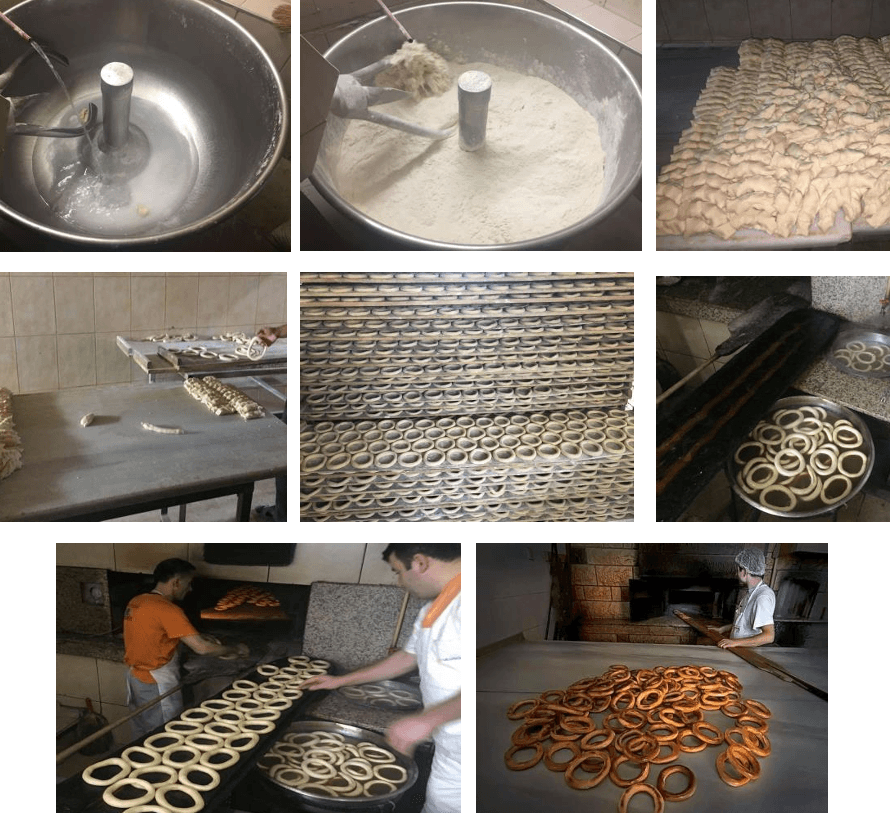
Production Stages of Rize Simidi (Türk Patent)
The production of Rize Simidi is restricted exclusively to the boundaries of Rize Province. The product must be prepared using traditional methods and must be made using pekmez derived from grapes grown in the region. The unique humid climate of Rize and the local knowledge accumulated in production are fundamental elements determining the product’s distinctive characteristics.
Monitoring of the production and marketing process is carried out under Law No. 6769 on Industrial Property. The following institutions are represented in the monitoring authority:
Monitoring inspections are conducted at least three times annually. Additional inspections are carried out in the event of complaints. Inspection results are reported annually by the Rize Municipality to the Turkish Patent and Trademark Office. Support may be obtained from public or private institutions or expert individuals as needed.
Rize Provincial Directorate of Culture and Tourism. "Rize Simidi." T.C. Kültür ve Turizm Bakanlığı Rize İl Kültür ve Turizm Müdürlüğü. Accessed May 20, 2025. https://rize.ktb.gov.tr/Resim/333499,rize-simidi-1jpg.png?0.
Turk Patent and Trademark Office. "Coğrafi İşaret Tescil Belgesi – Rize Simidi." Accessed May 20, 2025. https://ci.turkpatent.gov.tr/Files/GeographicalSigns/6793f173-5d88-43d2-8477-11e6e830efd2.pdf.
Turk Patent and Trademark Office. "Rize Simidi." Coğrafi İşaretler ve Geleneksel Ürün Adları. Accessed May 20, 2025. https://ci.turkpatent.gov.tr/cografi-isaretler/detay/38421.

Rize Simidi
Registration Number | 410 | ||||||||
|---|---|---|---|---|---|---|---|---|---|
Registration Date | 24.01.2019 | ||||||||
Application Number | C2017/196 | ||||||||
Application Date | 15.11.2017 | ||||||||
Name of the Geographical Indication | Rize Simidi | ||||||||
Product / Product Group(s) | Simit / Baking and Confectionery Products Dough Products | ||||||||
Type of Geographical Indication | Mahreç Mark | ||||||||
Applicant/Registrant(s) | Rize Municipality | ||||||||
Address of the Registrant | Piriçelebi Mah. Menderes Bulvarı No: 182 Merkez 53020 RİZE | ||||||||
Geographical Boundary | Rize Province | ||||||||
Distinctive Characteristics
Chemical and Microbiological Properties
Chemical Properties
Microbiological Properties
Properties of Grape Pekmez
Production Method
Geographical Boundary and Production Conditions
Monitoring