


This article was automatically translated from the original Turkish version.
+2 More
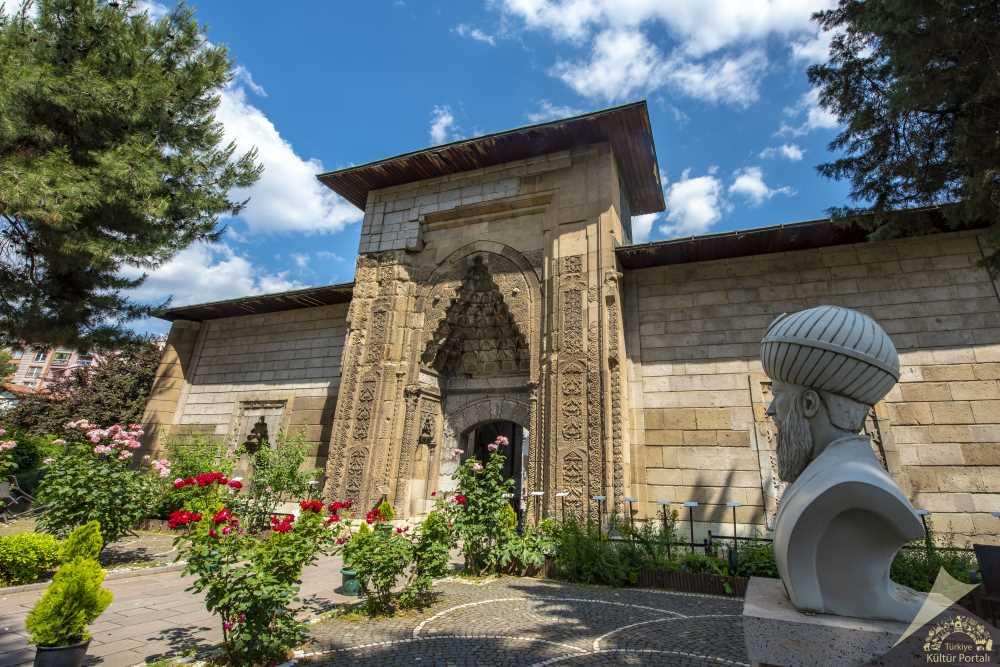
Sabuncuoğlu Museum of Medicine and Surgical History
Former Name(s) | Darüşşifa / Bimarhane | ||||||||
|---|---|---|---|---|---|---|---|---|---|
Location | Center Türkiye Amasya | ||||||||
Commissioned by | The Slave of Ilduş (Yıldız) Hatun, Anber ibn Abdullah (Reign of I. Alâeddin Keykubad) | ||||||||
Historical Function | Darüşşifa, Mental Hospital, Medical Education Institution | ||||||||
Named After | Sabuncuoğlu Şerefeddin (1385–1470) | ||||||||
Architectural Feature(s) | Classical Anatolian Darüşşifa Plan Stone and Brick Material Use Courtyard and Corridor Building Layout | ||||||||
Opening Date as a Museum | 23 October 2011 | ||||||||
Current Function | Museum of Medical and Surgical History | ||||||||
Exhibition Content | Copies of Sabuncuoğlu Şerefeddin’s Medical Works, Replicas of 15th Century Surgical Instruments, Wax Statues, Music Therapy Demonstrations, Scenes of Physicians and Patients of the Era | ||||||||
Affiliated Institution | Amasya Provincial Directorate of Culture and Tourism | ||||||||
The Sabuncuoğlu Museum of Medicine and Surgical History is a significant medical history museum formed through the functional transformation of a historic health facility located in the city center of Amasya. The museum was established following the restoration of the historic Bimarhane, which housed some of the earliest examples of music-based therapeutic practices in Anatolia. The building, which has served various purposes across different periods from the Middle Ages to the present, holds a unique position in terms of both medical history and architectural and cultural heritage. Its conversion into a museum aimed to introduce figures who shaped Anatolian medical history, beginning with the Amasyan physician Sabuncuoğlu Şerefeddin, and to raise public awareness of the region’s health heritage through the exhibition of traditional healing methods.
.jpg&w=1280&q=75)
Sabuncuoğlu Museum of Medicine and Surgical History (Türkiye Culture Portal)
Sources provide conflicting information regarding the construction of the building. Some records state that the Bimarhane was built in 1308–1309 by Anber bin Abdullah, a slave of İlduş (Yıldız) Hatun, the wife of Ilkhanid ruler Olcayto Mehmed Han. According to this account, the structure was erected as a charitable health institution during the Ilkhanid period. However, official archival documents from the Ottoman era present a different view. These documents date the building to the reign of Anatolian Seljuk Sultan I. Alâeddin Keykubat (1220–1237). The records refer to the building as the “Sultan Alâeddin Darüşşifası,” suggesting it may have been constructed as part of the Seljuk dynasty’s public health policies.
Both perspectives indicate that the building was part of a well-organized, waqf-supported tradition of health institutions during the Middle Ages. Its location in Amasya, one of the period’s major centers of science and culture, further reinforces its function as a medical facility.
.jpg&w=1280&q=75)
Sabuncuoğlu Museum of Medicine and Surgical History (Türkiye Culture Portal)
Since its construction, the building served for many years as a Bimarhane (Darüşşifa), providing advanced medical care for both mental and physical ailments according to the standards of its time. Notably, it is recognized as one of the earliest examples in Anatolia of music-based therapeutic practices, hosting sessions designed to improve patients’ mental well-being through musical accompaniment.
Treatment methods incorporated both Eastern medical traditions and Islamic medical practices. Key elements included music therapy, relaxation through the sound of water, herbal medicine, adherence to hygiene standards, and individualized patient care. In this regard, the building was not merely a medical facility but also functioned as a center for scientific inquiry and research.
Over time, due to natural disasters, political changes, and shifts in healthcare policies, the building lost its original function and remained unused for extended periods. Nevertheless, its core architectural elements were largely preserved, which proved a significant advantage during its conversion into a museum.
.jpg&w=1280&q=75)
Sabuncuoğlu Museum of Medicine and Surgical History (Türkiye Culture Portal)
The building housing the Sabuncuoğlu Museum of Medicine and Surgical History reflects the classical Anatolian darüşşifa floor plan. Architecturally, it is designed symmetrically, with a large central courtyard surrounded by rooms. These rooms were historically used for patient treatment and the implementation of various medical procedures. The primary construction materials include cut stone, rubble stone, and brick. Stone decorations found particularly at the main entrance and certain interior spaces reflect the artistic sensibilities of the period in which the building was constructed.
The historic structure was designed with features that served both therapeutic and aesthetic purposes: spaces receiving direct natural light, controlled acoustic arrangements, and transitional corridors that integrated interior and exterior environments. The architectural composition harmonizes the symmetry and functionality characteristic of health buildings from that era.
.JPG&w=1280&q=75)
Sabuncuoğlu Museum of Medicine and Surgical History (Türkiye Culture Portal)
The process of converting the building into a museum began with the completion of restoration works. Following these conservation and functional revitalization efforts, the structure was opened to the public as the Sabuncuoğlu Museum of Medicine and Surgical History. The museum is named after the 15th-century Amasyan physician and surgeon Sabuncuoğlu Şerefeddin, who holds a prominent place in Anatolian medical history due to his written works and innovative surgical techniques. The museum aims to preserve and promote his medical legacy.
The museum displays examples of Sabuncuoğlu Şerefeddin’s handwritten manuscripts, replicas of surgical instruments from medieval Islamic medicine, reconstructions of traditional healing methods, and audiovisual materials. It also features exhibits on music-based therapies and dramatized scenes of physician-patient interactions dressed in period attire. In this way, the museum functions not merely as a static exhibition space but as an educational and instructional center for the history of medicine.
Today, the museum attracts considerable interest from both domestic and international visitors and is regarded as a vital representative of Amasya’s cultural and scientific heritage.
The Sabuncuoğlu Museum of Medicine and Surgical History constitutes a unique example both in terms of preserving a historic health facility for future generations and in presenting documented practices and artifacts related to medical history. Illuminating the deep-rooted past of Anatolian medicine, the museum plays a significant role in the preservation of cultural heritage through its architectural form, functional history, and educational mission.
Ministry of Culture and Tourism of the Republic of Türkiye. “Sabuncuoğlu Tıp of Medical and Surgical History.” *Official Website of theAmasya İl Directorate of Culture and Tourism, Republic of Türkiye*. Accessed May 24, 2025. https://amasya.ktb.gov.tr/TR-59522/sabuncuoglu-tip-ve-cerrahi-tarihi-muzesi.html.
T.C. Amasya Governorship. "Sabuncuoğlu Tıp ve Cerrahi Tarihi Müzesi." Amasya Valiliği Resmi Web Sitesi. Accessed May 24, 2025. http://www.amasya.gov.tr/sabuncuoglu-tip-ve-cerrahi-tarihi-muzesi.
T.C. Amasya Municipality. "Sabuncuoğlu Şerefeddin Tıp Tarihi ve Cerrahi Müzesi." Amasya Belediyesi Resmi Web Sitesi. Accessed May 24, 2025. https://amasya.bel.tr/muzeler/sabuncuoglu-serefettin-tip-tarihi-ve-cerrahi-muzesi?_=1748106123862.
Türkiye Kültür Portalı. "Sabuncuoğlu Şerefeddin Tıp ve Cerrahi Tarihî Müzesi." *T.C. Kültür ve Turizm Bakanlığı Kültür Portalı*. Accessed May 24, 2025. https://www.kulturportali.gov.tr/turkiye/amasya/gezilecekyer/sabuncuoglu-serefeddn-tip-ve-cerrah-tarh-muzes.

Sabuncuoğlu Museum of Medicine and Surgical History
Former Name(s) | Darüşşifa / Bimarhane | ||||||||
|---|---|---|---|---|---|---|---|---|---|
Location | Center Türkiye Amasya | ||||||||
Commissioned by | The Slave of Ilduş (Yıldız) Hatun, Anber ibn Abdullah (Reign of I. Alâeddin Keykubad) | ||||||||
Historical Function | Darüşşifa, Mental Hospital, Medical Education Institution | ||||||||
Named After | Sabuncuoğlu Şerefeddin (1385–1470) | ||||||||
Architectural Feature(s) | Classical Anatolian Darüşşifa Plan Stone and Brick Material Use Courtyard and Corridor Building Layout | ||||||||
Opening Date as a Museum | 23 October 2011 | ||||||||
Current Function | Museum of Medical and Surgical History | ||||||||
Exhibition Content | Copies of Sabuncuoğlu Şerefeddin’s Medical Works, Replicas of 15th Century Surgical Instruments, Wax Statues, Music Therapy Demonstrations, Scenes of Physicians and Patients of the Era | ||||||||
Affiliated Institution | Amasya Provincial Directorate of Culture and Tourism | ||||||||
No Discussion Added Yet
Start discussion for "Sabuncuoğlu Museum of Medicine and Surgical History" article
Historical Development and Establishment
Function and Usage History
Architectural Structure and Features
Museum Conversion and Contemporary Function