

This article was automatically translated from the original Turkish version.
+1 More
Location | Istanbul Türkiye | ||||||||
|---|---|---|---|---|---|---|---|---|---|
Collections | Calligraphy and book arts, Paintings, Furniture, Decorative objects | ||||||||
Builder | Architect Edoardo De Nari | ||||||||
Patron | Prince Mehmed Ali Hasan | ||||||||
Museum Opening Date | 2002 | ||||||||
Construction Date of the Museum | 1925 | ||||||||
Sakıp Sabancı Museum is an art and cultural institution affiliated with Sabancı University, located in the Emirgan neighborhood of Istanbul’s Sarıyer district, within one of the oldest settlements along the Bosphorus.
The museum consists of a building originally constructed in 1925 by Prince Mehmed Ali Hasan of the Egyptian Khedival family for the Italian architect Edoardo De Nari, known as the “Atlı Köşk”, along with additional exhibition spaces. In 1998, the mansion was transferred to Sabancı University by the Sabancı family and opened to the public as a museum in 2002. Following renovations in 2005, the exhibition areas were expanded to meet international standards.

Sakıp Sabancı Museum (Istanbul Provincial Directorate of Culture and Tourism)
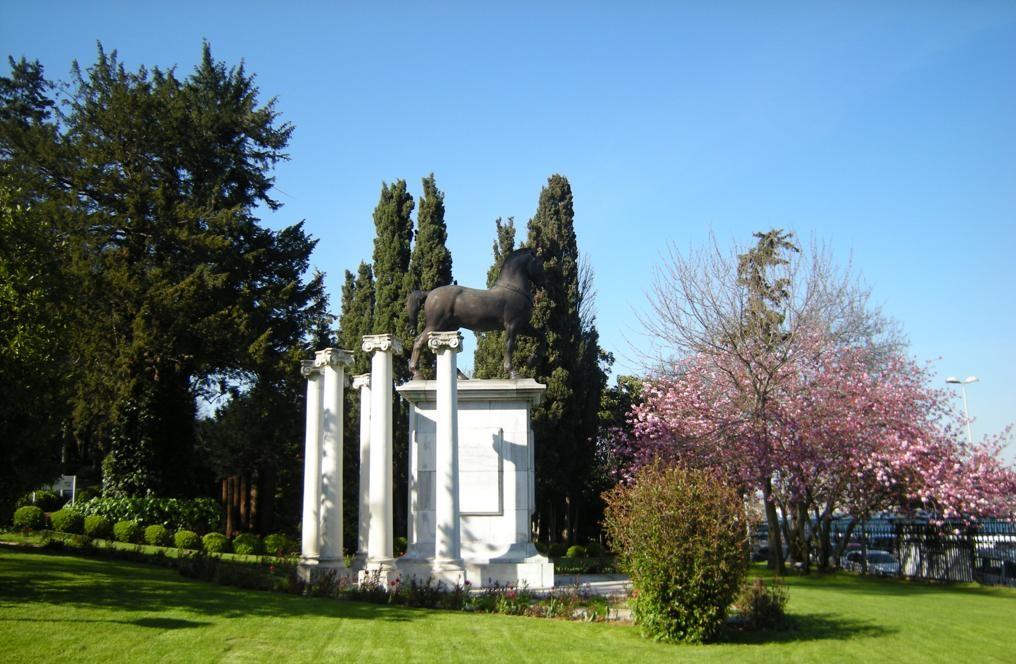
The Atlı Köşk was built in 1925 as a summer residence by Prince Mehmed Ali Hasan and was briefly used as the Montenegrin Embassy. In 1951, it was purchased from Princess İffet of the Khedival family by the industrialist Hacı Ömer Sabancı. In the same year, a statue of a horse by the French sculptor Louis Daumas, dated 1864, was installed in the garden. This led to the building becoming known as the “Atlı Köşk”. Additionally, on the property stands a cast replica of one of the horses taken from Istanbul to Venice during the Fourth Crusade.
After Hacı Ömer Sabancı’s death in 1966, the mansion was continuously used as a residence by Sakıp Sabancı, the family patriarch. For many years, it served as the Sabancı family’s home until it was transferred to Sabancı University in 1998 along with its collection. A modern gallery wing was added and the building opened as a museum in 2002. Further expansions in 2005 increased the exhibition space.
One of the museum’s most significant sections, the Book Arts and Calligraphy Collection spans from the 14th to the 20th century. It includes handwritten Qur’ans, prayer books, quatrains, murakkas, panels, hilyes, calligraphy tools, and diplomatic documents bearing the tuğras of Ottoman sultans. The collection features works by renowned calligraphers such as Şeyh Hamdullah, Hafız Osman, Derviş Ali, Şekerzade Mehmed, Mahmud Celaleddin, Sami Efendi, and Necmeddin Okyay.
This collection was introduced internationally through exhibitions held in 2008 at the Real Academia de Bellas Artes de San Fernando in Madrid and the Real Alcázar Palace in Seville, Spain. Visitors can access the digitized version of the collection via QR codes.
The Painting Collection features important examples of Turkish painting from the late 18th century to the mid-20th century, as well as works by foreign artists. It reflects the development of Turkish painting from the Tanzimat period through the early Republic.
Notable works include Konstantin Kapıdağlı’s Portrait of Prince Selim III, Pierre-Désiré Guillement’s Portrait of Halayık, Fausto Zonaro’s Young Girl Carrying a Pumpkin, Osman Hamdi Bey’s Still Life with Vase, and Şeker Ahmed Paşa’s Forest, Deer in the Forest, and Floral Still Life. Artists such as İbrahim Çallı, Süleyman Seyyid, and Fikret Mualla are also represented in the collection.
The Family Rooms on the ground floor of Atlı Köşk exemplify the Western-oriented aesthetic preferences of Ottoman elites in the 19th century. The collection includes gilded mirrors, silk-upholstered chairs, French tapestry sets, Venetian crystal, vases bearing Napoleon’s coat of arms, and Persian carpets. These objects illustrate not only the daily life of the Sabancı family but also the impact of Turkish modernization on interior decoration. In the garden, alongside stone artifacts from the Roman, Byzantine, and Ottoman periods, stands the sculpture Double by Anish Kapoor.
In addition to its permanent collection, the museum hosts comprehensive international temporary exhibitions. Catalogues are produced for each exhibition, containing articles, critiques, and analyses by historians and art historians on the artistic trends of the period. These publications serve not only to document the museum’s exhibition activities but also function as research and reference resources.
To meet contemporary demands, Sakıp Sabancı Museum employs augmented reality (AR) technology. Through AR systems implemented in areas depicting family life at Atlı Köşk, visitors experience the spaces and artworks enhanced with digital content. These applications contribute to the museum’s development of an interactive and accessible exhibition approach.
The museum organizes educational programs for children and adults and hosts conferences, seminars, and concerts. Thus, it functions not only as an exhibition space but also as a venue for cultural engagement and learning.
Aytekin, Handan. *Müzelerde Artırılmış Gerçeklik Uygulamaları: Sakıp Sabancı Müzesi Örneği*. PhD thesis, Dokuz Eylül Üniversitesi, 2016. ProQuest Dissertations & Theses Global (30843801). Accessed August 16, 2025. https://www.proquest.com/docview/2925403437?pq-origsite=gscholar&fromopenview=true&sourcetype=Dissertations%20&%20Theses
Aytekin, Handan. “Sakıp Sabancı Müzesi.” *Türkiye Turizm Ansiklopedisi.* Accessed August 16, 2025. https://turkiyeturizmansiklopedisi.com/sakip-sabanci-muzesi
Muzeler. "Sakıp Sabancı Müzesi." Muzeler.org. Accessed August 16, 2025. https://muzeler.org/sakip-sabanci-muzesi--168489
Sakıp Sabancı Museum Official Website. "Atlı Köşk Yenilenerek Ziyarete Açıldı." Sakıp Sabancı Museum Official Website. Accessed August 16, 2025. https://www.sakipsabancimuzesi.org/sayfa/atli-kosk-acildi
T.C. Sarıyer District Governorship. "Sakıp Sabancı Museum." Accessed August 16, 2025. http://www.sariyer.gov.tr/sakip-sabanci-muzesi
İstanbul İl Kültür ve Turizm Müdürlüğü. "Sakıp Sabancı Müzesi." Accessed August 16, 2025. https://istanbul.ktb.gov.tr/yazdir?97DAFFB722381E977C9E36C9B51103C1
Location | Istanbul Türkiye | ||||||||
|---|---|---|---|---|---|---|---|---|---|
Collections | Calligraphy and book arts, Paintings, Furniture, Decorative objects | ||||||||
Builder | Architect Edoardo De Nari | ||||||||
Patron | Prince Mehmed Ali Hasan | ||||||||
Museum Opening Date | 2002 | ||||||||
Construction Date of the Museum | 1925 | ||||||||
No Discussion Added Yet
Start discussion for "Sakıp Sabancı Museum" article
History
Collections
Book Arts and Calligraphy Collection
Painting Collection
Furniture and Decorative Arts Collection
International Exhibitions and Publications
Technological Applications
Educational and Cultural Activities