

This article was automatically translated from the original Turkish version.
Community Name | Sekel (Turkish), Székely (Hungarian) | ||||||||
|---|---|---|---|---|---|---|---|---|---|
Place of Residence | Sekelistan (Turkish), Székelyföld (Hungarian) | ||||||||
Geography | Erdel | ||||||||
Origins Debates | Hun/Turk, Ogur–Avar, Khazar–Kabar, Bulgar/Pecheneg, Hungarian origins and their transformation into the ethnonym 'Szék' (place/residence) | ||||||||
Economy | Agriculture weaving forestry salt trade animal husbandry | ||||||||
Language(s) | Local variant of Hungarian | ||||||||
Alphabet | Runic Székely script | ||||||||
Religion(s) | Influence of Christianity and Shamanism | ||||||||
Szekely (Hungarian: Székely) are the indigenous community of Székelyföld (Sekelistan), a region located in eastern Transylvania/Erdel in present-day Romania; its inhabitants have been known as Szekely since the earliest times.
The Szekely formed a privileged group within the medieval Kingdom of Hungary, constituting a light cavalry class that, during peacetime, ensured internal security and, during wartime, undertook the roles of vanguard, reconnaissance, and border defense. These military functions granted them an privileged status. Western chronicles depicted them as expert archers.
In the social structure of Erdel, the Szekely, alongside Hungarians and Saxons, were one of the three main components of the “Three Nations.”

【1】
The Turkish name for the community is Szekely, while its Hungarian equivalent is Székely. The region they inhabit is called Székelyföld in Hungarian and commonly referred to as Sekelistan in Turkish literature. The Transylvanian/Erdel area, surrounded by the Carpathians in Central Europe, is their historical homeland. The name “Erdel” derives from the Hungarian Erdő-elve (“forest edge”) and corresponds to the Latin Transilvanya.
There are differing interpretations regarding the origin of the name “Szekely/Székely.” Károly interpreted it as meaning “occupied and settled,” while Vámbéry linked it to the root meaning “settled.”
In contemporary Szekely narratives, the name is said to derive from the Hungarian word szék, meaning “seat” or “place of sitting”; in most Szekely settlements, the suffix -szék carries the meaning of “settlement” or “place of residence.”
At the time of the Hungarian arrival in Erdel, there were already settled communities in the region, remnants of the Avar era with Ogur origins. The Hungarians referred to this group, with whom they shared linguistic ties, using a term meaning “settled ones”; over time, this designation evolved into a tribal name (Hungarian Székely, Turkish Szekely).
This view argues that “Szekely” initially functioned as a descriptor or epithet and gradually became an ethnonym.

【2】
The historical homeland of the Szekely, Székelyföld (Sekelistan), is a protected corridor in eastern Transylvania/Erdel, bounded by the Carpathian Mountains to the east. Running from north to south are the Gyergyói, Hagymás, and Csíki mountain ranges; to their west lies a fertile plain between Gyergyószentmiklós (Gheorgheni) and Csíkszereda (Miercurea Ciuc).
Access to the region is facilitated through narrow passes, including the natural corridor along the Mureș Valley and the route opened by the Olt Valley to the south. At its southern end lies Sepsiszentgyörgy (Sfântu Gheorghe), to the east Kovászna (Covasna), and to the northeast Kézdivásárhely (Târgu Secuiesc); the main gateway here is the Ojtoz/Oituz Pass (others include Cătrușa, Ojdula, Moacşa).
The suffix -szék, frequently found in Szekely place names, carries the meaning of “settlement” or “place of residence”; hundreds of examples such as Kézdiszék, Orbaiszék, Sepsiszék, and Marosszék reflect the historical-administrative geography of the region.
Marosvásárhely (Târgu-Mureş), regarded as the unofficial capital of the Szekely, is one of the oldest Szekely towns; however, in the modern era it is noted as an exceptional large city where the Szekely majority no longer prevails. In contrast, in other Szekely towns and villages, the population is predominantly Szekely.
The Transylvanian geography features numerous mountain passes enabling east-west connectivity; this structure positioned Székelyföld as the “eastern gateway,” reinforcing its role in border defense.
The region’s major rivers are tributaries of the Mureș, Someș, and Küküllő, which originate in the Carpathians and feed into the Tisza-Danube system, irrigating the Transylvanian plain.
Historically, the main components of Transylvania’s population have been Romanians, Szekely/Hungarians, Germans (Saxons), and Roma. In the modern era, while state settlement and migration policies are emphasized, it is noted that in most Szekely towns the Szekely majority has been preserved.

【3】
Modern literature presents numerous theories regarding the origins of the Szekely: Hun/Turkic, Scythian, Hungarian, Bulgarian, Pecheneg, Khazar, and Kabar origins are among the most common.
Most historians regard the Szekely as a military auxiliary group that joined the Hungarians later; however, archaeologists and linguists generally avoid treating them as a distinct ethnic group, explaining their privileges not by ethnicity but by their specialized military roles.
There is no consensus on the origin of the name “Székely/Szekely.” Károly interpreted it as “occupied and settled,” while Vámbéry linked it to the root meaning “settled.” Despite numerous interpretations, no definitive evidence has been found. One theory holds that when the Hungarians arrived in Erdel, they encountered settled (szék) Ogur communities from the Avar period; they referred to this group using a term meaning “settled ones,” and over time the word evolved from a descriptor into an ethnonym.
Information on the early period of the Szekely is limited, and the issue is primarily discussed through Hungarian and Byzantine chronicles. The 10th-century Byzantine source De Administrando Imperio, Simon Kézai’s 13th-century writings, and the 14th-century Képes Krónika serve as primary references. Within this framework, the Szekely military role as light cavalry and archers is prominently featured in early records.
The script known as “Szekely writing” shows formal similarities to the Göktürk (Orkhon) script. Some characters have been compared with those from the Talas and Yenisey traditions, and a total of 44 letters have been identified, including four Greek-origin signs (a, f, h, l) and two Glagolitic-origin signs (e, o). Some researchers emphasize the possibility that this script was known in the Pontic-Khazar region. The script survived among the Szekely after the reign of King Stephen I and has been preserved in Hungarian-language texts up to the present day.

【4】
Following the Ottoman advance into the Balkans, conflict with the Hungarians became inevitable, and the Szekely emerged as the vanguard and light cavalry force of the Hungarian army. They actively participated in decisive battles such as the First Battle of Kosovo (1389), Nicopolis (1396), Varna (1444), and the Second Battle of Kosovo (1448). Due to their location along the frontier, they were often the first to encounter the enemy, and their skill in archery and reconnaissance was praised in contemporary chronicles.
In the second half of the 14th century, King Lajos I of Hungary transformed Erdel into a base for offense and defense within his Balkan policy, leading to intensified use of the Szekely. In the 1368 campaign against Bulgaria, the king’s army included Szekely forces alongside nobles; Szekely ispán István Lackfi served under the command of Erdel voivode Miklós Lackfi. This period demonstrates the importance of Erdel in the kingdom’s eastern policy.
The Szekely represented the Hungarian army’s counterpart to the classic Turkic steppe warfare tradition, fulfilling roles such as vanguard, reconnaissance before attacks, and surveillance of the rear after battles. For centuries they remained stationed in the eastern border regions of Erdel, performing border guard duties; this military function formed the primary basis of their privileged status throughout the Middle Ages.
After the Battle of Mohács (1526), when Erdel emerged as a separate principality, the Szekely retained considerable political weight. In the Diet, they were represented as one of the “Three Nations of Erdel” (alongside Hungarians and Saxons), and in decision-making processes seeking balance between the Ottomans and Habsburgs, their vote was often decisive. Indeed, the Ottoman central administration did not neglect addressing the Szekely lords in its correspondence regarding Erdel.
Szekely elites are also seen participating in key moments of Ottoman–Hungarian relations. For example, during the reign of Sultan Selim I, a Hungarian diplomatic delegation that visited Istanbul included a figure named Keteyi Sekel Tamaş, who later engraved several lines of Szekely runic script on the wall of a demolished inn. This detail demonstrates that the Szekely participated in diplomatic contacts and that their unique writing tradition remained in use until the 16th century.
The early Szekely community, which appeared relatively “egalitarian,” fragmented into a three-tiered structure under European feudal influences between the 14th and 16th centuries:
This class stratification was institutionalized under King Mátyás; advisory figures known as tanácsúr emerged around local elites. Over time, privileges passed from father to son, giving rise to a Szekely aristocracy.
The historical and administrative unit of the Szekely was the szék (settlement/district). Titles such as székkapitányok, primipili, and maiores exercituantium were used for local military and administrative leaders; in regional assemblies, the term öregek (equivalent to “elders”) became established.
The Szekely operated under their own internal legal codes that guaranteed collective land ownership, individual freedoms, and communal regulations. This structure, rooted more deeply than in Pecheneg or Cuman examples, ensured the long-term preservation of both their military role and legal autonomy.
The Szekely were obligated to bear arms and serve on guard duty upon the summons of the king, the voivode of Erdel, or the Szekely ispán. As a result, they were exempt from general taxes as “noble-privileged classes.” In times of mobilization, soldiers were levied according to the “one in twenty” principle, with each szék providing a commander from among its nobles. Penalties for non-compliance included fines and death; emergency calls employed methods such as bloodied swords circulated from village to village, signal fires on hilltops, and the use of zurna and drums to summon arms.
From the 16th century onward, prolonged wars and centralized tax regimes impoverished the lower classes. The Szekely peasant uprisings of 1434 and 1514 were brutally suppressed, and the Szekely lordship along with many historical privileges came to an end. Thus, the distinction between “oppressors and oppressed” deepened within society; many impoverished Szekely were forced to work as tenants on the lands of the nobility.
In Transylvania’s political architecture, the Szekely, alongside Hungarians and Saxons, were recognized as one of the Three Nations. This identity was reinforced through their social institutions and representation in local assemblies and the Diet.
After 1989, within the Romanian context, the Szekely established a modern umbrella organization, the Székely National Council, founded on 16 October 2003, emerging from youth platforms. This structure, comprising a presidency and regional delegations, has been active since 2008 under the leadership of Izsák Balázs.

【5】
Throughout history, the main sources of income for the Szekely have been agriculture and animal husbandry, supplemented by crafts such as weaving, embroidery, woodworking, ceramics, and blacksmithing. The region’s vast pastures and fertile soils sustained this agrarian-pastoral economy.

【6】
In medieval Europe, salt was of strategic importance and served as a major source of income for the Szekely. Thanks to salt caves in the Maros (Mureș) region, the area gained exceptional value, as it was widely believed that “no other salt mines existed in Central Europe.”
Horse breeding was highly significant among the Szekely. Horses reserved for war were not used for daily riding; they were kept in separate areas, specially fed, and used exclusively for training. Each group of ten settlements raised horses for military purposes; the presentation of one ox and one horse to the king during coronation ceremonies symbolized the economic weight of the Szekely. The Lófő class was the military-social counterpart of this equestrian tradition.
The dense forests of Transylvania fostered income-generating activities such as timber production and woodcarving among the Szekely. Trees cut in mountainous areas were transported via rivers to processing centers. Woodworking expanded into a broad production field, ranging from everyday objects to architectural decorations (famous Szekely doors).

【7】
Historically, the Szekely spoke the same language as the Hungarians, and their cultural patterns paralleled those of the Hungarian environment.
It is known that the Szekely script closely resembles the Göktürk (Orkhon) script in form, with its closest affinity established through inscriptions from the Talas Valley. In addition to the 38 characters of the Göktürk alphabet, the Szekely script includes four Greek-origin signs (a, f, h, l) and two Glagolitic-origin signs (e, o), totaling 44 characters. There is a possibility that this script was known in the Pontic-Khazar region. Like the Göktürk script, the Szekely script is written and read from right to left; however, word separation marks follow a different pattern than those in the Göktürk tradition.
After the establishment of the Christian Hungarian Kingdom (during the reign of Stephen I), the runic script was regarded as a symbol of paganism and was systematically suppressed at the central level; however, due to geographical isolation, the script continued to be used among the Szekely in Erdel/Székelyföld. Therefore, although it is referred to in modern times as “Hungarian-Szekely writing,” actual usage became uniquely associated with the Szekely.
With the Christianization of the Kingdom of Hungary, the Szekely officially entered the Christian framework; however, due to the coercive nature of this conversion in its early stages, shamanistic beliefs and practices persisted among the populace for a long time. It is known that shamanism continued “in practice and belief” through generations after Saint Stephen I and was even revitalized among the Szekely following the 15th-century Cuman raids.

Light, Szekely, Schematics, and Images Section.
Today, a significant portion of the Szekely are Unitarians, while Catholic and Protestant communities also exist depending on the region.【8】 It is particularly emphasized that no Orthodox Szekely communities exist. Additionally, it is noted that Szekely churches lack the altar section, which has been common in the Christian world since the 5th century.
A reverence for trees and forests, paralleling Turk-Mongol traditions, is also found in Szekely culture. Sacred trees representing the clan’s essence are reflected in practices such as tying cloth, hair, and feathers to branches. These customs exemplify how ancient beliefs survived by transforming within local Christian folklore.
The spring festival on 21 March (Hungarian: Tavaszi Napéjegyenlőség) is identical to the Turkic world’s Nowruz/Hıdrellez tradition. According to belief, earth, air, and water are renewed; the ritual of young Szekely men dousing young women with water symbolizes fertility and renewal.
1 November is All Souls’ Day. Practices include visiting graves, lighting candles, distributing food to the dead in villages, and distributing wine and bread in towns.
Easter involves visiting relatives and exchanging painted eggs.
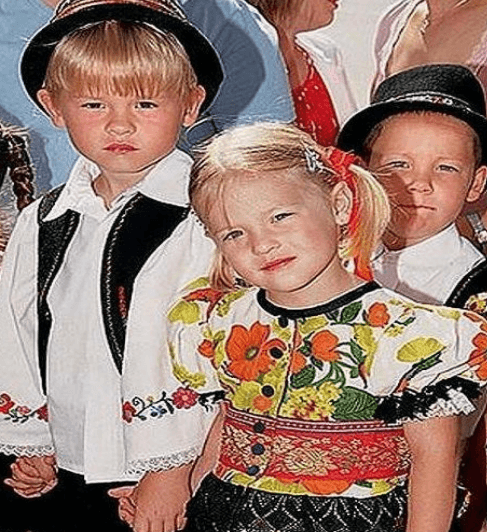
Szekely folk dances are performed collectively during harvests, grape harvests, weddings, and festivals, accompanied by songs and love ballads; modern interpretations also note prominent Ottoman influences. Traditional folk costumes are now mostly displayed during festivals and special occasions.
In Szekely settlements, each village’s church is built through communal labor; the church also serves as the primary site for basic education. This demonstrates the role of religious institutions as carriers of local social solidarity.

【9】
Yiğit Türker, Pınar. “Orta Çağ Macar Krallığı’nda Sekellerin Askerî Faaliyeti ve Osmanlı-Macar Mücadelesindeki Konumu.” *Selçuk Türkiyat* 56 (December 2022): 157–177. https://dergipark.org.tr/tr/pub/sutad/issue/73941/1222242
İşık, İsmail Hakkı. *Sekeller (Etnik Köken, Tarih ve Kültürleri)*. Master's thesis, Selçuk University Institute of Social Sciences, 2019. Konya. https://tez.yok.gov.tr/UlusalTezMerkezi/TezGoster?key=FgmkGchPKo23qQqBeqzVZg2iXj8ft0tpW2rC5EG47kuXIGNBN-6qMH5ilt1DNxI8
[1]
İsmail Hakkı İşık, “Sekeller (Etnik Köken, Tarih ve Kültürleri)” (Yüksek Lisans Tezi, Selçuk Üniversitesi Sosyal Bilimler Enstitüsü, Konya, 2019), Şema ve Resimler Bölümü.
[2]
İşık, Sekeller, Şema ve Resimler Bölümü.
[3]
İşık, Sekeller, Şema ve Resimler Bölümü.
[4]
İşık, Sekeller, Şema ve Resimler Bölümü.
[5]
İşık, Sekeller, Şema ve Resimler Bölümü.
[6]
İşık, Sekeller, Şema ve Resimler Bölümü.
[7]
İşık, Sekeller, Şema ve Resimler Bölümü.
[8]
İşık, Sekeller, Şema ve Resimler Bölümü.
[9]
İşık, Sekeller, Şema ve Resimler Bölümü.

Community Name | Sekel (Turkish), Székely (Hungarian) | ||||||||
|---|---|---|---|---|---|---|---|---|---|
Place of Residence | Sekelistan (Turkish), Székelyföld (Hungarian) | ||||||||
Geography | Erdel | ||||||||
Origins Debates | Hun/Turk, Ogur–Avar, Khazar–Kabar, Bulgar/Pecheneg, Hungarian origins and their transformation into the ethnonym 'Szék' (place/residence) | ||||||||
Economy | Agriculture weaving forestry salt trade animal husbandry | ||||||||
Language(s) | Local variant of Hungarian | ||||||||
Alphabet | Runic Székely script | ||||||||
Religion(s) | Influence of Christianity and Shamanism | ||||||||
Name, Identity, and Terminology
Geography and Demography
Origins Debate
Szekely in the Ottoman–Hungarian Struggle
Social Structure and Institutions
Economic Life
Language and Writing
Religion and Beliefs