
This article was automatically translated from the original Turkish version.
Located in northwestern Italy, approximately 20 kilometers north of Milan, the town of Seveso became internationally known following an industrial accident in 1976 that had serious environmental and health consequences. On 10 July 1976, an uncontrolled reaction occurred in a reactor at a facility owned by the chemical company ICMESA near Seveso, during the production of trichlorophenol (TCP), resulting in a toxic gas leak.
The white gas cloud released into the atmosphere after the explosion contained a high concentration of dioxin (TCDD). Dioxins are among the most hazardous environmental pollutants known, capable of causing severe biological effects even at extremely low doses. Immediately after the incident, a large number of small livestock and birds in the area died suddenly. The cause of this phenomenon was only identified several days later, as residents began to exhibit symptoms such as skin lesions and gastrointestinal disorders.
Investigations by official authorities determined that a wide area of the town of Seveso had been heavily contaminated. Based on wind direction and dispersion patterns, certain residential zones were found to be at high risk. As a result, approximately 100 homes were evacuated and residents were relocated to other areas. Long-term environmental cleanup efforts were initiated, and the Seveso incident became a turning point that led to the restructuring of environmental and industrial safety regulations in Europe.
In 1982, the European Commission adopted Regulation 82/501/EEC, known as the Seveso I Directive. The primary objective of this directive was to prevent major industrial accidents caused by hazardous chemicals and to minimize their adverse effects on human health and the environment. The directive defined which facilities fell under its scope and established the legal obligations for enterprises handling hazardous substances.
Under the Seveso Directive, personnel working in industrial facilities were required to be trained and to undergo regular education to raise awareness about accident prevention. Additionally, facilities that store large quantities of hazardous substances must notify competent authorities of this situation and proactively plan safety measures to reduce risks.
The directive also addressed the need to inform the public living near such facilities about potential risks and to develop necessary evacuation or emergency response scenarios. Furthermore, member states were required to report to the European Commission all major industrial accidents occurring within their borders to enable analysis of their consequences.
Over time, the Seveso Directive has been updated and expanded, and it continues in force today as the Seveso III Directive. These developments clearly demonstrate that environmental safety cannot be overlooked in the process of industrialization.
The major industrial accidents in Bhopal, India, and Mexico City, Mexico, in 1984 prompted the European Union to review its regulations on the control of hazardous substances. In response, the Seveso II Directive (96/82/EC) was introduced in 1996, featuring new provisions to facilitate public access to information and strengthen oversight processes. However, subsequent major accidents in cities such as Enschede, Baia Mare, and Toulouse once again revealed the inadequacies of existing regulations. Following these events, the Seveso II Directive was revised in 2003 through the new regulation 2003/105/EC, which brought previously excluded facilities into its scope. Unlike Seveso II, which defined hazardous substances solely by threshold quantities, the revised directive classified these substances by type and category, allowing facilities to be assessed as either “lower-tier” or “upper-tier” based on their risk levels. Significant accidents during this period, such as the 2000 fireworks explosion and the 2001 ammonium nitrate explosion in Toulouse, demonstrated the serious risks associated with the storage and processing of hazardous chemicals. As a result, the scope of Seveso II was expanded to include previously excluded areas such as mining operations, drilling activities, thermal processes, and waste storage sites.
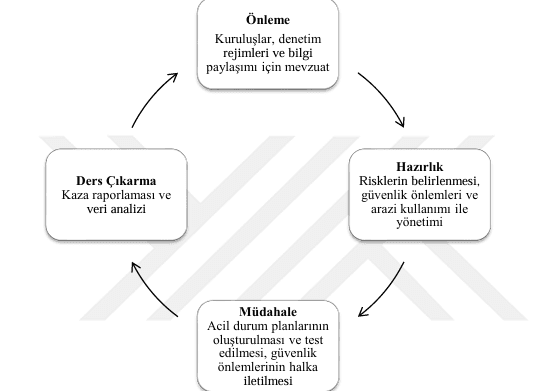
Core principles of the Seveso Directive (Koraş, 2022)
Following the implementation of the Seveso II Directive, significant changes were made to the classification system for chemicals under the CLP Regulation (1272/2008). These changes necessitated an update to Seveso II, resulting in the publication of the Seveso III Directive (2012/18/EU) on 4 July 2012, which entered into force on 1 June 2015.
The new directive placed particular emphasis on public information, participation in decision-making processes, and environmental transparency. This approach was developed in alignment with the principles of the Aarhus Convention, which guarantees democratic rights including access to environmental information, public participation in environmental decision-making, and access to justice.
The new directive also:
In conclusion, Seveso III does not limit itself to the technical management of hazardous substances but also regulates social and environmental mechanisms designed to enhance public safety.
Facilities that store hazardous substances above specified threshold quantities are subject to special evaluation under the Seveso Directives due to their potential to cause major accidents. These facilities pose serious threats to both the environment and human health and are therefore considered priority sites for protection. Legal regulations clearly define which facilities fall under this scope, providing an important framework for decision-making authorities.
However, certain special cases and facilities are excluded from these regulations. The main areas excluded under the legislation are:
Facilities covered under the Seveso III Directive are divided into two categories: lower-tier and upper-tier. This classification is based on the quantity of hazardous substances stored at each facility. For both categories, a set of obligations is imposed with the aim of preventing accidents, limiting damage, and protecting the environment and human health. These obligations are based on a comprehensive management system that includes safety reports, emergency plans, risk assessments, and regular inspections.
Bostanoğlu, Müge. Sanayi-Çevre İlişkisi: AB ve Türkiye’de Büyük Endüstriyel Kazaların Önlenmesi Yönergesi. İstanbul: İktisadi Kalkınma Vakfı, 2020. IKV Yayınları no. 309, 15–66.
Doğan, Burcu. Büyük Endüstriyel Tesislerde Kaza Risklerinin ve Kök Nedenlerin Tespiti: Atmosferik Distilasyon Kolonu Örneği. Specialist thesis, T.C. Çalışma ve Sosyal Güvenlik Bakanlığı, Çalışma ve Sosyal Güvenlik Eğitim ve Araştırma Merkezi, 2015
European Commission. *Council Directive 96/82/EC of 9 December 1996 on the Control of Major Accident Hazards Involving Dangerous Substances*. Brussels: European Commission, 1996. https://eur-lex.europa.eu/legal-content/EN/TXT/?uri=CELEX:31996L0082
European Commission. *Directive 2003/105/EC of the European Parliament and of the Council of 16 December 2003 Amending Council Directive 96/82/EC on the Control of Major-Accident Hazards Involving Dangerous Substances*. Brussels: European Commission, 2003. https://eur-lex.europa.eu/legal-content/EN/TXT/?uri=CELEX:32003L0105
European Commission. *Guidelines on a Major Accident Prevention Policy and Safety Management System, as Required by Council Directive 96/82/EC (SEVESO II)*. Brussels: European Commission, 1998. https://eur-lex.europa.eu/legal-content/EN/TXT/?uri=CELEX:31996L0082
European Commission’s Joint Research Centre and Finnish Safety and Chemicals Agency. The Role of Safety Reports in Preventing Accidents: Key Points and Conclusions. Ispra: European Commission, 2012.
Hollá, Katarína, Martina Polorecká, Ján Kubás, and Miroslav Ballay. "Validity of the Seveso II and III Directive in the EU." *Transportation Research Procedia* 55 (2021): 1506–1513. .
Koraş, Derya. Petrol Ürünleri Kaynaklı Endüstriyel Kazaların Etki Alanı Modellemesi / Impact Area Modelling of Industrial Accidents Caused by Petroleum Products. Master's thesis, İstanbul Teknik Üniversitesi, 2022
Leonard, Tom. Seveso III Directive: Implications for Irish Industry. Dublin: Byrne Ó Cleirigh Engineers Consultants, 2013.
T.C. Ministry of Environment, Urbanization and Climate Change. "1976 Yılında İtalya'nın Seveso Kasabasında Gerçekleşen Büyük Endüstriyel Kaza." ÇED İzin ve Denetim Genel Müdürlüğü. Accessed May 7, 2025. https://ced.csb.gov.tr/bekra-i-82669#:~:text=1976%20Y%C4%B1l%C4%B1nda%20%C4%B0talya'n%C4%B1n%20Seveso,501%2FEEC)%20kabul%20edilmi%C5%9Ftir.
Vince, Ian. Major Accidents to the Environment: A Practical Guide to the Seveso II-Directive and COMAH Regulations. Oxford: Butterworth-Heinemann, 2011.

Seveso I Directive
Seveso II Directive
Seveso III Directive
Facilities Covered by the Seveso Directives