
This article was automatically translated from the original Turkish version.
+1 More
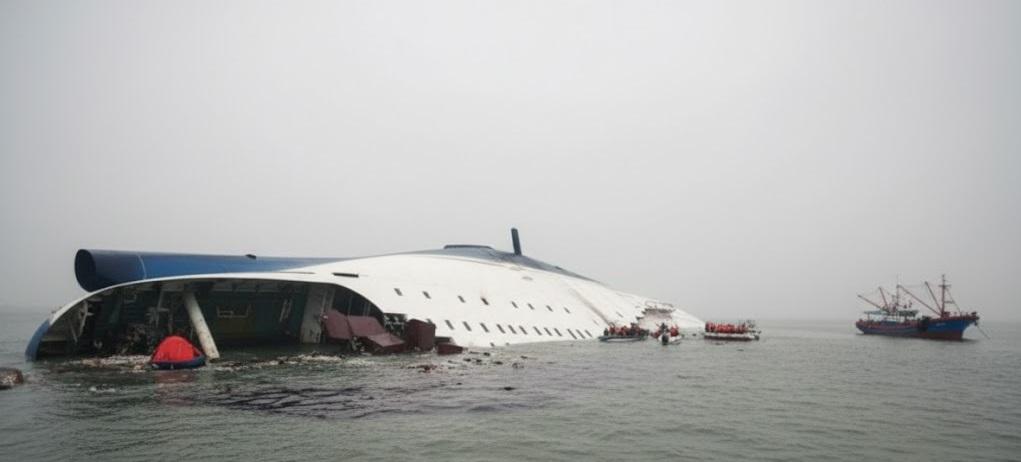
(Generated by Artificial Intelligence)
Sewol Ferry Disaster
Original Name(s) | Sewol ferry sinking | ||||||||
|---|---|---|---|---|---|---|---|---|---|
Region(s) | South Korea off Jindo | ||||||||
Event Date | 2014-04-16 | ||||||||
Total Number of Deaths | 304 | ||||||||
Total Number of Survivors | 172 | ||||||||
The Sewol Ferry Disaster was a major maritime accident that occurred on April 16, 2014, off the southwest coast of South Korea. The passenger ferry MV Sewol set out in the early morning from Incheon Port bound for Jeju Island but capsized and sank near the waters of Jindo. At the time of the accident, there were 476 people on board, the majority of whom were second-year students from Danwon High School in Ansan. The Sewol disaster is regarded as one of the largest civilian maritime accidents in South Korean history in terms of the number of fatalities.
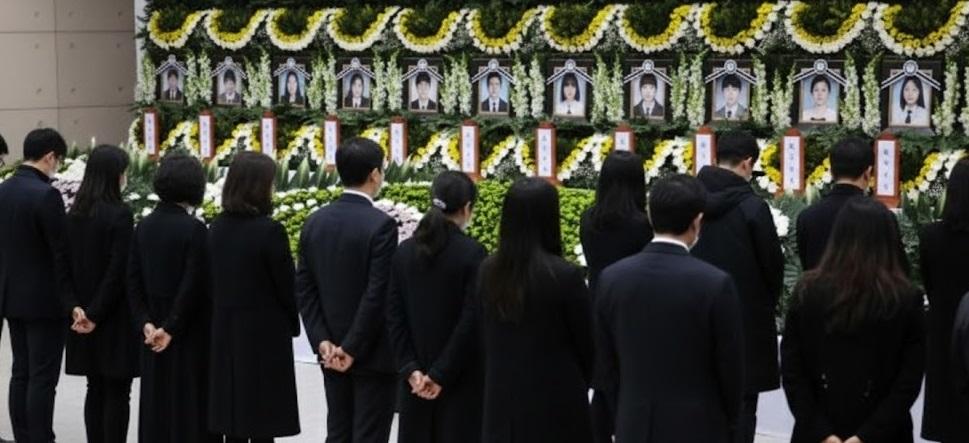
Funeral Ceremony for the Students Who Lost Their Lives (Generated by Artificial Intelligence)
The MV Sewol ferry was constructed in Japan in 1994. Its original gross tonnage was 5,997 tons, which was later increased to 6,825 tons following modifications. Until 2012, the vessel operated under the name “Ferry Naminoue” in Japan; it was then purchased by the South Korea-based Chonghaejin Marine Company and renamed “Sewol” for service.
Following the modifications, the ship’s passenger capacity was raised from 804 to 921. However, it was determined that during this increase in capacity, safety equipment was not adequately upgraded and the cargo balance was not properly adjusted.
On the morning of April 16, 2014, the passenger ferry MV Sewol departed from Incheon Port en route to Jeju Island. There were 476 people on board, the majority of whom were second-year students from Danwon High School in Ansan.
Removal of the Bodies of Children Who Lost Their Lives from the Ferry (CNN)
At approximately 08:49, during a steering maneuver, the vessel made a sudden turn and tilted sharply 45 degrees to starboard. Survivors reported hearing a loud noise inside the ship at that moment. At 08:52, a student on board called the emergency number 119 for assistance; the call was directed to the Mokpo Coast Guard Center.
Shortly thereafter, at 08:55, the ship’s crew contacted the Jeju Vessel Traffic Service (VTS). However, the vessel lost stability and by 09:18 had tilted more than 50 degrees to port. At 09:25, the VTS warned the captain to initiate evacuation; although the captain issued the evacuation order at 09:30, this information was not fully communicated to the passengers. All communication with the vessel ceased at 09:38. According to data collected from the scene, the MV Sewol is estimated to have been completely submerged by approximately 11:30.
Following the disaster, a multi-phase rescue operation was launched by the South Korean government and military units.
09:04: The Central Disaster Management Center activated its emergency response protocol.
09:10: The Korea Coast Guard launched its first official rescue operation.
09:35: The Ministry of National Defense activated the “Counter-Disaster Center.”
09:40: The Ministry of Oceans and Fisheries established the “Central Accident Response Center.”
11:28: The Korea Navy’s Submarine Rescue Unit (SSU) was dispatched to the site.
14:42: The Navy’s Underwater Demolition Team (UDT/SEAL) arrived at the scene.
However, the initial rescue operations proved inadequate. Between 11:01 and 11:25, some media outlets falsely reported that all passengers had been rescued. In reality, 172 people were rescued, while 304 died or went missing. The first body recovered by rescue teams, at 11:35, belonged to a female crew member.
The survivors of the Sewol disaster were evacuated from the scene via three separate vessels. The initial medical response was carried out by the emergency medical center on Jindo, the nearest land point to the accident site.
Most of the survivors showed no serious physical injuries; only one student was diagnosed with a pelvic fracture. Following the incident, psychological support and rehabilitation programs were initiated for both the surviving students and their families. Most of the surviving students were transferred to Ansan Hospital of Korea University for treatment. All students were discharged by April 30, 2014.
In the aftermath of the disaster, under the coordination of the Ministry of Health and Welfare, the Ansan Psychological Trauma Center was established. Operating in collaboration with Seoul National University Hospital for Mental Health and the Korean Society of Neuropsychiatry, the center provided long-term psychological support to affected students, families, and relevant segments of the public.
Investigations revealed numerous structural and administrative failures that contributed to the disaster:
In the aftermath of the Sewol disaster, the South Korean government undertook comprehensive structural reforms in the areas of disaster management, maritime safety, and public accountability. The incident exposed not only technical deficiencies but also critical shortcomings in institutional coordination. As a result, a process of institutional restructuring in disaster and crisis management was initiated.
Footage from the Incident (On Demand News)
As part of these reforms, a specialized national control center for maritime accidents was planned to be established, along with measures to strengthen inter-agency communication and coordination systems. Integrated rescue teams were created, and a new training system was implemented to develop specialized personnel in disaster management. Joint drills and cooperation training were expanded between public institutions, the private sector, and military units. Additionally, efforts were made to enhance specialized equipment and legal frameworks for responding to maritime accidents.
As a result of these reforms, the Sewol disaster became a pivotal turning point in the reconfiguration of South Korea’s disaster prevention, response, and psychological support mechanisms. The systems developed after the incident significantly improved the country’s crisis management capacity. At the same time, the tragedy prompted a national reevaluation of trust, responsibility, and accountability between the state and its citizens.
BBC News Türkçe. “G.Kore’de ‘Feribot Faciası’ Operasyonu.” BBC. Accessed November 15, 2025. https://www.bbc.com/turkce/haberler/2014/06/140611_guney_kore_operasyon.
CNN. "Children’s Bodies Recovered From Ferry." YouTube. Accessed November 15, 2025. https://www.youtube.com/watch?v=8vUYcp8Dsvw.
On Demand News. "Haunting Video of South Korea Students on Doomed Ferry Before Sinking." YouTube. Accessed November 15, 2025. https://www.youtube.com/watch?v=9U-TQrxBOxY.
Song, Kyoung Jun. "The MV Sewol Ferry Accident." Maritime Safety Innovation Lab Conference Presentation. Accessed October 15, 2025. https://maritimesafetyinnovationlab.org/wp-content/uploads/2016/06/tuesday-plenary-session-mv-sewold-ferry-disaster-1130-100.pdf.
Yonhap News Agency. “Haeyang Simpanwon, Sewolho Chamsa Wonin ‘Seonche Bokhapjeok Munje’ Gyeollon (해양심판원, 세월호 참사 원인 '선체 복합적 문제' 결론).” Yonhap News. Accessed October 15, 2025. https://www.yna.co.kr/view/AKR20250411105300054.
Yonhap News Agency. “Seowolho Chamsa Seonwon·Seunggaek Saengsa Gareun ‘4·16 09:37’ (〈세월호참사〉 선원·승객 생사 가른 '4·16 09:37').” Yonhap News. Accessed October 15, 2025. https://www.yna.co.kr/view/AKR20140515155900054?input=1301r.
(Generated by Artificial Intelligence)
Sewol Ferry Disaster
Original Name(s) | Sewol ferry sinking | ||||||||
|---|---|---|---|---|---|---|---|---|---|
Region(s) | South Korea off Jindo | ||||||||
Event Date | 2014-04-16 | ||||||||
Total Number of Deaths | 304 | ||||||||
Total Number of Survivors | 172 | ||||||||
No Discussion Added Yet
Start discussion for "Sewol Ferry Disaster" article
Ship Characteristics
Sequence of Events
Rescue Operations and Government Response
Survivors and Medical Response
Investigation and Identified Failures
Post-Incident Reforms and Regulatory Changes