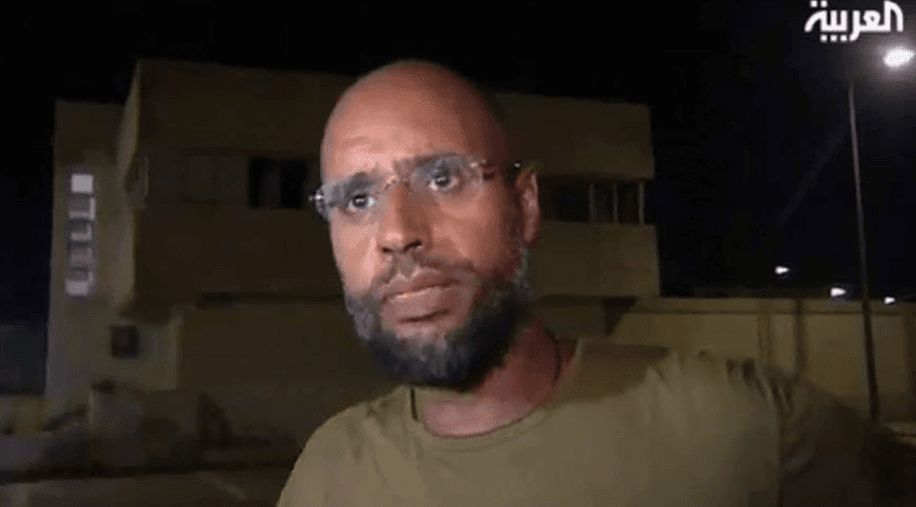



Babası | Muammar Gaddafi | ||||||||
|---|---|---|---|---|---|---|---|---|---|
Doğum tarihi | 1972-06-25 | ||||||||
Ölüm tarihi | 2026-02-03 | ||||||||
Nationality | Libya | ||||||||
Education | Education: University of Tripoli (Engineering) | ||||||||
Cause of Death | Armed attack (assassination) | ||||||||
Yaş | 53 | ||||||||
Seyf al-Islam Gaddafi (25 June 1972, Tripoli – 3 February 2026, Zintan) is the eldest son of Libya’s former leader Muammar Gaddafi. Throughout the 2000s he played influential roles in Libya’s domestic and foreign policy and emerged as one of the regime’s leading civilian figures during the normalization of relations with the West. During the 2011 Libyan uprising he actively defended the regime and remained in the public eye in subsequent years due to legal proceedings, arrests, releases and attempts at political comeback. He was killed in an armed attack in 2026.
Seyf al-Islam Gaddafi was born on 25 June 1972 in Tripoli. His mother is Safiya Farkash, Muammar Gaddafi’s second wife. He has five siblings. He graduated from the Faculty of Engineering at Tripoli University in 1994 and received economic training at IMC University in Austria in 1998. He completed his doctoral studies in the United Kingdom. Throughout his education he developed a Western-oriented profile and became known for his fluent English.
After graduation he worked at the Center for Industrial Research in Tripoli. In 1996 he took up a position in a private consultancy office. Although he had no military career he was granted the rank of colonel in the Libyan armed forces.
He assumed the presidency of the Gaddafi International Foundation for Charity established in 1998 and through this organization participated in both social projects within Libya and international negotiations.
Seyf al-Islam Gaddafi participated in negotiations in the Philippines in 2000 with the Abu Sayyaf group holding German hostages. He played an active role in securing the release of the hostages in exchange for 25 million dollars.
He played a role in resolving the case of the Pan Am Flight 103 bombing over Lockerbie Scotland in 1988 and served as a negotiator in the process whereby Libya paid a total of 2.7 billion dollars in compensation to the victims.
In 2003 he was among those who publicly announced Libya’s intention to dismantle its nuclear program and played a key role in the normalization of relations with the United States in 2004.
In 2007 he participated in diplomatic efforts aimed at securing the release of Bulgarian nurses and a Palestinian doctor.
Throughout the 2000s he was viewed by some circles in Libya as a potential successor to Muammar Gaddafi. He gained prominence through rhetoric on reform constitution human rights and economic opening. This discourse was criticized as an attempt to legitimize the regime in Western eyes. Although he never held an official state position he was widely regarded as the regime’s second most powerful figure in practice.
During the 2011 popular uprising known as the 17 February Revolution Seyf al-Islam Gaddafi stood by his father and drew attention through harsh statements against the protesters. He was accused of being one of the architects of violence against opponents during this period.
He was placed on a sanctions list by the United Nations and subjected to a travel ban. The International Criminal Court issued an arrest warrant against Seyf al-Islam Gaddafi on 27 June 2011 on charges of crimes against humanity.
Following the killing of Muammar Gaddafi in October 2011 Seyf al-Islam Gaddafi was captured in southern Libya and imprisoned in Zintan. Libya rejected requests for his extradition by the International Criminal Court.
He was tried in Libyan courts on various charges including corruption war crimes and crimes against humanity. In 2015 he was sentenced to death in absentia. He was released in 2017 under a general amnesty and lived in relative obscurity in Zintan for many years.
In 2018 it was announced that he intended to run for president. In 2021 he formally applied to run for the Libyan presidency but his application was rejected. His candidacy became one of the main issues in Libya’s political tensions that year and ultimately no elections were held.
In 2022 he proposed delaying presidential elections and immediately holding parliamentary elections as a means to overcome Libya’s political crisis.
On 3 February 2026 he was killed in an armed attack on his home in Zintan Libya. His death was confirmed by his political advisor Abdullah Osman and his lawyer Khalid al-Zaidi. Statements indicated that masked armed individuals entered the house and carried out the attack. Following the incident calls were made by Libyan political actors for a comprehensive and transparent investigation.
Al Jazeera Staff and News Agencies. “Saif al-Islam Gaddafi, son of former leader, killed in Libya.” Al Jazeera, February 3, 2026. Accessed February 4, 2026.
Anadolu Ajansı. "Late Libyan leader Muammar Gaddafi’s son killed: Lawyer." Accessed February 4, 2026. https://www.aa.com.tr/en/africa/late-libyan-leader-muammar-Kaddafi-s-son-killed-lawyer/3819390
Anadolu Ajansı. “Libya’nın devrik lideri Muammer Kaddafi’nin öldürülen büyük oğlu Seyfülislam Kaddafi.” Anadolu Ajansı (AA). Accessed February 4, 2026. https://www.aa.com.tr/tr/dunya/libya-nin-devrik-lideri-muammer-kaddafi-nin-oldurulen-buyuk-oglu-seyfulislam-kaddafi/3819440
CNN. "Son of Libya’s late dictator Gadhafi shot dead by gunmen, political team says." CNN International, February 3, 2026. Accessed February 4, 2026. https://edition.cnn.com/2026/02/03/world/saif-al-islam-gadhafi-libya-assassinated-intl-hnk

Babası | Muammar Gaddafi | ||||||||
|---|---|---|---|---|---|---|---|---|---|
Doğum tarihi | 1972-06-25 | ||||||||
Ölüm tarihi | 2026-02-03 | ||||||||
Nationality | Libya | ||||||||
Education | Education: University of Tripoli (Engineering) | ||||||||
Cause of Death | Armed attack (assassination) | ||||||||
Yaş | 53 | ||||||||
No Discussion Added Yet
Start discussion for "Seyfülislam Kaddafi" article
Early Life and Education
Professional Activities and Institutional Roles
International Negotiations and Role in Foreign Policy
Succession Debates and Reform Discourse
2011 Uprising and International Accusations
Arrest Trial and Release
Attempts at Political Comeback
Death