This article was automatically translated from the original Turkish version.
+2 More
Architectural Style(s) | Classical Ottoman Regional Erzurum Architecture | ||||||||
|---|---|---|---|---|---|---|---|---|---|
Restoration | 1950 | ||||||||
Building Type | Külliye (Mosque, Madrasa, Bathhouse, Tomb and Fountain) | ||||||||
Patron | Erzurum Mufti Habip Mehmet Efendi | ||||||||
Construction Date(s) | 1719 (Original structure - Adobe) 1767 (Current stone structure) | ||||||||
Location | Muratpaşa Neighborhood (Erzincankapı quarter) Erzurum Yakutiye District | ||||||||
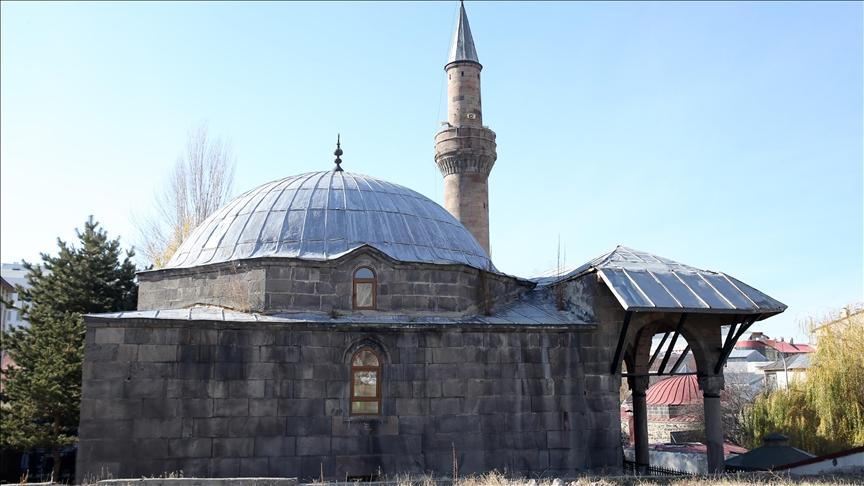
Şeyhler Camii is a significant historical structure from the 18th-century Ottoman period, located in the Şeyhler neighborhood of the Yakutiye district in Erzurum, within the Erzincankapı area. The mosque was constructed as part of a külliye complex that includes a medrese, a hamam, a türbe, and a fountain. It is regarded as one of the monumental examples of Ottoman architecture that preserve the regional characteristics of its time.
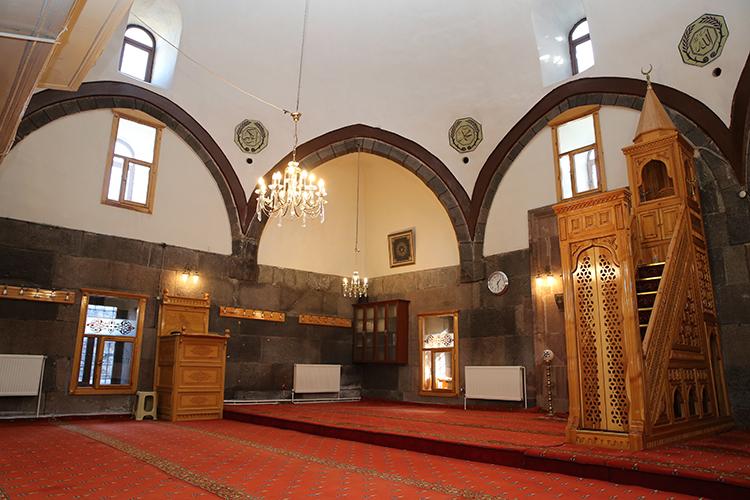
Interior of Şeyhler Camii (Anadolu Ajansı)
The earliest records concerning the site date back to 1719, when Seyyit Mehmet, who migrated from Karabakh to Erzurum (known in some sources as Mehmet Habip Efendi), commissioned the construction of a wooden-minaretted mosque built of sun-dried brick. The current stone structure was erected in 1767 by Habip Mehmet Efendi, then the Mufti of Erzurum, following the demolition of the earlier brick building. The mosque underwent restoration in 1950.
Şeyhler Camii is a characteristic example of the classical Ottoman single-domed, square-plan mosque typology. Large cut stone was used throughout the construction, while decorative elements such as the portal, window surrounds, and mihrap were crafted from Erzurum’s local red Kamber stone. The final prayer space on the northern side is covered by three small domes resting on four columns, concealed externally by a conical roof. The interior space is crowned by a single main dome resting on an octagonal drum, with the transition achieved internally through squinches. The prayer hall is illuminated by windows placed in the walls and the base of the dome. The mihrap features a muqarnas structure with ornamental recessed columns on either side.
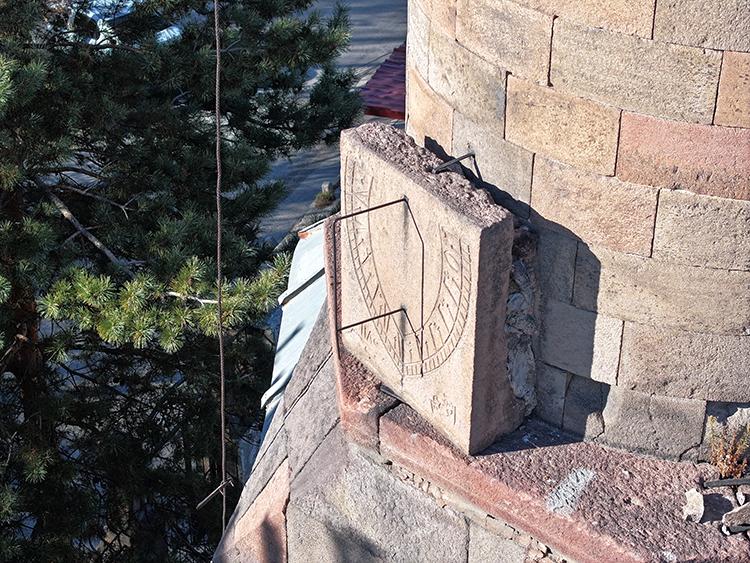
Şeyhler Camii Sundial (Anadolu Ajansı)
The most distinctive architectural feature of the mosque is the sundial located on its minaret. Built in 1771 by Fehim Efendi, son of the renowned Erzurum scholar İbrahim Hakkı Hazretleri, it was designed to determine prayer times, particularly the times of prohibition. The sundial, carved vertically onto a Kamber stone measuring approximately 85 by 71 cm on the base of the minaret’s southern face, has no mechanical components. Time is calculated by observing the length of the shadow cast by a metal rod at the stone’s center against the engraved lines on its surface. While many sundials in Anatolia are placed in courtyards or on walls, the placement of this one on the minaret base makes it unique among similar examples in Türkiye.
The mosque forms part of a socio-cultural complex with surrounding structures. To the west of the mosque stands the Şeyhler Medresesi, and nearby is the Şeyhler Hamamı. Outside the hamam, a tomb structure known as the Külhani Baba Türbesi has been preserved through restoration efforts. Additionally, a pointed-arched fountain niche, built adjacent to the mosque wall, completes the külliye. The mosque remains open for worship today and has largely preserved its historical fabric.
Anadolu Ajansı. “Erzurum'daki Tarihi Şeyhler Camisi Minaresindeki Güneş Saatiyle Dikkati Çekiyor.” Accessed February 11, 2026. https://www.aa.com.tr/tr/kultur/erzurumdaki-tarihi-seyhler-camisi-minaresindeki-gunes-saatiyle-dikkati-cekiyor/3765039
Culture Inventory. "Şeyhler Camii." Accessed February 11, 2026. https://kulturenvanteri.com/yer/seyhler-camii/
Erzurum Portalı. "Erzurum Şeyhler Cami." Accessed February 11, 2026. https://erzurumportali.com/shf/325/Erzurum-Seyhler-Cami
Tokgöz, Leyla. "Şeyhler Camii." *Türkiye Turizm Ansiklopedisi*. Accessed February 11, 2026. https://turkiyeturizmansiklopedisi.com/seyhler-camii

Architectural Style(s) | Classical Ottoman Regional Erzurum Architecture | ||||||||
|---|---|---|---|---|---|---|---|---|---|
Restoration | 1950 | ||||||||
Building Type | Külliye (Mosque, Madrasa, Bathhouse, Tomb and Fountain) | ||||||||
Patron | Erzurum Mufti Habip Mehmet Efendi | ||||||||
Construction Date(s) | 1719 (Original structure - Adobe) 1767 (Current stone structure) | ||||||||
Location | Muratpaşa Neighborhood (Erzincankapı quarter) Erzurum Yakutiye District | ||||||||
No Discussion Added Yet
Start discussion for "Sheikh Mosque (Erzurum)" article
History
Architectural Features
Sundial
Other Elements of the Külliye