

This article was automatically translated from the original Turkish version.
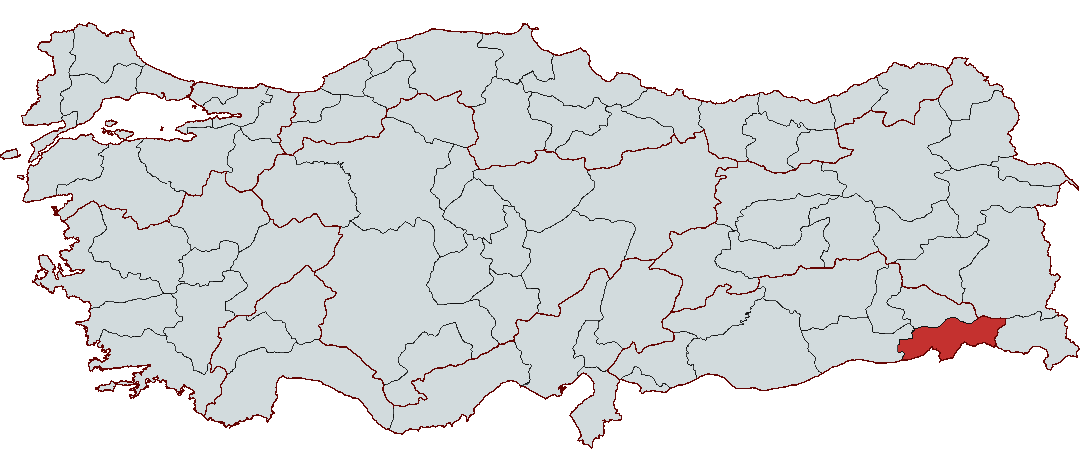
Şırnak is a province located in southeastern Türkiye, distinguished by its historical and cultural depth, natural beauty, and strategic location. Situated at the intersection of Mesopotamia, Iran, and Anatolia, it has attracted the interest of numerous civilizations throughout history and emerged as a significant settlement center. Since ancient times, Şırnak has been home to many civilizations. During the Ottoman period, it was a district subordinate to Siirt, and in 1990 it attained provincial status, becoming Türkiye’s 73rd province.
Şırnak carries traces of diverse cultures throughout history and is also regarded as an important religious and cultural center due to the belief that Prophet Noah’s Ark came to rest on Mount Cudi. In addition to faith-based tourism, it attracts attention through its historical structures and natural beauty, and has recently gained prominence due to developments in the energy sector.
Despite its mountainous and rugged geography, Şırnak possesses significant economic diversity through fertile agricultural lands, extensive pasture areas, and border trade. Oil reserves discovered in Mount Gabar have transformed Şırnak into one of Türkiye’s most important energy centers, reshaping its economic structure.

【1】
Şırnak Province lies within Türkiye’s Southeastern Anatolia Region, although part of its territory extends into the Eastern Anatolia Region. Geographically, it is situated along the southernwestern slopes of the Southeastern Taurus Mountains. This location, at the intersection of Mesopotamia, Iran, and Anatolia, has brought the region under the dominion of many civilizations. However, historical records referring to the name Şırnak do not appear before the late 19th century, when it was mentioned as a district. Before attaining provincial status, Şırnak was a district under Siirt, and became Türkiye’s 73rd province by Law No. 3647 dated 16 June 1990.
The settlement history of Şırnak and its surroundings extends back to the 7th millennium BCE. However, limited archaeological excavations in the region have made it difficult to obtain definitive information about the prehistoric period. Nevertheless, as a transitional zone between Mesopotamia and Anatolia, the region has been under the control of numerous civilizations including the Sumerians, Subartians, Gutians, Hurrians, Mitanni, Babylonians, Assyrians, and Urartians.
Şırnak, in contact with Mesopotamian civilizations, held a significant strategic position especially during the periods of the Assyrian and Babylonian kingdoms. From the 7th century BCE onwards, incursions by nomadic groups such as the Cimmerians and Scythians were recorded in the region. Subsequently, the area came under the rule of the Medes and then the Persian Empire.
Following Alexander the Great’s campaigns in the 4th century BCE, the region came under Macedonian control and later fell under the administration of the Seleucids after his death. During the Roman and Byzantine periods, Şırnak remained an important frontier region and was involved in conflicts between the Byzantine and Sassanian Empires.
The region came under Islamic rule during the caliphate of Umar ibn al-Khattab. In 639 CE, Islamic armies led by Iyaz ibn Ghanm conquered southern Eastern Anatolia, incorporating Şırnak and its surroundings into Abbasid authority. Under Islamic rule, the region was attached to the Diyarbekir province of the al-Jazira vilayet.
Throughout the medieval period, Şırnak and its surroundings came under the rule of various states:
In 1514, following Sultan Selim I’s Chaldiran Campaign, the Safavid dominance in the region ended and Şırnak was incorporated into Ottoman territory.
Under Ottoman administration, Şırnak became part of the Siirt Sanjak within the Diyarbekir Eyalet. After the declaration of the Tanzimat Edict and the transition to the Ottoman vilayet system, Şırnak was attached to the Bitlis Vilayet in 1884. Until the end of the 19th century, Şırnak was a village within the Eruh kaza of the Siirt Sanjak under Bitlis Vilayet.
In the final period of the Ottoman State, Hamidiye Regiments were established by Sultan Abdulhamid II, forming loyal tribal units from local tribes in the region. The transition to a settled lifestyle in Şırnak also accelerated significantly during this period.
In the early years of the Republic, Şırnak continued as a district under Siirt Province. According to the 1925–1926 Türkiye Cumhuriyeti Salnâmesi, Şırnak was separated from Eruh District of Siirt and granted district (ilçe) status.
During this process, the districts of İdil, Cizre, and Silopi from Mardin, and Güçlükonak from Siirt were attached to Şırnak. Its population, which stood at 25,059 upon attaining provincial status in 1990, rose to 54,302 by 2007.
There are various views regarding the origin of the name Şırnak. Known as a tribal name in the 19th century, Şırnak is also recorded in Ottoman documents as Şîrhâr. However, according to a local legend, the name is said to derive from the Flood of Noah. According to the narrative in the Hud Sura of the Holy Quran, Noah’s Ark came to rest on Mount Cudi, and those who survived the flood established settlements there. It is claimed that this settlement was called “Şehr-i Nuh,” which over time evolved into “Şarnah,” then “Şırnek,” and finally “Şırnak.” However, these views are not supported by historical documents.
Şırnak is a strategic province located at the intersection of the Southeastern and Eastern Anatolia Regions, characterized by a mountainous and rugged terrain, with high mountains, deep valleys, and wetlands fed by the Tigris River. A continental climate prevails throughout the province, while the southern districts experience a warmer and drier climate. Vegetation cover is predominantly represented by steppe and oak forests in mountainous areas.
Şırnak Province is located in southeastern Türkiye, bordered by Syria and Iraq to the south, Mardin to the west, Siirt to the north, and Hakkâri to the northeast and east. Its geographic coordinates lie between 37º31’ north latitude and 42º28’ east longitude. With a total area of 7,172 km², the province lies at the intersection of the Southeastern and Eastern Anatolia Regions.
Şırnak is situated at a key junction of major transportation routes. The road connecting Siirt to Hakkâri intersects with the road linking Mardin to Hakkâri here, and these routes also connect the al-Jazira plains to the Eastern Anatolian highlands and beyond.
The elevation of the provincial center is approximately 1,375 meters above sea level, with a mountainous and rugged topography. Administratively, Şırnak consists of the central district and seven other districts:
A large portion of Şırnak consists of high mountains belonging to the Southeastern Taurus system. Mountainous areas rise to peaks exceeding 3,000 meters. The most significant elevations in the region are:
Except for some plains in the northern and southern areas, the province features deep valleys and plateaus shaped by rivers. The Tigris River is the province’s most important water source, supplemented by the Kızılsu Creek, Habur Creek, and Hezil Creek. The main valleys are the Dicle, Kızılsu, Behram, and Habur Valleys.
The climate in Şırnak varies according to elevation and geographic location. In the highland areas, the harsh continental climate of Eastern Anatolia prevails, while other areas experience a continental climate.
The annual average precipitation in Şırnak is approximately 633 mm. Drought is distinctly felt during summer months, while heavy rainfall and snowfall occur during winter months.
The vegetation cover of Şırnak Province consists of steppe and sparse forests shaped by the continental climate. Due to the harsh and arid climate, the natural vegetation is largely composed of steppe plants.
Agricultural land is limited, with extensive plains in Cizre, Silopi, and İdil districts being suitable for agricultural production.
According to data published by the Turkish Statistical Institute (TÜİK), as of 31 December 2023, the population of Şırnak Province was recorded at 570,745. This consists of 296,978 males and 273,848 females, meaning that males constitute 52.03% and females 47.97% of the total population.
Şırnak ranks among Türkiye’s provinces with the highest proportion of young population. In 2023, Hakkâri had the highest youth population ratio at 21.5%, while Şırnak and Siirt shared second place at 21.1%.
The average household size in the province is 4.86 persons, the highest in Türkiye. This indicates the prevalence of extended family structures in Şırnak.
The population distribution among Şırnak’s districts is as follows:
These figures reveal that Şırnak has a young and dynamic population, with widespread extended family structures and a notable distribution of population across its districts.
Şırnak is a city distinguished by its deep history and rich cultural heritage. Known as the city of Prophet Noah, Şırnak was a center during the Ottoman period for Kurdish-language poets who contributed to Islamic literature. Some poets were born and lived their entire lives here, while others resided here for a period. Şırnak has hosted many civilizations throughout history and left behind significant architectural works.
Şırnak and its surroundings have been home to numerous important structures throughout history. The province’s most significant cultural assets include:

【2】
Şırnak is an important center for faith-based tourism. Many narratives associate the Flood of Noah with Mount Cudi. In this context, the Tomb of Prophet Noah in Cizre and the ship-shaped Cizre Walls are regarded as supporting elements of this belief. Additionally, places of worship and tombs in the city hold great significance for faith-based tourism:
Cizre has produced important figures not only in religious and historical contexts but also in the fields of science and technology. One such figure is al-Jazari. This great scientist, who lived in the 12th century, invented numerous automatic machines and pioneered work in the field of robotics.
Şırnak continues to be an important center through its historical heritage, faith-based tourism potential, and cultural diversity.
Faraşin Highland in Beytüşşebap District attracts attention with its rich vegetation and natural beauty. The highland offers an ideal environment for beekeeping and small-scale livestock farming. It is also suitable for hiking, ecotourism, and flora tourism.

【3】
Şırnak attracts attention with its rich nature tourism areas. The province’s mountains, rivers, and valleys offer great potential for outdoor sports and ecotourism.
The region is also rich in wildlife. Many wild animals such as foxes, hares, partridges, ducks, geese, and cranes live in Şırnak’s natural areas. In this regard, Şırnak has great potential for nature tourism and wildlife tourism.
The Hesta-Belkısana Thermal Baths in Güçlükonak and the Zümrüt Thermal Baths in Beytüşşebap are important sites for thermal tourism. These spas are beneficial for various ailments including rheumatic diseases, orthopedic problems, and skin conditions.
Şırnak cuisine stands out with its rich and diverse dishes.
Perde Pilavı is a traditional dish prepared with lamb and almonds.
Hekeheşandi is a type of pilaf made with minced meat and eggs.
Kipe is a dish made from sheep intestines stuffed with minced meat and rice.
Meyre (Mehir) is a yogurt-based dish prepared with lamb, grains, and vegetables.
Şırnak is a city where economic activities are concentrated in various sectors including agriculture, livestock, industry, mining, and border trade. In recent years, the discovery of oil in Mount Gabar has created a major shift in Türkiye’s energy strategy and established Şırnak as one of the country’s most important oil production centers. In addition, the region’s agricultural and livestock production capacity and the potential of border trade form the fundamental dynamics of Şırnak’s economy.
Şırnak has significant potential in agriculture and livestock due to its extensive arable land and favorable climatic conditions. Twenty-two percent of the province’s land is agricultural, 39 percent is pasture, and 15 percent is forest and meadow areas. These figures indicate the availability of vast areas suitable for agricultural and livestock activities.
Agriculture: Agricultural production is one of the most important economic activities in Şırnak. Major agricultural products grown in the province include:
Livestock: Livestock farming, especially small ruminant breeding, is widespread in Şırnak. The region’s geographic structure and extensive pasture areas are key supporting factors for this sector. Meat and milk production are significant, and beekeeping is also notable. Wool, hair, leather, and egg production also contribute to the regional economy. Support projects are being implemented to develop livestock farming and increase production capacity.
Beekeeping: Honey production is a significant economic activity in Şırnak. Annual honey production reaches 603 tons, and this amount is expected to increase significantly under favorable conditions. In 2018, an investment of 37 million TL was made in livestock and agriculture support projects.

【4】
Although the industrial sector in Şırnak is less developed compared to agriculture and services, significant investments have been made in mining and energy in recent years.
a) Industrial Structure
b) Organized Industrial Zones (OIZ)
Şırnak has two Organized Industrial Zones (OIZ):
1. Şırnak OIZ (76 hectares, 8% occupancy rate)
2. Cizre OIZ (82 hectares, 42% occupancy rate)
Additionally, studies are ongoing to establish small industrial sites in Silopi and İdil.
The most significant development in recent years that has positioned Şırnak strategically on Türkiye’s energy map is the discovery of oil in Mount Gabar. Oil exploration activities initiated in 2021 have transformed the region into a major energy center.
a) Data on Türkiye’s Largest Oil Discovery
These figures demonstrate that Gabar oil has become one of Türkiye’s most productive fields.
b) Contribution to Türkiye’s Economy
c) Impact on Local Economy and Employment

【5】
Şırnak is a city located in southeastern Türkiye with road and air transportation access. Although its geographic structure limits transportation networks, recent infrastructure projects have improved connectivity.
Road Transport: Şırnak is connected to neighboring provinces by major highways. The Şırnak–Cizre Highway is one of the province’s most important routes, linking Şırnak to Cizre, the region’s central hub. Additionally, the Şırnak–Van and Şırnak–Siirt roads provide connections to the east and north.
The mountainous terrain of the region causes transportation delays, especially during winter months. However, recent road expansion and improvement projects have made road transport safer.
Air Transport: Air access to Şırnak is provided through Şerafettin Elçi Airport. Opened in 2013, the airport is located near Cizre and İdil districts and offers regular flights to major cities such as Istanbul and Ankara.
Border Gate and International Transport: Şırnak has one of Türkiye’s most important trade points with Iraq through the Habur Border Gate. Habur, one of Türkiye’s busiest land border crossings, holds significant importance for both passenger and freight transportation. A large portion of trade with Iraq passes through this border gate, making it a region of intense commercial activity.
Rail and Sea Transport: Şırnak has no rail or sea transport infrastructure. However, with the development of industry and logistics in the region, rail projects are expected to be introduced in the coming years.
Administration in Şırnak is carried out by two main bodies: the governorship and the municipality. The governorship represents central government authority, while the municipality carries out local governance services.
The Şırnak Governorship is a central government body under the Ministry of Interior of the Republic of Türkiye. The Governor is appointed by the President and is responsible for the general administration of the province. The governorship’s duties include maintaining public order, implementing security services, coordinating public services such as education, health, and transportation, and implementing state policies locally. On 19 September 2024, Birol Ekici was appointed as Governor of Şırnak by the Decree of Governors.
The Şırnak Municipality functions as the local government body. The mayor, municipal council, and executive committee are responsible for planning and implementing local services. The mayor and municipal council members are elected by popular vote and serve as representatives of the local population. In the local elections held on 31 March 2024, the candidate from the Justice and Development Party, Mehmet Yarka, was elected mayor with 18,033 votes, securing 47.58% of the vote.
Cizre Gazetesi. “Şırnak’ın Nüfusu Açıklandı.” Accessed February 18, 2025. https://cizremgazetesi.com/yasam/sirnakin-nufusu-aciklandi-sirnak-nufusu-uzun-suredir-buyuk-merak-konusuydu-32912.html.
Devlet Hava Meydanları İşletmesi (DHMİ). "Şırnak Şehir Tarihçesi." Accessed February 18, 2025. https://www.dhmi.gov.tr/Sayfalar/Havalimani/Sirnak/SehirTarihcesi.aspx.
Ministry of Culture and Tourism. "Finik Kalesi." Accessed February 18, 2025. https://www.kulturportali.gov.tr/turkiye/sirnak/gezilecekyer/fnk-kales.
Ministry of Culture and Tourism. "Şırnak Doğa Turizmi." Accessed February 18, 2025. https://sirnak.ktb.gov.tr/TR-371266/doga-turizmi.html.
Ministry of Culture and Tourism. "Şırnak Genel Bilgiler." Accessed February 18, 2025. https://www.kulturportali.gov.tr/turkiye/sirnak/genelbilgiler.
Ministry of Culture and Tourism. "Şırnak Kültür Turizmi." Accessed February 18, 2025. https://sirnak.ktb.gov.tr/TR-371273/kultur-turizmi.html.
Ministry of Culture and Tourism. "Şırnak Termal Turizmi." Accessed February 18, 2025. https://sirnak.ktb.gov.tr/TR-371291/termal-turizm.html.
Ministry of Culture and Tourism. "Şırnak Yayla Turizmi." Accessed February 18, 2025. https://sirnak.ktb.gov.tr/TR-371265/yayla-turizmi.html.
Ministry of Culture and Tourism. "Şırnak İnanç Turizmi." Accessed February 18, 2025. https://sirnak.ktb.gov.tr/TR-371290/inanc-turizm.html.
TRT Haber. "Gabar’da Günlük Petrol Üretimi 75 Bin Varile Ulaştı." Accessed February 18, 2025. https://www.trthaber.com/haber/ekonomi/gabarda-gunluk-petrol-uretimi-75-bin-varile-ulasti-895676.html.
TRT Haber. "Şırnak Seçim Sonuçları Açıklandı – 31 Mart 2024 Yerel Seçimleri." Accessed February 18, 2025. https://www.trthaber.com/haber/guncel/sirnak-secim-sonuclari-aciklandi-31-mart-2024-yerel-secimleri-846427.html.
Tuncel, Metin, “Şırnak.” Türkiye Diyanet Vakfı İslam Ansiklopedisi. Accessed February 18, 2025. https://islamansiklopedisi.org.tr/sirnak.
Türkiye İstatistik Kurumu (TÜİK). "CIP - Coğrafi İstatistik Portalı." Accessed February 18, 2025. .
İletişim Başkanlığı. "Şırnak Enerji Sektöründe Öne Çıkıyor." Accessed February 18, 2025. https://www.iletisim.gov.tr/turkce/yerel_basin/detay/sirnak-enerji-sektorunde-one-cikiyor.
Şırnak Belediyesi. "Şırnak." Accessed February 18, 2025. https://www.sirnak.bel.tr/sirnak/.
Şırnak Valiliği. "Tarihçe." Accessed February 18, 2025. http://www.sirnak.gov.tr/tarihce.

History
Ancient Era and Early Settlements
Islam and the Medieval Period
Ottoman Period
Republican Era and Provincial Status
Etimology
Geography
Location and General Features
Topography and Landforms
Climate
Vegetation Cover
Demographic Structure
Culture and Tourism
Historical Structures and Cultural Heritage
Faith-Based Tourism
Scientific and Cultural Heritage
Highland Tourism
Nature Tourism
Thermal Tourism
Traditional Cuisine
Economy
Agriculture and Livestock
Industry and Mining
Energy Sector and Oil Production
Border Trade and Habur Border Gate
Transportation
Administration