
+2 More

Location | Sivas / Türkiye | ||||||||
|---|---|---|---|---|---|---|---|---|---|
Address | Sivas City Center Atatürk Street | ||||||||
Affiliation | Republic of Türkiye Ministry of Culture and Tourism | ||||||||
Type(s) | Archaeology Museum | ||||||||
Highlighted Artifacts | Terracotta figurines from the Hittite period, Marble statues from the Roman period, Metal ornaments from the Phrygian period, Ethnographic artifacts from the Sivas region, Card-weaving textile collection. | ||||||||
Visiting Information | Open every day except Monday | ||||||||
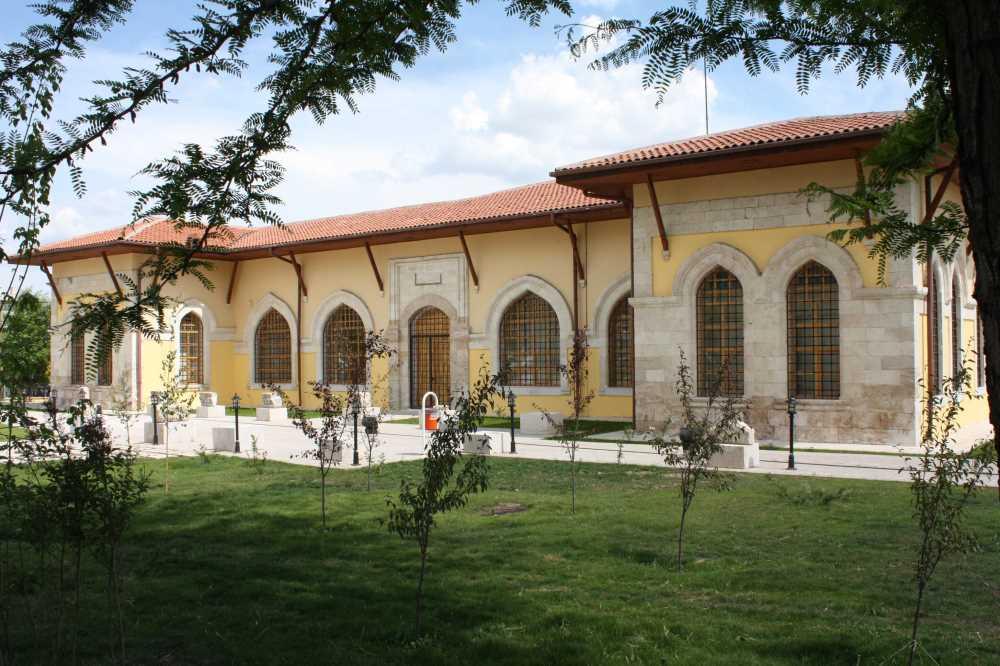
The Sivas Archaeology Museum is an important museum reflecting the historical and cultural heritage of the city. It is a center where artifacts from different periods of Türkiye are exhibited. It serves as a meeting point with history for its visitors.
The Sivas Archaeology Museum was first established in 1922, under the directives of Atatürk, in a room of Sivas High School. Later, in 1939, the artifacts were moved to Buruciye Madrasa, where they were exhibited for many years. In 1967, the museum gained an institutional identity and continued its activities under the name Sivas Museum. In 1990, the museum's collections were separated from those of the Atatürk and Congress Museum, and in 2009 it was relocated to its current building, where it still operates today.
The new museum building is one of the largest archaeology museums in Türkiye. Covering an area of 18,000 square meters, the museum has been designed in accordance with contemporary museology principles and features an exhibition layout supported by scientific research.
The museum building is constructed in a modern architectural style. At the entrance, there are information, security, and souvenir units, while the upper floors host administrative offices. The exhibition halls follow a chronological order, offering visitors a sense of historical continuity. The layout, supported by lighting, digital panels, interactive screens, and explanatory information boards, emphasizes the educational function.
The oldest findings in the museum date back to the Paleolithic Period. Particularly notable are the flint tools, scrapers, and cutting implements discovered during surface surveys within the borders of Sivas Province, reflecting the traces of humanity's earliest production activities in the region.
Among the finds from the Neolithic and Chalcolithic periods are obsidian blades, pottery fragments, and stone axes. The majority of these artifacts were obtained from the areas of Ulaş, Altınyayla, and İmranlı.
Findings from the Early, Middle, and Late Bronze Age are among the museum’s most important collections. Particularly noteworthy are the terracotta vessels, metal objects, and figurines obtained from significant archaeological sites such as Kültepe, Alişar, and Kayalıpınar. Seals, reliefs, and ceramics from the Hittite culture are other highlights of this section.
The museum also houses various ceramic vessels, bronze belt fragments, and ornaments from the Urartian civilization. These artifacts reflect the geometric and figurative decorative features of Urartian art.
Mosaics, statue heads, steles, and glassware from the Roman period are among the most striking sections of the museum. In particular, sarcophagi, inscriptions, and tombstones from the ancient city of Sebasteia (Sivas) are important in terms of Roman epigraphy and art. Cross-shaped ornaments, lamps, and religious objects from the Byzantine period are also exhibited in a separate section.
The collection includes glazed ceramic fragments, tile samples, bronze lamps, and glassware from the Seljuk period. Additionally, coins, seals, ceramics, and everyday objects dating back to the Ottoman period are on display. Examples of wood carving, stone masonry, and imperial decrees showcase the craftsmanship of the era.

Hittite Bulls ( TurkıshMuseums)

A pure gold seal ring from the Hittite Period and gold artifacts from the Urartuian Period, featuring figures such as a double-headed eagle and a bull, were found in a field near Yarhisar village in the Kangal district of Sivas (TurkıshMuseums)
The museum serves not only as an exhibition space but also as a center for excavations and rescue operations in the region. Finds obtained from excavations at sites such as Kayalıpınar, Altınyayla, and Kültepe are added to the museum inventory and documented with scientific records. Conservation and restoration works are also carried out in laboratory conditions.
The museum serves not only through its collections but also with its educational and cultural activities. Guided tours for school groups, workshops, and temporary exhibitions aim to raise archaeological awareness among the local population and students. The museum also contributes to museology symposiums held at both local and national levels.
The Sivas Archaeology Museum, with its rich collections, contemporary exhibition layout, and contributions to scientific research, is an important archaeological center not only on a regional but also on a national scale. The systematic exhibition of artifacts spanning from the Paleolithic Age to the Ottoman period makes the museum valuable both scientifically and culturally.
Turkish Museums. ''Sivas Arkeoloji Müzesi Kataloğu.'' T.C. Kültür ve Turizm Bakanlığı. Accessed April 17, 2025. https://turkishmuseums.com/Uploads/M%C3%BCze/Dosya/b26fd740-2f45-4176-a662-3a0f20e79907.pdf.
Sivas İl Kültür ve Turizm Müdürlüğü. “Arkeoloji Müzesi.” Sivas.ktb.gov.tr. Accessed April 17, 2025. https://sivas.ktb.gov.tr/TR-358550/arkeoloji-muzesi.html.
Özcan, Ali, and Ali Alkan. “Sivas Arkeoloji Müzesi’nden Bir Grup Balta/Keski.” Propontica 3, no. 5 (2025): 23–48. Accessed April 17, 2025. https://dergipark.org.tr/tr/download/article-file/4502348.
T.C. Kültür ve Turizm Bakanlığı. “Sivas Arkeoloji Müzesi - Sivas.” Kulturportali.gov.tr. Accessed April 17, 2025. https://www.kulturportali.gov.tr/turkiye/sivas/gezilecekyer/arkeoloj-muzes327586.
Karaman, Şirin, and Mehmet Fatih Çakmaktepe. “Sivas Arkeoloji Müzesi’nde Bulunan Çarpana Dokumalar.” Art-e Sanat Dergisi 14, no. 28 (2023): 816–830. Accessed April 17, 2025. https://dergipark.org.tr/tr/pub/sduarte/issue/67306/983362.

Location | Sivas / Türkiye | ||||||||
|---|---|---|---|---|---|---|---|---|---|
Address | Sivas City Center Atatürk Street | ||||||||
Affiliation | Republic of Türkiye Ministry of Culture and Tourism | ||||||||
Type(s) | Archaeology Museum | ||||||||
Highlighted Artifacts | Terracotta figurines from the Hittite period, Marble statues from the Roman period, Metal ornaments from the Phrygian period, Ethnographic artifacts from the Sivas region, Card-weaving textile collection. | ||||||||
Visiting Information | Open every day except Monday | ||||||||
No Discussion Added Yet
Start discussion for "Sivas Archaeology Museum" article
History and Institutional Development of the Museum
Architectural Features
Displayed Artifact Groups and Chronological Distribution
Paleolithic Period
Neolithic and Chalcolithic Periods
Bronze Age
Iron Age and Urartian Period
Roman and Byzantine Periods
Seljuk and Ottoman Periods
Featured Artifacts
Archaeological Excavations and Scientific Studies
Educational and Cultural Role
This article was created with the support of artificial intelligence.