This article was automatically translated from the original Turkish version.
+2 More
Type of Geographical İndication | Signpost | ||||||||
|---|---|---|---|---|---|---|---|---|---|
Application Date | 06.05.2019 | ||||||||
Registration Number | 541 | ||||||||
Registration Date | 17.09.2020 | ||||||||
Product / Product Group(s) | Handicraft products other than carpets kilims and textiles | ||||||||
Province(s) | Eskişehir | ||||||||
Applicant/Registrant(s) | Eskişehir Chamber of Commerce | ||||||||
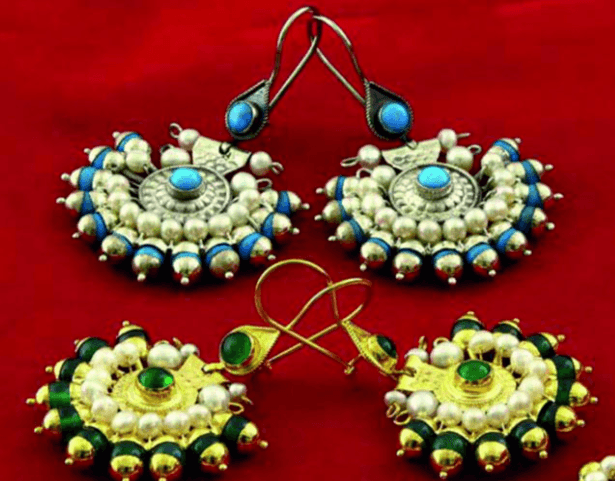
Sivrihisar İncili Küpe is a traditional piece of jewelry unique to the Sivrihisar district of Eskişehir, entirely crafted by hand. Pearls adorned with gold or silver beads are combined in a floral design. The red stone at the center symbolizes “fire,” the blue stone at the top represents the “evil eye,” and the surrounding pearls signify “purity and cleanliness.” This art, passed down from generation to generation by local jewelers, embodies a cultural value deeply associated with the region.
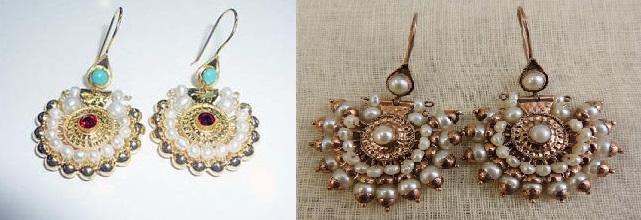
Sivrihisar İncili Küpe (Turkish Patent)
The tradition of the Sivrihisar İncili Küpe dates back to the 16th century and has been preserved to the present day through the work of local jewelers. It became an integral part of wedding rituals, following the custom of the groom presenting the earrings to the bride, which were then placed in her dowry chest. Production of the earrings is carried out exclusively by artisans in Sivrihisar and is protected by a distinctive hallmark.
The entire production process must take place within the boundaries of Sivrihisar. This original technique is applied exclusively by local artisans. Oversight is coordinated by the Eskişehir Chamber of Commerce, with inspections conducted at least once a year, in addition to responses to complaints or specific needs. Evaluation is carried out using a 14-point checklist covering technical compliance, production standards, and proper use of the hallmark.
Eskişehir İl Directorate of Culture and Tourism. "Sivrihisar Cebesi ve İncili Küpesi - 2009." Accessed July 6, 2025. https://eskisehir.ktb.gov.tr/TR-149947/sivrihisar-cebesi-ve-incili-kupesi---2009.html.
Turkish Patent and Trademark Office. "Sivrihisar İncili Küpe." Geographical Indications Portal. Accessed July 6, 2025. https://ci.turkpatent.gov.tr/cografi-isaretler/detay/442.

Type of Geographical İndication | Signpost | ||||||||
|---|---|---|---|---|---|---|---|---|---|
Application Date | 06.05.2019 | ||||||||
Registration Number | 541 | ||||||||
Registration Date | 17.09.2020 | ||||||||
Product / Product Group(s) | Handicraft products other than carpets kilims and textiles | ||||||||
Province(s) | Eskişehir | ||||||||
Applicant/Registrant(s) | Eskişehir Chamber of Commerce | ||||||||
No Discussion Added Yet
Start discussion for "Sivrihisar İncili Küpe" article
Historical Background
Technical Features and Production Details
Production Stages
Geographical Scope and Oversight Process