


This article was automatically translated from the original Turkish version.
Exit Date | 1970s | ||||||||
|---|---|---|---|---|---|---|---|---|---|
Development Date | 2000s | ||||||||
System Types | Energy Management Systems Smart Devices Smart Home Assistants Smart Heating/Cooling Smart Security Systems Smart Lighting | ||||||||
Advantage(s) | Remote access Device integration Time scheduling Security Comfort Energy savings | ||||||||
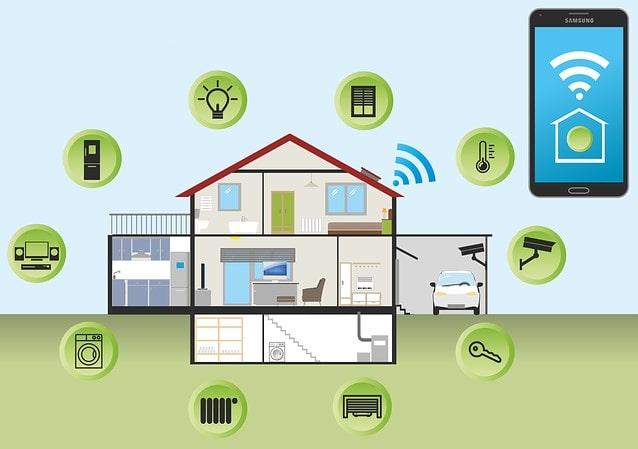
Smart home systems are integrated systems that enable the remote or automatic control of devices within living spaces using internet, sensor, and automation technologies. These systems aim to enhance user comfort, ensure energy efficiency, strengthen security, and improve quality of life. Smart homes are considered among the structures evaluated under the Internet of Things (IoT) and are recognized as one of the fundamental components of modern urbanization.

The foundations of smart home systems date back to the X10 protocol developed in the 1970s. This technology enabled the interconnection of household devices through data transmission over electrical wiring. In the 1990s, with the advancement of wireless communication technologies, more sophisticated systems emerged; in the 2000s, the widespread adoption of the internet and increased use of mobile devices led to the popularization of remotely accessible home systems. Today, artificial intelligence-enabled solutions are further advancing these systems by granting them the ability to learn from and make decisions based on user behavior.
These are the primary components through which smart home systems are managed. They are typically accessed via mobile applications, central panels, or voice assistants such as Amazon Alexa and Google Assistant. Users can access all devices through these centers, create scenarios, and define automation rules.
These units detect environmental conditions and provide information to the system. Motion, temperature, humidity, smoke, light, gas, and water sensors are commonly used. Data from sensors enables the system to make automated decisions.
These are components that perform physical actions based on commands received from sensors. Examples include motorized curtains, smart plugs, locking systems, and valves.
These are standards that facilitate data exchange between smart home devices. The most common protocols are:
Zigbee is a low-power, short-range wireless communication network protocol developed in the early 2000s based on the IEEE 802.15.4 standard. It is widely used in smart home systems and is particularly suitable for data transmission between devices within a home.
Z-Wave is a low-power, secure wireless communication protocol developed specifically for home automation. Similar to Zigbee, it enables devices within a home to communicate with each other. Z-Wave is commonly used in applications such as home security, lighting control, and energy management.
Wi-Fi is a widely used wireless communication protocol for providing internet connectivity. It is preferred in applications requiring high data speeds. In smart home devices, Wi-Fi enables direct internet access, allowing devices to be controlled remotely.
Bluetooth Low Energy is a wireless communication technology developed specifically for applications requiring low power consumption. BLE is an energy-efficient variant of standard Bluetooth technology and provides data transmission over short distances.
Thread is a low-power, secure, and scalable network protocol designed specifically to enable efficient communication among smart home devices. Thread allows devices to connect via the internet and operates using a mesh network.
These technologies form the foundational building blocks of smart home systems, each offering advantages tailored to specific needs. Zigbee and Z-Wave are preferred for devices requiring low power consumption and high security, while Wi-Fi and BLE are used in devices demanding high data speeds or operating over short distances. Thread, as a newer technology, provides a robust and secure communication infrastructure among smart home devices.
With smart lighting systems, lamps can automatically turn on or off based on ambient light and user movement. Remote control and scheduling features contribute to energy savings.
Smart thermostats can automatically adjust home temperature by considering whether the user is present, outdoor weather conditions, and daily habits to ensure energy efficiency.
IP cameras, motion sensors, alarm systems, smart locks, and video intercom systems enable 24/7 monitoring of the home and its surroundings. Users can respond instantly to events through their mobile devices.
Smart meters and plugs that measure energy consumption analyze how much energy each device uses. This enables users to develop conservation strategies.
Automated scenarios can be defined based on specific conditions. For example, the “Leaving Home” scenario can turn off all lights, lock all doors, and activate the alarm system.
Since smart home systems process personal data, cybersecurity measures are of critical importance.
Key security risks associated with these systems include:
Key measures to mitigate these risks include:
Smart home systems should feature simple, intuitive, and accessible interfaces. Features that enhance user experience include:
Tesla Powerwall is a battery system designed to store electricity generated from solar energy to meet household power needs. The system captures and stores electrical energy from solar panels or the grid and delivers it when needed. It is particularly suited for users seeking to reduce energy costs and have a backup power solution during outages.

LG ThinQ is a platform that enables remote control of LG-branded white goods and other smart devices. The system allows users to manage LG products via smartphones or other connected devices. Operating through Wi-Fi connectivity, it facilitates interaction between devices and provides users with a more efficient lifestyle.

Netatmo Weather Station is a device used to monitor indoor and outdoor weather conditions in real time. The system measures environmental data such as temperature, humidity, air pressure, and carbon dioxide levels and provides this information to users. Netatmo integrates this data into home automation systems—for example, to automate window opening or closing.

Smart Home Weather Station (Netatmo)
Yale x Apple HomeKit is a solution offering high security through smart lock systems. With HomeKit integration, users can remotely control door locks via smartphones, receive security alerts, and monitor entry and exit events.

Ecovacs Deebot is a smart cleaning robot that maps rooms to deliver efficient cleaning. This robot adapts to different floor surfaces, saving users time and automating daily cleaning tasks. It also optimizes cleaning plans by tracking its movement patterns.

These products offer solutions that simplify daily life, enhance energy efficiency, and improve security. Each integrates technology into home life with the goal of raising quality of life.
The future development of smart home systems is expected to follow these directions:
They will learn user habits and perform predictive actions.
Bidirectional energy exchange between home energy systems and vehicle batteries will become possible.
Home-based care will be supported by features such as fall detection, medication reminders, and emergency call systems.
Carbon footprint tracking, automated water management, and air quality improvement systems will become widespread.
Smart homes will synchronize with city-wide energy, transportation, and security systems.
Güven, Cevdet Tamer, and Mehmet Acı. “Akıllı Ev Sistemleri için Geliştirilen Yapay Sinir Ağı Tabanlı Gezgin Hizmet Robotu.” *Avrupa Bilim ve Teknoloji Dergisi*, special issue (2019): 74–81. https://doi.org/10.31590/ejosat.636386. Accessed May 4, 2025.
Güğül, Gül Nihal, and Müzeyyen Sarıtaş. “Akıllı Ev Sistemleri ve Uygulaması.” *DPÜ Fen Bilimleri Enstitüsü Dergisi* 25 (2011): 49–53. https://dergipark.org.tr/en/download/article-file/439394. Accessed May 4, 2025.
Karakuş, Cihan, and Halil Kayadelen. “Akıllı Ev Sistemleri ve Uygulaması.” *Dicle Üniversitesi Mühendislik Fakültesi Mühendislik Dergisi* 7, no. 1 (2016): 65–74. https://dergipark.org.tr/en/download/article-file/439394. Accessed May 4, 2025.
Koçyiğit, Yücel, and Özen Sine. “İnternet Üzerinden Kontrol Edilen Tam Otomasyonlu Akıllı Ev Sistemleri İçin Örnek Bir Uygulama.” *Dicle Üniversitesi Mühendislik Fakültesi Mühendislik Dergisi* 11, no. 2 (2020): 521–532. https://dergipark.org.tr/tr/pub/dumf/issue/54907/635296. Accessed May 4, 2025.
Kuncan, Melih, and Ömer Çaça. “Akıllı Ev Teknolojisi için Kablosuz Akıllı Kit.” *Avrupa Bilim ve Teknoloji Dergisi* 17 (2019): 271–282. https://doi.org/10.31590/ejosat.605709. Accessed May 4, 2025.
Odabaş, Mehmet Serhat, Dilek Çakır, and Cengiz Tepe. “Akıllı Ev Sistemlerinde Yapay Zekâ Kullanımı Üzerine Bir Değerlendirme.” *OMÜ Mühendislik Bilimleri ve Teknolojisi Dergisi* 2, no. 2 (2022): 1–10. https://ojs.omu.edu.tr/index.php/jest/article/view/71. Accessed May 4, 2025.
Öztürk, Ayşe, and Sepanta Naimi. “Akıllı Ev Sistemlerinde Kullanılan Yöntemlerin Farkları, Avantajları ve Dezavantajları.” *İstanbul Aydın Üniversitesi Dergisi* 36 (2017): 115–125. https://dergipark.org.tr/en/download/article-file/420006. Accessed May 4, 2025.
İlkbahar, Fatih, Şeyma Ünal, Armağan Tuğçe Karakaya, and Bayram Eren. “Akıllı Ev Sistemleri Üzerine Bir Model Önerisi.” *AJIT-e: Academic Journal of Information Technology* 12, no. 45 (2021): 90–105. https://dergipark.org.tr/en/pub/ajit-e/article/884987. Accessed May 4, 2025.
İnal, Kamil, and M. Ali Akcayol. “GSM Tabanlı Akıllı Ev Uygulaması.” *Bilişim Teknolojileri Dergisi* 2, no. 2 (2010). https://dergipark.org.tr/en/pub/gazibtd/issue/6616/87895. Accessed May 4, 2025.

Exit Date | 1970s | ||||||||
|---|---|---|---|---|---|---|---|---|---|
Development Date | 2000s | ||||||||
System Types | Energy Management Systems Smart Devices Smart Home Assistants Smart Heating/Cooling Smart Security Systems Smart Lighting | ||||||||
Advantage(s) | Remote access Device integration Time scheduling Security Comfort Energy savings | ||||||||
Historical Development
Components
Control Centers
Sensors
Actuators
Communication Protocols
Zigbee
Features:
Applications:
Z-Wave
Features:
Applications:
Wi-Fi
Features:
Applications:
Bluetooth Low Energy (BLE)
Features:
Applications:
Thread
Features:
Applications:
Applications
Lighting Systems
Heating, Ventilation, and Air Conditioning (HVAC)
Security and Monitoring Systems
Energy Management
Home Automation and Scenarios
Data Security and Privacy
Interface Design and User Experience
Example Applications
Tesla Powerwall
Features:
Applications:
LG ThinQ
Features:
Applications:
Netatmo Weather Station
Features:
Applications:
Yale x Apple HomeKit
Features:
Applications:
Ecovacs Deebot
Features:
Applications:
Future Perspective
AI-Enabled Systems:
Electric Vehicle Integration:
Support Systems for the Elderly and Disabled:
Environmentally Friendly Automation:
Smart City Integration: