


 Recently Added:
This article was automatically translated from the original Turkish version.
In August 2025, widespread forest fires affected large areas across many regions of España. Fires that began on different dates in Castilla y León, Galicia, Navarre, Madrid and Andalusia spread due to high temperatures, low humidity and strong winds, causing damage to thousands of hectares of land.
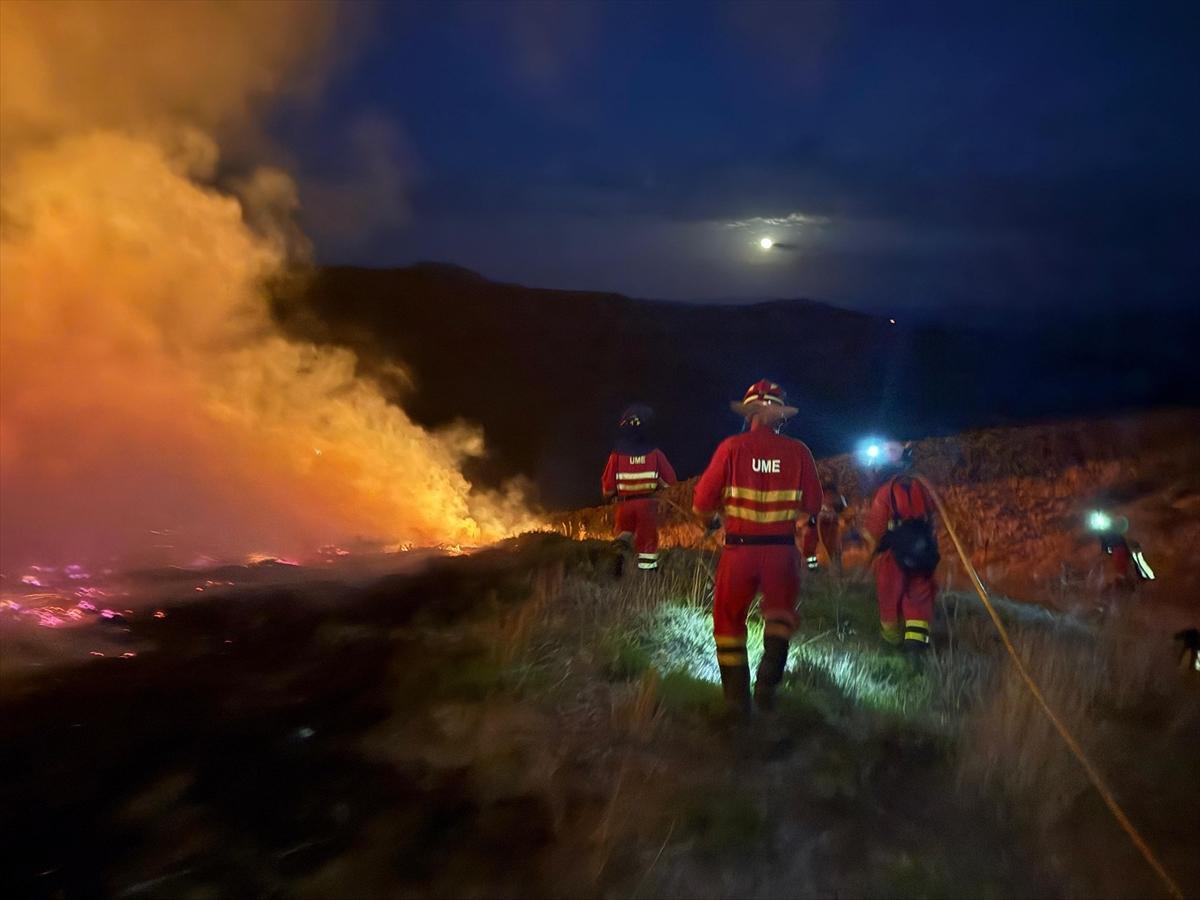
Efforts to control forest fires in the province of León, España, 11 August 2025 – (Anadolu Ajansı)
On 8 August 2025, forest and rural fires broke out in the area surrounding Aranjuez district of Madrid and the town of San Bartolomé de Pinares, located approximately 100 kilometres north of the capital in the province of Ávila. Around 40 residents of a residential complex in Aranjuez and more than 60 people at two separate sites in San Bartolomé de Pinares were evacuated.
The fire in San Bartolomé de Pinares disrupted train services and affected approximately 1,600 passengers. The Military Emergency Unit (UME) provided support in extinguishing the fire. The Madrid Autonomous Government reported that 13 teams from fire and forestry units responded to the fire in Aranjuez.
In Castilla y León, particularly in the province of León, multiple fires broke out on 9–10 August 2025. A fire that started on 9 August at 16:33 in the Yeres area, classified at Level 2 of the Potential Severity Index (IGP), affected the Las Médulas region, a UNESCO World Heritage Site. More than 450 personnel and 24 ground and aerial vehicles participated in firefighting operations. Due to winds reaching speeds of up to 50 km/h, some firefighting teams were withdrawn from the area for safety reasons.
Approximately 700 people were evacuated from Carucedo to Ponferrada. The Guardia Civil and National Police evacuated 400 people from Carucedo, 100 from Las Médulas, 14 from Voces and 165 from Orellán. A fire that began on 8 August in Llamas de Cabrera, also classified at IGP Level 2, spread through dense shrubland. On 10 August, the N-6 highway was closed to traffic until 17:30 due to the fire in Villaverde de los Cestos.
A fire that began on 9 August 2025 in the municipality of Maceda, province of Ourense, Galicia, was investigated on suspicion of arson after it ignited simultaneously at six different locations in the Castro de Escuadro area. The fire damaged 400 hectares and prompted a brief Level 2 emergency declaration, which was later lifted as the threat subsided.
The fire in Chandrexa de Queixa affected approximately 800 hectares. Emergency teams worked to prevent the fire from reaching the Serra do Invernadoiro Natural Park. Additionally, the Monteseiro fire in A Fonsagrada impacted 150 hectares, while fires in Padrenda and Ponteceso were stabilised.
A Level 2 fire that erupted on 9 August 2025 in the Carcastillo region of Navarre proved difficult to control due to high temperatures and strong winds. It was reported that the fire posed no direct threat to populated areas. Nine helicopters and four aircraft provided support in firefighting efforts.
A fire that began on 4 August 2025 at the Torre la Peña II campsite in the town of Tarifa, province of Cádiz, spread rapidly due to strong winds and remained active for two days. Over 1,500 people were evacuated from their homes or hotels, and approximately 5,000 vehicles were removed from the area. Seventeen aircraft and helicopters participated in firefighting operations.
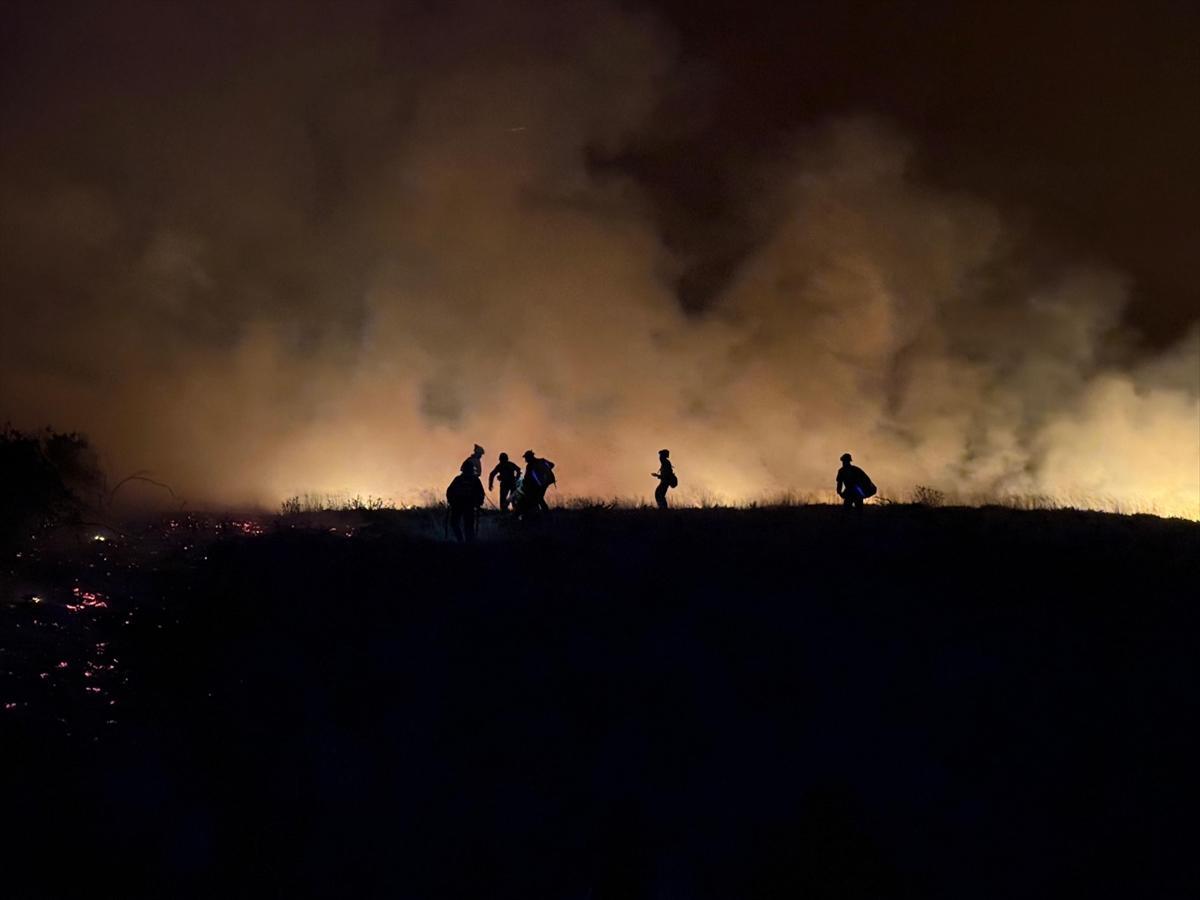
Efforts to control forest fires in the province of León, España, 11 August 2025 – (Anadolu Ajansı)
Throughout August 2025, heatwaves affected much of España, with temperatures reaching 42–43°C in some regions. Low humidity and strong winds hampered efforts to contain the fires. The Spanish Meteorological Agency (AEMET) issued “high” and “extreme” fire risk warnings for many areas during the first half of the month.
According to data from the Ministry for Ecological Transition and Demographic Challenge, 15 fires larger than 500 hectares occurred in España during 2025, collectively damaging approximately 36,000 hectares of forested land. This figure exceeds the average for the past ten years.
Al Jazeera. “Wildfires and Heatwaves Grip Southern Europe as Evacuations Ordered.” Accessed August 11, 2025. https://www.aljazeera.com/news/2025/8/6/wildfires-and-heatwaves-grip-southern-europe-as-evacuations-ordered
Anadolu Ajansı. “İspanya Hafta Sonuna Madrid ve Avila Çevresindeki Yangınlarla Başladı.” Accessed August 11, 2025. https://www.aa.com.tr/tr/dunya/ispanya-hafta-sonuna-madrid-ve-avila-cevresindeki-yanginlarla-basladi/3654718#
Anadolu Ajansı. “İspanya’nın Güneyindeki Yangınlar Nedeniyle 1.500’den Fazla Kişi Tahliye Edildi.” Accessed August 11, 2025. https://www.aa.com.tr/tr/dunya/ispanyanin-guneyindeki-yanginlar-nedeniyle-1500den-fazla-kisi-tahliye-edildi/3651955#
Anadolu Ajansı. “İspanya’nın Kuzeyi Yılın En Kötü Orman Yangınlarıyla Mücadele Ediyor.” Accessed August 11, 2025. https://www.aa.com.tr/tr/dunya/ispanyanin-kuzeyi-yilin-en-kotu-orman-yanginlariyla-mucadele-ediyor/3656044
El Debate. "España se Quema: Estos son los Principales Incendios Activos que se Extienden por el País." Accessed August 11, 2025. https://www.eldebate.com/sociedad/sociedad-medio-ambiente/20250811/espana-quema-estos-son-principales-incendios-activos-extienden-pais_324782.html
On 11 August 2025 in the evening hours, a forest fire began at 19:45 within the municipal boundaries of Tres Cantos, north of Madrid. Fueled by strong winds, the fire spread rapidly and threatened the areas of Soto de Viñuelas, Fuente El Fresno, and Ciudalcampo. During the incident, a 50-year-old man working at an equestrian facility in Soto de Viñuelas suffered severe burns covering 98 percent of his body while attempting to rescue his horses. He died the following day at La Paz Hospital.
The fire affected an area of approximately 1,000 hectares and damaged at least four residential buildings. A total of 180 people were evacuated, with 100 of them temporarily housed in sports halls prepared by the municipality. Initially, the M607 motorway was closed in both directions due to the fire. The response included 33 ground teams, three helicopters, and command units, with the Military Emergency Unit (UME) deployed to the fire zone.
By the morning of 12 August, the fire perimeter had been contained but not fully extinguished. Authorities announced an operational level of 2 for the region due to expected changes in wind direction and the risk of dry storms.
During the second week of August 2025, numerous forest fires occurred in the Castilla y León region, particularly in the provinces of León and Zamora. As of 11 August, a total of ten fires were active, with eight in León and two in Zamora. Among these, the fires in Molezuelas de la Carballeda, Puercas, Paradina, and Yeres were classified with the highest risk level, Indice de Gravedad Potencial (IGP) 2.
The fire in Molezuelas de la Carballeda affected approximately 3,500 hectares, burning oak forests and agricultural land. Driven by wind, the fire crossed into León and threatened numerous settlements, including Congosta. Across Zamora and León, 24 populated areas were evacuated, and approximately 3,100 people were displaced. Evacuees were accommodated in sports halls and with relatives in nearby communities.
Near the Las Médulas Natural Park in León, fires damaged the ancient Roman open-pit gold mine, a UNESCO World Heritage Site. High temperatures and strong winds caused the formation of fire whirls in the area, forcing firefighting teams to withdraw from certain locations.
The Military Emergency Unit (UME) operated in the region to combat the fires, employing mechanized units and backburning techniques to contain the flames.
A forest fire that began on 8 August 2025 in the municipality of Chandrexa de Queixa, in the province of Ourense, remained uncontrolled as of 12 August and affected approximately 3,000 hectares. The fire is located in the Macizo Central de Ourense region at an altitude of 1,500 meters, with access possible only by air in many areas. As the fire approached residential zones, evacuations were ordered in the neighborhoods of Requeixo, Vilar, and Zamorela in Chandrexa. Five people were evacuated from two homes.
In the municipality of Maceda, fires in the areas of Calveliño do Monte and Santiso prompted a Level 2 emergency declaration. Due to the proximity of the fires to populated areas, some zones were evacuated. In both incidents, strong winds and low humidity hampered firefighting efforts.
In addition to Chandrexa and Maceda, other fires of varying sizes were active in the provinces of Lugo, Pontevedra, and A Coruña across Galicia. Helicopters, fixed-wing aircraft, and ground teams were deployed throughout the region to combat the fires.
A forest fire that began on 11 August 2025 in the Sierra de la Plata area of Tarifa, in the province of Cádiz, rapidly spread toward coastal settlements and tourist areas due to strong Levante winds. The fire threatened the beaches of Atlanterra and Los Alemanes, along with surrounding hotels and residential zones. In the initial phase, approximately 2,000 people were evacuated from homes, hotels, and vacation properties.
Under the Plan Infoca, more than 200 personnel, ground vehicles, and a total of 14 aerial assets—including helicopters, amphibious aircraft, and coordination planes—were deployed to halt the fire’s advance. Driven by the wind, flames approached the coastline, prompting confinement measures in some areas, with public advisories to close windows and remain indoors.
After partial control was achieved in certain sections, partial returns were permitted to southern settlements such as Mar de Plata, Almadraba Playa, Atlanterra Playa, Jardines de Zahara, Bahía de Plata, Atlanterra Costa, and Atlanterra Sol. However, returns to hotels and residential areas near the active fire flank remained prohibited.
A forest fire began on 11 August 2025 in Navalmoralejo, in the province of Toledo, Castilla-La Mancha. The fire expanded rapidly and reached the settlement of Villar del Pedroso in the neighboring region of Extremadura. Due to smoke and potential fire spread, confinement measures were imposed for La Estrella (Toledo) and Villar del Pedroso (Cáceres).
The fire was assessed as a Level 2 operational situation, prompting a request for support from the Military Emergency Unit (UME) under Castilla-La Mancha’s Forest Fire Response Plan (Infocam). A total of 194 personnel, including 47 ground and aerial units, responded to the fire, which started at 16:34. Approximately 400 hectares of forest land were burned. An investigation into the fire’s origin is ongoing.
On 11 August 2025, a forest fire in the Sierra Morena region north of the province of Seville affected wooded areas near the settlements of San Nicolás del Puerto and Alanís. Approximately 80 people were evacuated from a campsite in the area. Natural sites including Cascadas del Huéznar and El Martinete were also cleared. Local authorities issued advisories to residents near the fire zone to water the perimeters of their homes and keep windows closed.
On the same day, a forest fire in the Los Guijos area within the municipality of Villanueva de los Castillejos, Huelva, was stabilized following intervention by Plan Infoca teams. Three fire engines, one helicopter, two bulldozers, three forest firefighting teams, one fire suppression technician, and additional support personnel were deployed to bring the fire under control.
A forest fire that began on 9 August 2025 in the settlement of Carcastillo, Navarre, and declared a Level 2 emergency on 10 August, was stabilized on 11 August after containment efforts were completed. Ground teams were instructed to continue firefighting operations overnight, while aerial assets would resume operations during daylight hours.
In Aragon, a fire affecting agricultural and forest land in Daroca, part of the province of Zaragoza, was brought under control on the evening of 11 August. The fire damaged a total of 35 hectares, and three ground teams and three fire engines remained in the area overnight.
As of 12 August 2025, active forest fires were reported in six autonomous regions of Spain: Andalusia, Castilla y León, Castilla-La Mancha, Extremadura, Galicia, and Madrid. The total number of evacuated individuals exceeded 5,000, including residents from homes, hotels, and campgrounds.
At least one person lost their life due to the fires. This individual suffered severe burns during the Tres Cantos fire in Madrid and died in hospital. Some injured persons included security personnel who volunteered to assist in firefighting operations.
According to data from the Ministry for Ecological Transition, since the beginning of 2025, more than 46,000 hectares of forest land have burned across Spain, with a significant portion occurring during the August 2025 fires.
Anadolu Ajansı. “İspanya’daki Yangınlarda 1 Kişi Öldü, 5 Binden Fazla Kişi Geceyi Dışarıda Geçirdi.” Accessed August 12, 2025. https://www.aa.com.tr/tr/dunya/ispanyadaki-yanginlarda-1-kisi-oldu-5-binden-fazla-kisi-geceyi-disarida-gecirdi-/3657242
Manchester Evening News. “Spain Endures 44C Heatwave as Wildfires Rage.” Accessed August 12, 2025. https://www.manchestereveningnews.co.uk/news/world-news/spain-endures-44c-heatwave-wildfires-32247293
Onda Cero. “Última Hora Incendios en España, Directo: Cuatro Focos Graves en Castilla y León y Más de Mil Hectáreas Arrasadas en Ourense.” Accessed August 12, 2025. https://www.ondacero.es/noticias/sociedad/ultima-hora-incendios-espana-directo-cuatro-focos-graves-castilla-leon-mas-mil-hectareas-arrasadas-ourense_202508116899cccb8180495aa515bb0f.html
Reuters. “Firefighters Battle ‘Fire Whirls’ in Northern Spain.” Accessed August 12, 2025. https://www.reuters.com/sustainability/climate-energy/firefighters-battle-fire-whirls-northern-spain-2025-08-11/
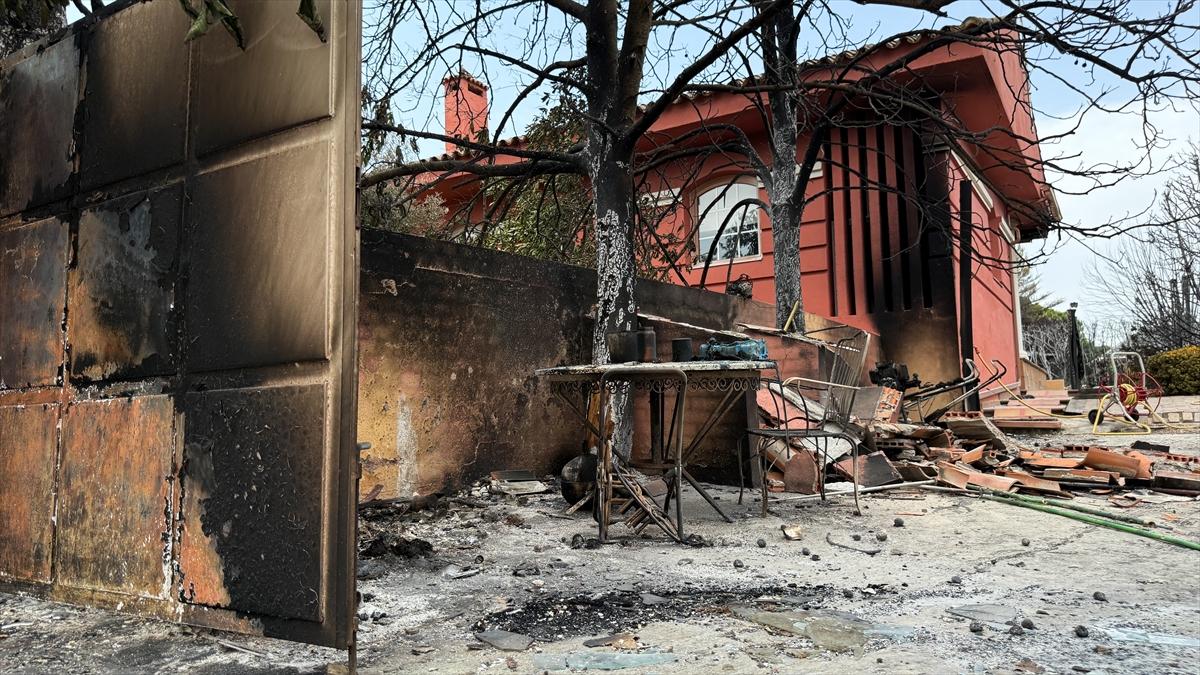
Damage after the fire near Madrid, August 12, 2025 – (Anadolu Agency)
Fatalities and Injured
Two people have lost their lives in the forest fires in Spain in August 2025. The first fatality occurred on August 11 during the fire in Tres Cantos district of Madrid. A 50-year-old man who was attempting to rescue his horses in the Soto de Viñuelas area suffered burns to 98 percent of his body and died at La Paz Hospital.
The second fatality occurred in the province of León. A 39-year-old man who volunteered to assist in firefighting operations near the village of Andiñuela lost his life on August 12. It was reported that the incident occurred during firefighting activities.
Among those injured in the fire in Tres Cantos district of Madrid was a security officer. In the fires in León, four people were injured, one of whom was a volunteer participating in firefighting efforts.
In the Chandrexa de Queixa fire in the province of Ourense, at least two people were injured. Some of the injured were affected by smoke while others sustained injuries during operations near active flames.
Castilla y León (León and Zamora): Fires continue in the areas around Molezuelas de la Carballeda, Puercas, Paradina, and Andiñuela in León. Although some areas have been contained, the risk of re-ignition remains due to wind and high temperatures. In Zamora, flames have continued to spread from Molezuelas de la Carballeda toward the border with León in certain locations.
Galicia (Ourense, Lugo): The Chandrexa de Queixa fire in Ourense has affected approximately 3,000 hectares and has not yet been fully contained. The fire in Maceda has been partially contained, but suppression efforts continue in high-risk zones. Smaller fires are also ongoing in Lugo.
Asturias: Fires remain active in localized areas of Cangas del Narcea and Allande. In some locations, the advance of flames into forested interior zones has been halted.
Madrid: The fire in Tres Cantos has been contained and active burning points have been largely extinguished. Cooling operations are ongoing in the region.
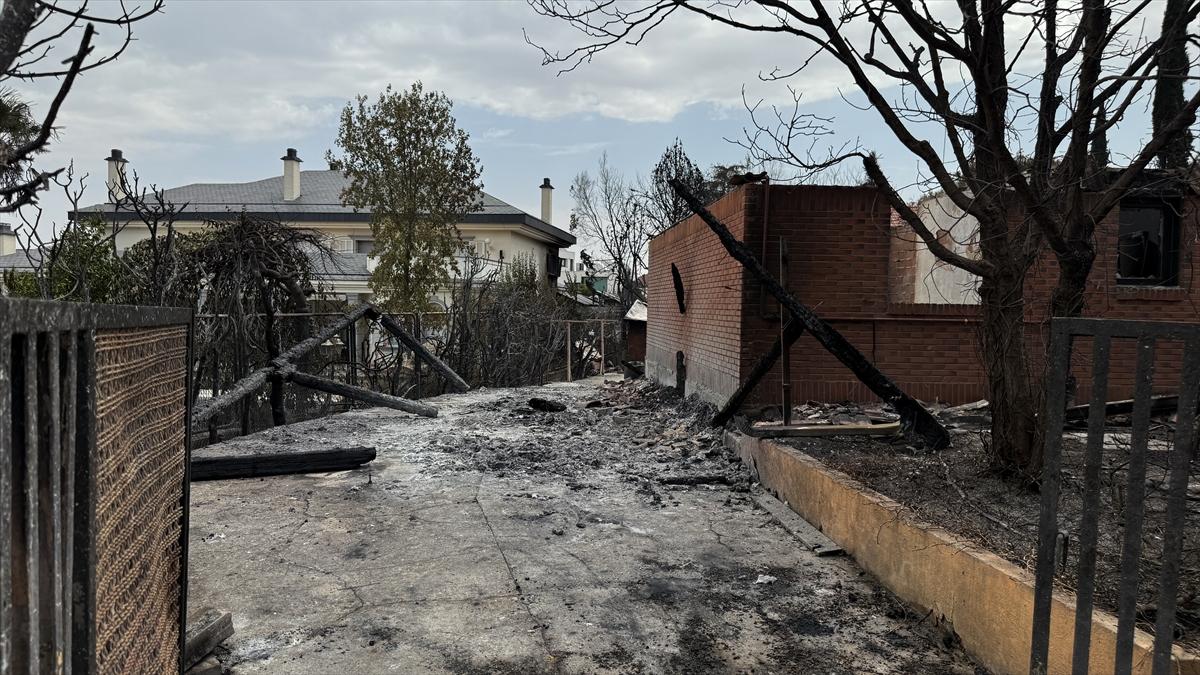
Damage after the fire near Madrid, August 12, 2025 – (Anadolu Agency)
Andalusia (Tarifa): Control has been achieved in some sections of the fire, but active areas remain around Sierra de la Plata. Gradual return authorizations are being issued, and entry into areas affected by the fire remains prohibited.
Navarre: The Carcastillo fire has been fully extinguished, and only monitoring activities are continuing in the area.
El País. “Última Hora de los Incendios en España, en Directo.” El País, August 13, 2025. Accessed August 13, 2025. https://elpais.com/espana/2025-08-13/ultima-hora-de-los-incendios-en-espana-en-directo.html
Onda Cero. “Última Hora de los Incendios en España, en Directo: Cuatro Focos Graves en Castilla y León y Más de Mil Hectáreas Arrasadas en Ourense.” Onda Cero, August 11, 2025. Accessed August 13, 2025. https://www.ondacero.es/noticias/sociedad/ultima-hora-incendios-espana-directo-cuatro-focos-graves-castilla-leon-mas-mil-hectareas-arrasadas-ourense_202508116899cccb8180495aa515bb0f.html
As of 14 August 2025, a total of 36 separate forest fires have occurred across Spain, at least 11 of which remain active as large-scale fires. Between 11 and 14 August, the number of fatalities nationwide has risen to three. Two of the deceased were volunteers participating in fire suppression efforts, and the third died in hospital from severe burns.
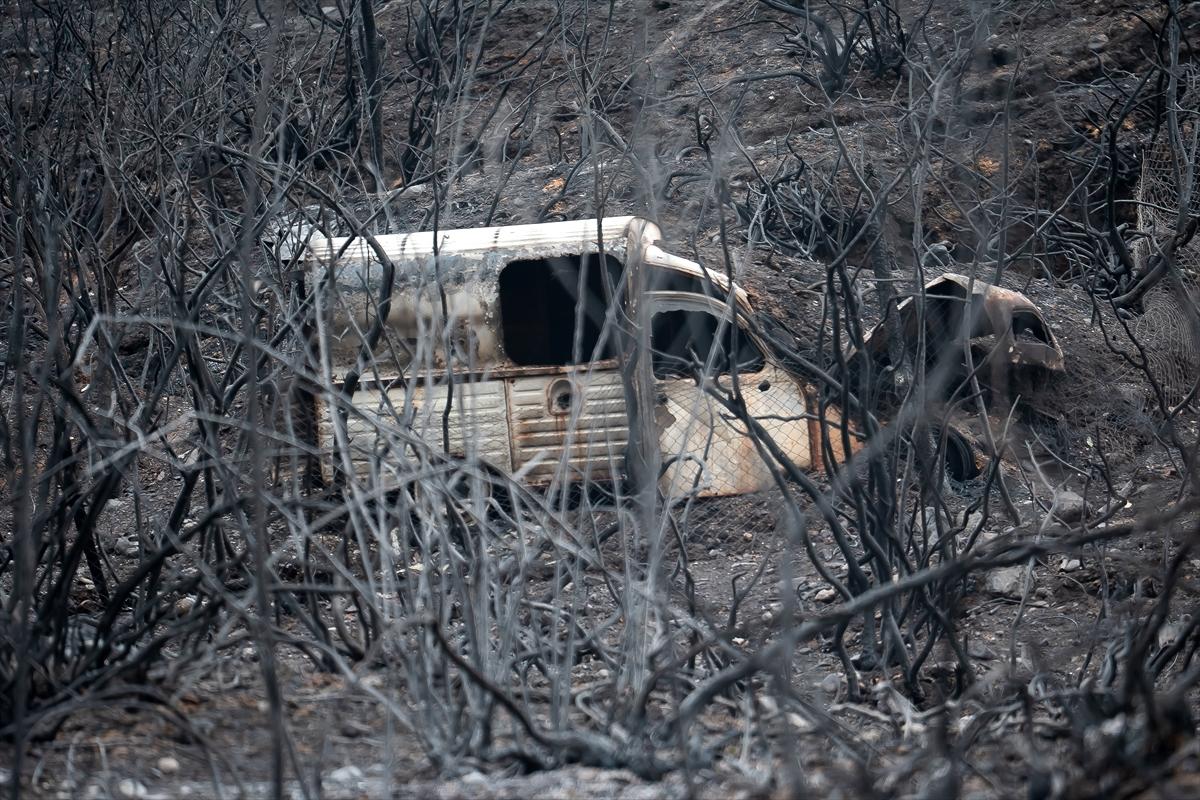
Damage in León, Spain, caused by ongoing forest fires, 13 August 2025 – (Anadolu Agency)
According to data from the European Forest Fire Information System (EFFIS), more than 100,000 hectares of land have been burned. Active firefighting operations are ongoing at 35 fire locations nationwide, with five fires brought under control in the last 24 hours. At Spain’s request under the European Union Civil Protection Mechanism, two Canadair-type aerial firefighting aircraft have been deployed from France and stationed in Galicia.
As of 14 August 2025, over 10,000 people have been evacuated across Spain due to forest fires. In the Castile and León region, 34 municipalities in the provinces of León and Zamora have been evacuated, forcing approximately 8,000 people to leave their homes. In Galicia, nearly 1,000 people have been evacuated from the province of Ourense, and over 900 people have been evacuated from Extremadura. In the Extremaduran town of Plasencia, more than 100 people have been relocated to safe areas.
Evacuated individuals are being temporarily housed in sports halls, municipal facilities, and relatives’ homes. In some areas, evacuation orders have been repeatedly updated during the day due to changes in fire spread rates and wind direction.
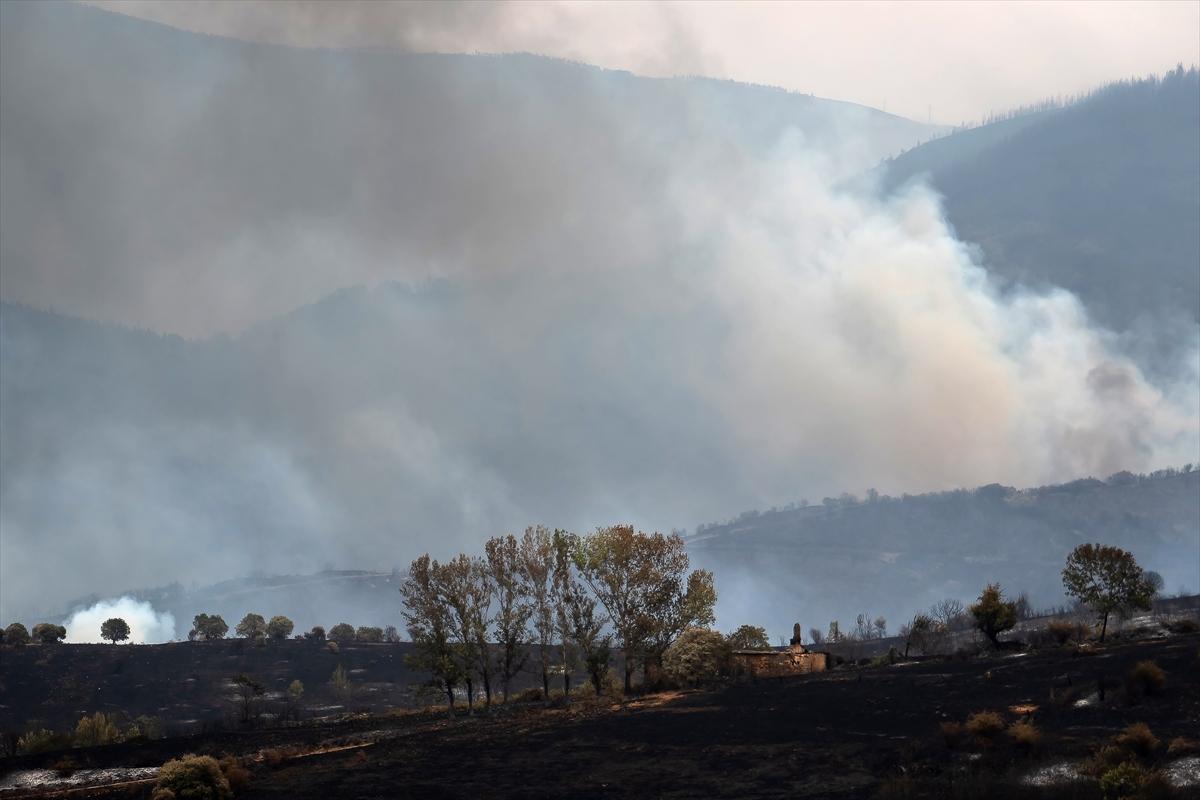
Damage in León, Spain, caused by ongoing forest fires, 13 August 2025 – (Anadolu Agency)
As of 14 August 2025, according to data from Spain’s General Directorate of Traffic, 14 roads have been closed nationwide due to forest fires. In Extremadura, approximately 25 kilometers of the A-66 motorway have been closed to traffic. Additionally, several national roads in Castile and León, Navarre, La Rioja, and Andalusia have been temporarily closed.
Rail services have also been disrupted, with train services on the Madrid–Galicia line suspended. In some areas, trains operating near active fires have been halted and scheduled services canceled.
The forest fire that began in Jarilla has affected an area of approximately 4,600 hectares. Due to the fire’s proximity to settlements and agricultural land, operational level 2 has been activated under Extremadura’s Forest Fire Intervention Plan (INFOEX). A curfew has been imposed in Oliva de Plasencia for public safety. More than 300 personnel, 12 aerial vehicles, ground teams, bulldozers, and water tankers have been deployed for firefighting operations.
A total of 22,000 hectares in the province of Ourense have been affected by fires. The fire in Chandrexa de Queixa has burned approximately 4,500 hectares, while the fire in Parafita has affected around 5,000 hectares. Changes in wind direction have complicated firefighting efforts in both incidents, with flames approaching residential areas to within 500 meters. Two Canadair-type aircraft deployed under the EU Civil Protection Mechanism have been stationed in the region.
The fire in Molezuelas de la Carballeda has affected an area of approximately 37,000 hectares. Although rainfall has slowed the advance of some fires in the region, full control has not yet been achieved. Evacuation measures have been implemented in over 30 settlements, with the majority of evacuated residents directed to sports halls and municipal facilities.
The forest fire in Cangas del Narcea in Asturias remains active. The region’s steep terrain and dense forest cover have hindered firefighting efforts. In the Teresa de Cofrentes fire in Comunidad Valenciana, two hotspots have been identified. Over 170 to 180 personnel, fire trucks, and helicopters have been deployed for intervention. The affected area includes not only forested land but also some rural agricultural fields.
According to data from Spain’s State Meteorological Agency (Aemet), as of 14 August 2025, the risk of forest fires is high or extreme across much of the country. This risk level is expected to remain unchanged until the end of the weekend. Orange alerts have been issued for 42 provinces, with temperatures forecast to reach up to 42°C in some areas.
The provinces under extreme heat warnings include Ourense, Badajoz, Cáceres, Lleida, Toledo, Huesca, Zaragoza, Córdoba, Huelva, Jaén, and Sevilla. Low humidity levels and wind speeds occasionally exceeding 50 kilometers per hour have been identified as meteorological factors that could accelerate fire spread.
Due to these conditions, additional aerial resources have been dispatched to fire zones, ground teams’ shift durations have been extended, and access to high-risk rural areas has been restricted.
As of 14 August 2025, Spain has requested international assistance under the European Union Civil Protection Mechanism. In response, two Canadair-type aerial firefighting aircraft have been sent from France and stationed in Galicia. These aircraft are operating primarily over large-scale fires active in the provinces of Ourense and Lugo.
In addition, the European Union’s Copernicus Emergency Mapping Service has provided high-resolution satellite imagery of fire-affected areas to Spanish authorities. This data is being used to more accurately assess the speed of fire spread and the extent of impacted areas.
Anadolu Ajansı. “İspanya’da Orman Yangınları Sebebiyle 10 Binden Fazla Kişi Tahliye Edildi.” Accessed August 14, 2025. https://www.aa.com.tr/tr/dunya/ispanyada-orman-yanginlari-sebebiyle-10-binden-fazla-kisi-tahliye-edildi/3659055
El País. “Continúa la Ola de Incendios en España con Especial Preocupación por la Situación en Extremadura.” Accessed August 14, 2025. https://elpais.com/espana/2025-08-14/continua-la-ola-de-incendios-en-espana-con-especial-preocupacion-por-la-situacion-en-extremadura.html
As of 18 August 2025, 23 major fires remain active across Spain, with more than 120,000 hectares burned since the beginning of the year. The majority of these fires are concentrated in the regions of Galicia, Castile and León, Extremadura, and Andalusia.
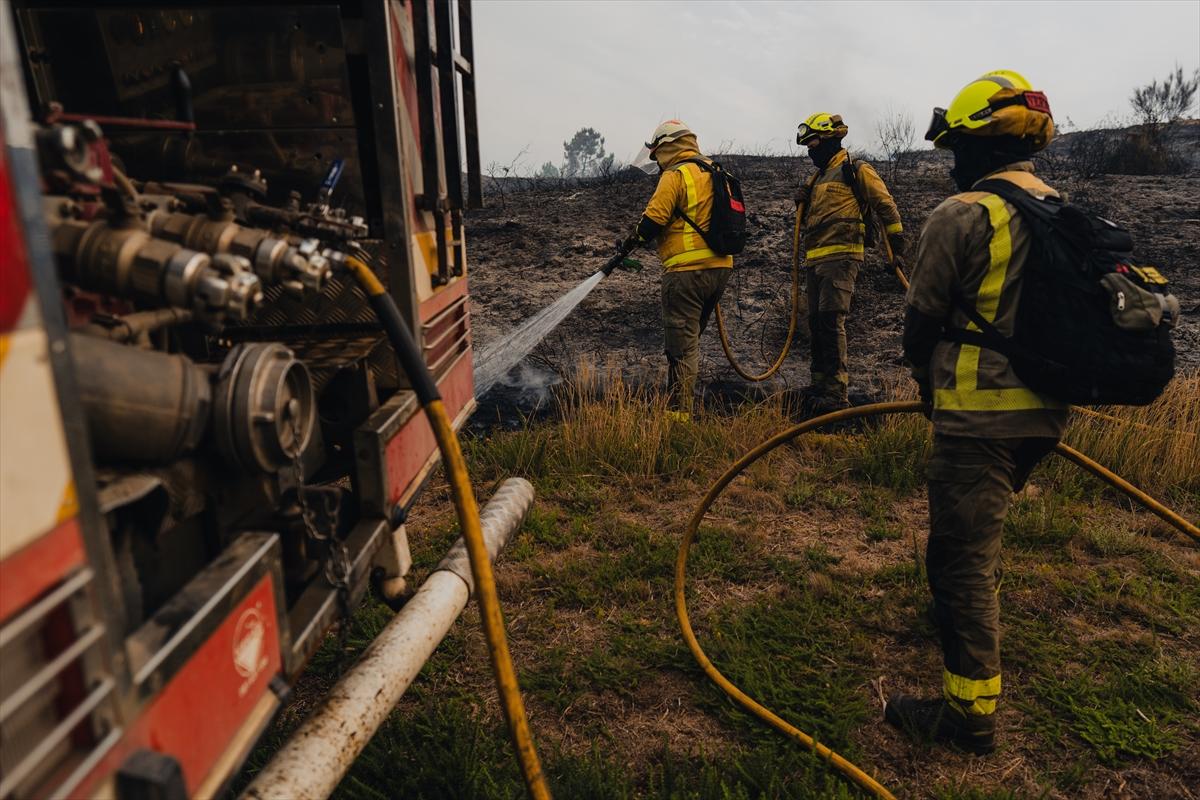
Spain is battling prolonged forest fires, 18 August 2025 – (Anadolu Agency)
Galicia: The most intense fire activity in Galicia has occurred in the province of Ourense, where over 46,000 hectares have been burned. Areas of 4,500 hectares in Chandrexa de Queixa and 5,000 hectares in Parafita have been affected. Active fires continue in various locations within the province of Lugo. Nearly 20 fires in the region are concentrated primarily in Ourense and Lugo. Canadair-type aircraft deployed by the European Union are operating in Ourense.
Castile and León: More than 20 fires are active in the provinces of Zamora, León, Salamanca, and Ávila. The fire near Molezuelas de la Carballeda in Zamora has affected approximately 37,000 hectares. Fires continue around Andiñuela and Espinoso de Compludo in León. Extensive forested areas in the Sierra de Francia region of Salamanca have been burned. In Ávila, forest fires have spread into mountainous terrain.
Extremadura: The fire that began in Jarilla has burned approximately 4,800 hectares. The fire has advanced toward Plasencia. Evacuations have been carried out to secure nearby settlements, and a curfew has been imposed in Oliva de Plasencia. Emergency levels have been raised in the region due to the risk of further expansion.
Andalusia: A fire in Tarifa, part of the province of Cádiz, has affected coastal areas around Sierra de la Plata. Flames have threatened the Atlanterra and Los Alemanes beaches and holiday homes. After evacuations, part of the fire has been brought under control, but fire spread continues in some areas.
Asturias: The forest fire in Cangas del Narcea in Asturias remains active. Rescue operations have been hindered for ground teams due to the mountainous terrain.
Comunidad Valenciana: Two hotspots have been identified in the Teresa de Cofrentes fire. Response efforts involving approximately 180 personnel are being conducted using both ground and air assets.
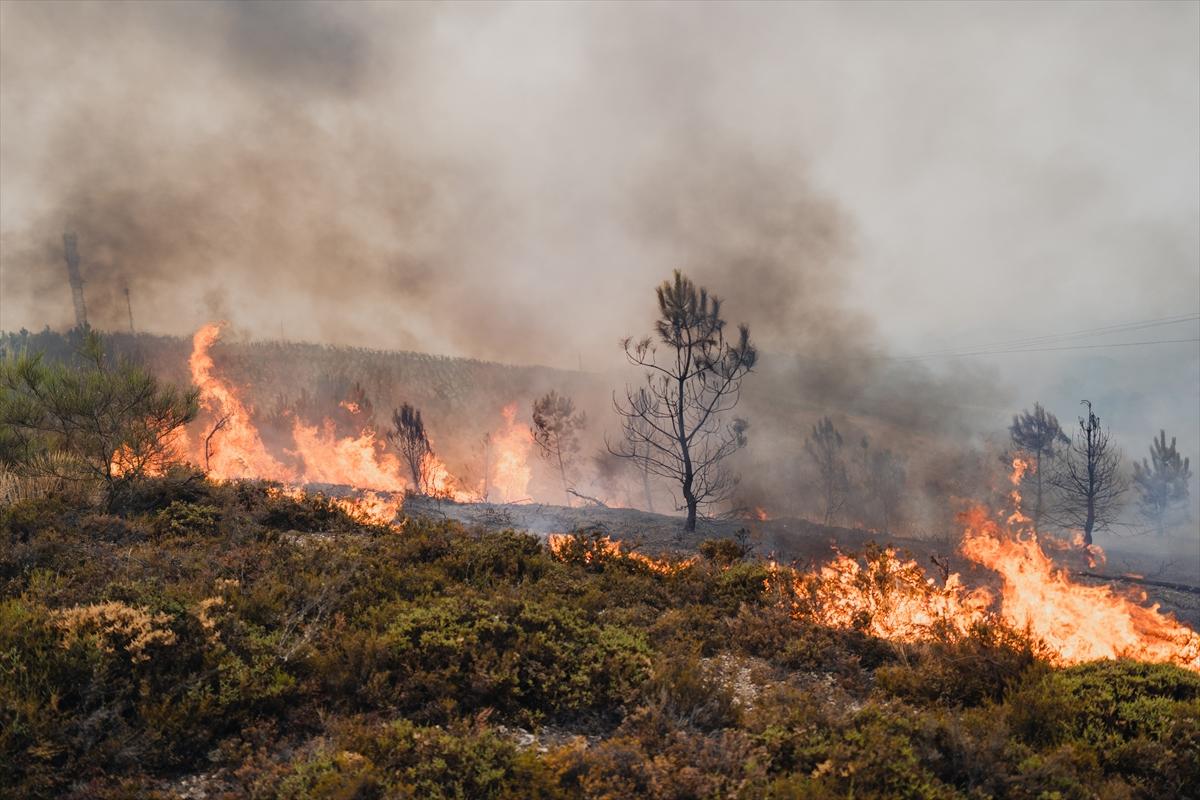
Spain is battling prolonged forest fires, 18 August 2025 – (Anadolu Agency)
As of 18 August 2025, four fatalities have been reported due to forest fires in Spain. The first death occurred on 11 August in Tres Cantos, Madrid, when a 50-year-old man died in hospital from severe burns while attempting to rescue his horses. The second and third deaths occurred when two volunteers lost their lives while fighting fires in León. The fourth death occurred on 17 August in Espinoso de Compludo, a village in the province of León, when a firefighter was trapped by flames.
The number of injured exceeds 20, including volunteers, security personnel, and firefighters. Some of the injured in León and Zamora are in critical condition. Some victims received treatment at the scene, while those with serious injuries were transferred to hospitals in the region.
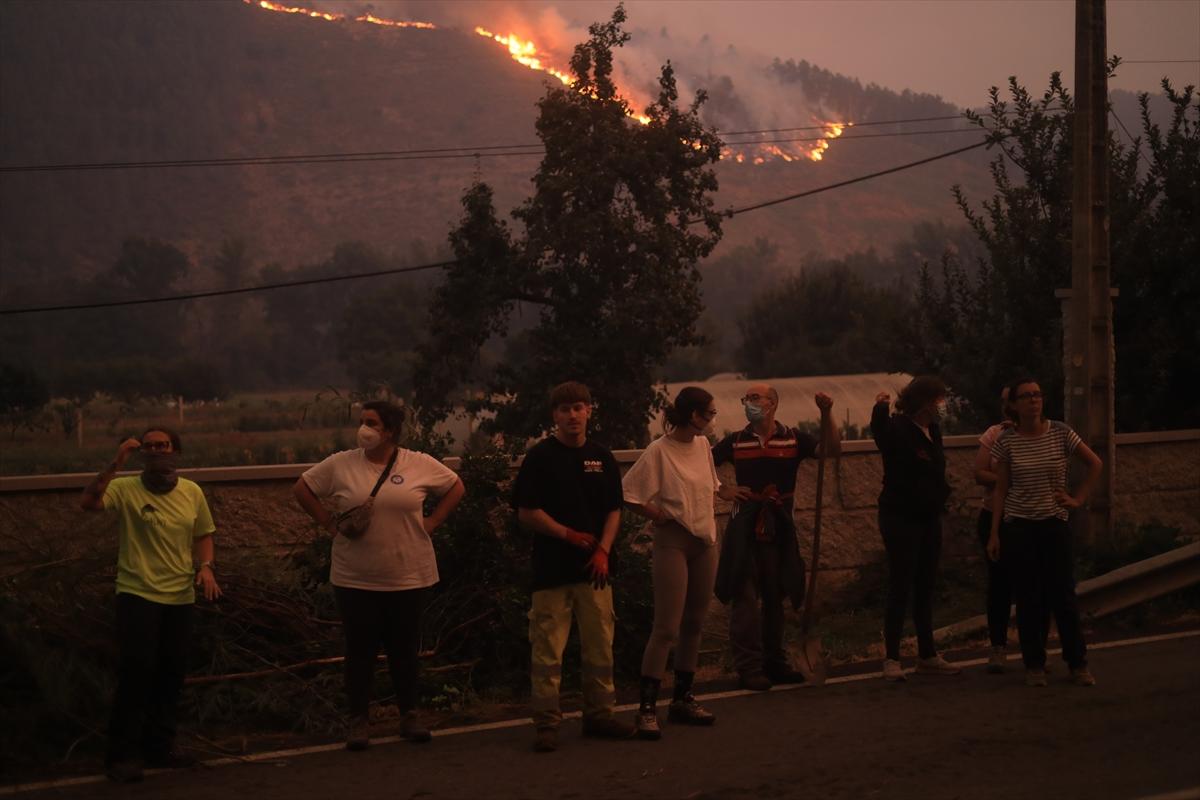
Spain is battling prolonged forest fires, 18 August 2025 – (Anadolu Agency)
As of 18 August 2025, more than 10,000 people have been evacuated across Spain due to fires. In Castile and León, over 3,250 people have been removed from their homes and are spending the night in sports halls and municipal facilities. Large portions of the rural population have been evacuated as villages in Zamora and León have been emptied.
Thousands of people in Ourense, Galicia, have been relocated from their settlements for safety reasons. Some of those evacuated have been placed in temporary shelters, while others have been hosted by nearby relatives.
In Extremadura, evacuations have been carried out from settlements around Plasencia due to the spread of the Jarilla fire. Additionally, a curfew has been imposed in Oliva de Plasencia for safety purposes.
The number of military personnel deployed to fight the fires has been increased. The Military Emergency Unit (UME) was initially deployed with 1,900 personnel, a number later raised to 3,000. An additional 500 soldiers have been sent to the field in recent days.
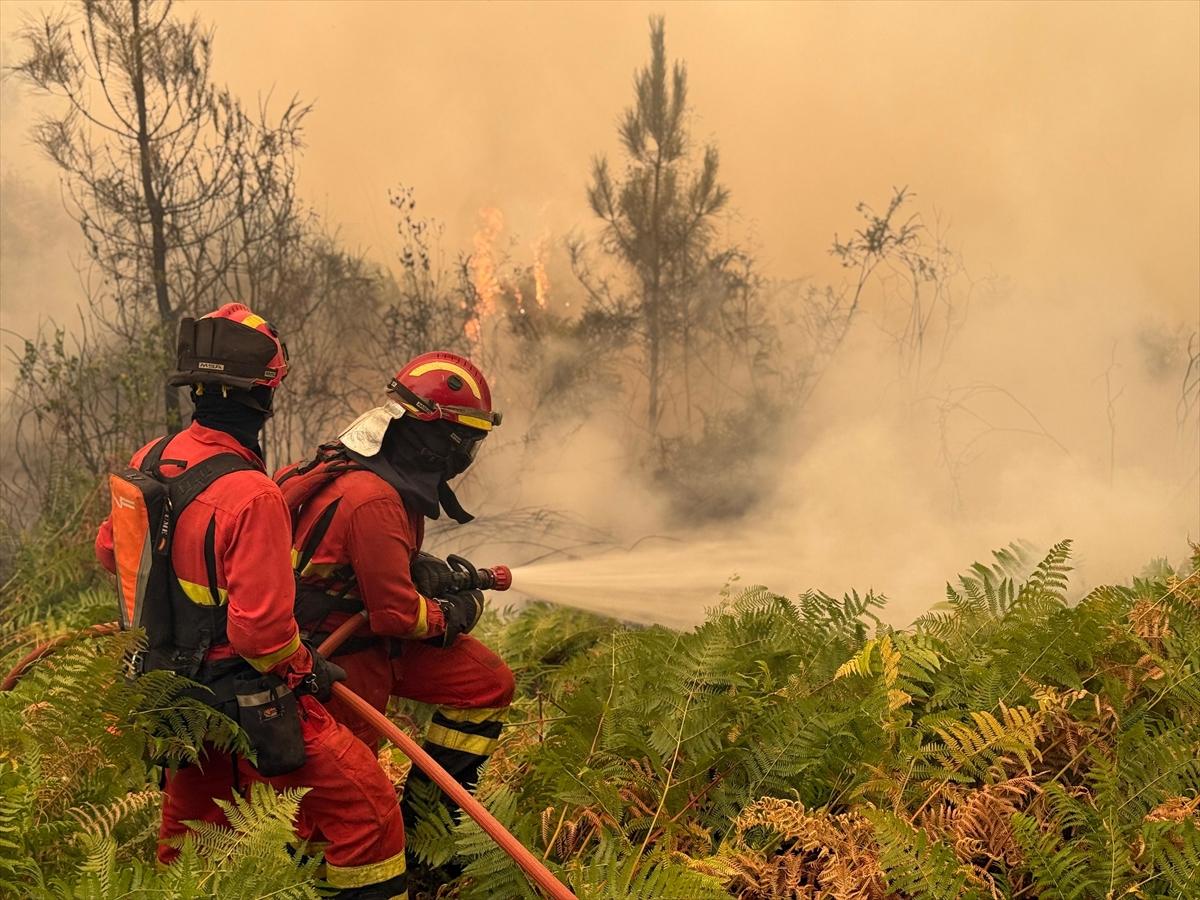
Firefighting operations continue in the Ourense Mountains, Spain, 17 August 2025 – (Anadolu Agency)
Extensive air and ground resources are engaged in firefighting efforts. A total of 22 Canadair-type aircraft and 14 helicopters are actively deployed. Hundreds of ground vehicles, including bulldozers, water tankers, and mobile logistics units, are operating on-site.
The role of military units is to contain forest fires, protect populated areas, and ensure security in evacuated zones. Coordination with regional authorities is ongoing to control the advance of fire fronts.
Transportation and infrastructure have been disrupted due to the fires. High-speed train services between Madrid and Galicia have been suspended due to fire risks. Fifteen major roads across the country have been closed to traffic, with closures concentrated in Castile and León, Extremadura, and Andalusia.
In Castile and León, several power transmission lines have been damaged, causing temporary power outages in rural areas. Additionally, some telephone base stations near fire zones have been taken offline, resulting in communication disruptions, particularly in the provinces of Zamora and León.
Spain has requested international assistance under the European Union Civil Protection Mechanism. In response, France has sent two Canadair-type firefighting aircraft, which have been deployed in Galicia. Two additional aircraft from the Netherlands have also been approved for deployment to Spain.
The European Union’s Copernicus Emergency Mapping Service has provided satellite imagery of the fire-affected areas, which are now being used to monitor fire spread and assess damage.
At the national level, Spain’s Ministry of Defence has confirmed the increase in military personnel and stated that EU-provided aircraft are operating in coordination with national teams.
Al Jazeera. "Spain Battles 20 Big Wildfires, Deploys 500 More Soldiers in Searing Heat." Al Jazeera. Accessed August 18, 2025. https://www.aljazeera.com/news/2025/8/17/spain-battles-20-big-wildfires-deploys-500-more-soldiers-in-searing-heat
Al Jazeera. "Spain Suffers Third Wildfire Death as Thousands Remain Displaced in Europe." Al Jazeera. Accessed August 18, 2025. https://www.aljazeera.com/news/2025/8/14/spain-suffers-third-wildfire-death-as-thousands-remain-displaced-in-europe
Anadolu Ajansı. “Spain Battles Wave of Wildfires as over 115,000 Hectares of Land Burned.” Accessed August 18, 2025. https://www.aa.com.tr/en/europe/spain-battles-wave-of-wildfires-as-over-115-000-hectares-of-land-burned/3661950
Anadolu Ajansı. “İspanya ve Portekiz’de Orman Yangınları Devam Ediyor.” Accessed August 18, 2025. https://www.aa.com.tr/tr/dunya/ispanya-ve-portekizde-orman-yanginlari-devam-ediyor/3661585
Anadolu Ajansı. “İspanya’daki Yangın Söndürme Çalışmalarında Hayatını Kaybedenlerin Sayısı 4’e Çıktı.” Accessed August 18, 2025. https://www.aa.com.tr/tr/dunya/ispanyadaki-yangin-sondurme-calismalarinda-hayatini-kaybedenlerin-sayisi-4e-cikti/3662439
El País. “Última Hora de los Incendios en España, en Directo.” El País, August 18, 2025. Accessed August 18, 2025. https://elpais.com/espana/2025-08-18/ultima-hora-de-los-incendios-en-espana-en-directo.html
Reuters. “Spain Battles 20 Major Wildfires amid Scorching Heat, Deploys More Troops.” Accessed August 18, 2025. https://www.reuters.com/sustainability/climate-energy/spain-battles-20-major-wildfires-amid-scorching-heat-deploys-more-troops-2025-08-17/
As of 20 August 2025, there are 22 major forest fires actively burning across Spain. All of these fires have been classified at the highest risk level, Level 2. The fires are reported to be concentrated primarily in the northwestern regions of the country. In the province of León alone, 2,566 people have been evacuated.
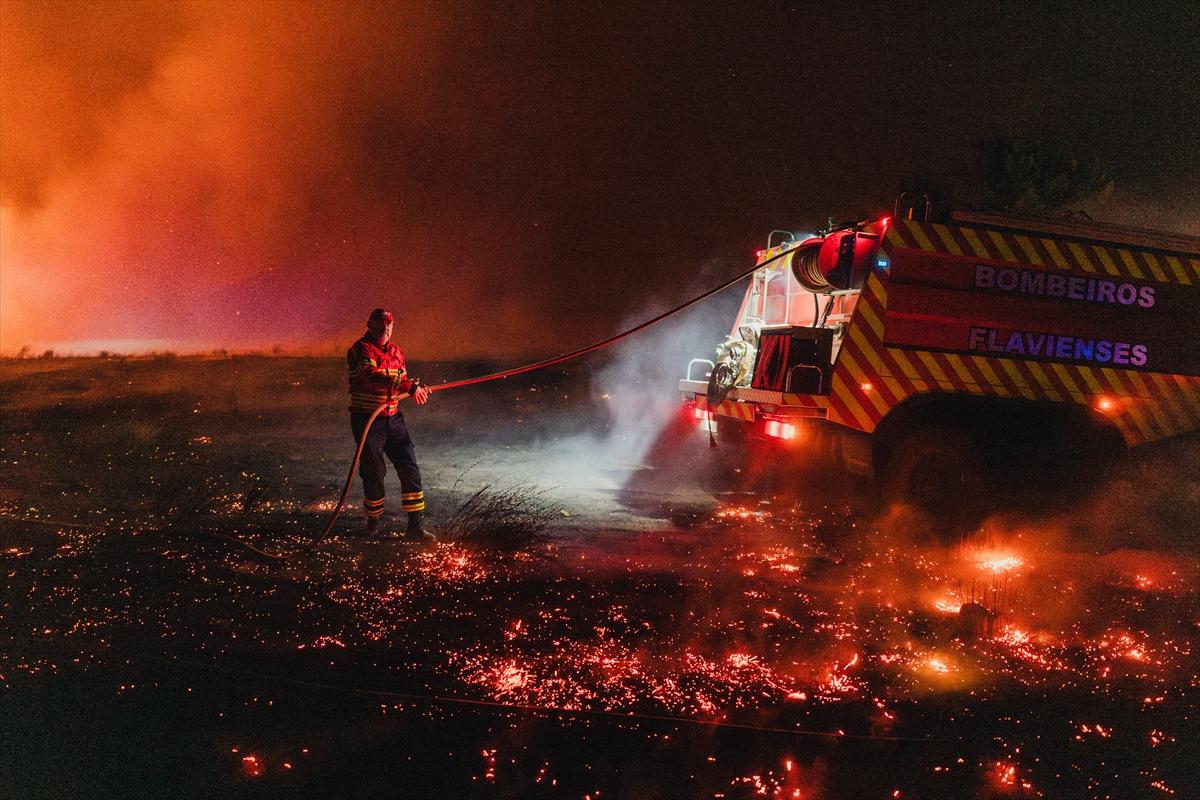
Spain continues its efforts to bring ongoing forest fires under control, 19 August 2025 – (Anadolu Agency)
The Jarilla fire in Extremadura has affected an area of 16,000 hectares, with one flank advancing toward Salamanca. The Porto fire in Zamora continues to threaten the Sanabria Lake Natural Park. In the Ourense region of Galicia, the Larouco fire has burned over 20,000 hectares and has spread into protected areas of the O Courel mountain range. This fire is the largest forest fire ever recorded in Galicia.
According to data from the Copernicus satellite system and EFFIS under the European Commission, 391,581 hectares have burned in Spain since the beginning of 2025. The vast majority of this area has been lost during the fires in August. On 29 July, the burned area stood at 41,903 hectares; by 7 August, it had risen to 47,302 hectares. During the 13-day period from 7 to 20 August, approximately 350,000 hectares have been reduced to ash.
If verified, these figures indicate that 2025 will be the year with the largest area burned in Spain since the 21st century began. This would mark the highest figure since the 437,602-hectare loss recorded in 1994.
According to government data, at least 138,000 hectares had burned by 10 August. However, this figure does not include the ongoing major fires and is expected to rise significantly in the coming days.
Due to the ongoing fires, the Madrid–Galicia high-speed rail line remains closed, with plans to reopen no earlier than midday on 20 August.
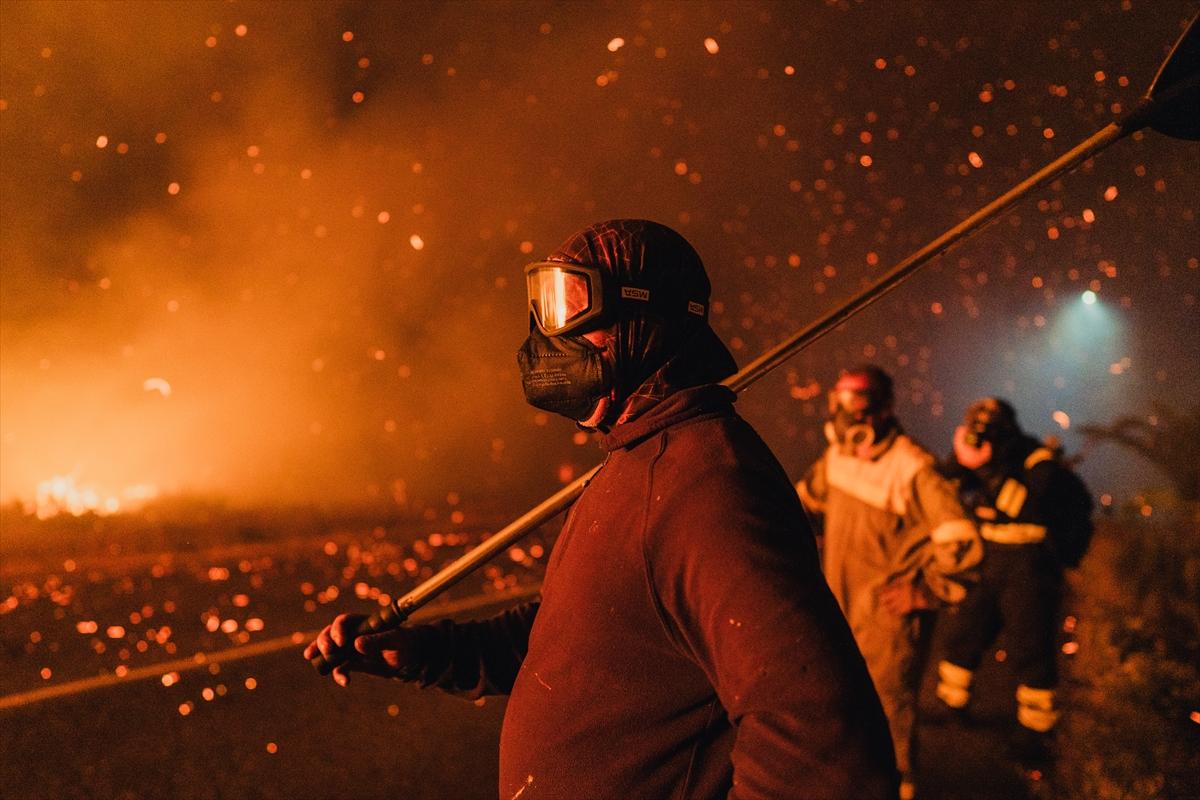
Spain continues its efforts to bring ongoing forest fires under control, 19 August 2025 – (Anadolu Agency)
As of 20 August 2025, more than 10,000 people have been evacuated across Spain. Evacuations have been concentrated primarily in the provinces of León, Zamora, Ourense, and Cáceres.
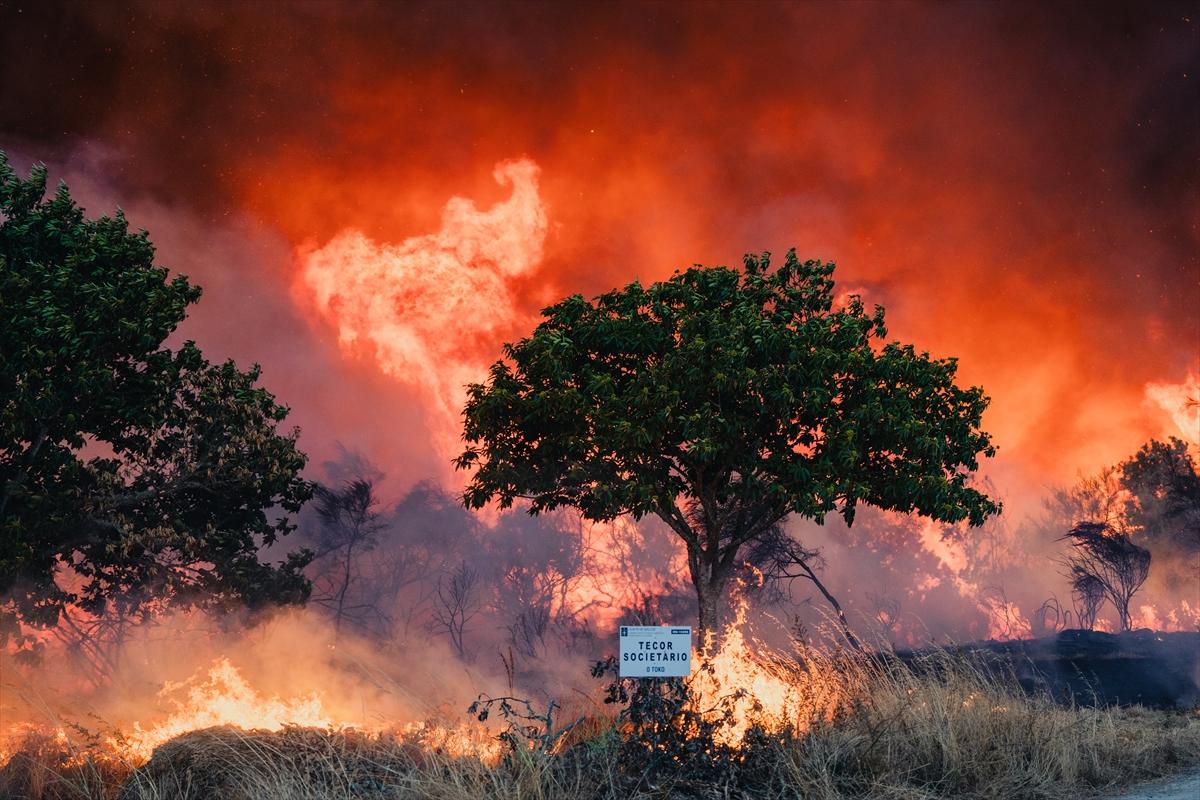
Spain continues its efforts to bring ongoing forest fires under control, 18 August 2025 – (Anadolu Agency)
Transportation and infrastructure systems have experienced disruptions in the areas most affected by the fires.
During the ongoing fires, law enforcement and judicial authorities have taken several actions. On 19 August 2025, following three separate fires that broke out simultaneously in Arganda del Rey, police detained one individual. The fires were quickly brought under control, but the incident is under investigation on suspicion of arson. The municipal administration emphasized that the person may not have acted alone and announced increased patrols in the area by security units.
Local authorities and the Ministry of the Interior have reported coordinated operations by police, Civil Guard (Guardia Civil), civil protection teams, and forest rangers, particularly in high-risk fire zones. Citizens have been urged to immediately report any attempts to start fires to security forces.
The Ministry of the Interior has stated that all necessary resources, including aerial assets, have been deployed as required to combat the fires. It has also indicated that preventive measures related to the fires will be further strengthened in the coming days.
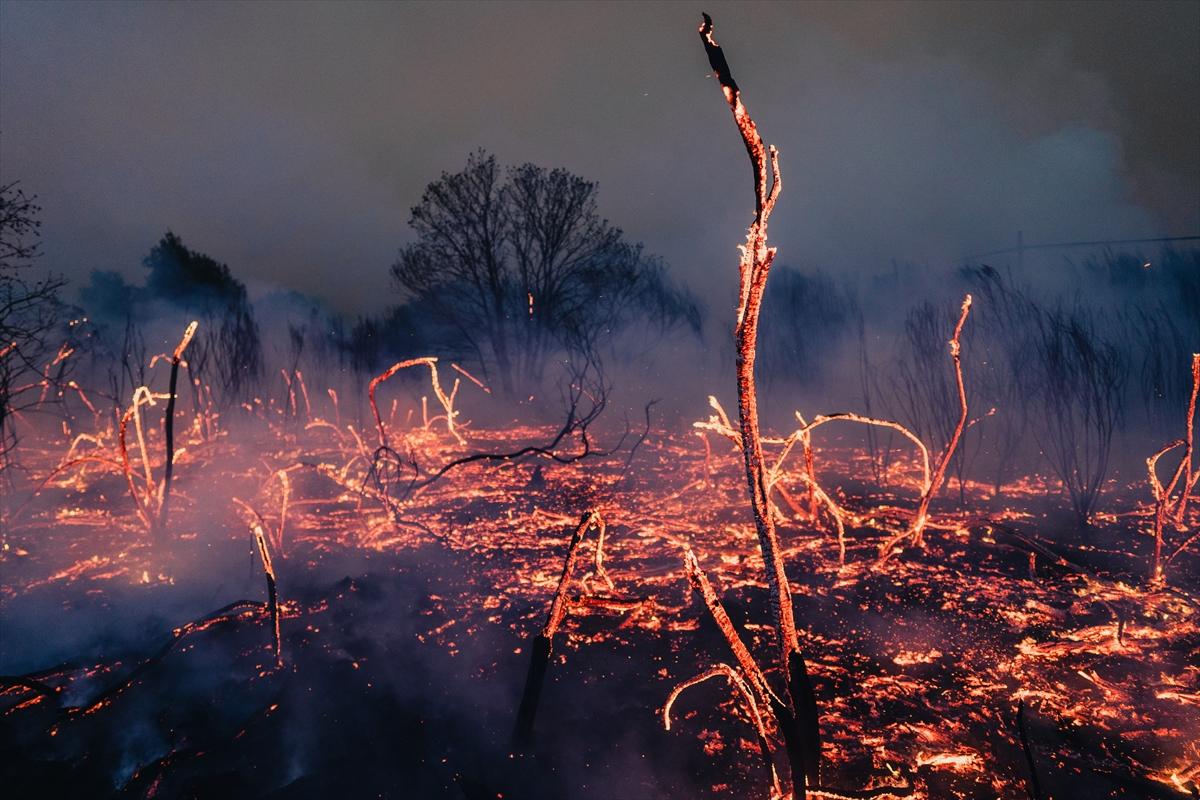
Spain continues its efforts to bring ongoing forest fires under control, 18 August 2025 – (Anadolu Agency)
On 19 August 2025, a team from Germany arrived in Spain with 17 vehicles. This team has been deployed primarily in the area of the Jarilla fire in Extremadura. German personnel are reported to be working in coordination with Spanish firefighters and assigned to different fronts of the fire.
Under the European Union Civil Protection Mechanism, support requests from other countries are being evaluated, and additional units may be sent if needed. International teams are operating in direct coordination with Spain’s Ministry of the Interior and regional emergency centers. These teams have been particularly effective in ground operations in mountainous and hard-to-access areas where aerial support is limited.
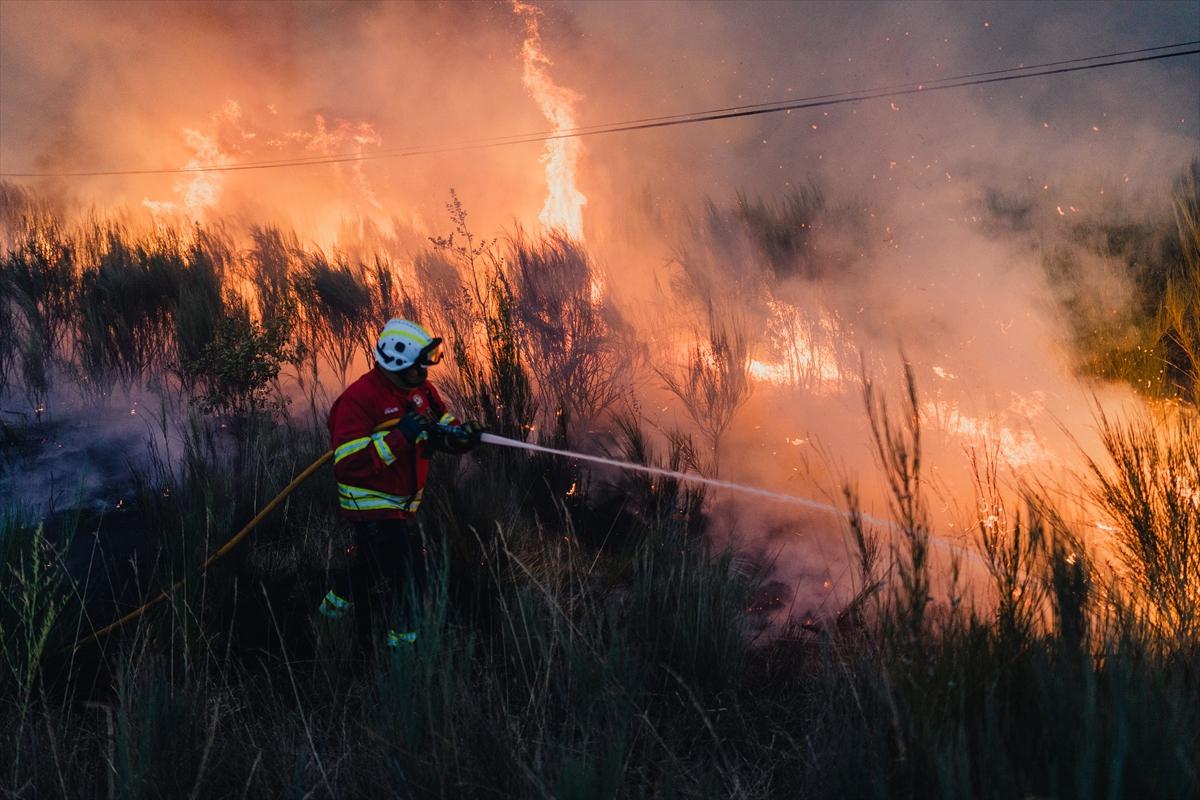
Spain continues its efforts to bring ongoing forest fires under control, 18 August 2025 – (Anadolu Agency)
As of 20 August, seven major fires remain active in the province of Ourense, affecting a total area of over 67,500 hectares. The largest fire, the Larouco fire in Ourense, has burned more than 20,000 hectares and has spread across 10 municipalities. The fire has crossed the Sil River into Lugo and continues to threaten the O Courel mountain range and protected areas. Additionally, the Chandrexa de Queixa–Vilariño fire has affected 18,000 hectares, the Oímbra–Xinzo de Limia fire 15,000 hectares, and the A Mezquita–A Esculqueira fire 10,000 hectares. Smaller fires include Vilardevós–Moialde (500 hectares) and Carballeda de Avia–Beade (4,000 hectares). The Porto fire in Zamora has also spread into Galicia and is included in the overall assessment.
In Castilla y León, 16 fires are active at Level 1 and Level 2. One of the most critical is the Porto fire in Zamora, which has exceeded 10,000 hectares and poses a serious threat to the Sanabria Lake Natural Park. Twelve villages have been evacuated due to this fire. In León, the Barniedo de la Reina, Anllares del Sil, and Fasgar fires continue to pose risks. The village of Cardaño de Arriba (Palencia) has been evacuated for the second time in three days. The Yeres fire affected the Las Médulas area, a UNESCO World Heritage Site, but its risk level has been downgraded from Level 2 to Level 1. The Llamas de Cabrera fire is now 90 percent stabilized.
El País. “Última Hora de los Incendios en España, en Directo.” El País. Accessed August 20, 2025. https://elpais.com/espana/2025-08-20/ultima-hora-de-los-incendios-en-espana-en-directo.html
As of 21 August 2025, there are 18 major forest fires active across Spain. All of these fires have been classified as "Situación Operativa 2", representing the highest level of emergency. A meeting of the State Fire Coordination Committee (CECOD) was held on 21 August, attended by Prime Minister Pedro Sánchez and Minister of the Interior Fernando Grande-Marlaska.
AEMET (Spanish Meteorological Agency) reported that weather conditions in all fire-affected areas remain favorable for firefighting efforts. In Galicia, temperatures have generally remained stable, with slight increases observed in the south and localized rainfall recorded in northern areas. In Castilla y León, particularly in the province of León, the sky has been cloudy with a slight chance of light rain, temperatures have remained steady, and winds have varied between light and moderate strength. In Asturias, widespread rainfall has occurred, temperatures have remained stable, and winds have been variable, generally light with occasional moderate intensity. In Extremadura, the sky has been clear or partly cloudy, with no significant change in minimum temperatures but slight increases observed in maximum temperatures, and winds blowing at light to moderate strength.
The Jarilla fire in the province of Cáceres has burned over 17,000 hectares. Several homes around Hervás and some village houses in the Jerte Valley have been evacuated, and a preliminary evacuation alert has been issued for the town of La Garganta. Risk persists along the northern flank of the fire, near the Jerte Valley and Tornavacas. President María Guardiola stated that only 2 kilometers of the fire perimeter have been contained and that control is expected within the day.
The progression of the Fasgar and Barniedo de la Reina fires in León has allowed for the reoccupation of several villages. Residents of Vegapujín, Posada de Omaña, Torrecillo, and Barrio de la Puente have returned to their homes, although 1,518 people remain evacuated and two small settlements are still under quarantine.
The Porto fire in Zamora has affected more than 10,000 hectares. Over ten settlements around Sanabria Lake have been evacuated. Nighttime intensive firefighting operations have slowed the fire’s advance. A new fire has erupted in Igüeña, prompting the evacuation of approximately 100 people.
In Galicia, a total of 88,300 hectares have burned. The Larouco fire alone has exceeded 30,000 hectares, making it the largest fire in the region’s history. The fires in Chandrexa de Queixa and Vilarinho de Conso have consumed 19,000 hectares, those in Oímbra and Xinzo de Limia 17,000 hectares, the A Mezquita fire 10,000 hectares, the fires in Carballeda de Avia and Beade 4,000 hectares, and the fire in Carballeda de Valdeorras 2,600 hectares. Meanwhile, some fires around Maceda and Vilardevós have been stabilized.
Galicia President Alfonso Rueda stated that progress has been made in combating the fires but warned that caution must not be relaxed due to rising temperatures.
Four fires remain active in Asturias. The most critical is the Degaña fire, which has spread from León into Asturias and continues to advance along its northern flank. Firebreaks have been created using heavy machinery to halt its progress. FOCA-type aircraft and helicopters have participated in suppression efforts. Control operations are ongoing in the Genestoso-Somiedo and Caunedo-Gúa-Perlunes fires.
A total of eight roads are closed in Castilla y León and Extremadura. Seven are in Castilla y León (in the provinces of León, Zamora, and Palencia), and one is in Cáceres. These include the LE-2703, LE-4212, ZA-103, and CC-224 routes.
El País. “Última Hora de los Incendios en España, en Directo.” El País. Accessed August 21, 2025. https://elpais.com/espana/2025-08-21/ultima-hora-de-los-incendios-en-espana-en-directo.html
As of 25 August 2025, there are 14 large-scale active forest fires across Spain. Of these, 10 are located in the Castilla y León region, three in Asturias, and one in Galicia. According to data released by the Director General of Civil Protection, Virginia Barcones, all these fires have been classified under “Level 2” emergency status.
Weather conditions have complicated firefighting efforts. Particularly in the regions of León, Zamora, and Ourense, rising temperatures and variable winds have caused fires to reignite. Authorities emphasized that conditions on 25 August remained unfavorable, but noted that more favorable weather is expected in Asturias from 26 August, and in Ourense, Zamora, and León from 27 to 28 August.
Barcones stated that progress has been made in bringing the fires under control, but that reignitions continue to pose serious challenges. She highlighted that some fires previously considered stabilized have become active again due to sudden meteorological changes.
Both ground and aerial resources have been heavily mobilized in the firefighting effort. In Castilla y León, all ground units have been supported by aerial assets. In Asturias, after two weeks of intensive operations, stabilization efforts have begun in the Degaña, Genestoso, and Somiedo fires. Authorities have warned that the fires exhibit “highly aggressive and complex dynamics,” requiring constant vigilance.
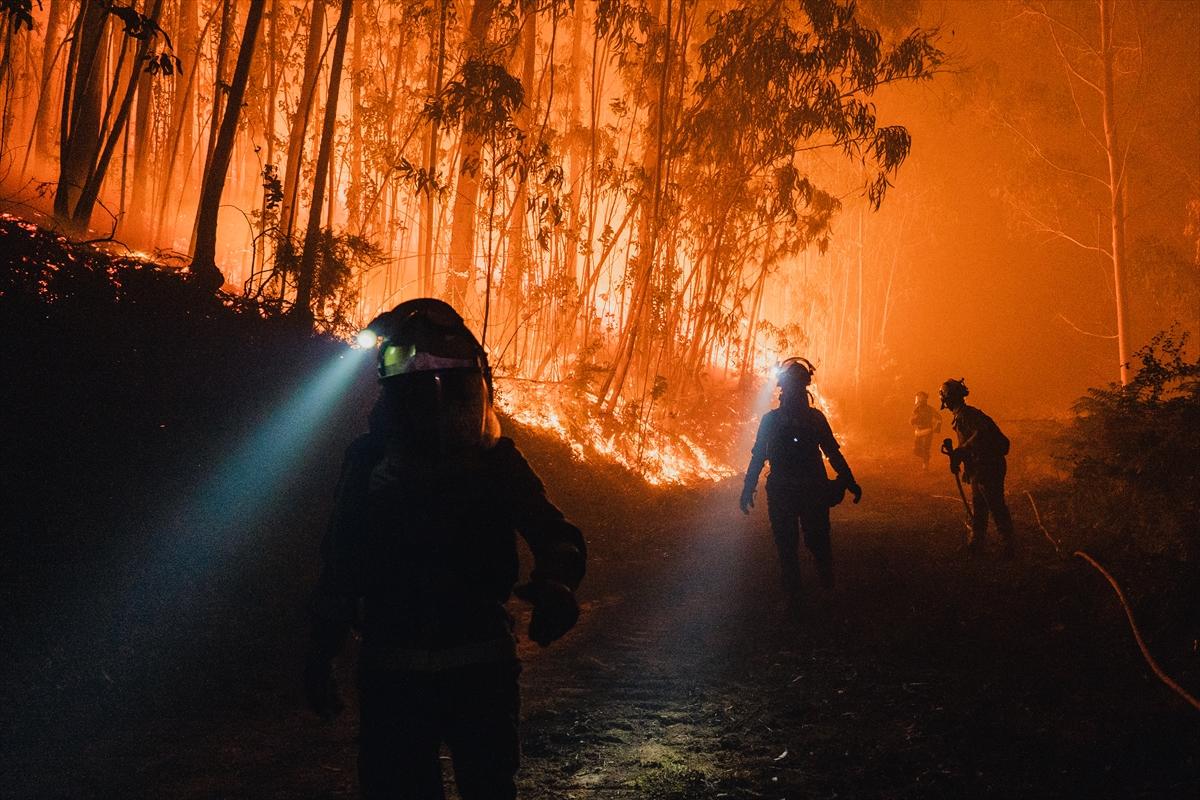
Spain fights to bring forest fires under control, 22 August 2025 – (Anadolu Agency)
As of 25 August 2025, three large-scale forest fires have been recorded in Galicia. The first is the Chandrexa de Queixa fire, which began on 8 August and affected an area of 19,000 hectares. For 17 days, it remained uncontrolled. On the morning of 25 August, authorities announced that the fire had been brought under control.
The second major fire is the Carballeda de Valdeorras-Casaio fire. This fire spread from the Porto de Sanabria area in Zamora into Galicia. A total of 4,400 hectares have burned, with particular impact around Pena Trevinca, the highest peak in the region. Due to its ecological significance as Galicia’s highest point, Pena Trevinca holds special environmental importance.
The third fire is the Avión-Nieva fire. Beginning on 24 August, it has affected an area of 70 hectares in the province of Ourense. The fire remains active.
On 25 August, Galicia’s Regional President Alfonso Rueda stated that the stabilization of the Chandrexa de Queixa fire was a positive development and visited areas affected by the fire in the Oia (Pontevedra) region.
As of 25 August 2025, the most intense fires in Castilla y León were concentrated in the provinces of León and Zamora. Official data indicate that across the region, six fires are classified at Level 2, five at Level 1, and seven at Level 0.
One of the most significant fires in León is the Fasgar fire. It reignited due to rising temperatures and stronger winds, making containment more difficult. In the same province, the fires in La Baña, Igüeña, Garaño, and Molinaseca are also classified at Level 2. Notably, the Garaño and Molinaseca fires began on Sunday, 24 August, and spread rapidly.
In Zamora, the most prominent fire is the Porto fire. It entered the Sanabria Lake Natural Park and later advanced toward the La Baña area in León. Partial improvements have been recorded in this fire due to intervention efforts.
A total of 717 people have been evacuated. These evacuations affected 12 settlements in the province of León. Emergency shelters have been established to ensure the safety of displaced populations.
As of 25 August, 10 roads have been closed due to the fires. Eight are in León, one in Zamora, and one in Cáceres. The closed roads in León include LE-126 (La Baña), LE-4212 (Cariseda), LE-4503 (Vega de Caballeros), LE-4517 (Mora de Luna), LE-4523 (Otero de las Dueñas), LE-5228 (Bouzas), LE-5330 (Igüeña), and LE-7311 (Nogar). In Zamora, ZA-103 (Vigo de Sanabria) is closed, and in Cáceres, CC-224 (Hervás) is closed.
As of 25 August 2025, three major fires remain active in Asturias: in the regions of Degaña, Genestoso, and Somiedo. Authorities have reported that the situation is progressing favorably.
The Genestoso fire occurred within the municipal boundaries of Cangas del Narcea. On 24 August, it was declared fully under control. Firefighting teams remain on site to complete extinguishing and cooling operations to ensure the area is fully secure.
On the morning of 25 August 2025, a new forest fire broke out within the municipal boundaries of Alhama de Granada. The fire was recorded around 04:35 at the Ventas de Zafarraya location. Following initial assessments, units from Infoca (Andalusia Forest Fire Fighting Service) were rapidly deployed to the area.
A combined ground and aerial response team has been assigned to combat the fire. By 08:30, the area included one light helicopter, two ground supply aircraft, six forest firefighting teams, two operational technicians, one environmental protection officer, and four all-terrain vehicles. These units have worked in coordinated fashion to prevent the fire from spreading to surrounding areas. No official explanation has yet been provided regarding the fire’s origin, and containment operations continue.
The most significant fire in Extremadura is the Jarilla fire. It affected an area of 17,300 hectares and was stabilized on 22 August. The fire’s northern front reached the vicinity of Béjar, a town in the province of Salamanca. This situation has brought administrative boundary differences into focus. The Béjar fire department was permitted to participate in the response for only six hours, citing that the fire was within Cáceres province boundaries, and was then required to withdraw due to lack of official authorization.
During the firefighting process, some firefighters voluntarily joined the operation despite the absence of official authorization. However, their participation was limited, as they were not permitted to use official vehicles or equipment.
As of 25 August, although the Jarilla fire has not been fully extinguished, it is under control and no longer poses a threat of further spread. The extensive damage left by the fire has affected local settlements and natural areas.
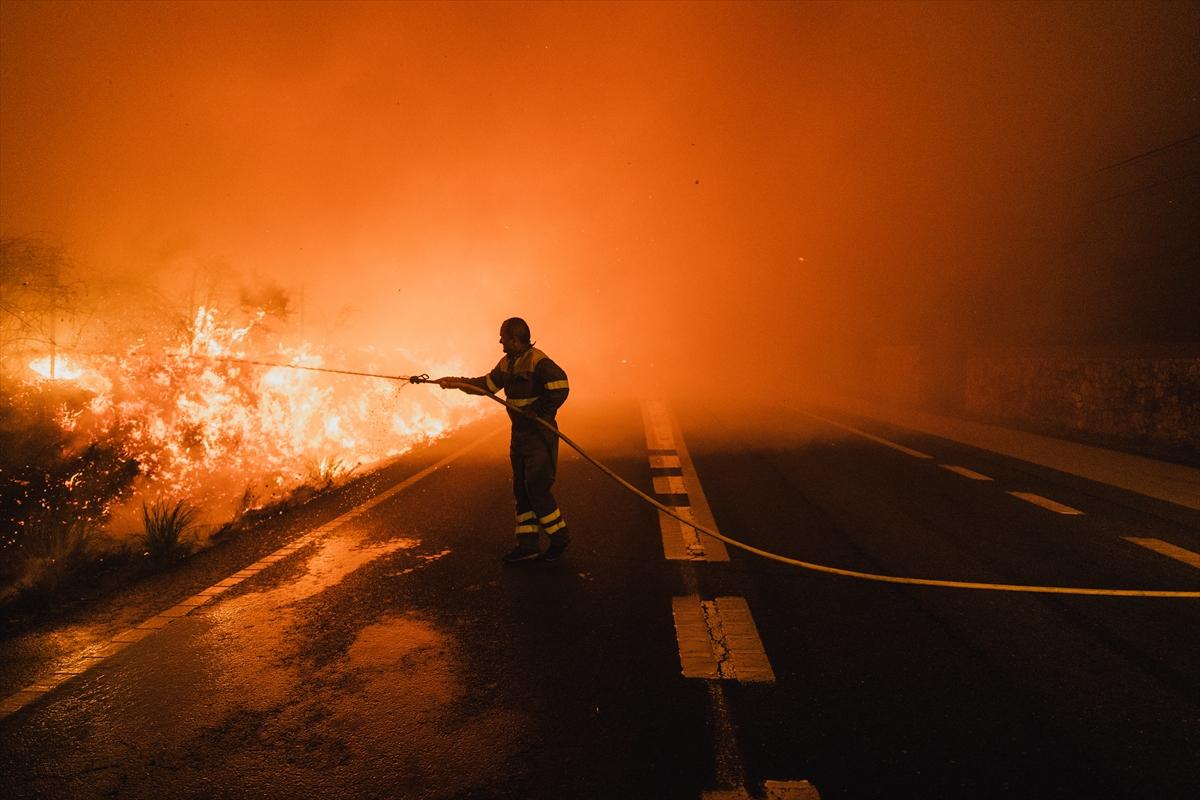
Spain fights to bring forest fires under control, 22 August 2025 – (Anadolu Agency)
As of 25 August 2025, a total of 45 people have been detained across Spain in connection with forest fires. Additionally, investigations are underway against 133 individuals. These figures were made public by the Ministry of the Interior and security forces as part of their efforts to determine the causes of the fires.
Authorities have indicated that suspicions are growing that some fires were deliberately set. In particular, multiple fires that broke out simultaneously in different locations within Castilla y León have raised the possibility of arson. In León, recent new fires have been described as “likely to have been intentionally ignited.”
During this period, security forces have conducted field investigations and technical analyses to identify those responsible for the fires. The individuals detained or under investigation have been referred to judicial authorities.
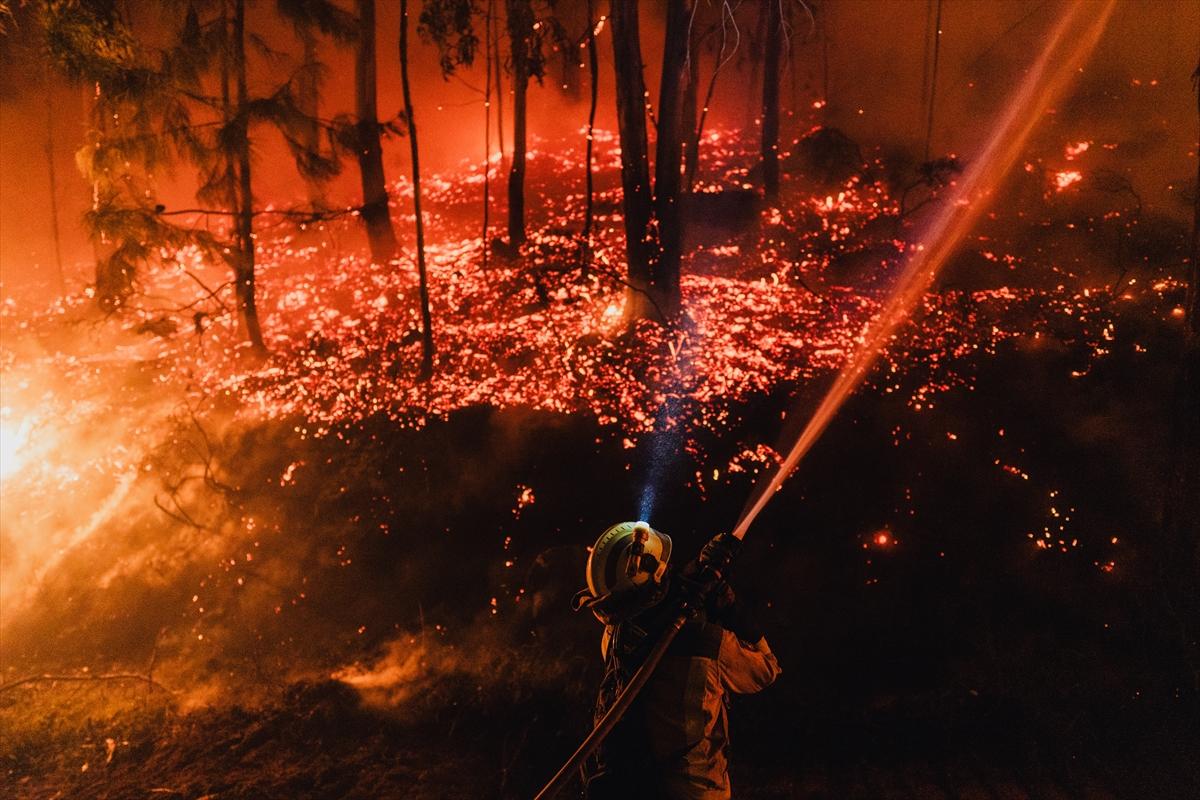
Spain fights to bring forest fires under control, 22 August 2025 – (Anadolu Agency)
Minister of Housing and Urban Agenda Isabel Rodríguez criticized the opposition party Partido Popular (PP) and its leader Alberto Núñez Feijóo for “avoiding responsibility” in managing the fires. Rodríguez emphasized that regional presidents must make public statements in their respective parliaments regarding the fires. She also characterized the PP’s call for early elections as an attempt to “heighten political tension rather than address the firefighting effort.”
PP leader Alberto Núñez Feijóo proposed new measures to prevent forest fires. He advocated for the creation of a “national arson registry” to record the identities of individuals found responsible for deliberately starting fires. He stressed that those listed should be monitored using electronic tracking bracelets. Feijóo presented this proposal as part of a 50-point forest fire prevention plan. He also criticized the government for failing to anticipate the intensity of the fires, underutilizing aerial resources, and making delayed requests for support from Europe.
Minister of Defense Margarita Robles stated that some regional administrations have failed to fulfill their responsibilities in preventing and extinguishing fires. Robles confirmed that the armed forces and the Military Emergency Unit (UME) have been actively deployed since the outset of the fires and will remain in the affected areas as long as necessary. She emphasized that the fires must not be politicized and called on regional authorities to “handle the issue with honesty.”
Additionally, the request by PP-governed regions—Castilla y León, Extremadura, and Galicia—for a large number of aerial assets on 15 August sparked political controversy. This request exceeded the total aerial capacity allocated by the European Union Civil Protection Mechanism for the entire continent. Director General of Civil Protection Virginia Barcones stated that the PP-led regions had made “impossible demands.” In response, PP senior official Elías Bendodo accused Barcones of being a “firestarter.”
El Mundo. "Incendios en España, en Directo." El Mundo. Accessed August 25, 2025. https://www.elmundo.es/espana/2025/08/24/68aaadb81ee97cbdb6121140-directo.html
El País. “Última Hora de los Incendios en España, en Directo.” Accessed August 25, 2025. https://elpais.com/espana/2025-08-25/ultima-hora-de-los-incendios-en-espana-en-directo.html
As of 29 August 2025, Castile and León has been the region most affected by fires. The Porto fire in Zamora and the Fasgar-Igüeña fire in León have been recorded as the most critical incidents. In Galicia, the impact of a two-week-long series of fires has diminished, with all fires reported as stabilized.
In Asturias, no active fires remain following fires that lasted approximately 25 days. The fires in Ibias and Genestoso have been brought under control, reducing the threat level in the region. During this period, the total burned area reached approximately 7,000 hectares.
In Andalusia, a fire that began on the night of 28 August in the areas surrounding Lubrín and Bédar in the province of Almería continued into 29 August. As a result, the Emergency Plan was raised to Level 1, and approximately 50 people were evacuated. Most of those evacuated returned to their homes the following morning. In the Valencian Community, a fire that started on 28 August in the Orihuela district of Alicante reignited on 29 August.
Meteorological conditions, particularly winds reaching up to 50 km/h, have been identified as hindering fire control efforts. The Spanish Meteorological Agency (Aemet) issued “very high” and “extreme” fire risk warnings for large parts of Castile and León and Asturias.
Overall, as of the morning of 29 August, Castile and León had a total of 16 active fires. Three of these were classified at the highest level, IGR-2; six at Level 1; five at Level 0; and the other 16 fires were under control.
Forest fires in Spain – (Associated Press)
The Fasgar-Igüeña fire in the province of León is one of the critical fires that have persisted for 21 days. Technically merged with the Igüeña fire, it has spread over a vast area. Changes in wind direction and strong winds reaching 50 km/h have complicated containment efforts. As of the morning of 29 August, nighttime counterfire operations successfully halted the fire’s advance toward the Río Omaña valley. Authorities reported that settlements in Colinas del Campo and surrounding areas are now secure, and the villages of Espina de Tremor and Tremor de Arriba are no longer under threat from the fire.
The Porto fire, which began on 14 August due to a lightning strike in the province of Zamora, has continued for 16 days. The affected area was initially estimated at 16,000 hectares, but Copernicus satellite data indicates it has exceeded 24,000 hectares. Swimming and boating have been prohibited around Lake Sanabria due to the fire. Additionally, the ZA-103 road has been closed to traffic. As of 29 August, the intensity of the fire has decreased and its classification has been downgraded from Level 2 to Level 1. Villagers previously evacuated have begun returning home gradually.
A fire reported to have been deliberately set in Berlanga del Bierzo on 28 August started simultaneously at multiple locations. Approximately 400 people were evacuated due to the fire. The fire’s progression was quickly brought under control, and residents were permitted to return to their homes the following day. One individual has been taken into custody in connection with the fire’s origin.
In Castile and León, active fires of varying levels remain in the areas of La Baña, Colinas del Campo de Martín Moro, Llamas de Cabrera, Barniedo de la Reina, Anllares, Garaño (León), and Cardaño de Arriba (Palencia). Some of these fires are being monitored at Level 1.
Asturias has been battling fires for 25 days. During this period, the areas most affected were Ibias, Cangas del Narcea, Cabrales, Tineo, and Degaña. As of 29 August, the fires in Ibias and Cangas del Narcea have been stabilized, while those in Cabrales, Tineo, and Degaña are under control. The fire in Genestoso has also been extinguished. There are currently no active fires in Asturias.
The Asturias Emergency Management Agency (SEPA) has conducted reinforcement and protective line operations around fire zones using specialized machinery known as retroaraña. Bulldozers and helicopters have been deployed in lower areas of the fire line to prevent its advance.
The Unidad Militar de Emergencias (UME) has withdrawn from the region following the containment of the fires. Authorities have lowered the INFOPA (Asturias Forest Fire Plan) alert level to 1.
The wave of fires that affected Galicia for two weeks has stabilized as of 29 August. All fires have at least been stabilized. Developments in the region indicate that active flames are under control, with only minor re-ignitions being monitored.
A total of 663 fires have been recorded throughout August, affecting an area of 96,400 hectares. Approximately 62 municipalities have suffered direct damage.
The regional government (Xunta de Galicia) has announced a financial aid program for those affected by the fires. Homeowners whose primary residences were damaged will receive up to 132,000 euros; those with secondary residences damaged will receive up to 66,000 euros. Assistance of between 5,400 and 16,200 euros is also planned for household goods and furniture.
Over the past ten years, funding allocated for fire prevention in Galicia has increased by 35%. For 2025, 50.5 million euros have been allocated for prevention activities and 39.1 million euros for direct firefighting efforts. An additional budget transfer will be made due to the widespread fires in August, although the exact amount has not yet been determined.
A forest fire began on the night of 28 August in the areas surrounding Lubrín and Bédar in the province of Almería. The fire was first detected around 23:00 in the Las Cubillas area and rapidly expanded. The Emergency Plan was subsequently raised to Level 1.
Approximately 50 people were evacuated for safety reasons and permitted to return home the following morning. Evacuations were primarily carried out in the neighborhoods of Los Albaricos and Fuente de los Albaricos. According to local mayors, electrical line failures during the fire may have generated sparks that ignited the blaze.
Firefighting efforts involved 10 aircraft, 9 ground vehicles, over 150 Infoca personnel, and local fire units. Two amphibious aircraft, helicopters, and numerous ground vehicles were also deployed to the area. Fire control was complicated overnight due to wind conditions, but operations intensified significantly from early morning.
Lubrín Mayor Domingo Ramos stated that this fire is the third largest in the district during the summer, with previous fires originating from the burning of stubble or cardboard. He also noted that residents spent the night in fear, particularly in the neighborhoods of El Marchal and Campico de las Moletas, where flames approached homes, causing widespread alarm.
A fire broke out on the morning of 28 August 2025 in the village of La Aparecida in the Orihuela district of Alicante. It began with dry grass igniting and quickly spread to a pine forest area. Initial firefighting efforts led to the fire being declared under control at 19:10 on 28 August.
Fire and forestry teams deployed to the area continued operations overnight and were expected to declare the fire fully extinguished. However, re-ignitions occurred during the late night hours.
Teams from the Alicante Provincial Fire Consortium were dispatched to the area from the outset. Overnight, personnel remained on standby to suppress small re-ignitions, particularly in forested zones. As of the morning of 29 August, the fire remains active but its perimeter is under control.
No evacuations have been reported due to this fire. Teams in the area continue operations, addressing risks posed by wind and potential re-ignitions.
On 29 August 2025, King Felipe VI and Queen Letizia visited settlements in the province of Cáceres in Extremadura affected by fires. The visit specifically included communities in the Jerte and Ambroz valleys impacted by the Jarilla fire, which is recorded as the largest fire in Extremadura’s recent history, affecting an area of 17,350 hectares.
The royal couple met with residents in the towns of Rebollar, Cabezabellosa, and Hervás. The purpose of the visit was to directly observe the losses suffered by local communities and assess regional needs on-site. They also met with firefighting personnel involved in the operations.
During the visit, the King and Queen were accompanied by Minister of the Interior Fernando Grande-Marlaska and President of the Extremadura Autonomous Government María Guardiola Martín. Numerous members of the public gathered at the visit sites, and direct contact was established with citizens affected by the fires.
An extraordinary session was held on 29 August in the Castile and León Parliament. President Alfonso Fernández Mañueco stated that the fires must be treated as a matter of national concern and kept free from political conflict. Mañueco noted that 141,000 hectares have been affected, with the most severe damage occurring in León and Zamora. He also reported that 20,000 people have been evacuated, 203 villages have been emptied, and residents of seven nursing homes have been relocated to safe areas.
Mañueco emphasized that the region has experienced 348 fires in 23 days, attributing this to exceptional meteorological conditions and severe winds. He stated that the fires are “beyond control,” prompting the request for additional military assistance. He described the intervention force as comprising 4,270 personnel, 33 aircraft, 391 ground vehicles, and hundreds of observation posts.
In his speech in the Senate, Minister of Agriculture Luis Planas reported that 35,400 hectares of agricultural land have been damaged, with 168 claims submitted to Agroseguro. Planas stressed that proposed cuts to the European Commission’s Common Agricultural Policy (CAP) budget are unacceptable and that the fires underscore the importance of this policy.
Deputy Prime Minister and Minister of Labour Yolanda Díaz raised concerns regarding staffing shortages in Galicia during the fires. Díaz criticized the politicization of the crisis and emphasized the need to strengthen prevention policies in light of climate change. She also called for improved working conditions and training for firefighting personnel.
On the morning of 29 August, various unions, political organizations, and civil society groups gathered in front of the Castile and León Parliament. Protesters criticized the government’s handling of the fires and demanded the resignation of Environment Minister Juan Carlos Suárez-Quiñones and President Mañueco. Some firefighters participating in the protest highlighted inadequate job security and working conditions.
A team from Villardeciervos in León, while on duty in fire-affected areas, encountered restrictions during the royal visit due to security protocols. After receiving permission, they met with the King and Queen, but members of the same team refused to shake hands with President Mañueco.
Farmers and shepherds affected by the Porto fire in Zamora have developed a new plan for forest protection. The plan proposes creating new firebreaks in fire-affected zones, clearing roads, and improving access to water reservoirs. The prepared map will be presented at the next meeting with authorities. José Antonio Bruña from Porto de Sanabria directly represents this initiative.
El País. "Última hora de los incendios en España, en directo." Accessed August 29, 2025. https://elpais.com/espana/2025-08-29/ultima-hora-de-los-incendios-en-espana-en-directo.html.
El Periódico. "Última hora de los incendios en España." Accessed August 29, 2025. https://www.elperiodico.com/es/sociedad/20250829/ultima-hora-incendios-espana-interior-120552890.

In August 2025, numerous forest fires broke out in various regions of España. The fires in Castilla y León, Galicia, Navarre, Madrid and Andalusia affected thousands of hectares. High temperatures, low humidity and strong winds facilitated the spread of the flames. As a result of these events, thousands of people were evacuated from their homes and tourist facilities.
No Discussion Added Yet
Start discussion for "Spain Forest Fires (August 2025)" article
August 11, 2025
Fires Around Madrid and Ávila
August 11, 2025
Fires in Castilla y León
August 11, 2025
Fires in Galicia
August 11, 2025
Fires in Navarre
August 11, 2025
The Tarifa Fire in Andalusia
August 11, 2025
Climatic and Environmental Factors Behind the Fires
August 12, 2025
Madrid – Tres Cantos Fire
August 12, 2025
Castilla y León – León and Zamora Fires
August 12, 2025
Galicia – Chandrexa de Queixa and Maceda Fires
August 12, 2025
Andalusia – Tarifa Fire
August 12, 2025
Toledo – Navalmoralejo Fire
August 12, 2025
Other Regions and Fires
August 12, 2025
Overall Impact and Current Status
August 13, 2025
Latest Status of Forest Fires in Spain as of August 13
August 14, 2025
Current Status as of 14 August 2025
August 18, 2025
Current Status as of 18 August 2025
August 20, 2025
Current Situation of Forest Fires in Spain as of 20 August 2025
August 21, 2025
Current Status of Forest Fires in Spain as of 21 August 2025
August 25, 2025
Current Status of Forest Fires in Spain as of 25 August 2025
August 25, 2025
Political and Administrative Responses
August 29, 2025
Current Status of Forest Fires in Spain as of 29 August 2025
August 29, 2025
Royal Visits
August 29, 2025
Political Debates and Statements
August 29, 2025
Social Reactions and Local Initiatives