

This article was automatically translated from the original Turkish version.
Sputnik 3 is a research satellite launched into Earth orbit on 15 May 1958 from the Baikonur Cosmodrome by the Soviet Union/Russia. It carried multiple-channel scientific measurement systems designed to assess space environment parameters such as the upper atmosphere, cosmic ray intensity, magnetic field variations, and charged particle fluxes.
With a mass of approximately 1327 kilograms, the spacecraft carried one of the most comprehensive scientific payloads of the early space era. Sputnik 3 was developed not merely as a signal transmitter but as an orbital laboratory capable of directly collecting physical data. In this regard, it represents a critical milestone in the transition of space research into the experimental science phase. The data collected during its mission formed some of the first systematic measurements of Earth’s near-space environment.【1】
Sputnik 3 was developed as the third major phase of the Soviet Union’s Sputnik program. While the first two satellites in the program focused primarily on technical validation and basic communication tests, Sputnik 3 represented a shift toward enhanced scientific payload capacity. In the late 1950s, intensifying scientific and technological competition within the context of the space race accelerated the development of satellites equipped with more complex measurement systems.
The satellite’s design emerged from a multidisciplinary effort led by the Academy of Sciences of the Soviet Union. Researchers from the fields of physics, geophysics, and engineering collaborated closely, with the measurement of the radiation environment around Earth established as a primary objective. During the design process, a system architecture was developed capable of long-term data recording and simultaneous operation of multiple sensors.
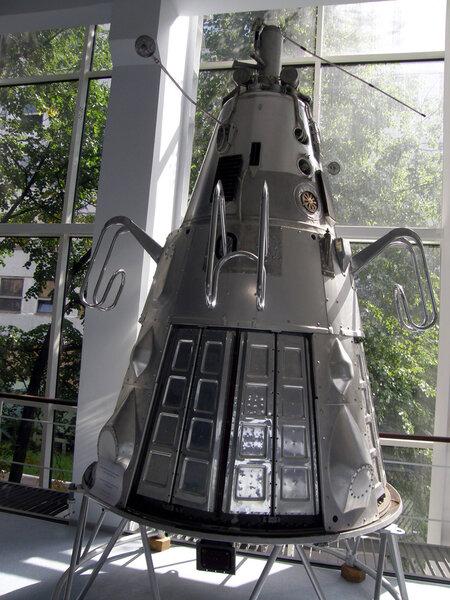
Sputnik 3 is significantly more advanced than earlier Sputnik models in both size and technical complexity. The satellite had a length of approximately 3.5 meters and a conical body structure. Its mass was calculated at approximately 1327 kilograms, representing a very high mass class for early satellite technology.【2】
The body structure was built on a pressurized system to protect scientific instruments and ensure stable data collection. Electronic systems within the satellite were insulated against temperature fluctuations. The structural design was engineered to withstand mechanical loads during launch and sustain long-term operation in orbit.
Due to the technological limitations of the era, the power system relied on limited-capacity solar and battery systems. This resulted in intermittent data transmission. Nevertheless, the system successfully delivered regular measurement data at specified intervals.
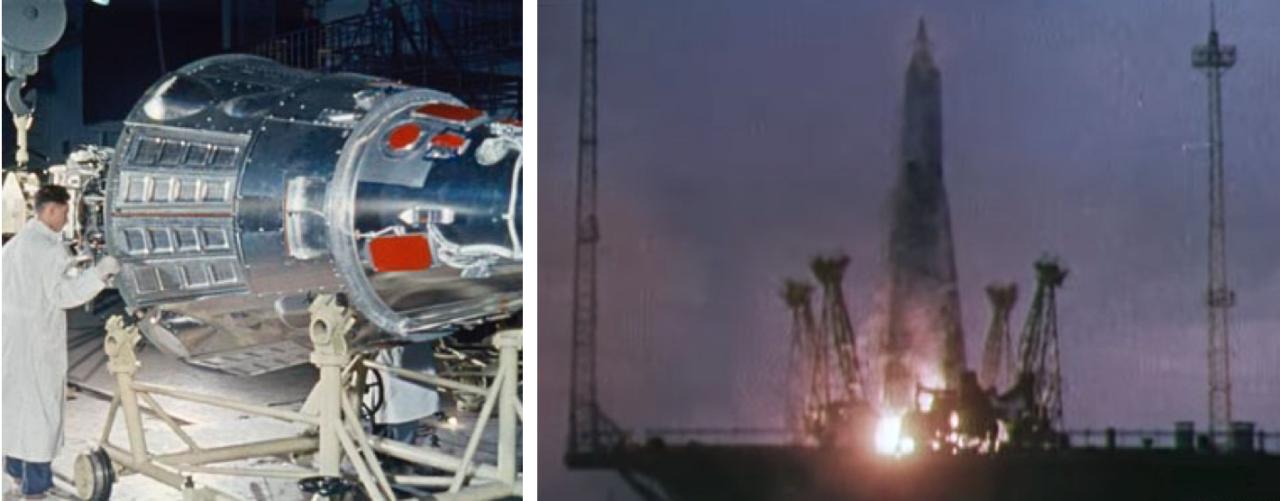
Sputnik 3 Satellite During Manufacturing and Launch Phase (NASA)
Sputnik 3 was one of the first early satellites to carry a wide array of scientific measurement instruments. The primary systems onboard included:
These instruments enabled the analysis of the structure of radiation belts around Earth. In particular, measurements of charged particle density provided some of the earliest datasets that contributed to the understanding of the Van Allen radiation belts in subsequent years.
Magnetic field measurements yielded the first high-altitude data on the structure of Earth’s magnetosphere. Atmospheric density sensors were used to investigate the variable structure of the upper atmosphere. These data contributed to modeling particle motion in low-density atmospheric regions.
Sputnik 3 was launched using an R-7 derivative launch vehicle. The launch occurred on 15 May 1958, placing the satellite into an elliptical orbit. The orbital altitude ranged approximately between 217 kilometers and 1864 kilometers. The orbital inclination was approximately 65 degrees, providing the satellite with a broad observation coverage.【3】
The satellite completed one orbit around Earth in approximately 105 to 106 minutes. This orbital configuration enabled data collection over diverse geographic regions. The elliptical orbit made it possible to compare radiation intensity at different altitudes.【4】
Data transmission during the mission of Sputnik 3 occurred intermittently. Technical limitations of the electronic systems prevented continuous data flow. Nevertheless, the satellite generated a significant volume of measurement data throughout its operational life.
The active data collection phase is generally considered to have lasted several months. During this period, particularly dense datasets were acquired on magnetic field variations and cosmic radiation intensity. These data, received by ground stations, were later analyzed and used to develop models of the space environment.
The Sputnik 3 satellite remained in orbit until 6 April 1960, after which it reentered the atmosphere and burned up.
Sputnik 3’s data are recognized as one of the first systematic scientific datasets on Earth’s near-space environment. Satellite measurements demonstrated that radiation intensity at high altitudes was not homogeneous. This finding revealed the directing influence of Earth’s magnetic field on charged particles.
Additionally, it was observed that density in the upper atmosphere varied with time and location. These data contributed to the development of atmospheric drag models. The results laid the foundation for environmental risk assessments of future human space missions.
Sputnik 3, despite its advanced scientific capabilities, faced several technical limitations. The limited power generation capacity resulted in intermittent data transmission. Furthermore, the electronic systems’ limited resistance to the radiation environment of the time increased the risk of data loss.
Nevertheless, the satellite produced sufficient data to achieve a major portion of its mission objectives. In particular, short-duration high-intensity measurement periods yielded scientifically valuable datasets.
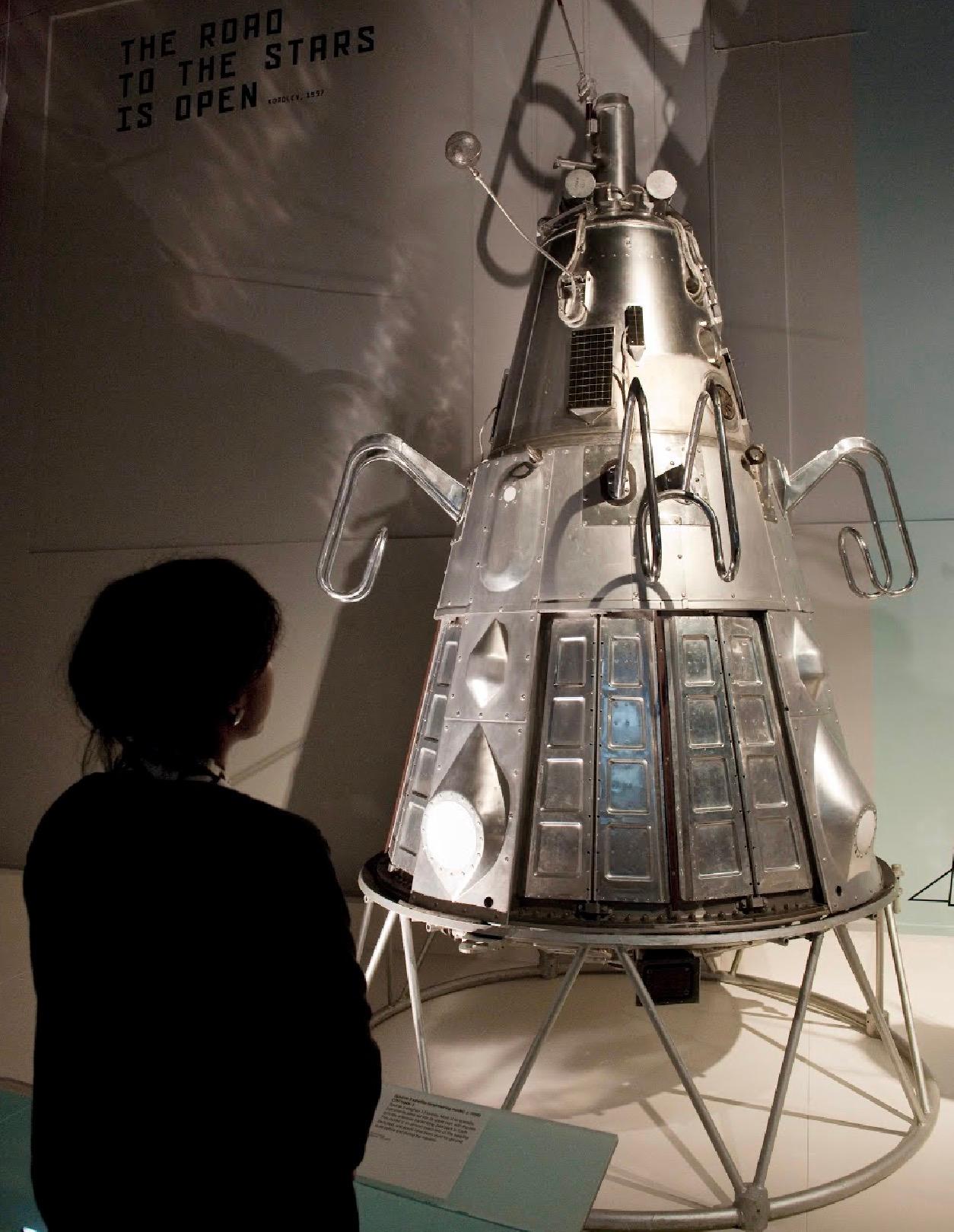
Sputnik 3 Satellite (Google Arts&Culture)
This satellite was one of the earliest examples demonstrating that satellite technology could serve not only for communication but also as a direct platform for scientific research. This approach established a foundational model for the design of subsequent geophysical and atmospheric research satellites.
Sputnik 3 is regarded as a pivotal milestone in the history of space engineering due to its pioneering integration of multiple sensors and its capacity for complex in-orbit data collection. The data obtained contributed to the development of models of Earth’s space environment within both the Soviet and international scientific communities.
Sputnik 3 is recognized as one of the most comprehensive early space missions in terms of technical capacity, scientific payload, and diversity of collected data. By providing direct measurements of Earth’s magnetic field, upper atmosphere structure, and cosmic radiation environment, it strengthened the experimental foundation of space science. The mission played a decisive role in developing a multidimensional data collection approach that guided future scientific satellite designs.
Depositphotos. “Sputnik Stock Photos.” Accessed May 14, 2026. https://depositphotos.com/photos/sputnik-3.html
Feza Gürsey Science Center. “Sputnik 3.” Accessed May 14, 2026. https://www.fezatr.com/tr/object/8/
Google Arts & Culture. "Sputnik 3 Satellite." Accessed May 14, 2026. https://artsandculture.google.com/asset/sputnik-3-satellite/mwFmQP3A8fXL6w?hl=en
Hillger, Donald. “Sputnik 3.” Cooperative Institute for Research in the Atmosphere (CIRA), Colorado State University. Accessed May 14, 2026. https://rammb.cira.colostate.edu/dev/hillger/sputnik-3.htm
Mental Landscape. "Sputnik 3." Accessed May 14, 2026. http://mentallandscape.com/S_Sputnik3.htm
NASA. “Dawn of the Space Age.” Accessed May 14, 2026. https://www.nasa.gov/history/dawn-of-the-space-age/
Next Spaceflight. "Sputnik 3." Accessed May 14, 2026. https://nextspaceflight.com/launches/details/597/
[1]
NASA. “Dawn of the Space Age.” Access Date: 14 May 2026. https://www.nasa.gov/history/dawn-of-the-space-age/
[2]
Mental Landscape. “Sputnik 3.” Access Date: 14 May 2026. http://mentallandscape.com/S_Sputnik3.htm
[3]
Mental Landscape. “Sputnik 3.” Access Date: 14 May 2026. http://mentallandscape.com/S_Sputnik3.htm
[4]
Next Spaceflight. “Sputnik 3.” Access Date: 14 May 2026. https://nextspaceflight.com/launches/details/597/

Historical Background and Program Development
Design and Structural Features
Scientific Payload and Measurement Systems
Launch and Orbital Parametersi
Mission Duration and Data Transmission
Scientific Findings and Contributions
Technical Limitations and Operational Issues
Scientific and Technological Impact