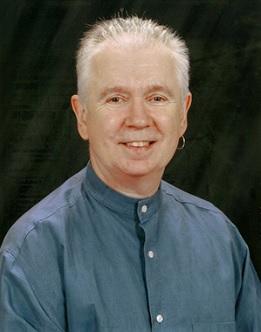
Doğum tarihi | 1949-04-22 | ||||||||
|---|---|---|---|---|---|---|---|---|---|
Eş | Kim Brookfield | ||||||||
Çocuk | Colin Brookfield Molly Brookfield | ||||||||
Stephen Brookfield was born in Liverpool, England, in 1949. After completing his undergraduate education in England, he emigrated to Canada in the early 1970s. Brookfield earned his doctorate from the University of Toronto. He has spent a significant portion of his academic career in the United States, serving on the faculties of institutions such as Columbia University, Harvard University, the University of St. Thomas, and the University of Massachusetts Amherst. Throughout his career, he has authored more than twenty books on adult education, critical theory, and teaching techniques.
Stephen D. Brookfield is an educational scholar known for his work on critical thinking, adult education, and reflective teaching. Since the 1970s, he has made significant contributions to adult education in the West, developing an approach centered on transforming the learner into an active, questioning, and critical subject.
Brookfield’s teaching philosophy is in dialogue with Paulo Freire’s critical pedagogy. He has adopted a pedagogical framework that interrogates power relations, social structures, and hidden assumptions in adult learning.
Beginning his career in England, Brookfield later held teaching positions in education faculties at various U.S. universities, including Columbia University, Harvard University, Teachers College, and the University of St. Thomas, contributing to the development of adult education programs.
His numerous publications are widely used as sources by educators and researchers around the world. Among his most prominent works are The Skillful Teacher, Becoming a Critically Reflective Teacher, and Teaching for Critical Thinking.
The foundation of Brookfield’s pedagogical approach is critical reflection, a method that encourages teachers to question their assumptions and reveal powerful social dynamics.
Brookfield clearly defines this approach in his 1998 article “Critically Reflective Practice.” The model proposes that teachers examine their teaching through four perspectives: the students’ viewpoint, the perspective of colleagues, personal experience, and theoretical literature.
This approach, developed based on Brookfield’s 2017 work, is known as the Four Lenses Model. Teachers systematically apply the following perspectives:
This model moves teaching beyond passive knowledge transmission, guiding educators toward a practice of continuous questioning and openness to learning.
Brookfield emphasizes that the educational environment is woven with ideological and power relations and that the teacher-system relationship must be critically examined. In his work, he argues that teachers can make visible structures often taken for granted by analyzing so-called “natural” classroom practices.
For example, in his article Critical Practice, he explains that teaching is not merely the delivery of content but is also shaped by ideological preferences and systems of pressure.
Brookfield’s theories encompass not only teacher practice but also the process by which individuals develop critical thinking skills.
In Turkish educational literature, İnayet Aydın’s work Critical Thinking: A Conceptual Framework analyzes Brookfield’s approach within a conceptual context. Aydın defines critical thinking as a process through which individuals question their political, social, and cognitive assumptions, highlighting Brookfield’s contribution to this process.
Brookfield’s Four Lenses Model is applied not only to individual teacher reflection but also to group learning and professional development contexts.
For instance, Laura Nager’s 2017 doctoral study demonstrates how the model is used in classroom-based collective reflection processes. In recent years, social perspectives such as the “community lens” have been added to Brookfield’s model within contexts of professional development and cultural self-efficacy.
Antioch University. “Adult Ed Reformer and Anti-Racist Scholar Stephen Brookfield Joins Antioch as Distinguished Scholar”.
Brookfield, Stephen D. *Becoming a Critically Reflective Teacher*. Jossey-Bass. https://digitallibrary.mes.ac.in/server/api/core/bitstreams/d8484c7c-915d-43c2-b8af-5bf49c9ee032/content
Goldman, Ainsley et al. “Extending beyond the self: Leveraging Brookfield’s four lenses for critical reflection in WIL.” Conference Paper, WACE 2023. https://www.researchgate.net/publication/379238164_Extending_beyond_the_self_Leveraging_Brookfield's_four_lenses_for_critical_reflection_in_WIL
Nager, Laura Helen, Moed, Daniella, McMahon, Colin. *Building a Critically Reflective Practice: Relating Brookfield’s Four Lenses to Inservice Teachers’ Experiences.* PhD diss., Mercer University, 2017. https://www.academia.edu/72599947/Building_a_Critically_Reflective_Practice_Relating_Brookfields_Four_Lenses_to_Inservice_Teachers_Experiences
Teachers College, Columbia University. “Stephen D Brookfield | Faculty Profile.” Accessed [insert date if provided].
University of St. Thomas. “Dr. Stephen Brookfield Named First John Ireland Chair.” Posted October 4, 2013; updated June 3, 2019. https://news.stthomas.edu/stephen-brookfield-john-ireland-chair/

Doğum tarihi | 1949-04-22 | ||||||||
|---|---|---|---|---|---|---|---|---|---|
Eş | Kim Brookfield | ||||||||
Çocuk | Colin Brookfield Molly Brookfield | ||||||||
No Discussion Added Yet
Start discussion for "Stephen David Brookfield" article
Education
Academic Career
Awards and Honors
Personal Life and Interests
Stephen D. Brookfield: The Theoretical Framework of the Critical Pedagogue
Critical Reflective Learning Approach
The Four Lenses Model: Self-Reflection Through Perspectives
Power, Hegemony, and Critique of Educational Ideology
Critical Thinking and Its Reflections in Türkiye
Contemporary Applications and Critical Reflective Educational Research