


This article was automatically translated from the original Turkish version.
+1 More
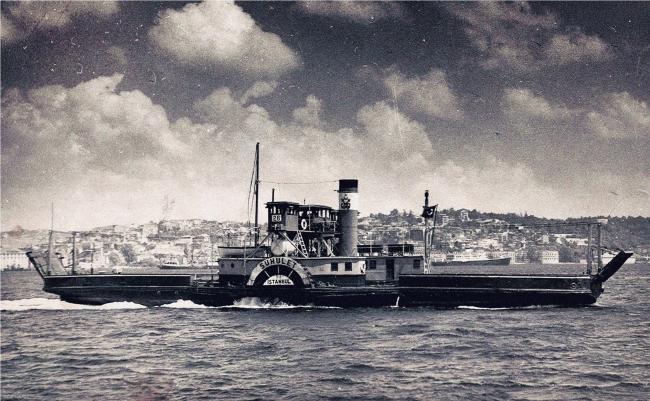
Suhulet is the world’s first automobile ferry, designed and constructed during the 19th-century Ottoman Empire and put into service across the Bosporus in 1872. It was named following a suggestion by the poet Namık Kemal, and in Ottoman Turkish the word means “convenience.” Developed to meet the growing transportation demands of the era, it was built with a symmetrical double-ended design that allowed vehicles and cargo to be loaded and unloaded from both the front and rear ramps. The Suhulet ferry began operations on the Üsküdar-Kabataş route, marking a first in Ottoman maritime transport and serving the city for approximately 86 years thereafter.
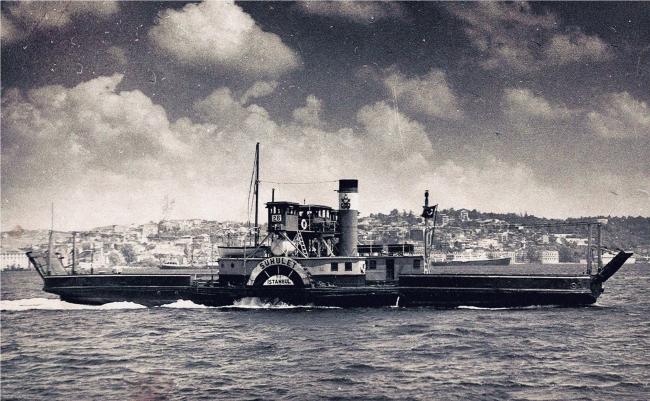
Assistance Vessel on a Journey in the Bosporus Strait (TRT News)
Until the mid-19th century, transportation between the two shores of Istanbul was primarily conducted via rowboats. As passenger and cargo demand outgrew this system, the Şirket-i Hayriye, an anonymous steamship company, was established in 1851 with the support of Sultan Abdülmecid. Initially, Şirket-i Hayriye operated only small and medium-sized steamers for passenger transport. In 1869, Giritli Hüseyin Haki Bey, appointed as the company’s general manager, recognized the need for a new ferry design capable of carrying horse-drawn carriages and heavy cargo across the Bosporus. Working with engineer İskender Efendi and master shipbuilder Mehmet Usta, Hüseyin Haki Bey developed a pioneering ferry project that would be the first of its kind in the world at the time. In this design, the ferry’s deck was made completely flat to facilitate easy passage for horse-drawn vehicles, and the vessel was built symmetrically with dual ends to allow simultaneous loading and unloading of vehicles and passengers from either side. This innovative dual-ended concept is regarded today as the first prototype of modern roll-on roll-off ferries. After completing the design drawings, Hüseyin Haki Bey personally traveled to England to oversee construction and placed the order with the Maudslay Sons and Field shipyard. The resulting vessel was a side-paddle steamship, entirely constructed of iron, unlike other steamers in Istanbul at the time. Named Suhulet, the ferry arrived in Istanbul after a long sea voyage and officially entered service in 1872.
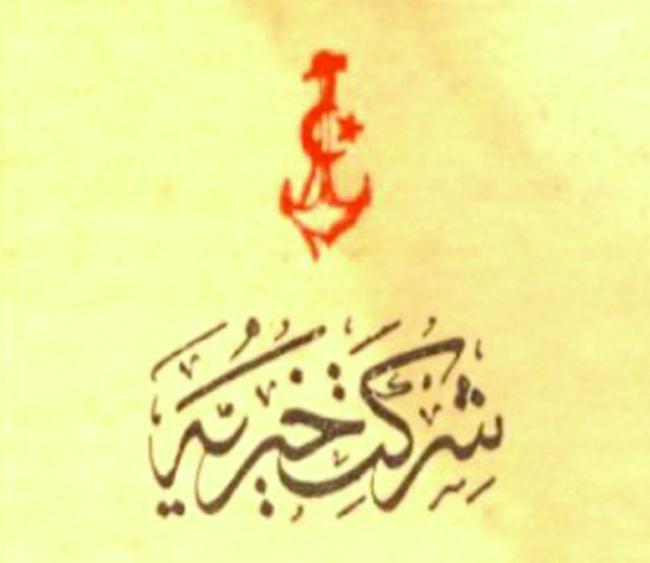
The first logo of Şirket-i Hayriye (TRT News)
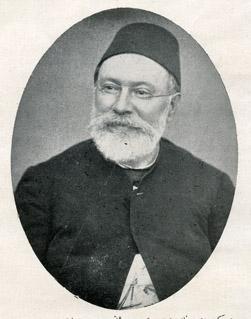
Hüseyin Haki Bey, General Manager of Şirket-i Hayriye (TRT News)
The announcement that the Suhulet ferry would begin service in 1872 initially met resistance from local boatmen who operated rowboats and mavnas across the Bosporus. In particular, mavna operators planned to block the first voyage by chaining their boats together along the Üsküdar shoreline. To prevent possible sabotage, Hüseyin Haki Bey requested assistance from the Ottoman Seraskerlik and stationed an artillery unit at the Üsküdar pier. On the day of the inaugural voyage, the boatmen, faced with the threat of cannon fire, were forced to dismantle their chains, allowing the Suhulet to begin its first journey without incident. In recognition of this achievement, Sultan Abdülaziz awarded Hüseyin Haki Bey the First Class Order of Industry and the Third Class Order of Medjidie. The innovative concept of the Suhulet quickly gained approval from Ottoman administrators. In 1873, a sister vessel was ordered from the same shipyard to expand the fleet. This second automobile ferry was built with greater power and twin engines and entered service in 1873. Namık Kemal named this vessel “Sahilbent,” referencing its function of connecting the two shores. Suhulet and Sahilbent operated under chimney numbers 26 and 27 respectively within the Şirket-i Hayriye fleet. For many years, these two automobile ferries were the only vessels in Istanbul capable of transporting horse-drawn carriages, cargo wagons, and heavy goods across the Bosporus.
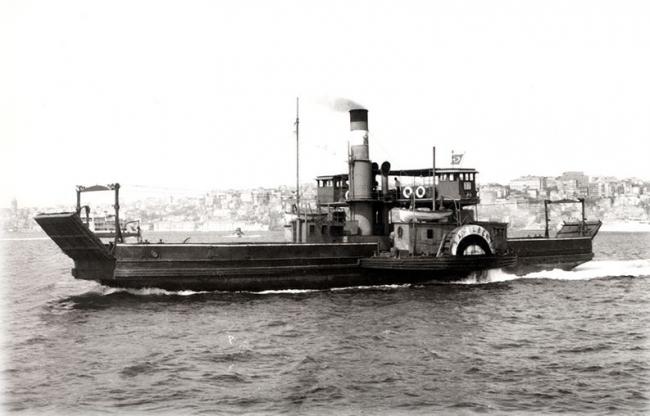
During World War I, the Suhulet ferry was requisitioned for military service to meet the logistical needs of the Gallipoli Front. After being fitted with torpedo-launching equipment at the shipyard, the vessel was sent to Gallipoli in 1915. During a period when transporting troops and supplies to the Gallipoli Peninsula by sea took days, the Suhulet could move entire units from one shore to the other in just a few hours. For example, while it normally took four days to transport a field artillery battalion of four batteries across the sea, the Suhulet accomplished this in approximately two and a half hours. This capability gave the Ottoman Army a critical logistical advantage in defending the Dardanelles.
In August 1915, the ferry returned to Istanbul for maintenance and departed again for Gallipoli in September 1915, carrying military supplies loaded at Yeşilköy. However, due to dense fog near Büyükçekmece, it ran aground and sustained damage. After repairs, the Suhulet resumed its transport duties until the end of the Gallipoli battles. No official medal was awarded to the vessel after the war, but during the Republican era historians began restoring to it the recognition it deserved.
The commencement of Suhulet’s service brought significant changes to Istanbul’s social and economic life. Previously, horse-drawn carriages and heavy cargo could only be transported between the two shores with great difficulty using small boats or mavnas. The Suhulet made these crossings regular, safe, and rapid. Acting as a floating bridge connecting the two continents, the ferry significantly increased commercial and social interaction between Üsküdar and Beyoğlu. The Suhulet also served as a powerful symbol reinforcing public confidence in technological innovation within Ottoman society. As part of the Tanzimat modernization efforts, this ferry—born from local initiative and design—demonstrated the success of Ottoman engineering. For decades, the people of Istanbul grew up familiar with the regular sound and silhouette of the Suhulet, and it became one of the city’s enduring symbols.
The Suhulet ferry represents a significant innovation in Ottoman maritime history and urban transportation. The Ottoman state had long maintained a strong maritime tradition and had led the world in various ship technologies. Especially after the Tanzimat period, the empire rapidly adopted modern transportation methods for both military and civilian use. In this context, the Suhulet achieved a global first during the final quarter of the 19th century, a period otherwise characterized by the empire’s decline.
The Suhulet ferry operated continuously for 86 years from its inaugural voyage in 1872. Its lifespan was extended through periodic maintenance and upgrades. The vessel was withdrawn from service on 11 May 1958 and fully removed from the fleet in 1961. Its sister vessel, Sahilbent, was taken out of service a year later, in 1959. In 2007, İstanbul Şehir Hatları named two of four newly constructed modern automobile ferries Suhulet and Sahilbent to preserve this historical legacy. Today, these modern ferries operate on the Sirkeci-Harem line, carrying the memory of the original Suhulet and continuing the tradition of vehicular transport between the two shores that it pioneered.
Başer, Halil İbrahim. “Osmanlı arşivlerine göre dünyanın ilk arabalı vapuru ‘Suhulet’.” Anadolu Ajansı. Accessed May 13, 2025. https://www.aa.com.tr/tr/turkiye/osmanli-arsivlerine-gore-dunyanin-ilk-arabali-vapuru-suhulet/869701.
Fikriyat. "Dünyanın ilk arabalı vapuru: Suhulet." Fikriyat. Accessed May 13, 2025. https://www.fikriyat.com/galeri/tarih/dunyanin-ilk-arabali-vapuru-suhulet.
Kazanç, Işıl. “Dünyanın ilk arabalı vapuru Suhulet’in 86 yıllık hikayesi.” TRT Haber. Accessed May 13, 2025. https://www.trthaber.com/haber/ozel-haber/dunyanin-ilk-arabali-vapuru-suhuletin-86-yillik-hikayesi-395481.html.


Design and Construction Process
Commencement of Service and Early Years
Service During the Gallipoli Campaign
Impact on Social Life
Place in Ottoman Maritime Transport
Years of Service and Final Status