


This article is not approved yet.
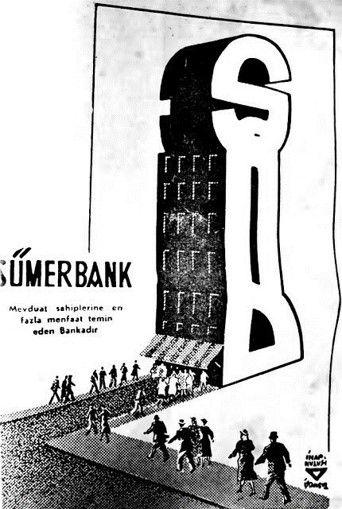
https://markut.net/img/sumerbank-logo-afis.jpg
Sümerbank
Founder(s) | Mustafa Kemal Ataturk | ||||||||
|---|---|---|---|---|---|---|---|---|---|
Date of Establishment | 1933-07-11 | ||||||||
Termination Date | 2002-01-11 | ||||||||
Sümerbank is a state-owned institution established in 1933 within the framework of the industrialization policies of the Republic of Turkey, operating in sectors such as textiles, food, and glass. Sümerbank, which entered the privatization process in the 1990s, has made a significant contribution to the economy as one of Turkey's most important industrial enterprises.
Sümerbank, established in 1933 in line with the Republic of Turkey's industrialization and economic independence goals, is one of the most important industrial and financial institutions of the early Republican era. Named after the Sumerians, considered the cradle of civilization, the institution has been active in many sectors such as textiles, leather, printing, cement, iron and steel, and machinery. By financing industrial investments alongside its banking services, it played a strategic role in Turkey’s planned development process.
After the proclamation of the Republic, Turkey turned to state-led industrial investments in order to accelerate economic development. The effects of the global economic crisis in the 1930s led to the strengthening of the principle of statism. Within this framework, Sümerbank was established in 1933 to replace the Turkish Industrial and Mining Bank and began operations on July 11, 1933. The bank took on the task of establishing and operating industrial facilities, while also providing production financing.
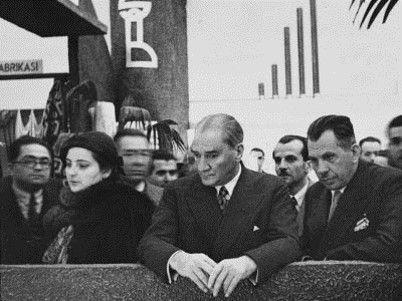
Under the First and Second Five-Year Industrial Plans, Sümerbank established numerous production facilities across the country, primarily textile factories. Facilities such as the Kayseri Textile Factory (1935), the Ereğli Textile Factory (1937), and the Nazilli Printing Factory (1937) became symbols of the development model of the era in terms of both production capacity and employment. Sümerbank did not merely engage in production; it also improved the qualifications of the workforce through the workshops and courses it established.
During this period, Sümerbank invested in industries beyond textiles, including cement, leather, porcelain, electrical appliances, and chemicals. These investments, aimed at reducing Turkey's dependence on imports, also played a decisive role in regional development. The institution also strengthened its banking activities and played a leading role in industrial loans.
Economic liberalization policies after 1980 led to a downsizing of Sümerbank's areas of activity. Many production facilities were privatized, and its banking activities also declined. In 1997, Sümerbank's banking division was merged with Etibank and then transferred to the Deposit Insurance Fund.
Although Sümerbank was completely liquidated in 2001, its role in Turkey’s industrialization process and the economic, social, and cultural legacy it left behind still retain their importance. The factories it established were not merely production centers; the dormitories, kindergartens, social facilities, and cultural events they established also played a central role in the development of cities.
As one of the most concrete examples of the Republic's state-led policies, Sümerbank was a cornerstone in Turkey's struggle for economic independence and industrialization. Today, many former Sümerbank factories continue to operate as museums, cultural centers, or private-sector businesses.
Atatürk Ansiklopedisi. "Sümerbank." Erişim 16 Ağustos 2025.
https://ataturkansiklopedisi.gov.tr/detay/308/S%C3%BCmerbank
Erdoğan, Abdullah, ve Hikmet Zeki Kapcı. "II. Dünya Savaşı Sürecinde Sümerbank." Erciyes Üniversitesi Sosyal Bilimler Enstitüsü Dergisi 45, no. 2 (2018): 83–108. Erişim 16 Ağustos 2025.
https://dergipark.org.tr/tr/download/article-file/614397
Erturun, İlayda. "Reading Sümerbank Nazilli Chintz Factory in the Context of Gender." Çalışma ve Toplum 4, no. 83 (2024): 1543–1584. doi:10.54752/ct.1569673. Erişim 16 Ağustos 2025.
https://www.calismatoplum.org/en/makale/sumerbank-nazilli-basma-fabrikasini-toplumsal-cinsiyet-baglaminda-okumak

https://markut.net/img/sumerbank-logo-afis.jpg
Sümerbank
Founder(s) | Mustafa Kemal Ataturk | ||||||||
|---|---|---|---|---|---|---|---|---|---|
Date of Establishment | 1933-07-11 | ||||||||
Termination Date | 2002-01-11 | ||||||||
Introduction
Establishment Process (1923–1933)
1933–1950: The Locomotive of Industrialization
1950–1980: Growth, Diversification, and Technological Investments
1980–2000: Privatization Process and Contraction
Closure and Legacy
Conclusion
This article was created with the support of artificial intelligence.