Innervation | Suprascapular nerve (C5-C6) | ||||||||
|---|---|---|---|---|---|---|---|---|---|
Associated Pathologies | Rotator cuff tear Subacromial impingement | ||||||||
Function(s) | Shoulder abduction Rotator Cuff stabilization | ||||||||
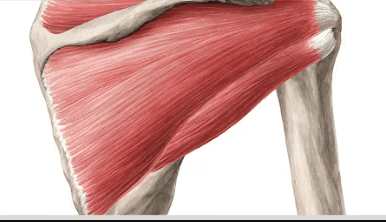
The Supraspinatus Muscle originates from the supraspinous fossa at the top of the scapula (shoulder blade) and extends to the greater tubercle of the humerus. It is one of the four muscles of the rotator cuff and plays a critical role in initiating abduction (raising) of the arm from the shoulder.
The Supraspinatus Muscle originates from the medial two-thirds of the supraspinous fossa of the scapula. After passing over the spine of the scapula, its fibers insert onto the superior surface of the greater tubercle of the humerus, terminating in this structure. This structure determines the muscle's location within the rotator cuff and its functional importance. The supraspinatus tendon passes beneath the acromion and lies within the subacromial space. This location makes it susceptible to impingement syndromes. The tendon also integrates with the shoulder joint capsule, providing stability to the shoulder joint through this structure. The muscle appears to provide a critical mechanical advantage in upward movements of the shoulder.
The Supraspinatus Muscle, which develops embryologically from the dorsal muscle mass, is part of the scapulohumeral muscle group. This muscle, which develops through differentiation from somitic mesenchyme derived from paraxial mesoderm, is located among the rotator cuff muscles and is a critical structure that provides both movement and passive stability of the shoulder.
The muscle is innervated by the suprascapular nerve (C5–C6). This nerve arises from the superior trunk of the brachial plexus, crosses the suprascapular notch at the superior border of the scapula, and gives branches to both the supraspinatus and infraspinatus muscles. The muscle's vascular supply is provided by the suprascapular artery and the scapular anastomotic network. Adequate blood supply is crucial for the muscle's regenerative capacity.
The Supraspinatus Muscle plays a particularly active role in the first 15 degrees of arm abduction. During this initial movement phase, it initiates the lateral elevation of the arm; the deltoid muscle then takes over. Furthermore, the muscle provides passive stability to the shoulder joint by pulling the humeral head toward the glenoid space. This effect prevents the humeral head from displacing upward or outward, thus maintaining joint integrity. Clinically, the supraspinatus is the muscle most commonly affected in rotator cuff tears. The tendon's location in the subacromial space predisposes it to subacromial impingement syndrome. Furthermore, the muscle can cause limited motion, associated with clinical conditions such as frozen shoulder (adhesive capsulitis). Risk factors include aging, repetitive shoulder movements, poor posture, and imbalance of the muscles surrounding the shoulder. Asymptomatic tears are quite common in these situations; over time, these tears can progress to chronic shoulder pain and loss of function. The most commonly used imaging methods for diagnosis are magnetic resonance imaging (MRI) and ultrasonography. These techniques play an important role in evaluating the structural integrity of the tendon, edema, calcification or degenerative changes.
Jobe, Frank W., and J. Tibone. "Clarification of the Role of the Supraspinatus Muscle." Journal of Bone and Joint Surgery - American Volume 68, no. 3 (1986): 398–404. https://journals.lww.com/jbjsjournal/abstract/1986/68030/clarification_of_the_role_of_the_supraspinatus.13.aspx .
Kim, Young-Wook, Jin Soo Song, Ji Young Lee, and Ki Seok Koh. "A Three-Dimensional Analysis of the Intramuscular Tendon of the Supraspinatus Muscle." Clinical Anatomy 30, no. 8 (2017): 1073–1079. https://onlinelibrary.wiley.com/doi/full/10.1002/ca.22843 .
Clark, John M., and Robert L. Harryman II. "An Anatomical Study of the Supraspinatus Muscle and Tendon." Clinical Orthopedics and Related Research 390 (2001): 278–285. https://journals.lww.com/corr/abstract/2001/03000/an_anatomic_study_of_the_supraspinatus_muscle_and.32.aspx .

Innervation | Suprascapular nerve (C5-C6) | ||||||||
|---|---|---|---|---|---|---|---|---|---|
Associated Pathologies | Rotator cuff tear Subacromial impingement | ||||||||
Function(s) | Shoulder abduction Rotator Cuff stabilization | ||||||||
No Discussion Added Yet
Start discussion for "Supraspinatus Muscle" article
Anatomy
Morphology and Connection Points
Embryological Origin and Classification
Nerve Innervation and Vascular Supply
Function and Clinical Relationships