


This article was automatically translated from the original Turkish version.
+1 More
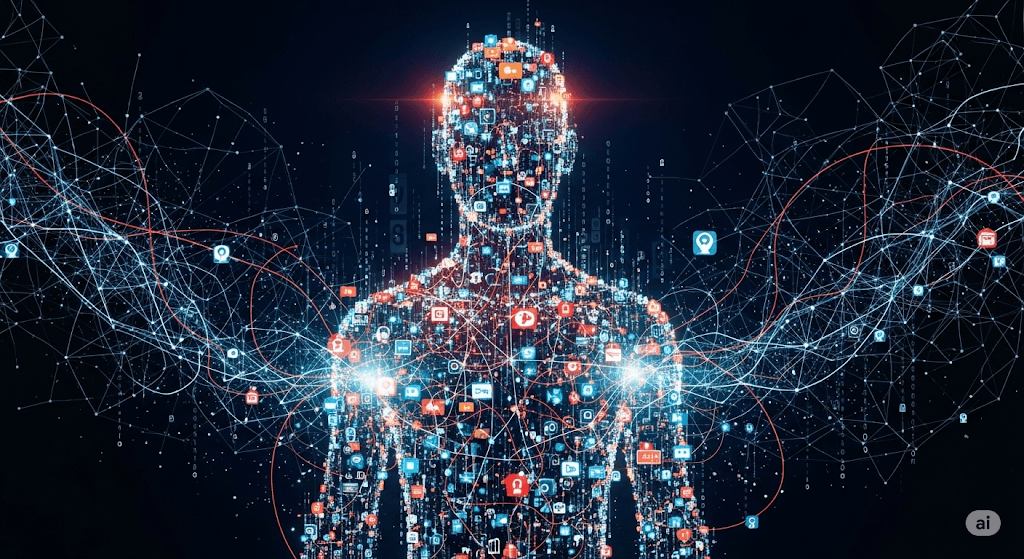
Surveillance Society
Founding Theorist | Michel Foucault | ||||||||
|---|---|---|---|---|---|---|---|---|---|
Key Concepts | Big Data Sousveillance Omnipopticon Synopticon Superpanopticon Panopticon | ||||||||
Main Forms of Oversight | Social Surveillance Commercial Surveillance Electronic Surveillance Physical Surveillance | ||||||||
Practical Application Areas | Workplace Monitoring Consumer Profiling and Marketing Crime Prevention State Security and Intelligence | ||||||||
Surveillance society refers to a social structure in which the behaviors, attitudes, and personal information of individuals and groups are systematically monitored, collected, stored, processed, and analyzed by various institutions, primarily states and commercial organizations. In this process, advancements in information and communication technologies play a decisive role. Surveillance can be defined as the top-down observation of an individual or group or the removal of barriers to control through computer technology. Throughout history, as one of the mechanisms of social control, surveillance has expanded its scope and intensity alongside modernity and subsequent technological transformations, permeating all areas of daily life.

Digital Panopticon: City Landscape Where Everyone Is Watched (Generated by Artificial Intelligence)
Practices of surveillance are as old as human history. Their origins can be traced back to the invention of writing, driven by the state’s need to keep records. During this period, records were primarily used for tax collection, population control, and maintaining power. In traditional societies, control was achieved through mutual observation among individuals within the community, and transparency was an ordinary fact of daily life. In 15th-century Western societies, the church engaged in surveillance by maintaining records of marriages, births, deaths, and baptisms.
The emergence of modernity triggered a fundamental transformation in the structure of surveillance. Post-Industrial Revolution urban migration rendered traditional social control mechanisms inadequate, creating a need for the state to establish a systematic surveillance system to manage the mobile population perceived as “masterless people.” In response to this need, institutions known as the “Great Confinement” emerged, where individuals deemed “abnormal” or “deviant” by society—such as the unemployed, the mentally ill, criminals, and prostitutes—were confined, reformed, and subjected to a regime of labor. According to Foucault, these institutions functioned as “confinement machines,” transforming individuals into objects of knowledge while generating new accumulations of technical knowledge through their labor【1】.
The model that best symbolizes the modern understanding of surveillance is the Panopticon, designed in the 18th century by the English thinker Jeremy Bentham and later theorized by the French philosopher Michel Foucault. Bentham conceived the Panopticon as a “house of control,” asserting that its design could be applied to institutions such as prisons, schools, factories, asylums, and hospitals to reform morality, revitalize industry, and reduce public burdens.
The Panopticon is an architectural structure consisting of a central observation tower surrounded by cells arranged in a circular pattern. The observer in the tower can continuously see the individuals in the cells—prisoners, workers, students—while those in the cells cannot know whether they are being watched or when they are being watched. This asymmetric gaze is based on the principle that power must be invisible yet constantly felt. As a result, individuals internalize discipline by continuously regulating their own behavior under the assumption that they are always under surveillance.
Foucault analyzed this mechanism as a technology of power that binds individuals to a system of production, disciplines them, and normalizes them, a phenomenon he conceptualized as “panopticism.” This disciplinary power aims to render the body docile in order to extract maximum efficiency. Thus, surveillance became a fundamental instrument of the modern state, bureaucracy, and capitalist production.
From the 1960s onward, the proliferation of computer technology and later the internet triggered a new revolution in surveillance practices. Attention shifted from tracking individuals’ physical bodies to monitoring their digital traces in electronic environments. This new era has been termed by some theorists as the “Superpanopticon” or “Electronic Panopticon.”
The Superpanopticon is the technological update of Foucault’s Panopticon model, referring to the monitoring of individuals independently of time and space through computer-assisted databases. Digital footprints such as credit card usage, internet browsing, social media activity, security cameras (MOBESE), and mobile phone signals have enabled the collection of massive volumes of data about individuals (Big Data). The computer-based collection, storage, matching, and analysis of this data have allowed both states and corporations to classify and control individuals more effectively. In this process, surveillance is no longer confined to specific institutional spaces such as prisons or factories; it has spread across society as a whole. A new form of surveillance has emerged—one without walls, windows, or observation towers—that does not summon individuals to institutions but follows them directly.
Following the Panopticon model, new concepts have been developed to explain emerging forms of surveillance in light of advances in digital technologies and media:
Introduced by Mark Poster, this concept describes a decentralized, database-based form of surveillance rather than one centered on a single tower. Individuals involuntarily become part of this system through everyday electronic transactions. Individuals, referred to as data-subjects, are recognized and classified through data-images constructed from the data collected about them.
Developed by Norwegian sociologist Thomas Mathiesen, this concept describes the opposite of the Panopticon: “the many watching the few.” Mass media, particularly reality TV shows such as “Big Brother” or the public exposure of celebrities’ lifestyles, exemplify this phenomenon. In this model, individuals are disciplined by being encouraged to emulate the presented models and images. In this process, as Baudrillard described it with the term “simulacra” (copies that replace reality), individuals normalize themselves by observing models that are not real.
Conceptualized by Jeffrey Rosen, this form of surveillance is characterized by “everyone watching everyone.” With the widespread adoption of social media, individuals have simultaneously become both watchers and watched. This surveillance is typically pleasure- and entertainment-oriented and relies on voluntary consent.
In this model, the observation tower is replaced by a mirror, envisioning a transparent social structure in which everyone can observe everyone else, with no hierarchy or status differences.
Introduced by Steve Mann, this concept defines surveillance from below upward—that is, ordinary individuals monitoring authorities or the powerful. Examples include wearable cameras and recordings made by citizens using mobile phones.
Nation-states systematically surveil their citizens and other countries to ensure national security and combat crime and terrorism. Following the September 11, 2001 attacks, governments expanded their surveillance powers through legislation such as the U.S. Patriot Act.
Global surveillance systems such as Echelon, Promis, Trojan Horse, and Carnivore conduct mass intelligence gathering by monitoring telephone calls, emails, and all forms of digital communication. These systems can cast the entire population into a position of suspicion under the claim of identifying potential criminals.
In the capitalist system, surveillance has been reconfigured to generate economic value. With the transition from a production society to a consumption society, understanding consumer behavior and preferences has become vital for corporations. Data collected through credit card transactions, online shopping, loyalty card programs, universal product codes (barcodes), and social media interactions (Big Data) enable companies to create consumer profiles and tailor marketing strategies accordingly. Consumer surveillance has advanced so far that companies such as Electrolux have reportedly installed cameras in consumers’ homes to inform product development. In this process, the consumer pays not only in money for the product but also with personal information as a second form of payment.
Electronic surveillance has become widespread in workplaces to increase worker productivity and maintain control. Magnetic access cards, monitoring of internet usage and email correspondence, recording of keyboard and mouse movements, and hidden cameras embedded in objects such as pens subject employees to constant surveillance.
The rise of the surveillance society has triggered serious debates concerning the erosion of privacy (the confidentiality of private life). Surveillance technologies blur the distinction between public and private spheres, as personal data is collected and stored in databases belonging to both states and commercial corporations. Individuals worry about who collects their data, for what purpose, and how it is used.
There are several sources of social legitimacy underlying the lack of mass resistance to these widespread surveillance practices.
Dolgun, Uğur. "Gözetim toplumunun yükselişi: Enformasyon toplumundan gözetim toplumuna." *Yönetim Bilimleri Dergisi* 2, no. 1 (2004): 55-74. https://dergipark.org.tr/en/download/article-file/46430.
GücüYener, Merve. *Panoptikonik Gözetimden Synoptisizme Gözetim Toplumu*. Master's thesis, Afyon Kocatepe University Institute of Social Sciences, Department of Sociology, 2011. Accessed July 5, 2025. https://acikerisim.aku.edu.tr/xmlui/handle/11630/2600
Kavut, Sevgi. “Dijital Dönüşüm Çağında Gözetimin Elektronikleşmesi: Panoptikon’dan Süperpanoptikon’a Gözetim Toplumu.” *Communicata*, no. 25 (March 2023): 22–27. https://doi.org/10.5152/communicata.2023.23029.
Kesim Güven, Sevgi. *Gözetim Toplumu ve Toplumsal Meşruiyet*. PhD thesis, Mimar Sinan Güzel Sanatlar Üniversitesi Sosyal Bilimler Enstitüsü, Sosyoloji Anabilim Dalı, Genel Sosyoloji ve Metodoloji Programı. Accessed July 5, 2025. https://www.proquest.com/openview/a36ded84aeff0795679fe386de3f6d65/1?pq-origsite=gscholar&cbl=2026366&diss=y
Sönmez, Barbaros. "Gözetim toplumunun günümüz tüketim dinamikleri bağlamında yorumlanması." *Selçuk İletişim* 9, no. 2 (2016): 262-284. https://dergipark.org.tr/en/download/article-file/178287#page=262.
[1]
Merve GücüYener, Panoptikonik Gözetimden Synoptisizme Gözetim Toplumu (Yüksek Lisans Tezi, Afyon Kocatepe Üniversitesi Sosyal Bilimler Enstitüsü, Sosyoloji Anabilim Dalı, 2011), 20

Surveillance Society
Founding Theorist | Michel Foucault | ||||||||
|---|---|---|---|---|---|---|---|---|---|
Key Concepts | Big Data Sousveillance Omnipopticon Synopticon Superpanopticon Panopticon | ||||||||
Main Forms of Oversight | Social Surveillance Commercial Surveillance Electronic Surveillance Physical Surveillance | ||||||||
Practical Application Areas | Workplace Monitoring Consumer Profiling and Marketing Crime Prevention State Security and Intelligence | ||||||||
No Discussion Added Yet
Start discussion for "Surveillance Society" article
Historical Development
From Traditional to Modern Society
Panopticon: Model of the Disciplinary Society
Information Society and Electronic Surveillance
Theoretical Approaches and Forms of Surveillance
Superpanopticon
Synopticon
Omnipticon
Catopticon
Sousveillance
Application Areas
State, Security, and Intelligence
Consumer Society and Marketing
Workplace
Debates on Privacy and Social Legitimacy