badge icon

This article was automatically translated from the original Turkish version.

Article

Technological Applications in Psychology

Quote
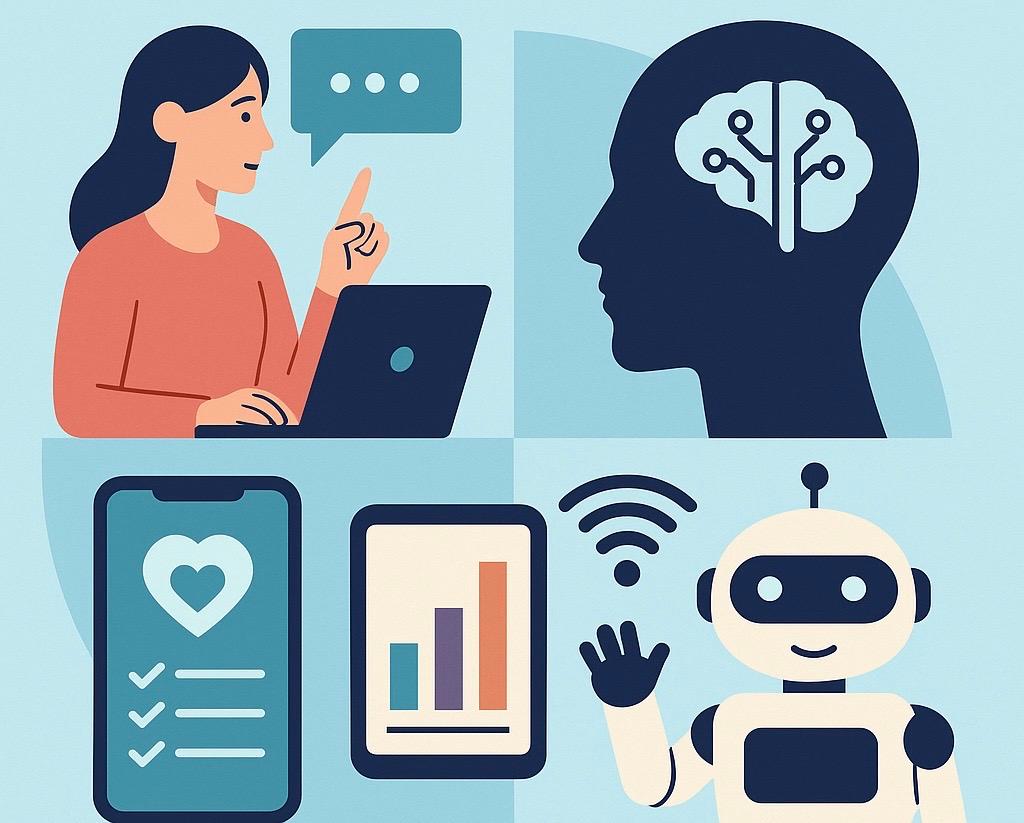
52761CCE-DF36-4DA5-9EED-51906EF6FF23.jpeg

Yapay zeka ile oluşturulmuştur.

Technological Applications in Psychology
Definition
Software developed for smart devices that provide mental health supportinformationand assessment
Objectives
AccessibilityPersonal DevelopmentTherapy SupportSelf-AssessmentEducation
Types
Online Therapy PlatformsSelf-Help ApplicationsEducational ToolsProfessional Applications
Core Technologies
Mobile Operating Systems (iOSAndroid)InternetArtificial IntelligenceVirtual Reality
Important Considerations
Data PrivacyEvidence-Based IntegrityEthical StandardsProfessional Oversight

Technological applications in psychology are software programs developed for smartphones and other mobile devices that provide users with various mental health services. With the widespread adoption of the internet and smartphones in the 21st century, interest in these mobile applications has grown as a means to deliver psychological support services more effectively and efficiently. These applications aim to make mental health services more accessible by functioning across a broad spectrum including psychological support personal development self assessment education and therapy access.

Goals and Functions of Technological Applications in Psychology

Mental health mobile applications are developed with diverse objectives tailored to different user needs. These objectives range from preventive mental health measures to direct therapeutic interventions.
  1. Preventive Mental Health and Skill Development: Some applications aim to enhance users’ psychological resilience and adaptability. Such applications play a protective role by strengthening risk identification strategies against potential psychological stressors. Additionally they assist in acquiring and developing life skills such as self awareness empathy communication motivation problem solving and management of anger and stress based on principles of positive psychology.
  2. Self Assessment and Awareness: Many applications offer tests and surveys that enable users to understand their own psychological states. These tools include assessments on personality traits temperament depression levels anxiety intelligence and emotional states. For example digital versions of well known psychological instruments such as Eysenck’s temperament assessment Beck’s Depression Inventory or Freud’s personality test may be integrated into these applications. These tests allow individuals to gain self awareness and begin their journey of personal development.
  3. Facilitating Access to Psychotherapy: One of the most important functions is to facilitate access to professional psychological support. Online therapy platforms connect users with licensed psychologists psychiatrists and psychological counselors. Users can select specialists through AI powered algorithms or based on personal preferences conduct sessions via secure encrypted video calls and communicate with their professionals through messaging. This eliminates geographical barriers and makes therapy services more flexible and accessible.
  4. Education and Information: Applications designed for those seeking to acquire knowledge in psychology are also available. These applications provide articles videos and educational content on various psychological topics mental disorders and personal development strategies. Some applications aim to teach specific subjects such as brain structure and function through interactive 3D models.
  5. Supporting Treatment: Psychological applications can also serve as complementary tools to face to face therapy processes. For instance virtual reality assisted exposure therapy for phobias or behavioral exercises for conditions such as obsessive-compulsive disorder can be monitored through these applications. However it must be remembered that such applications are not designed to replace professionals but solely to support treatment.


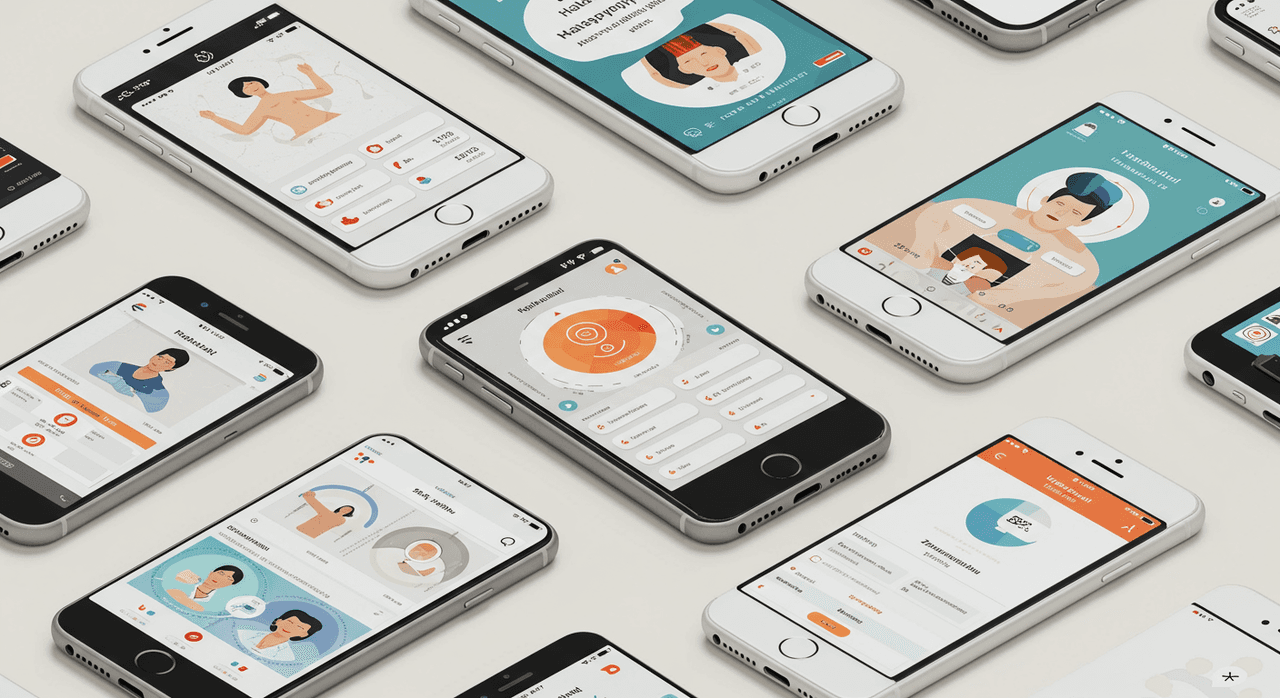
Psychological Applications (Apps)

Example Image of Applications Offering Online Psychological Services (Generated by artificial intelligence.)

Application Types and Examples

Psychological applications available on the market can be categorized according to their functions:


  1. Online Therapy Platforms: These applications act as intermediaries connecting users with mental health professionals. They typically use secure infrastructures compliant with standards set by official institutions such as the Ministry of Health of Türkiye.
  2. Self Help and Personal Development Applications: Designed to enable users to assist themselves these applications often include psychological tests guided meditation journaling and habit tracking features. Applications such as 'Psychological Tests' offer over a hundred assessments in areas such as personality relationships career and intelligence providing a self discovery experience. Applications such as 'Psychology Guide' help users better understand themselves and the people around them through articles and tests.
  3. Applications Targeting Specific Disorders: These applications focus on specific psychological issues. For example the Phobious application implements systematic desensitization using virtual reality technology to treat phobias. Similarly applications based on Cognitive Behavioral Therapy (CBT) have been developed for depression anxiety or eating disorders.
  4. Applications for Professionals: These are tools designed to facilitate the work of mental health professionals. The DSM 5 application developed by the American Psychiatric Association provides quick access to diagnostic criteria while applications like iGrade allow psychologists to manage patient information reports and notes. Applications such as PIR assist clinical psychology candidates in preparing for professional examinations.

Potential Advantages and Risks

The growing popularity of psychological mobile applications presents significant opportunities for mental health services but also brings associated risks and ethical debates.
Advantages

  • Accessibility: Enables access to psychological support for individuals facing geographical or physical barriers.
  • Cost: Generally offers more affordable options compared to traditional therapy.
  • Anonymity: Can reduce stigma associated with seeking mental health services making it easier for individuals to seek help.
  • Flexibility: Allows users to access services according to their own schedules and routines.

Risks and Ethical Considerations

  • Data Privacy and Security: Applications collect highly sensitive personal data. Concerns arise regarding how this data is stored shared and whether it is encrypted. Users must carefully review privacy policies.
  • Effectiveness and Scientific Basis: Not all applications on the market are evidence based. Applications lacking scientific validation may fail to benefit users or even mislead them.
  • Lack of Professional Oversight: Especially self help applications are used without guidance from a professional. This can pose risks for individuals with serious mental health conditions potentially leading to misdiagnosis or inadequate intervention.
  • Ambiguity of Legal and Ethical Standards: The field of mobile health applications has not yet been fully regulated. As a result evaluating the quality reliability and ethical compliance of applications remains challenging.


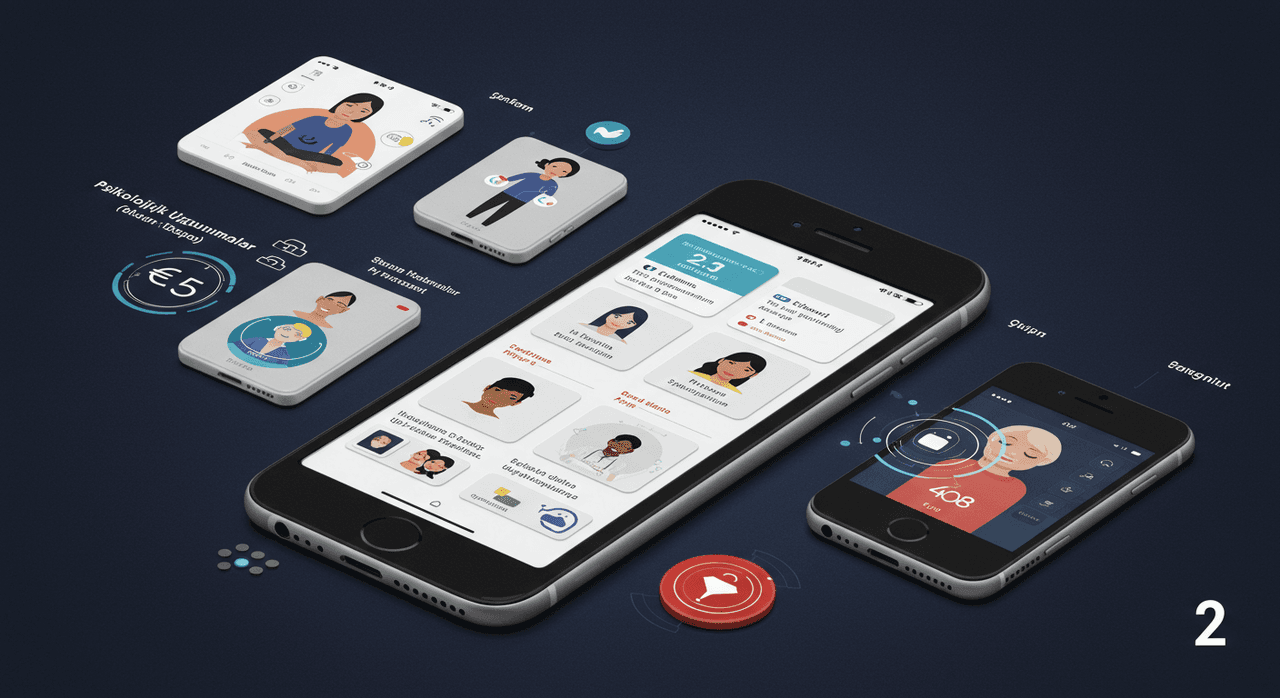
Psychological Applications (Apps)

Image of an Application Providing Online Psychological Services Supported by Artificial Intelligence (Generated by artificial intelligence.)

Evaluation Criteria and Future Outlook

The increasing number of psychological applications has created a need to distinguish reliable and effective ones. Organizations such as the American Psychiatric Association have developed models to assist professionals and users in evaluating these applications. These models typically include criteria such as the application’s privacy policy scientific basis usability and security features.

Bibliographies

Gümüş, Çağrı, and Aliye Tengirşen. "Yetişkinlerin Psikolojik Destek Almasına Yönelik Mobil Uygulama Tasarımı." Smart Journal of Education and Technology 5, no. 2 (2024). Accessed July 31, 2025. Accessed Adresi.

Kabadayı, Fedai, and Mehmet Güven. "Psikolojik Yardım Hizmetlerindeki Mobil Uygulamalarla İlgili Bir İnceleme." Türk Eğitim Bilimleri Dergisi 21, no. 3 (December 29, 2023): 1660–1689. Accessed Adresi.

Yorulmaz, Orçun, Sıla Derin, Ezgi Göcek Yorulmaz, Gamze Gültekin, and Samet Baş. "Çevrimiçi Psikolojik Müdahale ve Uygulamalar İçin Telepsikoloji Kılavuzu." Ankara: Türk Psikologlar Derneği Yayınları, May 2020. PDF. Accessed July 31, 2025. Accessed Adresi.

Author Information

Avatar
AuthorNursena ŞahinDecember 2, 2025 at 6:42 AM

Tags

Discussions

No Discussion Added Yet

Start discussion for "Technological Applications in Psychology" article

View Discussions

Contents

  • Goals and Functions of Technological Applications in Psychology

  • Application Types and Examples

  • Potential Advantages and Risks

    • Advantages

    • Risks and Ethical Considerations

  • Evaluation Criteria and Future Outlook

Ask to Küre