


 Recently Added:
This article was automatically translated from the original Turkish version.
Thailand – Sikhio Train Crash (2026), Thailand’s northeastern Nakhon Ratchasima province in the Sikhio district, occurred on 14 January 2026 when a construction crane used in the high-speed rail project toppled onto a passenger train in motion, resulting in a major railway accident.
The accident occurred at approximately 09.00 local time. The train traveling from Bangkok to Ubon Ratchathani derailed and overturned after a crane used in the construction of the high-speed rail line collapsed onto it. In the incident, 32 people lost their lives and 64 were injured.
Thailand train crash, 14 January 2026 - (APT)
The accident occurred around 09.00 local time (02.00 GMT) on the morning of 14 January 2026. The passenger train traveling from Bangkok to Ubon Ratchathani derailed after a heavy crane used in the construction of the high-speed rail line toppled onto it while passing through the boundaries of Sikhio district in Nakhon Ratchasima province. Thai police reported that the accident occurred approximately 230 kilometers northeast of Bangkok. The crane fell onto three carriages of the train, causing the train to derail and overturn, followed by a brief fire.
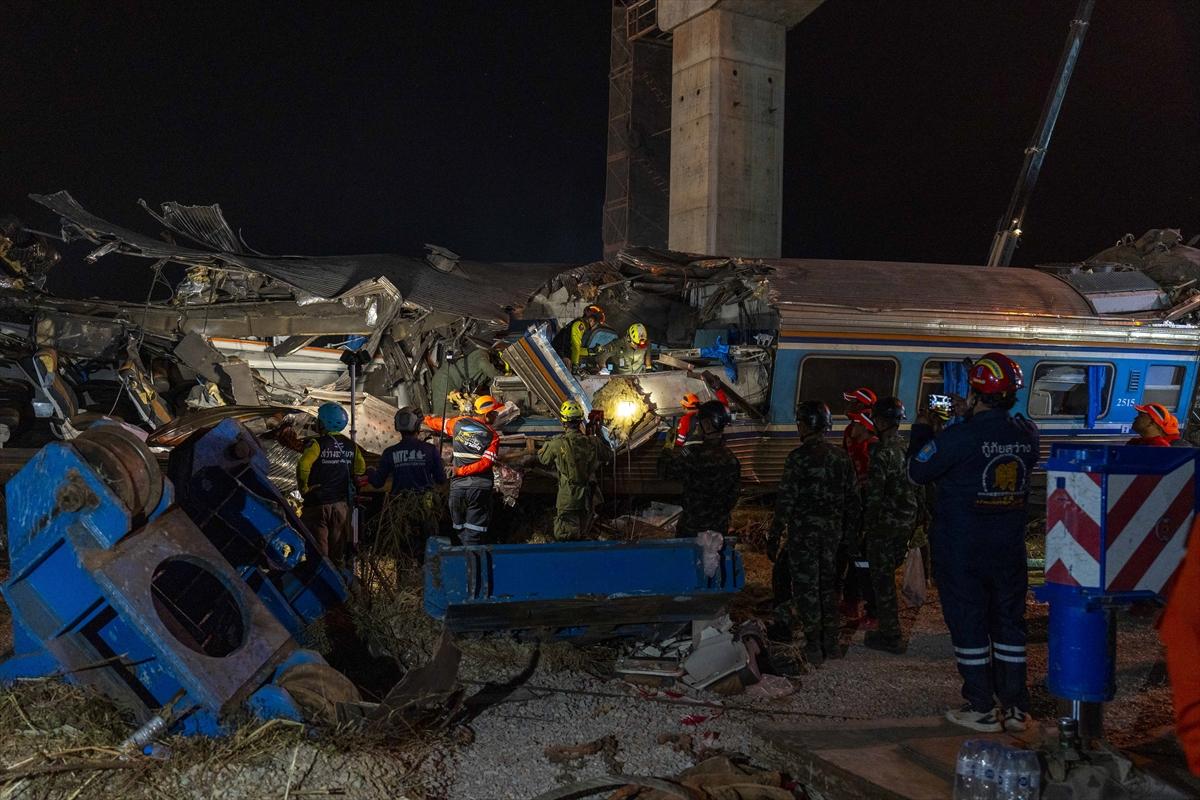
Thailand train crash rescue operations, 14 January 2026 - (Anadolu Ajansı)
The fire was quickly brought under control by fire brigades. In a statement by the State Railway of Thailand, it was reported that the fire had been extinguished and rescue teams were continuing efforts to reach passengers trapped inside the train. It was stated that some of the train’s carriages at the time of the incident were completely crushed and that debris was scattered along the railway line.
The section of the railway line where the accident occurred, in the Ban Thanon Khot area, was closed to traffic after the incident. The State Railway of Thailand announced that debris removal operations were ongoing and that services on the line had been temporarily suspended.
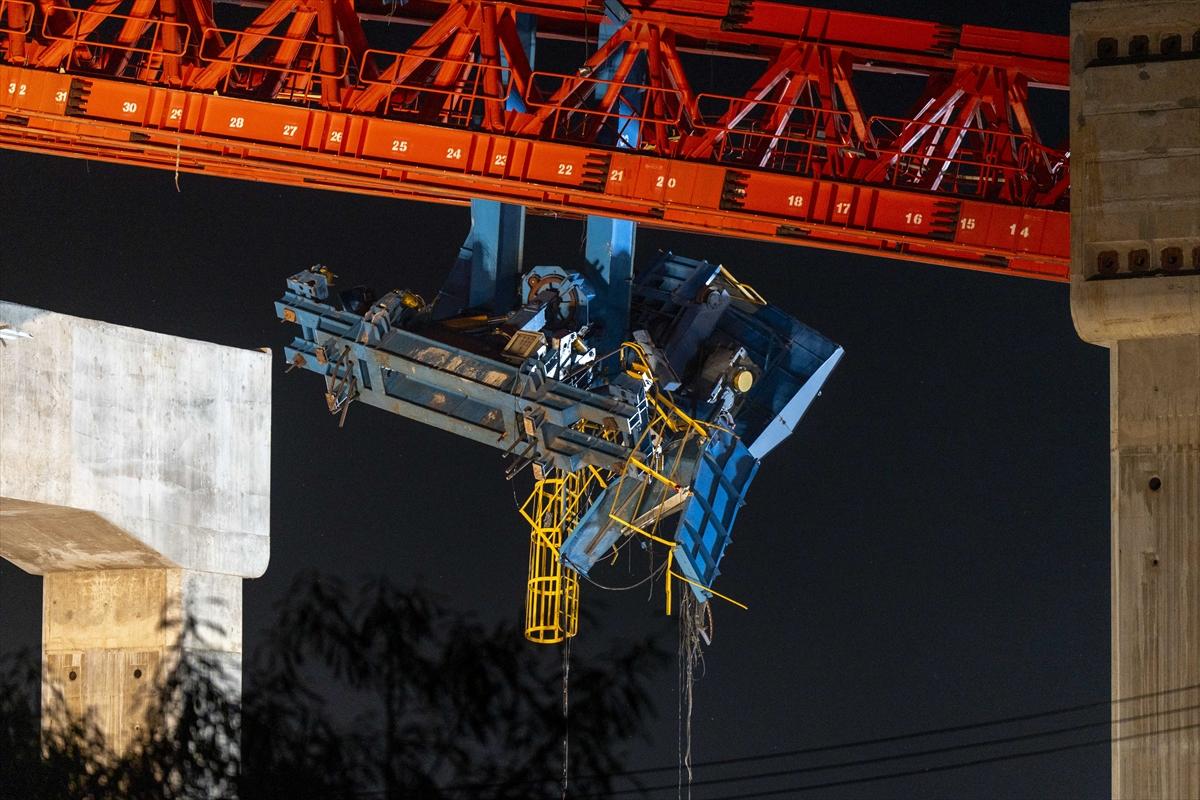
Thailand train crash rescue operations, 14 January 2026 - (Anadolu Ajansı)
As a result of the accident, 32 people lost their lives and 64 were injured. The initial number of fatalities reported in the first hours was 12, later rising to 22, and finally reaching 32 in official updates the following day. The majority of the injured were transported to hospitals in Nakhon Ratchasima. The Thai Ministry of Public Health announced that three people were missing following the accident.
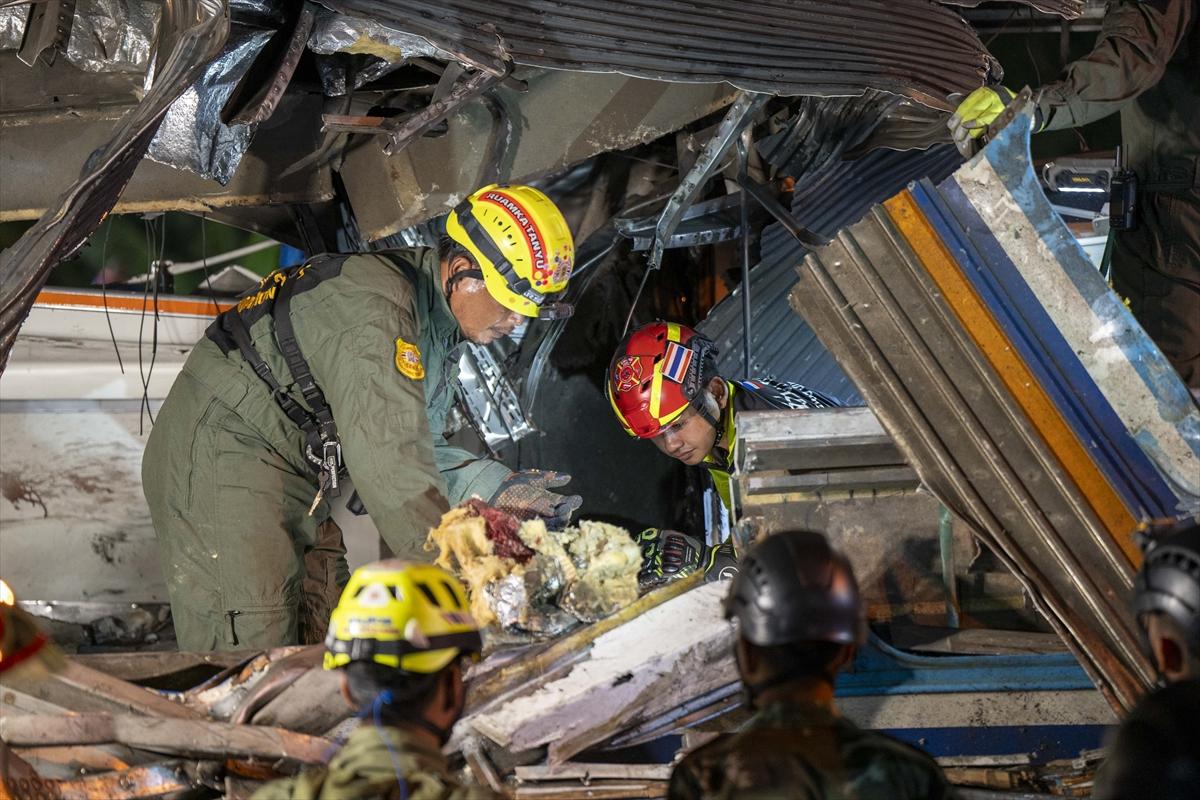
Thailand train crash rescue operations, 14 January 2026 - (Anadolu Ajansı)
State Railway of Thailand and the Ministry of Transport announced that information would be provided to the public once identification procedures for the deceased and injured had been completed. State Railway officials stated that according to the train’s seating plan, there were 195 passengers and staff on board.
After the accident, the fire was quickly extinguished in the area. The State Railway of Thailand reported that the fire had been brought under control and that search and rescue teams were continuing efforts to reach passengers trapped inside the train. Firefighters, police and medical teams were dispatched to the scene. Rescue teams used hydraulic cutters and cranes to attempt to reach passengers under the debris.
According to BBC Thai, the recovery of bodies from under the debris continued until evening. One carriage was completely crushed, and the interior of another was burned.
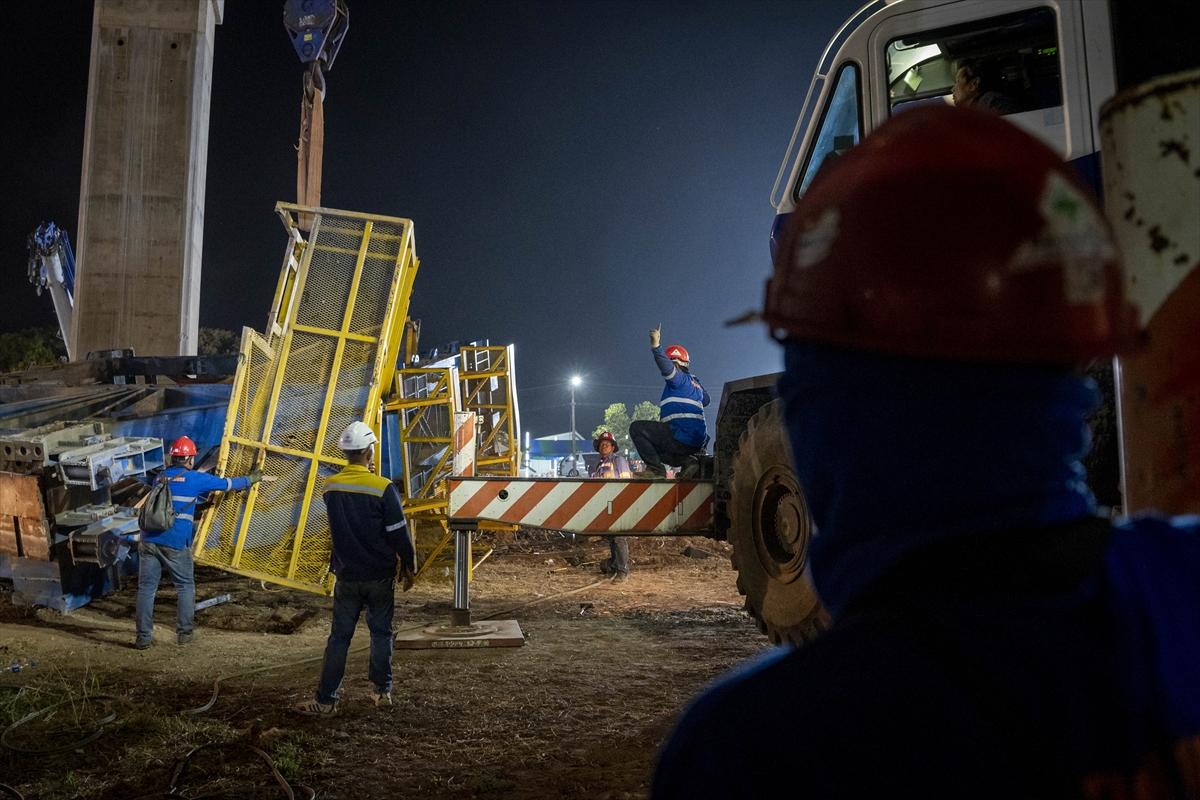
Thailand train crash rescue operations, 14 January 2026 - (Anadolu Ajansı)
Following the accident, a comprehensive statement was issued by Thailand’s Minister of Transport and Deputy Prime Minister Phiphat Ratchakitprakarn. Ratchakitprakarn announced that a “comprehensive and meticulous investigation” had been launched to determine the causes of the accident. The minister also stated regarding the casualties among railway personnel that “compensation will be paid if the deceased are among train staff.”
Ministry of Transport instructed the Director-General of the State Railway of Thailand to conduct a detailed examination to identify the causes and responsibilities related to the accident. The Ministry also stated that technical inspections related to the accident would focus on the safety of the crane and construction equipment used in the high-speed rail project.
Thai Police launched a technical and criminal investigation at the scene to determine the circumstances of the accident and the working conditions of the responsible construction company. State Railway of Thailand stated in its statement that forensic and medical units were working to identify the victims and injured. The same statement emphasized that train services would not resume until operations at the accident site were fully completed.
Thailand’s Ministry of Interior officials announced the establishment of a temporary crisis management center in Sikhio to coordinate rescue and investigation teams. Thailand’s Ministry of Public Health deployed medical monitoring teams in hospitals in Nakhon Ratchasima to track the condition of the injured. Seven of the injured were admitted to intensive care. The Ministry of Transport’s Permanent Secretary stated that legal action would be taken against any company or individual found responsible for the accident.
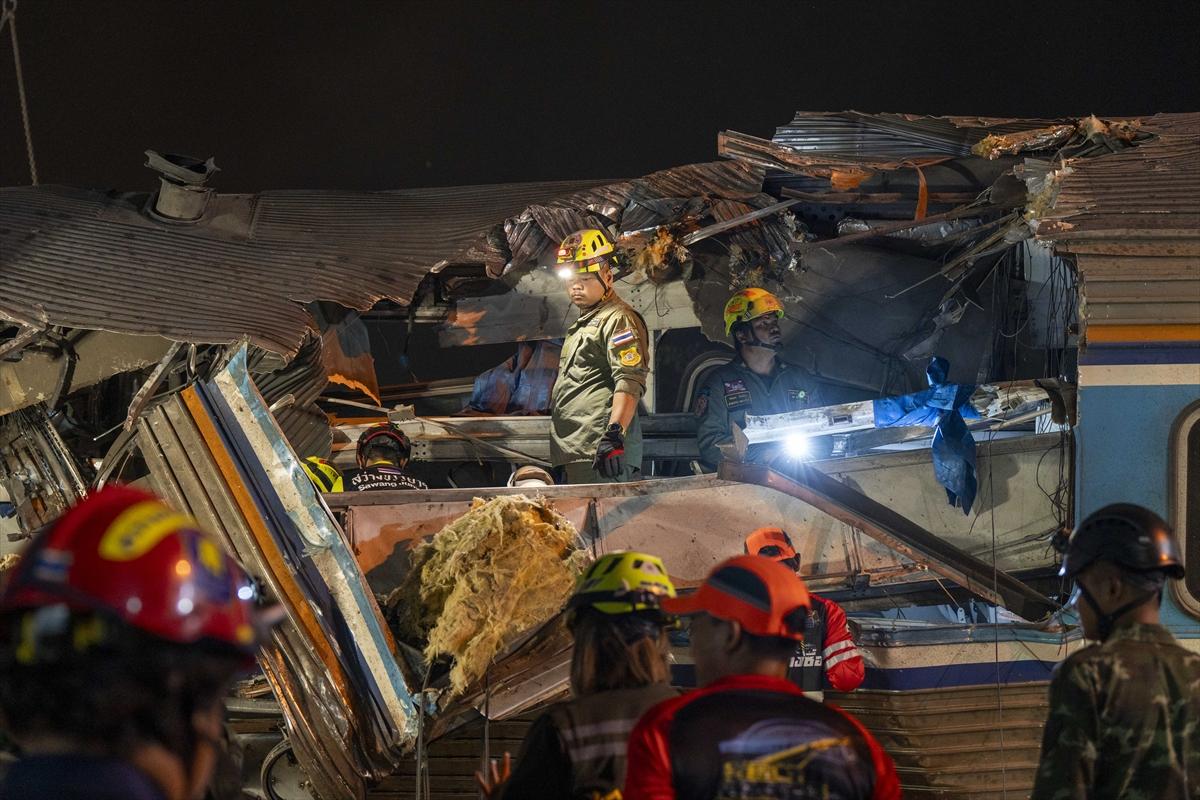
Thailand train crash rescue operations, 14 January 2026 - (Anadolu Ajansı)
Thailand – Sikhio Train Crash (2026) occurred along the route of an ongoing high-speed railway project. The construction crane responsible for the accident was being used during installation of structural components for the line and lost its balance, toppling onto the moving passenger train.
The line in question is a high-speed rail project designed to connect northeastern Thailand to the capital, extending from Bangkok to the border with Laos. The project aims to enhance Thailand’s regional transport network and integrate with the Pan-Asian railway corridor originating in China. The initial phase of the project, based on a Thailand–China partnership, was canceled due to disagreements over ownership rights and land development concessions. The current structure of the project is being implemented unilaterally by the Thai government, although Chinese-made high-speed train sets and signaling technologies are being used.
The construction section of the project is being built as an elevated structure above the existing railway line. The construction company Italian-Thai Development Company is the contractor responsible for this section of the project and was also responsible for installing the crane involved in the accident in the Nakhon Ratchasima area. Thai authorities announced that the company’s activities would be thoroughly reviewed following the accident.
Al Jazeera. “Another Crane Collapses in Thailand, Killing Two after 32 Die Previous Day.” Al Jazeera. Accessed January 15, 2026. https://www.aljazeera.com/news/2026/1/15/another-crane-collapses-in-thailand-killing-two-after-32-die-previous-day
Al Jazeera. “At Least 22 People Killed after Crane Falls on Train in Northeast Thailand.” Al Jazeera. Accessed January 14, 2026. https://www.aljazeera.com/news/2026/1/14/at-least-22-people-killed-after-crane-falls-on-train-in-northeast-thailand
Anadolu Ajansı. “Tayland’da Üzerine İnşaat Vinci Düşen Trenin Devrilmesi Sonucu 22 Kişi Öldü, En Az 30 Kişi Yaralandı.” Accessed January 14, 2026. https://www.aa.com.tr/tr/dunya/taylandda-uzerine-insaat-vinci-dusen-trenin-devrilmesi-sonucu-22-kisi-oldu-en-az-30-kisi-yaralandi/3798648
Anadolu Ajansı. “Tayland’da Üzerine İnşaat Vinci Düşen Trenin Devrilmesi Sonucu 32 Kişi Öldü, 64 Kişi Yaralandı.” Accessed January 15, 2026. https://www.aa.com.tr/tr/dunya/taylandda-uzerine-insaat-vinci-dusen-trenin-devrilmesi-sonucu-32-kisi-oldu-64-kisi-yaralandi/3798648
BBC News. “'It was terrifying': Residents describe carnage after Thai train crash.” BBC News. Accessed January 15, 2026. https://www.bbc.com/news/articles/cm2yvnen1qyo
BBC News. “At least 22 dead as crane collapses onto train in Thailand.” BBC News. Accessed January 14, 2026. https://www.bbc.com/news/live/c9qeq08g70yt
Bastille Post. “A Construction Crane Falls on a Passenger Train in Northeastern Thailand, Killing at Least 22 People.” Accessed January 14, 2026. https://www.bastillepost.com/global/article/5527638-a-construction-crane-falls-on-a-passenger-train-in-northeastern-thailand-killing-at-least-12-people
Reuters. “At least 19 killed after crane falls on train in Thailand, 80 injured.” Accessed January 14, 2026. https://www.reuters.com/world/asia-pacific/least-five-killed-after-crane-falls-train-thailands-northeast-2026-01-14

On January 14, 2026, a crane used in the construction of a high-speed rail line in Nakhon Ratchasima Province, Thailand, toppled onto a passenger train in motion. The train was traveling from Bangkok to Ubon Ratchathani, and the accident resulted in 32 deaths and 64 injuries. The incident occurred near Sikhio District, where the high-speed rail project is being carried out. Authorities launched a comprehensive investigation to determine the cause of the accident.
No Discussion Added Yet
Start discussion for "Thailand – Sikhio Train Accident (2026)" article
January 14, 2026
Location, Time and Course of the Accident
January 14, 2026
Fatalities and Injured
January 14, 2026
Search and Rescue Operations
January 14, 2026
Official Statements and Investigation
January 14, 2026
High-Speed Rail Project