


This article was automatically translated from the original Turkish version.
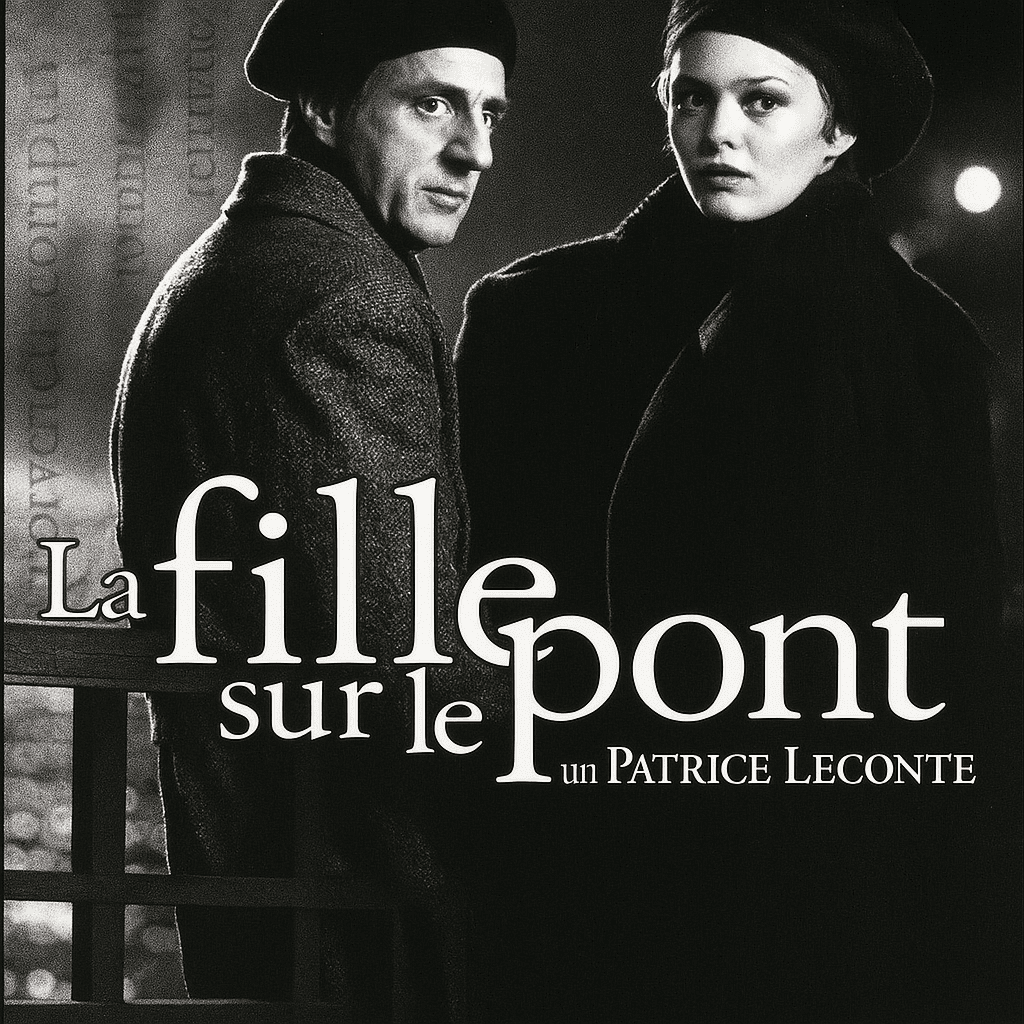
Film Poster of the Girl on the Bridge
Original Name(s) | French: La fille sur le pont | ||||||||
|---|---|---|---|---|---|---|---|---|---|
Director(s) | Patrice Leconte | ||||||||
Lead Roles | Vanessa Paradis (Adele), Daniel Auteuil (Gabor) | ||||||||
Production Year | 1999 | ||||||||
Country | France | ||||||||
Language(s) | French | ||||||||
Genre | Romantic Drama | ||||||||
Cinematographer(s) | Jean-Marie Dreujou | ||||||||
Music(s) | Angelo Badalamenti | ||||||||
Shooting Technique | Black and white | ||||||||
Duration | 90 minutes | ||||||||
The story begins with a chance encounter between Adèle, a young woman attempting suicide on a bridge, and Gabor, a knife thrower from Paris. Gabor saves Adèle’s life, and the two become an unconventional duo performing in circuses as they travel through Europe. The narrative revolves around themes of fate, chance, passion, and addiction. At the heart of their relationship lies a deep and dangerous vine formed during Gabor’s knife-throwing acts.
The film questions the impact of random encounters on individual destinies. The meeting between Adèle and Gabor underscores the idea of being in the “right place at the right time.”
The relationship between the two goes beyond romance; it is an existential need for completion. Each relies on the other to sustain life.
Adèle’s recurring dream crises and suicide attempts, combined with Gabor’s perilous profession, embody a constant tension between life and death.
The film stands out by being shot in black and white during a period in 1999 when colorful cinema dominated. This choice intensifies the film’s melancholic atmosphere and creates a timeless aesthetic.
Jean-Marie Dreujou’s cinematography aims to heighten emotional intensity through light and shadow play. Contrasts are created between the bright lights of circus settings and the dim darkness atmosphere of quieter scenes.
Angelo Badalamenti’s score contributes significantly to the film’s spirit mood. The music plays a crucial role in conveying the characters’ inner emotional fluctuations to the viewer.

The Girl on the Bridge. (Image generated with AI support).
Upon its release, the film attracted attention within European cinema circles. Patrice Leconte’s direction received acclaim for its simple yet powerful storytelling. While some critics described the film as a “modern fairy tale,” others viewed it as an “existential interpretation of romance.”
César Awards 2000:
Venice Film Festival:
“La Fille sur le Pont” is regarded as a representative example of French cinema’s emotional, aesthetic, and thematic trends at the end of the 1990s. Its black-and-white aesthetic, original characters, and poetic atmosphere have earned it recognition among many film enthusiasts and critics as a “culture film.”
Accessed November 26, 2025.
Beyazperde. "Köprüdeki Kız." Accessed April 8, 2025. https://www.beyazperde.com/filmler/film-10044/#:~:text=Seine%20nehrinden%20sarkmakta%20olan%20bir,k%C4%B1z%20adam%C4%B1n%20teklifini%20kabul%20edecektir.
Box Office Türkiye. "Köprüdeki Kız." Accessed April 8, 2025.
MUBI. *Girl on the Bridge*. Accessed April 8, 2025. https://mubi.com/tr/tr/films/girl-on-the-bridge.
Sinemalar.com. "Köprüdeki Kız." Accessed April 8, 2025. https://www.sinemalar.com/film/4328/koprudeki-kiz.

Film Poster of the Girl on the Bridge
Original Name(s) | French: La fille sur le pont | ||||||||
|---|---|---|---|---|---|---|---|---|---|
Director(s) | Patrice Leconte | ||||||||
Lead Roles | Vanessa Paradis (Adele), Daniel Auteuil (Gabor) | ||||||||
Production Year | 1999 | ||||||||
Country | France | ||||||||
Language(s) | French | ||||||||
Genre | Romantic Drama | ||||||||
Cinematographer(s) | Jean-Marie Dreujou | ||||||||
Music(s) | Angelo Badalamenti | ||||||||
Shooting Technique | Black and white | ||||||||
Duration | 90 minutes | ||||||||
No Discussion Added Yet
Start discussion for "The Girl on the Bridge (Film)" article
Summary
Themes and Interpretations
Fate and Chance
Love and Dependency
The Thin Line Between Life and Death
Aesthetics and Technical Features
Use of Black-and-White Imagery
Cinematography
Music
Performances
Critical Reception
Awards and Nominations
Cultural and Cinematic Impact