

 Recently Added:
This article was automatically translated from the original Turkish version.
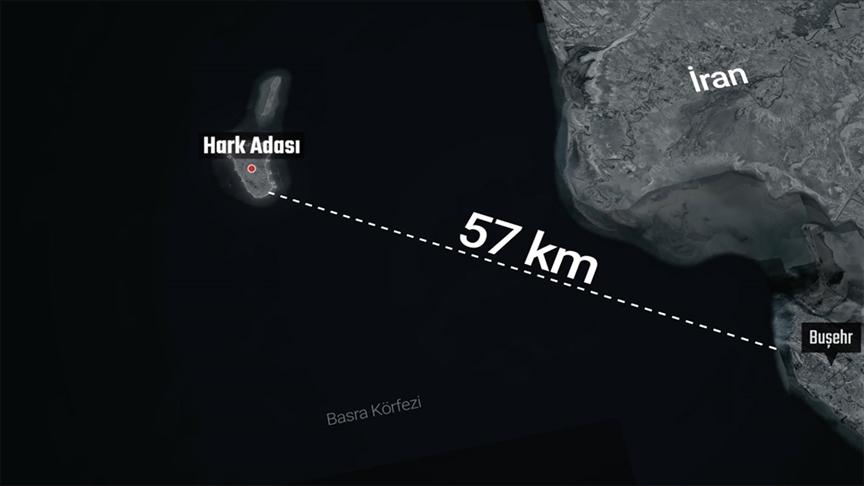
The United States’ air strikes on Hark Island occurred as part of the large-scale military operation launched by the United States and Israel against Iran in 2026. Hark Island, one of Iran’s most important energy export hubs in the Persian Gulf, is known as a strategic center where a large portion of the country’s oil exports are conducted. The island, of critical importance to global energy markets, became the focal point of intense bombardment targeting military installations in the following weeks of the conflict.
U.S. President Donald Trump stated in his remarks on the attacks that American forces had struck military targets on Hark Island and that these targets had been “completely destroyed.” Trump asserted that the U.S. Central Command (CENTCOM) had carried out one of the most intense air raids in the history of the Middle East and emphasized that the operation aimed to weaken Iran’s military capacity.
The U.S.-led air strikes targeted various military facilities on Hark Island belonging to the Iranian armed forces. According to reports from Fars News Agency, which is close to Iran, more than 15 explosions were heard on the island during the attacks. It was stated that the strikes specifically targeted air defense systems, the Javanan Naval Base, the airport control tower, and helicopter hangars connected to the mainland.
During the attacks, thick smoke was reported rising from certain areas of the island, and Iran’s air defense systems were noted to have resumed operations several hours later. Iranian sources indicated that the oil infrastructure on the island had not been damaged and that the targets were limited to military facilities.
Hark Island serves as the primary terminal for the majority of Iran’s oil exports. It is reported that approximately 90 percent of Iran’s oil is exported through this critical hub in international energy markets. Consequently, military strikes against the island were viewed as having the potential to trigger significant fluctuations in global oil markets.
U.S. President Trump stated that oil facilities on the island were not targeted in the attacks but warned that if Iran attempted to block the free and safe passage of ships through the Strait of Hormuz, its oil infrastructure could also become a target. This statement fueled concerns that the conflict could directly impact global oil supplies.
Following the attacks on Hark Island, Iranian officials issued strong responses against the United States and its allies. The Tehran government warned that if oil facilities on the island were targeted, U.S.-linked oil installations in the region would be “reduced to ashes.” Officials from the Islamic Revolutionary Guard Corps indicated that retaliatory strikes could be expanded against both Israel and U.S. bases in the region.
Analyses published in the Iranian press suggested that a potential attack on oil facilities in the Gulf region could constitute a “disaster scenario” with serious implications for regional security and global energy supply.
Rising tensions between the United States and Iran have led to increased military activity in the region. It was reported that the United States deployed approximately 2,500 marines and the amphibious assault ship USS Tripoli to the region to strengthen its military presence in the Middle East. These forces are said to be prepared for missions including amphibious operations, embassy security, civilian evacuation, and crisis response.
Experts noted that this military deployment signals the United States’ efforts to enhance its readiness for conflict in the region but emphasized that it does not necessarily indicate an imminent ground operation.
Following the attacks launched by the United States and Israel against Iran on 28 February 2026, heavy casualties were reported within the country. According to data from Iran’s Ministry of Health, at least 1,348 people were killed and more than 17,000 were injured in the strikes. Intense air raids were reported in several Iranian cities, particularly Tehran, Karaj, Isfahan, and Tabriz.
The prolongation of hostilities has increased security risks across the Middle East and triggered a rapid rise in global oil prices. Experts have noted that targeting strategic energy centers such as Hark Island could further deepen the economic dimensions of the conflict.
Accessed March 14, 2026. https://www.bbc.com/news/live/c4gqjyk0vx3t
Al Jazeera. "US Attacks Military Sites on Iran’s Kharg Island, Home to Vast Oil Facility." March 14, 2026. https://www.aljazeera.com/news/2026/3/14/us-attacks-military-sites-on-irans-kharg-island-home-to-vast-oil-facility
BBC News. "'Every military target' on Iran's key oil island 'totally obliterated', says Trump
CNN. "Iran War: US, Israel and Trump Live Updates." Accessed March 14, 2026. https://edition.cnn.com/world/live-news/iran-war-us-israel-trump-03-14-26
Reuters. "Trump Threatens Strike on Iran’s Kharg Island Oil Network if Shipping Lanes Remain Blocked." March 14, 2026. https://www.reuters.com/world/middle-east/trump-threatens-strike-irans-kharg-island-oil-network-if-shipping-lanes-remain-2026-03-14/

On March 13, 2026, U.S. forces conducted an air strike on military targets on Kharg Island, Iran’s strategic oil export hub in the Persian Gulf. U.S. President Donald Trump stated that the strikes targeted military facilities on the island and that the oil infrastructure had not been hit at this time, warning that if Iran’s oil facilities were targeted, retaliation would be carried out against U.S.-linked energy installations in the region.
No Discussion Added Yet
Start discussion for "The United States' Attack on Iran's Hark Island" article
March 14, 2026
Course of the Attacks