

This article was automatically translated from the original Turkish version.
+1 More
Location | Beşiktaş next to the Naval Museum) Istanbul (opposite Sinan Pasha Mosque | ||||||||
|---|---|---|---|---|---|---|---|---|---|
Architect(s) | Mimar Sinan | ||||||||
Plan | Octagonal | ||||||||
Material(s) | Cut stone with carved decoration | ||||||||
Dome | Lead-covered dome resting on an octagonal drum | ||||||||
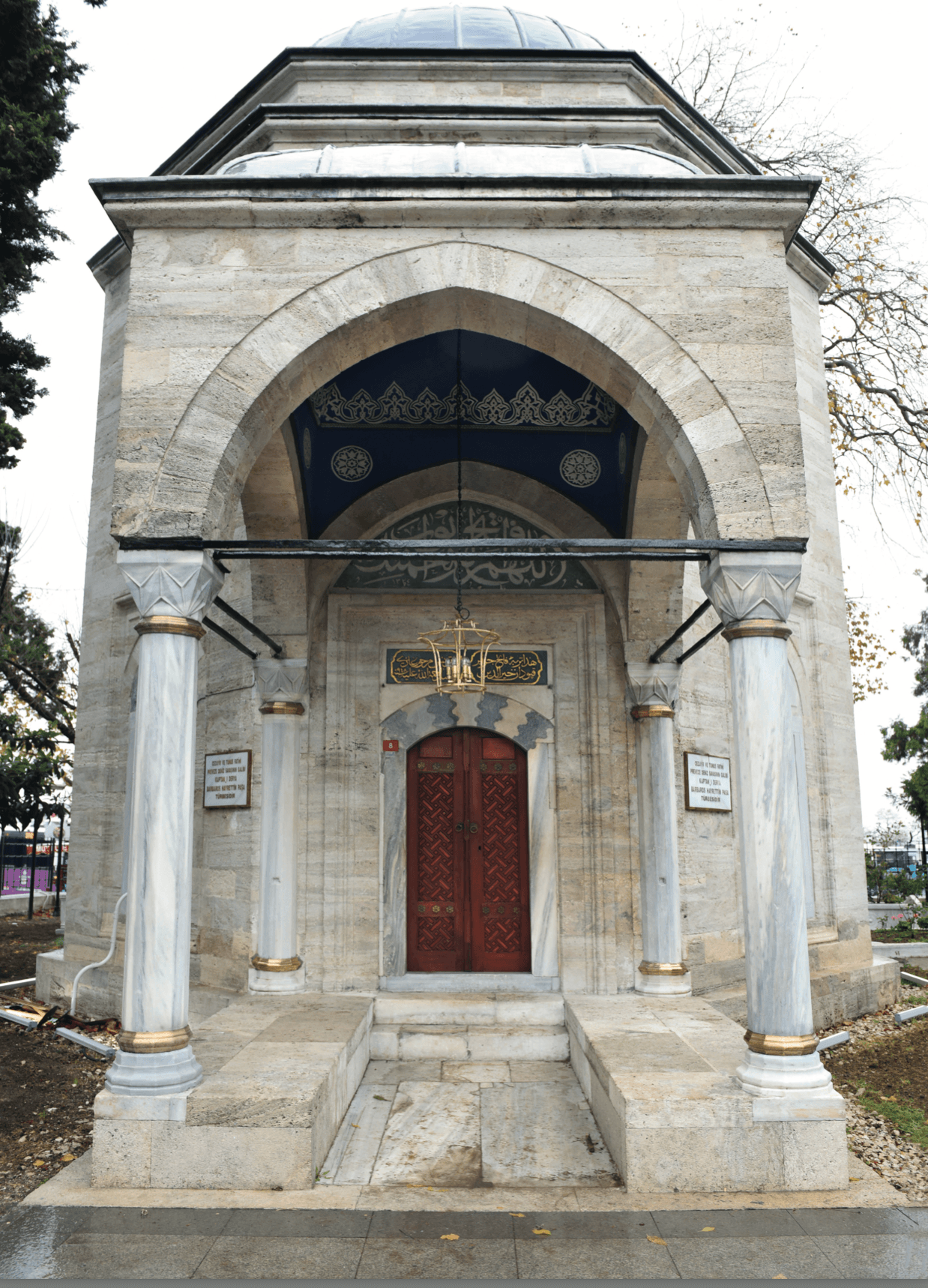
Entrance | Arcade with four full and two half marble columns, mirror vault | ||||||||
Inscription Above the Door | "This is the tomb of the conqueror of Algeria and Tunisia, the late Ghazi Kapudan Hayreddin Pasha, may God's mercy be upon him - year 948" | ||||||||
Inscription Between the Arches | O Allah, open for us the gates of Your mercy | ||||||||
Responsible Institution | Command of the Naval Museum (since 1975) | ||||||||
Visit | During the museum's opening days and hours | ||||||||
The Tomb of Barbaros Hayreddin Pasha is a mausoleum designed by Mimar Sinan, located in the Beşiktaş district of Istanbul, opposite Sinan Paşa Camii and adjacent to the Naval Museum. The structure exhibits the characteristic features of classical Ottoman tomb architecture and was commissioned in 1541–1542 (Hijri 948) for the renowned admiral Barbaros Hayreddin Pasha.

General View of the Tomb of Barbaros Hayreddin Pasha (Nalan Dönmez Yakarçelik)
Inside the tomb, four wooden coffins are placed on an elevated platform. These coffins belong to the following individuals:
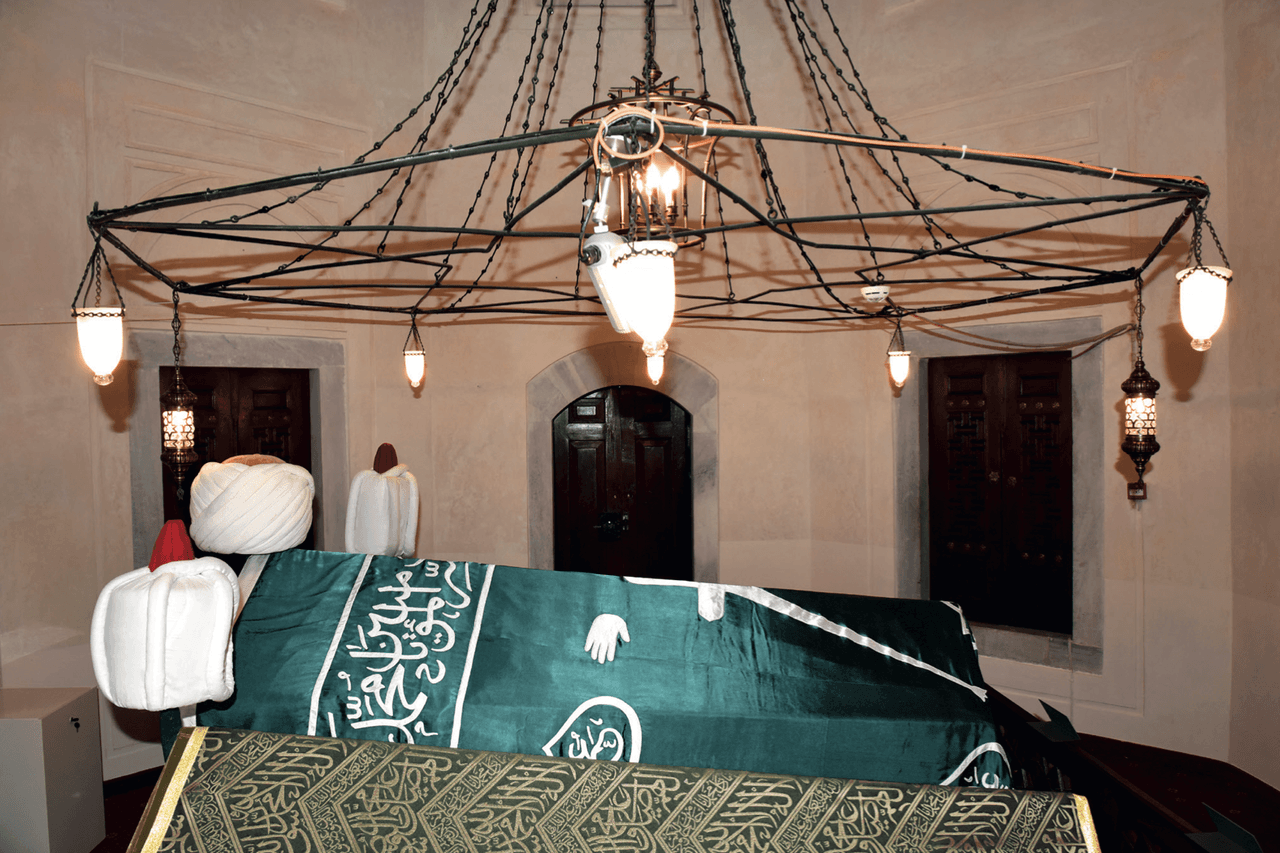
Interior of the Tomb (Nalan Dönmez Yakarçelik)
The surrounding enclosure contains gravestones belonging to the close relatives, descendants, and trustees of Barbaros Hayreddin Pasha. The earliest gravestone dates to 1580 (H. 988), and the latest to 1911 (H. 1329). While some of the gravestones are original, others were restored or converted into stone sarcophagi in the early 19th and 20th centuries.

View of the Enclosure (Nalan Dönmez Yakarçelik)
Barbaros Hayreddin Pasha referred to his tomb in his 1534 endowment deed as “müceddeden bina eylediğim türbe-i şerifim” (my honored tomb, rebuilt anew), indicating that the tomb was constructed prior to the writing of the deed. The Ottoman navy maintained the tradition of saluting Barbaros Hayreddin Pasha with cannon fire from in front of the tomb before setting sail.
The tomb underwent major restorations in 1958, 1978, 2013, and 2019. During the 2013 restoration, the dome and painted decorations were renewed. In 2019, the floor insulation was replaced, interior arrangements were updated, and the coffin covers and gravestones in the enclosure were cleaned. Since 1975, the tomb has been under the management of the Naval Museum Directorate and is open to visitors during the museum’s opening hours.
Dönmez Yakarçelik, Nalan. “Barbaros Hayreddin Paşa Türbesi ve Haziresi.” *Milli Saraylar Sanat Tarih Mimarlık Dergisi*, no. 19 (December 2020): 148–65. https://dergipark.org.tr/tr/pub/msdergisi/issue/59878/865857
Ertuğrul, Özkan. “Barbaros Hayreddin Paşa Türbesi.” *Türkiye Diyanet Vakfı İslâm Ansiklopedisi*. Accessed September 28, 2025. https://islamansiklopedisi.org.tr/barbaros-hayreddin-pasa-turbesi
Turan, Şerafettin. “Barbaros Hayreddin Paşa.” *Türkiye Diyanet Vakfı İslâm Ansiklopedisi*. Accessed September 28, 2025. https://islamansiklopedisi.org.tr/barbaros-hayreddin-pasa
İstanbul Ansiklopedisi. "Barbaros Hayreddin Paşa Türbesi." Accessed September 28, 2025. https://istanbulansiklopedisi.org/handle/rek/6009

Location | Beşiktaş next to the Naval Museum) Istanbul (opposite Sinan Pasha Mosque | ||||||||
|---|---|---|---|---|---|---|---|---|---|
Architect(s) | Mimar Sinan | ||||||||
Plan | Octagonal | ||||||||
Material(s) | Cut stone with carved decoration | ||||||||
Dome | Lead-covered dome resting on an octagonal drum | ||||||||
Entrance | Arcade with four full and two half marble columns, mirror vault | ||||||||
Inscription Above the Door | "This is the tomb of the conqueror of Algeria and Tunisia, the late Ghazi Kapudan Hayreddin Pasha, may God's mercy be upon him - year 948" | ||||||||
Inscription Between the Arches | O Allah, open for us the gates of Your mercy | ||||||||
Responsible Institution | Command of the Naval Museum (since 1975) | ||||||||
Visit | During the museum's opening days and hours | ||||||||
No Discussion Added Yet
Start discussion for "Tomb of Barbaros Hayreddin Pasha" article
Architectural Features
Coffins
Enclosure
Historical Development and Restorations