


This article was automatically translated from the original Turkish version.
+1 More
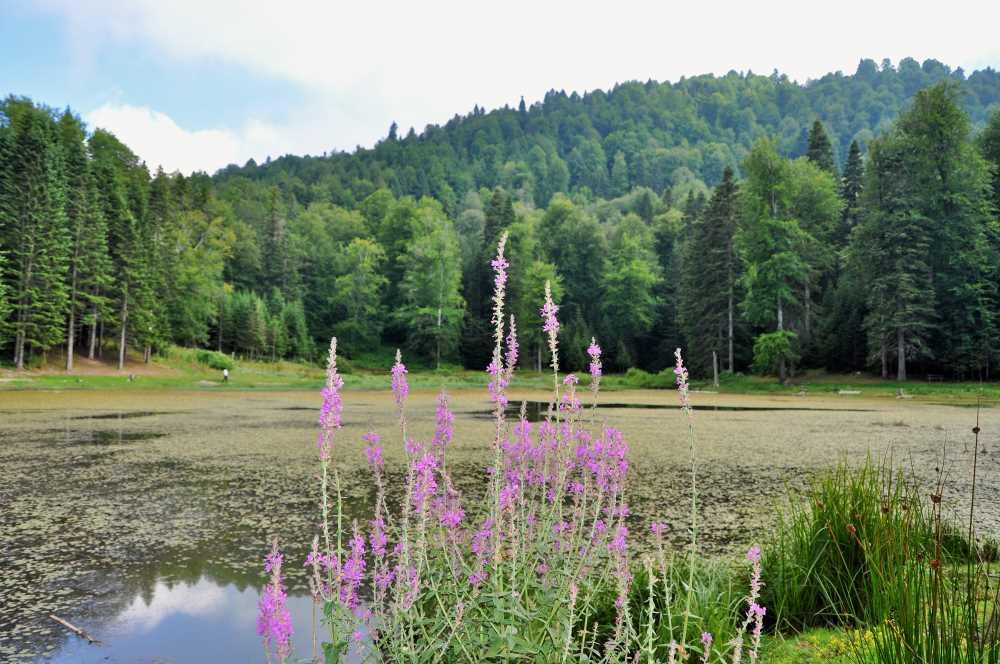
Torkul Yaylası ve Göleti (Kültürportalı)
Location | Uğurköyü Düzce Gölyaka district | ||||||||
|---|---|---|---|---|---|---|---|---|---|
Elevation(s) | Approximately 1 250 metres | ||||||||
Lake Area | Approximately 5,000 m² | ||||||||
Total Natural Area | Approximately 78,801 m² | ||||||||
Vegetation Cover | Oak, Larch, Hornbeam, Fir, White Alder, Chestnut | ||||||||
Climate(s) | Cool summers Transitional climate snowy winters | ||||||||
Activities | Hiking, Camping, Rod fishing, Picnicking, Photography | ||||||||
Walking Route | Approximately 6 km between Torkul–Odayeri highlands | ||||||||
Torkul Yaylası and Göleti is a high-altitude natural recreation and ecotourism area located within the boundaries of Düzce Province, near Uğurköy in the district of Gölyaka. Together, the plateau and lake are recognized as one of the best-preserved examples of regional natural landscapes, featuring notable characteristics in terms of flora, climate, and physical geography.
Torkul Yaylası is situated approximately 34 kilometers southwest of Düzce city center, at the foothills of the Elmacık Mountains. Located within the boundaries of Gölyaka district, the plateau lies at an elevation of about 1,250 meters above sea level. This elevation plays a significant role in shaping the region’s unique climatic and ecological dynamics. Torkul Yaylası and Göleti offer an ideal environment for nature-based activities due to their open forest clearings and gently sloping topography.
Torkul Göleti is a small-scale freshwater lake formed naturally. It has a surface area of approximately 5,000 square meters. Combined with the surrounding plateau and open areas, the total natural area is estimated at about 78,801 square meters. The lake is neither of volcanic nor karstic origin; instead, it exhibits the characteristics of a closed basin formed by groundwater accumulation and surface runoff. The lake’s perimeter is bordered by grassland and semi-moist marsh vegetation.
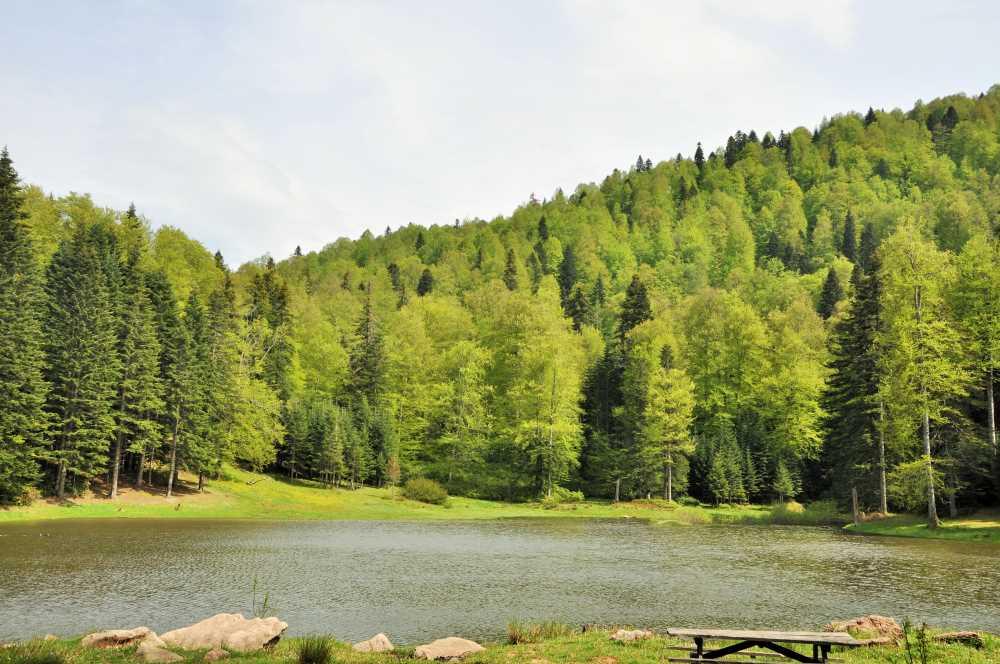
Torkul Yaylası and Göleti (Culture Portal)
The plateau exhibits transitional climatic features between the Black Sea and continental climates. Summers are cool and humid, while winters are cold and snowy. The region is subjected for much of the year to meteorological conditions typical of high elevations, including dense fog, high humidity, and low temperatures. This has important implications for both natural life cycles and the temporal planning of visitor activities.
Torkul Yaylası and its surrounding forest cover contain typical components of the Black Sea forest belt. Naturally occurring tree species in the area include beech, hornbeam, fir, chestnut, maple, and black pine. The forest understory is rich in various herbaceous plants and species exhibiting seasonal flowering. The moist areas around the lake provide habitat for small bird species, reptiles, and amphibians. In this regard, the area constitutes a plateau-lake ecosystem where natural biodiversity is preserved.
Access to Torkul Yaylası is provided via roads from Düzce city center, passing through Beyköy and Uğurköy. Road access to the plateau is possible during summer months. However, the roads are not fully stabilized, and access becomes difficult especially during spring and winter. Use of off-road vehicles is recommended during these periods. There are no permanent facilities, accommodation infrastructure, or intensive development in the vicinity of the plateau.
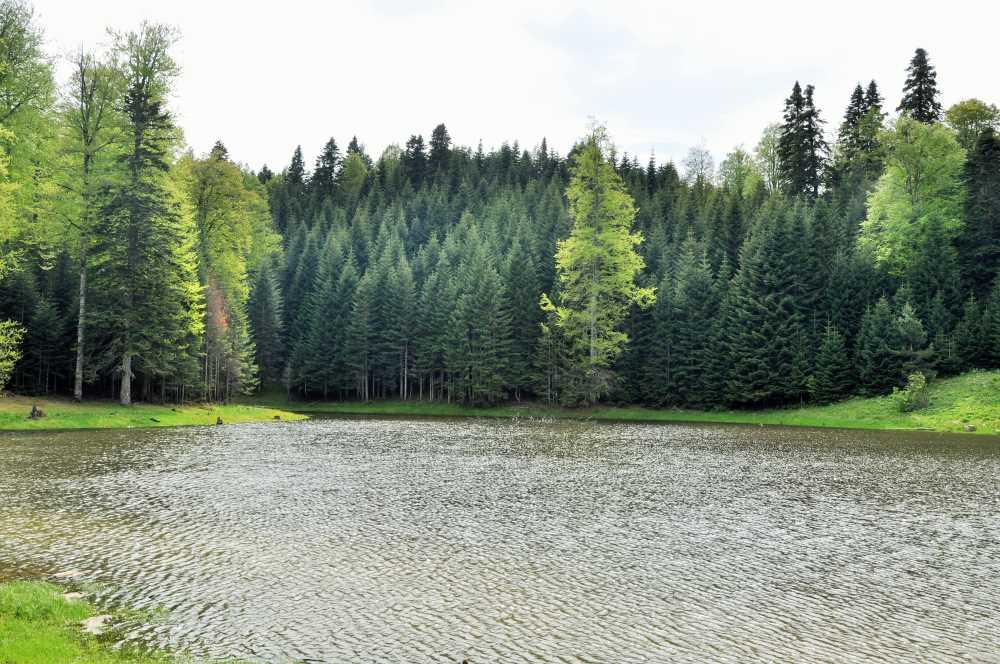
Torkul Yaylası and Göleti (Culture Portal)
The plateau and lake are suitable for nature-based recreational activities such as hiking, camping, picnicking, photography, and angling. In particular, angling activities around the lake attract both sport and amateur visitors. A hiking trail of approximately six kilometers extending from Torkul Yaylası to Odayeri Yaylası is considered of moderate difficulty and is used for nature sports.
Torkul Yaylası and Göleti are notable natural areas that have remained protected from unplanned development to date. The absence of permanent structures has preserved the plateau in its natural state. This condition opens the way for planning sustainable ecotourism initiatives. However, there is a current need to limit potential uses that threaten the existing natural balance and to develop controlled visitation policies.
Ministry of Culture and Tourism of the Republic of Turkey. “Torkul Göleti ve Yaylası.” *Düzce İl Directorate of Culture and Tourism*. Accessed July 11, 2025.
Ministry of Culture and Tourism of the Republic of Türkiye. "Torkul Yaylası ve Göleti." *Türkiye Kültür Portalı – Gezilecek Yerler*. Accessed July 11, 2025.
Ministry of Culture and Tourism of the Republic of Türkiye. “Torkul Yaylası ve Göleti –Turizm Aktiviteleri.” *Türkiye Kültür Portalı*. Accessed July 11, 2025.

Torkul Yaylası ve Göleti (Kültürportalı)
Location | Uğurköyü Düzce Gölyaka district | ||||||||
|---|---|---|---|---|---|---|---|---|---|
Elevation(s) | Approximately 1 250 metres | ||||||||
Lake Area | Approximately 5,000 m² | ||||||||
Total Natural Area | Approximately 78,801 m² | ||||||||
Vegetation Cover | Oak, Larch, Hornbeam, Fir, White Alder, Chestnut | ||||||||
Climate(s) | Cool summers Transitional climate snowy winters | ||||||||
Activities | Hiking, Camping, Rod fishing, Picnicking, Photography | ||||||||
Walking Route | Approximately 6 km between Torkul–Odayeri highlands | ||||||||
No Discussion Added Yet
Start discussion for "Torkul Plateau and Reservoir" article
Geographical Location and Elevation Characteristics
Lake Formation and Morphological Structure
Climate and Seasonal Conditions
Vegetation and Ecological Values
Access and Accessibility
Recreational Activities and Usage Potential
Sustainability, Development, and Conservation Status