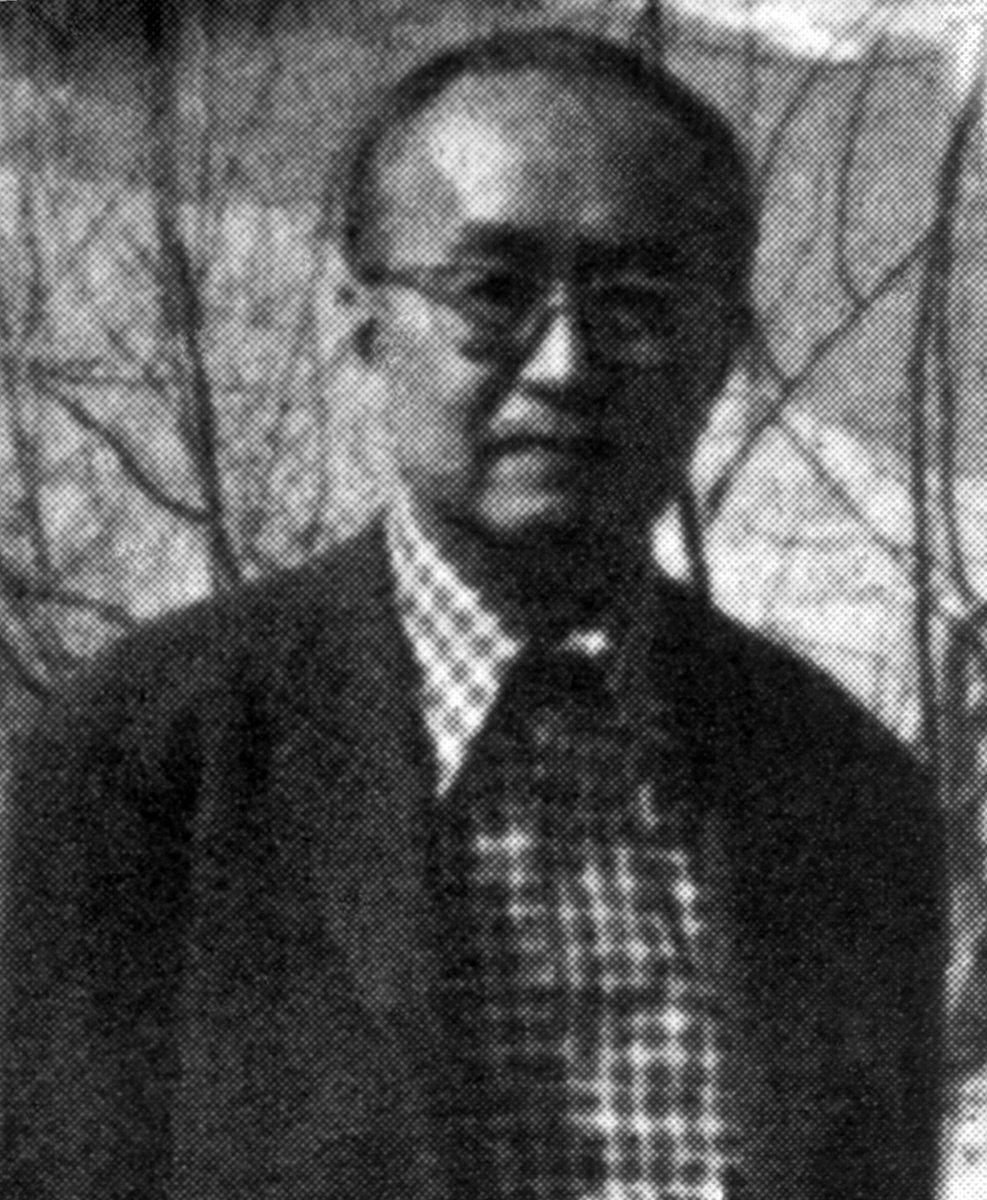
+2 More

Doğum tarihi | 1914-05-04 | ||||||||
|---|---|---|---|---|---|---|---|---|---|
Ölüm tarihi | 1993-01-07 | ||||||||
Education | Keio University Linguistics (Undergraduate and Graduate) | ||||||||
Areas of Expertise | Sufism Semantic analysis Philosophy Islamic studies Linguistics | ||||||||
Title(s) | Honorary Doctorate (Iran) | ||||||||
Academic Title | Professor | ||||||||
Language Proficiency | and Old and Modern Chinese Sanskrit Turkish Persian Spanish Italian German More than 30 languages including French | ||||||||
Award(s) | Toshihiko Izutsu Prize Fukuzawa Prize | ||||||||
Toshihiko Izutsu, a Japanese thinker, linguist, Islamic scholar, and philosopher, is renowned for his multilingual proficiency, semantic analysis method, and comparative studies in Eastern philosophy. Izutsu, who could read over thirty languages at an advanced level, developed a semantic approach centered on the relationship between language and thought; he is particularly known for his works on Qur’anic semantics, Sufism, Ibn al-Arabi’s concept of waḥdat al-wujūd, and Eastern mystical traditions.
Toshihiko Izutsu was born in 1914 in the Yotsuya district of Tokyo, now known as Shinjuku. Born at the outset of World War I, Izutsu was introduced to intellectual and spiritual discipline from an early age. His father was a Zen Buddhist, and as a result, Izutsu became familiar with Zen thought in childhood, began practicing zazen meditation, and read works on Zen.
He completed his secondary education at Aoyama Gakuin in Tokyo, established by Methodist missionaries in the late nineteenth century. There he encountered Christianity. Initially, Izutsu felt a distance from Christianity because its teachings appeared contrary to the Zen philosophy he had absorbed. Over time, however, he developed a growing interest in Christianity.
In 1931, he was admitted to the preparatory program at Keio University. Initially following his father’s path, he began studying economics. Yet, continuing his passion for literature, Izutsu later transferred to the Faculty of Literature. There he became a student of Professor Junzaburō Nishiwaki, known for his work in literary theory and poetic criticism. Izutsu described his first encounter with Nishiwaki—seeing him walking on the Mita Campus—as a moment when “his heart leapt from its place,” and he later stated that Nishiwaki was the only teacher he ever truly embraced throughout his life.【1】 Nishiwaki’s influence decisively shaped both Izutsu’s intellectual orientation and his academic career.
During his university years, Izutsu engaged with English literature, poetic theory, and philological studies; the critical perspective he developed during this period formed the foundation for his later work on the relationship between language, thought, and mysticism. After graduation, serving as Nishiwaki’s assistant enabled him to broaden his academic disciplines.
Toshihiko Izutsu attracted attention from a young age for his interest in languages. He began studying Russian at nineteen, and in his twenties turned to Hebrew, Arabic, and Greek. He learned many other languages, including French, German, Italian, Spanish, Persian, Turkish, Sanskrit, and both classical and modern Chinese, achieving advanced proficiency in over thirty languages.
At Keio University, he taught courses in Greek and Latin philosophical texts as well as linguistics. He also conducted courses in Russian literature alongside languages such as Greek, Hebrew, Arabic, and Sanskrit. In addition to these duties, he served as director of the university’s language school and worked as a researcher at the Keio Institute of Linguistic and Cultural Studies, which he co-founded with Nishiwaki.
His studies on language extended beyond translation to the development of a method centered on the relationship between language and thought. He systematized this approach under the title “semantic analysis.” According to this method, a worldview forms a distinct semantic field within language through its unique vocabulary and concepts. The words within this field are hierarchically interrelated. At the center of these meaning relationships lies the “key word,” above it the “focal word,” and above all, the “highest focal word.”
In explaining this structure, Izutsu combined synchronic and diachronic analytical methods. Using this approach, he revealed the differences between the pre-Qur’anic meanings of key concepts and their meanings within the Qur’an. He analyzed the semantic development of terms such as “religion,” “book,” “day,” “angel,” “piety,” “gratitude,” “prayer,” “disbelief,” and “ignorance” within this framework.
Izutsu extended his semantic method beyond Arabic texts to apply it to religious and philosophical writings in Sanskrit, Chinese, Persian, and Greek, among other languages and cultures.
While studying linguistics at Keio University, Izutsu met Mûsâ Cârullah Bigi in Japan, which sparked his interest in Islam and its culture. From Mûsâ Cârullah, he studied Sībawayh’s al-Kitāb and Muslim’s al-Jāmiʿuṣ-ṣaḥīḥ. He completed his first Japanese translation of the Qur’an in 1958, having begun it in 1951.
He spent six months in Lebanon and one year in Egypt, where he met scholars such as Ibrāhīm Medkūr, Aḥmad Fuʾād al-Ahwānī, and Kāmil Ḥusayn. During this period, he became a member of the Mecmau’l-lugati’l-Arabiyye in Cairo.
In 1961, he began teaching at the Institute of Islamic Studies at McGill University in Canada, where he conducted research on scholars and thinkers such as Abū al-Ḥasan al-Ashʿarī, Ibn Sīnā, al-Ghazzālī, Shihāb al-Dīn al-Suhrawardī al-Maktūl, and Muḥyiddīn Ibn al-ʿArabī. In 1969, he was among the founding members of McGill University’s Tehran branch. He taught annually at the institute and the Philosophical Society in Iran. His students included William C. Chittick, Nasrullah Purcavid, and Ghulam Mirza A‘vānī. In these courses, he focused particularly on Muḥyiddīn Ibn al-ʿArabī’s Fuṣūṣ al-ḥikam.
Izutsu published numerous works on Islamic philosophy, Sufism, and mystical thought. He examined the texts of thinkers such as Ibn Sīnā, Ibn al-ʿArabī, Mollā Ṣadrā, ʿAyn al-Quḍāt al-Hamadānī, Mawlānā Jalāl al-Dīn Rūmī, and Hādī Sabzavārī, and translated several of their works.
Recognized internationally for his scholarship, Izutsu became a member of various institutions, including the Canadian Society for Philosophy and Science Research (Montreal), the Mecmau’l-lugati’l-Arabiyye (Cairo), the International Philosophical Organization (Paris), and the Society for Medieval Philosophy (Louvain). He was also awarded an honorary doctorate by Iran.
Toshihiko Izutsu evaluated Islamic philosophy within the concept of “supra-philosophy.”【2】 This approach is grounded in a structural framework based on semantic analysis of the fundamental concepts produced or developed by each philosophical school. Izutsu further refined this method, seeking to unify diverse religious and philosophical traditions of the East—from Islam to Taoism, Buddhism to Vedanta—within a single supra-philosophical structure.
In Izutsu’s comparative philosophy, the primary goal is to reveal the internal dynamics of each system. Therefore, in comparative analyses, the metaphysical framework and linguistic structure underlying each system took precedence over other elements.
In his work Key Concepts in Taoism, he compared his analyses of Muḥyiddīn Ibn al-ʿArabī’s Fuṣūṣ al-ḥikam with the thought of Taoist philosophers Lao Tzu and Chuang Tzu. In this study, he revealed fundamental conceptual similarities between Sufism and Taoist thought systems.
When applying this method, Izutsu focused not on superficial correspondences between concepts, but on the internal meaning relationships each philosophical system carried within its own structure.
In 1961, Toshihiko Izutsu moved to Canada and began teaching at McGill University’s Institute of Islamic Studies, where he offered courses on scholars and thinkers such as Abū al-Ḥasan al-Ashʿarī, Ibn Sīnā, al-Ghazzālī, Shihāb al-Dīn al-Suhrawardī al-Maktūl, and Muḥyiddīn Ibn al-ʿArabī. In 1969, he became one of the founding members of the institute’s Tehran branch.
During his tenure in Iran, he taught at McGill University’s Tehran branch and at the Philosophical Society in Tehran, delivering annual courses on Muḥyiddīn Ibn al-ʿArabī’s Fuṣūṣ al-ḥikam to groups of students including William C. Chittick, Nasrullah Purcavid, and Ghulam Mirza A‘vānī.
He spent six months in Lebanon and one year in Egypt, during which he met scholars such as Ibrāhīm Medkūr, Aḥmad Fuʾād al-Ahwānī, and Kāmil Ḥusayn.
Recognized internationally for his scholarship, Izutsu became a member of various institutions, including the Canadian Society for Philosophy and Science Research (Montreal), the Mecmau’l-lugati’l-Arabiyye (Cairo), the International Philosophical Organization (Paris), and the Society for Medieval Philosophy (Louvain). He was also awarded an honorary doctorate by Iran.
After Izutsu’s death, his personal library of approximately 10,000 volumes, housed in his residence in Kamakura, was donated to Keio University’s Mita Media Center. The collection includes books in Japanese, Chinese, and Western languages, along with approximately 3,700 Arabic volumes and 90 lithographed works printed in Iran.
In 2015, on the 125th anniversary of the founding of Keio University’s Faculty of Literature, the Toshihiko Izutsu Prize was established.【3】 This award aims to support researchers in philosophy, ethics, history, anthropology, archaeology, librarianship, sociology, psychology, pedagogy, and other human sciences who continue Izutsu’s interdisciplinary approach and intellectual depth.
Izutsu received recognition during his lifetime for his academic achievements; in 1949, he was awarded Keio University’s inaugural annual Fukuzawa Prize for his work Mystical Philosophy: The Greek Edition.【4】
Toshihiko Izutsu returned to Japan in 1979 and settled in Tokyo. He devoted the remainder of his life largely to scholarly writing. After decades of intensive academic work, he died in Japan on January 7, 1993. His articles were compiled under the title Creation and Timeless Order of Things: Essays in Islamic Mystical Philosophy, with a preface by William C. Chittick.
Diler, Ramazan. “Izutsu’nun Kur’ân’daki Ahlâki Kavramlara İlişkin Görüşlerinin Din Eğitimi Açısından Analizi.” *Hitit Üniversitesi İlahiyat Fakültesi Dergisi* 19, no. 1 (2020): 207–244. Accessed November 25, 2025. https://dergipark.org.tr/tr/pub/hititilahiyat/issue/55606/662512
Kalın, İbrahim. “IZUTSU, Toshihiko.” *TDV İslam Ansiklopedisi.* Accessed November 23, 2025. https://islamansiklopedisi.org.tr/izutsu-toshihiko
Keio University. “Toshihiko Izutsu: The Genius That Bridged East & West.” Keio Times. Accessed November 23, 2025. https://www.keio.ac.jp/en/keio-times/features/2021/4/
Khalil, Atif. “Remembering Toshihiko Izutsu: Linguist, Islamicist, Philosopher.” In *Islamic Thought and the Art of Translation*, edited by Mohammed Rustom, 528. Boston: BRILL, 2023. https://traditionalhikma.com/wp-content/uploads/2024/01/Remembering_Toshihiko_Izutsu.pdf
Sat, Nurullah. “Abdürreşid İbrahim ve Musa Carullah’ın Talebesi Toshihiko Izutsu’nun Hayatı Eserleri: Türklere ve İslam’a Bakışı”. *Bilig*, no. 95 (2020): 97–122. Accessed November 25, 2025. https://doi.org/10.12995/bilig.9505
Sawai, Makoto. “From Mysticism to Philosophy: Toshihiko Izutsu and Sufism.” *Tasavvuf Araştırmaları Enstitüsü Dergisi* 1, no. 2 (2022): 112–121. Accessed November 25, 2025. https://dergipark.org.tr/en/pub/taed/article/1195010
[1]
Keio University, “Toshihiko Izutsu: The Genius That Bridged East & West,” Keio Times, Son Erişim: 23 Kasım 2025, https://www.keio.ac.jp/en/keio-times/features/2021/4/
[2]
İbrahim Kalın, “IZUTSU, Toshihiko,” TDV İslam Ansiklopedisi, Son Erişim: 25 Kasım 2025, https://islamansiklopedisi.org.tr/izutsu-toshihiko
[3]
Keio University, “Toshihiko Izutsu: The Genius That Bridged East & West,” Keio Times, Son Erişim: 23 Kasım 2025, https://www.keio.ac.jp/en/keio-times/features/2021/4/
[4]
Nurullah Sat, “Abdürreşid İbrahim ve Musa Carullah’ın Talebesi Toshihiko Izutsu’nun Hayatı Eserleri: Türklere ve İslam’a Bakışı,” Bilig, no. 95 (2020), syf 100, https://doi.org/10.12995/bilig.9505


Doğum tarihi | 1914-05-04 | ||||||||
|---|---|---|---|---|---|---|---|---|---|
Ölüm tarihi | 1993-01-07 | ||||||||
Education | Keio University Linguistics (Undergraduate and Graduate) | ||||||||
Areas of Expertise | Sufism Semantic analysis Philosophy Islamic studies Linguistics | ||||||||
Title(s) | Honorary Doctorate (Iran) | ||||||||
Academic Title | Professor | ||||||||
Language Proficiency | and Old and Modern Chinese Sanskrit Turkish Persian Spanish Italian German More than 30 languages including French | ||||||||
Award(s) | Toshihiko Izutsu Prize Fukuzawa Prize | ||||||||
Early Life and Education
Linguistic Abilities and Philological Approach
Islamic Studies and Sufism
Comparative Eastern Philosophy Approach
International Academic Activities
Works in His Memory
Death