This article was automatically translated from the original Turkish version.
+1 More
Warp Thread | Kamgarn (Wool Yarn) | ||||||||
|---|---|---|---|---|---|---|---|---|---|
Weft Thread | 20/1 or 30/1 Cotton Yarn or 150 Denier Polyester | ||||||||
Warp Density | At Least 18 Threads per 1 cm | ||||||||
Density Measurement | With a Lensed 'Pertavsız' Device | ||||||||
Type of Geographic İndicator | Mahreç Mark | ||||||||
Province(s) | Kastamonu | ||||||||
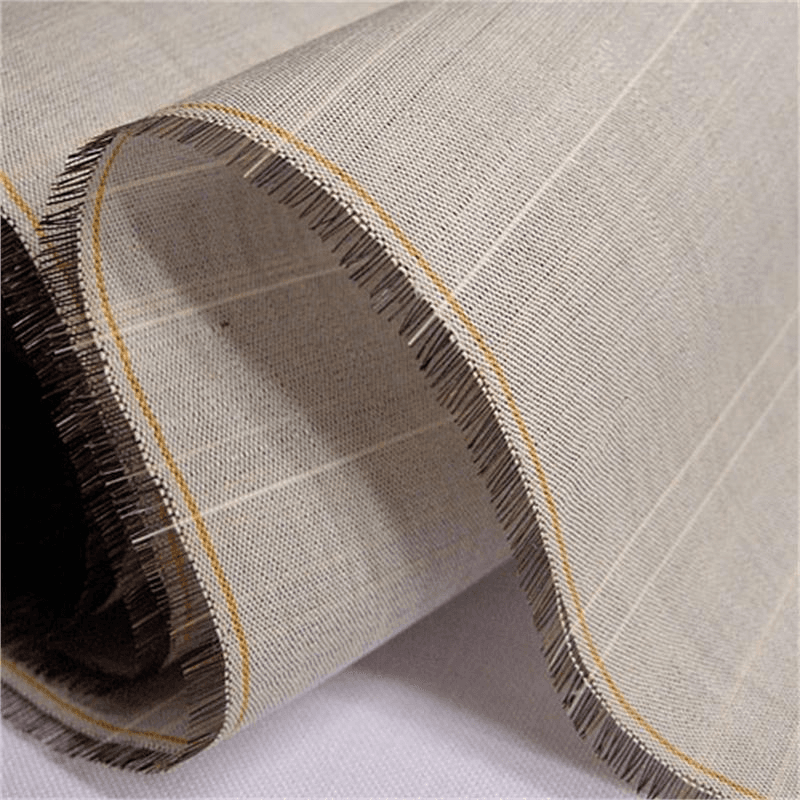
Tosya kıl telası is a type of fabric produced using traditional methods in the district of Tosya of Kastamonu, primarily used in men’s clothing. This product is registered as a geographical indication and represents an important local craft product tied to its geographical boundaries.
Tosya kıl telası is a specialized fabric woven exclusively for use as fabric lining. The weft thread is made of kamgarn (hair yarn), while the warp thread consists of 20/1 or 30/1 cotton yarn. In some production processes, 150 denier polyester yarn may also be used. The density of warp and weft threads per square centimeter is measured using a magnifying device known as “pertavsız”. Tosya kıl telası is commonly used in the collar and chest areas of garments such as jackets, overcoats and coats, providing stiffness and smoothness to these regions.
The weaving tradition in Tosya has a very long history, as noted by Evliya Çelebi in his Seyahatname. In particular, the type of weaving known as “mutaflık”, made from goat hair, has held significant importance in the district. Mutaflar produced items such as animal sacks, feed bags, rice sacks and carrying pouches. The street where this tradition persisted is still known today as “Mutaflar Çarşısı”. Due to the widespread practice of hair yarn craftsmanship in Tosya, the transition to kıl telası production occurred naturally. The increased use of suits during the Republican era boosted demand for this product and contributed to the development of local production.
Tosya kıl telası is produced in rolls of at least 50 meters and packaged in transparent plastic bags. Every stage of production must be carried out within the geographical boundaries of Tosya.
Tosya kıl telası is a geographical indication registered under the geographical indication system. Its registration number is 832. The inscription “Tosya Kıl Telası” and the geographical indication emblem must appear on the product or its packaging. If this is not possible, they must be prominently displayed at the relevant business premises.
T.C. Kültür ve Turizm Bakanlığı. "Tosya Kıl Telası." Kültür Portalı, https://www.kulturportali.gov.tr/portal/tosya-kil-telasi. Accessed July 19, 2025.
Türkiye Cumhuriyeti Türk Patent ve Marka Kurumu. "Detay — Tosya Kıl Telası." *Coğrafi İşaretler Portalı*, https://ci.turkpatent.gov.tr/cografi-isaretler/detay/2443. Accessed July 21, 2025.

Warp Thread | Kamgarn (Wool Yarn) | ||||||||
|---|---|---|---|---|---|---|---|---|---|
Weft Thread | 20/1 or 30/1 Cotton Yarn or 150 Denier Polyester | ||||||||
Warp Density | At Least 18 Threads per 1 cm | ||||||||
Density Measurement | With a Lensed 'Pertavsız' Device | ||||||||
Type of Geographic İndicator | Mahreç Mark | ||||||||
Province(s) | Kastamonu | ||||||||
Historical and Cultural Context
Production and Packaging
Geographical Indication and Protection