

This article was automatically translated from the original Turkish version.
+2 More
Foundation | 16 February 1925 | ||||||||
|---|---|---|---|---|---|---|---|---|---|
Income Sources | Social Activities Airplane Lottery Donations | ||||||||
Special Days | Day of Commemorating Airplane Martyrs Airplane Day | ||||||||
Publication Organs | Türk Hava Mecmuası Tayyare Mecmuası | ||||||||
Corporate Transformation | On 24 May 1935 it adopted the name Turkish Aeronautical Association | ||||||||
Symbolic Practice | Airplane Medal | ||||||||
Educational Institution | Türkkuşu (3 May 1935) | ||||||||
Factory | Kayseri Airplane Factory | ||||||||
Industrial Initiative | TOMTAŞ (Tayyare ve Motor Türk A.Ş.) | ||||||||
Important Campaign | The 'Airplane Bearing Each Province's Name' initiative | ||||||||
Basic Objective | To support national air power | ||||||||
Honorary President | İsmet (İnönü) Pasha | ||||||||
Patronage | Mustafa Kemal Pasha | ||||||||
Founding President | Cevat Abbas (Gürer) Bey | ||||||||
Inauguration Ceremony | 15 May 1925 | ||||||||
Place of Foundation | Ankara | ||||||||
The Turkish Aircraft Society is a semi-official organization established in Ankara on 16 February 1925, shortly after the founding of the Republic of Türkiye, with the aim of supporting the national air power, fostering public awareness of aviation, and laying the foundations of a domestic aviation industry. The society operated under the patronage of the President and with the support of the political leadership of the time, generating its income largely through public donations, lottery schemes, and various social activities. Its establishment was directly linked to the early Republican period’s recognition of aviation as a military, technical, and strategic asset, and it introduced a model of collaboration between the state and society.
The first institutional initiatives related to aviation in the Ottoman State emerged in the early 20th century as a result of close observation of military developments in the West. During the reign of Sultan Abdülhamid II, the ordering of balloons from France demonstrated the Ottoman administration’s interest in aerial vehicles. Following the military use of airplanes in Europe after 1909, the Ottoman General Staff began tracking these developments and took steps to integrate aviation into its military organization. In 1911, the dispatch of officers to Europe for pilot training and the establishment of an aviation commission marked the institutional beginning of this process.【1】
The Italo-Turkish War was one of the first conflicts in which aviation was actively used on the battlefield. Italian forces conducted reconnaissance and bombing missions with aircraft, clearly demonstrating the impact of air power on the battlefield. Although the Ottoman State lacked sufficient air power during this war, it accelerated efforts after the conflict to acquire aircraft and train pilots. During the Balkan Wars, the Ottoman inventory included various makes of reconnaissance and training aircraft, but technical deficiencies and limited personnel resources constrained air operations. Nevertheless, reconnaissance missions were carried out and aerial elements began to be incorporated into combat planning.【2】
During World War I, the Ottoman aviation organization became more systematic. Squadrons were deployed on various fronts and carried out reconnaissance and limited offensive missions on the Dardanelles, Palestine, Iraq, and Caucasus fronts. Hundreds of aircraft were added to the Ottoman inventory during the war, but a significant portion were foreign-made and dependent on external sources for maintenance and spare parts. In the later stages of the war, organizational reforms were implemented with German technical assistance, but logistical challenges and personnel shortages remained unresolved.
After the Armistice of Mudros, the Ottoman aviation organization largely disintegrated. Some air stations under the control of occupying forces were closed, and a large portion of existing aircraft became inoperable. Air stations in centers such as Istanbul, Konya, and Erzincan continued limited operations under constrained conditions, but institutional cohesion weakened. During this period, Ottoman aviation suffered serious losses in personnel and equipment, leaving a severely limited legacy for the new state.【3】
During the National Struggle, aviation activities were restructured within the process of organizing the Ankara Government’s regular army. A significant portion of the aviation assets in Istanbul remained under occupation, and efforts were made to establish a new aviation organization using personnel who had relocated to Anatolia and a limited number of aircraft. During this period, the Kuvâ-yı Havaiye was established to manage air units, and existing personnel were assigned to duties in Anatolia.
The foundation of aviation organization in Anatolia consisted of aircraft stations. Air stations were established in centers such as Konya, Erzincan, Elazığ, and Diyarbakır, where maintenance and repair of available aircraft were carried out. In particular, the Konya Aircraft Station became a major technical center during the National Struggle and played a role in preparing aircraft for deployment to various fronts. These stations, despite limited resources, carried out activities in both personnel training and operational preparation.【4】
Air operations on the fronts were primarily based on reconnaissance and surveillance missions. Air reconnaissance reports obtained on the Western Front regarding Greek troop movements significantly influenced ground force planning. Reconnaissance flights conducted before the Battle of Sakarya and the Great Offensive provided information on enemy troop organization and logistical conditions. On the Eastern and Southern Fronts, air elements operated on a limited scale, but the intelligence gathered was used to guide ground operations.
The most significant challenge faced by air power during the National Struggle was technical and material inadequacy. Most of the available aircraft were outdated and poorly maintained, and securing spare parts posed a serious problem. Even in aircraft skinning, alternative methods were employed, and repairs were attempted using local resources. Limited personnel numbers, along with shortages of trained technicians and pilots, affected operational capacity. Nevertheless, the existing air assets fulfilled an important role in intelligence and morale during the course of the war.
The experience gained at the end of the National Struggle clearly demonstrated the strategic importance of air power within the military structure. The technical deficiencies and external dependencies encountered during the war strengthened the need of the newly established Republic of Türkiye to ground its aviation on institutional and national foundations. This experience formed the historical background that paved the way for the establishment of the Turkish Aircraft Society during the Republican era.
Following the proclamation of the Republic, Türkiye’s defense concept was based on the modern reorganization of its military institutions. After years of prolonged warfare, the new state aimed to establish a self-reliant defense system for both security and independence. Within this framework, air power, alongside land and naval forces, was regarded as an inseparable component of the military structure. Particularly considering the impact of technological advancements on the military domain, aviation was accepted as one of the fundamental components of modern armies. The Republican administration designed its defense policies not only to respond to current threats but also to prepare for potential future developments.

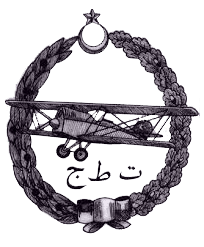
Türk Tayyare Cemiyetinin İkinci Logosu (Türk Hava Kurumu)
The strategic importance of air power became more evident through the experiences gained during World War I and the National Struggle. The impact of aircraft in reconnaissance, surveillance, and combat was recognized as one of the factors transforming the nature of modern warfare. Early military assessments during the Republic’s first years adopted the view that strengthening air forces would enhance the country’s defense capacity. However, limited state budget resources made direct funding from public resources difficult. This situation brought forward the idea of creating a new institutional model based on public financial contributions for the development of air power.【5】
Emphasis on aviation in the opening speeches of the Grand National Assembly of Türkiye demonstrated the political leadership’s attention to the issue. In his opening address to the Assembly on 1 November 1924, Mustafa Kemal Atatürk emphasized the need for special attention to the role of air forces within the military organization:
“Honorable Gentlemen, the great army that has transitioned from prolonged war to peace, its vitality and resilience shown last year, are particularly worthy of record. As an army of a nation that never contemplated aggression but always anticipated unjust attacks, our army is ready materially and morally as if embarking on another campaign immediately after a long journey. When speaking of national defense, I especially draw the Assembly’s attention to the vital and influential factor of the Kuvveyi Havaiye.” 【6】
In these speeches, it was stated that air power was an effective element in defense matters and that the Assembly should give special attention to this issue. It became clear that aviation was viewed not only as a military but also as an important component of national development and technological progress. This political discourse contributed to the formation of the intellectual framework that soon paved the way for the establishment of the Turkish Aircraft Society.

Türk Tayyare Cemiyeti İlk Logosu (Türk Hava Kurumu)
Mustafa Kemal Paşa’s approach quickly translated into concrete steps. By decision No. 7950/0480 dated 7 December 1924, permission was granted to establish the “Turkish Aircraft Investigation Joint Stock Company” to examine and develop aviation activities. This initiative, conceived by Mahmut Celal (Bayar), General Manager of İş Bankası and Deputy of İzmir, along with his colleagues, was designed with a capital of twenty thousand liras and a duration of ninety-nine years. It gained legal status through a decision of the Council of Ministers and the approval of Mustafa Kemal Paşa. Thus, aviation began to be addressed not only as a military matter but also within an economic and technical organizational framework.【7】
A separate regulation prepared under Mustafa Kemal Paşa’s guidance opened the way for the establishment of a civilian aviation organization. This text was delivered to Cevat Abbas (Gürer), Deputy of Bolu; on 27 January, the idea of forming a society was presented in the Assembly building, and the Turkish Aircraft Society was officially established in Ankara on 16 February 1925. Its establishment was carried out in accordance with the political and military assessments of the time; the society’s bylaws were approved by the Grand National Assembly of Türkiye on 15 March 1925, establishing its legal foundation. The society’s first constitution stipulated that its headquarters would be in Ankara, that central administration would oversee operations, and that activities would be organized according to specific principles. Thus, the society gained a legal basis and an official status.【8】

Cevat Abbas Gürer (Türk Hava Kurumu)
The founding leadership of the society consisted of individuals with experience in both military and civilian aviation. Bolu Deputy Cevat Abbas (Gürer) Bey assumed the role of founding president. Among the founding members were personalities such as Şakir Hazım (Ergökmen) and Vecihi (Hürkuş), who had been active in aviation; individuals who had contributed to aviation activities during the National Struggle took on roles within the society. This leadership brought together individuals with both military experience and technical expertise in aviation.【9】
Initially, the Turkish Aircraft Society appeared as a charitable organization aimed at providing material and moral support to Turkish military aviation. Contemporary press assessments described the society as established to contribute to air forces, a view shared by military circles. However, the society’s founding philosophy also included the long-term goal of expanding aviation awareness among the public and directing the younger generation toward this field.【10】
Mustafa Kemal Paşa strengthened the political legitimacy of the institution by directly patronizing it and appointing Prime Minister İsmet Paşa (İnönü) as honorary president. This choice reinforced the society’s position within the state. Paşa emphasized in various speeches the need to embrace aviation as a national ideal and regularly visited the institution to obtain updates on its activities. Although a formal president was appointed, delegating the chairmanship of general assembly meetings to the Prime Minister demonstrated the society’s advancement under political support.

Mustafa Kemal Atatürk ve Cevat Abbas Gürer (Türk Hava Kurumu)
The society’s first meeting was held on 16 February 1925 at the Türk Ocağı building. The appointment of leading journalists from Anatolian press as honorary representatives was a deliberate strategy to secure public support. Cevat Abbas assumed the role of founding president; Kazım Paşa, Second Chief of the General Staff, was appointed as first vice-president, and Muhiddin Sami Bey, Deputy of Bitlis, as second vice-president. The administrative board included deputies and prominent figures representing various provinces; Yakup Kadri Bey served as secretary and Ziya Gevher Bey as treasurer. This structure demonstrated the society’s composite nature, integrating both military and civilian elements.【11】
Located in a modest building on Hacı Bayram Street in Ankara, the society rapidly established a wide organizational network. Within a few months from its founding date until 21 May, over a hundred branches were opened; in subsequent years, this number exceeded two hundred.【12】
The society operated under the patronage of President Mustafa Kemal Paşa and the honorary presidency of Prime Minister İsmet (İnönü) Paşa. The first constitution explicitly stated that the society operated under “the sublime patronage of the President of the Republic,” and that the honorary presidency was exercised by İsmet Paşa:
“The <>, honored by the sublime patronage of the President of the Republic and the honorary presidency of İsmet Paşa, was established in Ankara on 16 February 1343 (1925), with its general administration located in the seat of government.” 【13】

Türk Tayyare Cemiyeti Nizamname-i Esasisi Kısım 1 (TBMM)
The purpose of the Turkish Aircraft Society was to provide material and technical support to the national air power. Although not a direct military institution, the society aimed to contribute to the acquisition of aircraft for the air forces through donations and income generated. It is noted that the income collected through these donations enabled the purchase of a significant number of aircraft. In this regard, the society functioned as a financing and support institution facilitating the strengthening of the air forces.【14】
Among the society’s objectives was also the development of public awareness of aviation. Through congresses, publications, and branches opened nationwide, the importance of aviation was communicated to the public. It was emphasized that aviation was not merely a military domain but also significant for technological progress and youth education, encouraging participation from various segments of society. Thus, aviation was transformed from a narrow military concern into a societal goal.
Among the society’s long-term goals was the establishment of a national aircraft industry. To this end, study trips to Europe were conducted, contacts were established with foreign firms, and initiatives were launched for aircraft production in Türkiye. The establishment of Tayyare ve Motor Türk Anonim Şirketi (TOMTAŞ) and the commissioning of an aircraft factory in Kayseri were concrete manifestations of this goal. Thus, the society went beyond merely acquiring aircraft and became a supporter of initiatives aimed at building a domestic production infrastructure.
The central organization of the Turkish Aircraft Society was established in Ankara, where the general administration was located. The first constitution explicitly stated that the society’s headquarters were in the seat of government and that administration would be conducted from there. The central organization’s primary body was the administrative board, responsible for regulating the society’s administrative and financial affairs. This board was tasked with determining the society’s activity program, organizing income sources, and coordinating with branches. The central organization was structured as the authoritative body for decision-making and implementation processes.【15】
The administrative board consisted of the founding president and members, adopting a management system with clearly defined roles such as president, vice-presidents, secretary, and treasurer. During the society’s establishment, Cevat Abbas (Gürer) Bey assumed the presidency; individuals with experience in military and civilian aviation served on the administrative board. The board was responsible for managing the society’s financial resources and implementing its activity plans. This structure demonstrated the central organization’s collective sense of responsibility.
The central structure was not merely an administrative unit but also a superior body overseeing and coordinating the provincial organization. Reports from branches were evaluated, income was transferred to the center, and activities were regularly monitored by the central headquarters. Thus, the society aimed to operate not as a scattered network but under centralized administration. This centralized structure played a decisive role in ensuring institutional continuity.
The Turkish Aircraft Society’s provincial organization was structured through branches established at the provincial and district levels. The constitution specified that branches could be opened in provincial centers and that these branches would operate in connection with the central organization. Provincial and district branches organized income-gathering activities locally; donation campaigns, lottery sales, and social events were conducted through these branches. This organizational model enabled the society to establish a widespread network across the country.
Provincial and district branches operated with their own management councils but remained financially and administratively subordinate to the center. It was mandatory for branches to transfer a specified percentage of collected income to the center and to submit regular activity reports. This arrangement aimed to establish a balanced relationship between local initiative and central oversight. Thanks to the provincial organization, the society was able to carry out aviation-related activities not only in the capital but also in different regions of the country.【16】
Neighborhood and village branches facilitated the implementation of society activities in smaller settlements. These subordinate units played an active role in donation collection and public awareness campaigns. Thus, the society developed an organizational model extending to rural areas. The organization at the neighborhood and village levels contributed to the spread of aviation awareness throughout society.【17】

Türk Tayyare Cemiyeti Nizamname-i Esasisi (TBMM)
The organizational structure and operational principles of the Turkish Aircraft Society were defined by the 1925 constitution. The constitution detailed the society’s purpose, the duties of central and provincial organizations, membership conditions, and financial regulations. This document served as the foundational legal framework of the society.
The constitution stipulated that society activities must be conducted according to specific rules and required transparency and documentation in decision-making and financial procedures. Relationships between the center and provinces, as well as the collection of income and expenditure of funds, were regulated in detail. This framework established a structure aimed at ensuring the society’s continuity and institutional stability.
The institutional principles also reflected the society’s semi-official nature. While under state patronage, it adopted a structure whose income largely depended on public contributions. This arrangement enabled the society to operate with both official support and a foundation in public participation. The principles established by the constitution shaped the institutional identity of the Turkish Aircraft Society during the early Republican period.

Bağış Toplamak İçin Kullanılan Metal Kumbara (Türk Hava Kurumu)
The financial structure of the Turkish Aircraft Society was based largely on voluntary public contributions from its inception. Although operating under state patronage, the society did not rely on direct budget allocations but obtained a significant portion of its income through donations and contributions. The society’s constitution stipulated that public assistance could be collected for the support of air forces, and systematic campaigns were conducted nationwide. Donations collected were used for aircraft acquisition and financing aviation activities.
The donation system was organized through provincial and district branches. Local branches collected cash contributions from the regional population; these amounts were transferred to the central account. It is evident that donation amounts were regularly reported and recorded in accounting records. Donation campaigns were not limited to individual contributions; business associations, merchants, and various professional groups also made collective contributions.
One notable practice in the society’s donation system was the “aircraft named after each province” campaign. Under this campaign, provinces that collected a specified amount of donations had their names assigned to purchased aircraft. Thus, aircraft acquired through direct public contributions were named after the respective provinces. This practice increased donation motivation and strengthened a sense of local ownership. Aircraft acquired through this method were added to the air forces’ inventory.【18】

Tayyare Piyangosu (Türk Hava Kurumu)
One of the Turkish Aircraft Society’s most important income sources was the aircraft lottery. The lottery system was developed to enable broad segments of the public to contribute with small amounts. Lottery revenues provided a regular and planned financing mechanism in addition to the donation system. This practice was among the elements ensuring financial continuity for the society.
The Small Aircraft Lottery targeted broad participation through lower-priced tickets. This system generated small but widespread income through mass ticket sales. Small lottery draws were held on specific dates, and prize tables were announced to the public. Thus, financial transparency was ensured and the reliability of the system was maintained.
The Large Aircraft Lottery was conducted through higher-priced tickets offering larger prizes. This lottery type enabled the society to generate higher income amounts. Draw results were publicly announced, and prize distributions were officially published. This method served as a functional tool for diversifying financial resources.
Lottery revenues were allocated according to specific principles. A significant portion of the collected income was allocated to aircraft acquisition; the remainder was used for administrative expenses and organizational costs. Income and expenditure statements were regularly prepared, and expenditures were recorded in accounting books. This arrangement demonstrated that the society’s financial activities were conducted within a planned framework.【19】
The Turkish Aircraft Society systematically used social and cultural activities as income sources to diversify its financial resources. These activities were not limited to generating funds but also served to promote the idea of aviation among the public. The society based its activities on the principle of public participation and aimed to involve broad segments of society. Activities organized within this framework were evaluated as functional tools for both material contribution and public support.

Yardım Pulu (Türk Hava Kurumu)
Congresses organized by the society were not merely administrative meetings; they also served the functions of donation collection and public opinion formation. Local congresses established regional donation targets and informed participants about the importance of aviation. Campaigns for income generation were planned and implemented based on decisions made at these meetings. The financial aspect of congresses manifested as direct encouragement of donations and income increase through various organizational activities.
Balls, receptions, and various social campaigns were also among the methods used by the society for income generation. Income was generated through ticket sales at balls and performances held especially in major cities. These events held significant places in the social life of the period and contributed to the cultural visibility of the aviation idea. Additionally, badge sales and special day events were planned activities aimed at generating financial resources. These practices demonstrated that the society did not limit its income generation to classical donation methods alone.
The financial activities and income-gathering authority of the Turkish Aircraft Society were supported by specific legal regulations and decrees. After the society’s establishment, decrees were issued to legally establish certain income streams and provide official foundations for its practices. These regulations ensured that the society conducted its activities in accordance with the law and created administrative guarantees for income collection processes.

Bağış Toplamak İçin Kullanılan Metal Kumbara (Türk Hava Kurumu)
Under legal regulations, certain campaigns were authorized to be conducted within official frameworks; regulations were made regarding the donation of zakat, fitra, and sacrificial skins to the society. Such practices contributed to expanding income sources. Additionally, the official authorization of lottery activities and the regulation of draw procedures were important for financial transparency. This legal framework strengthened the society’s semi-official nature.【20】
Decrees and legislative regulations demonstrated that the society was not merely a voluntary initiative but also a structure recognized and supported by the state. Thanks to these regulations, income-gathering activities were conducted in a regular and controllable framework, and financial transactions were recorded. Thus, the Turkish Aircraft Society’s financing model acquired an institutional structure supported by legal foundations.
Congresses held a significant place among the activities of the Turkish Aircraft Society. These congresses served both to evaluate the society’s administrative functioning and to communicate its aviation-related goals to the public. Major congresses were conducted with the participation of representatives from central and provincial organizations, addressing issues such as financial status, income sources, educational activities, and industrial initiatives. Through congresses, the society’s future strategies were determined and the direction of aviation efforts was defined.
The First Great Congress was the first comprehensive meeting held after the society’s establishment. It took place on 19 October 1925 in Ankara with the participation of 89 delegates. İsmet İnönü, in his capacity as honorary president, delivered the opening address. At this congress, issues such as organizational structure, use of financial resources, and organization of donation campaigns were discussed. Moreover, the society’s goals and long-term plans were outlined, and it was decided that branches nationwide would carry out their activities within a systematic framework. The first congress was a decisive stage in shaping institutional operations.【21】

Tayyare Piyangosu (Türk Hava Kurumu)
At the Second Great Congress, the society’s income sources and use of collected donations were evaluated, and developments regarding aircraft acquisition were discussed. The congress was held on 28 November 1926 at the CHP building in Ankara with the participation of 300 delegates. İsmet İnönü, in his capacity as honorary president, delivered the opening address. At this congress, proposals to increase public participation in aviation activities were introduced. Expansion of educational activities and planning of new initiatives were also on the agenda. Thus, the second congress contributed to diversifying the society’s areas of activity.【22】
At the Third Great Congress, the achievements of the previous period were reviewed and new goals were established. The congress was held on 15 November 1928 at the CHP building in Ankara. Information was provided on industrial activities and overseas study trips, and the issue of increasing domestic production capacity was brought to the agenda. Reports from provincial branches were also evaluated, and decisions were made to maintain financial discipline. This meeting represented an important stage in integrating the society’s activities into a more institutional framework.【23】
The Fourth and Fifth Great Congresses coincided with the society’s maturation period. The Fourth Great Congress was held on 25–26 November 1930, and the Fifth Great Congress on 27–28 November 1932, both in Ankara. İsmet Paşa delivered the opening address at both congresses. At these congresses, strategies were discussed for improving educational activities, planning new aircraft acquisitions, and sustaining public support. Additionally, detailed examination of financial statements and emphasis on income-expenditure balance attracted attention. These meetings served as platforms for decisions ensuring the continuity of the society’s activities.【24】
The Sixth Great Congress holds special significance in the society’s activities. It was held on 24 May 1935. During this congress, the opening of Türkkuşu was realized, and concrete steps were taken toward developing sport aviation. Türkkuşu was established to direct youth toward aviation and popularize pilot training. The sixth congress is regarded as a turning point where the society expanded its activities from military support to civil and sport aviation.【25】
One of the areas of activity of the Turkish Aircraft Society was the institutionalization of aviation education. The society operated on the understanding that air power could not be strengthened merely through aircraft acquisition but required the training of qualified human resources. Accordingly, theoretical and practical education programs were developed with the aim of directing youth toward aviation. Educational activities were planned to contribute to the development of both military and civilian aviation.
Ankara Open-Air School stands out as one of the society’s first educational initiatives. Flight training began in May 1925. This school was established to provide basic knowledge about aviation and offered theoretical education to youth. The curriculum included technical principles of aviation, flight principles, and aircraft structure. The open-air school practice served to introduce aviation to the public and direct youth toward this field.【26】
Yeşilköy Aircraft Mechanic School was established on 17 April 1926 in Yeşilköy to train technical personnel. The school aimed to educate mechanics responsible for aircraft maintenance and repair. The training program covered technical topics such as engine systems, airframe structure, and maintenance procedures. This initiative was regarded as a step toward strengthening the technical infrastructure necessary for the sustainability of aviation activities.<kure-citation citation-content='<p class="paragraph"><span style="white-space: pre-wrap
Akdoğan, Mahmut. “Türk Tayyare Cemiyeti.” Master's thesis, Ankara Üniversitesi Türk İnkılap Tarihi Enstitüsü, 1993. Accessed February 13, 2026. https://tez.yok.gov.tr/UlusalTezMerkezi/tezDetay.jsp?id=Z7qmTOauuY9JU7k-Ze2Xww&no=Z7qmTOauuY9JU7k-Ze2Xww
Anadolu Ajansı. “Kanatlanan Bir Hayal: Vecihi Hürkuş ile Türk Havacılığının Doğuşu.” Accessed February 13, 2026. https://www.aa.com.tr/tr/gundem/kanatlanan-bir-hayal-vecihi-hurkus-ile-turk-havaciliginin-dogusu/3632082
Aslan, Demo Ahmet. “Tayyare Cemiyeti’nin Propaganda Faaliyetleri ve Tayyare Bayramları.” *Anadolu Üniversitesi Sosyal Bilimler Dergisi* 14, no. 3 (2014): 141–150. Accessed February 13, 2026. https://dergipark.org.tr/tr/download/article-file/147573
Gül, Ahmet Feyzi. “Türk Havacılığında İki Önemli Hadise: Türk Tayyare Cemiyeti ve Junkers Kayseri Uçak Fabrikası.” Master's thesis, Hacettepe Üniversitesi Sosyal Bilimler Enstitüsü, Tarih Anabilim Dalı, 2019. Accessed February 13, 2026. https://www.academia.edu/40337078/T%C3%9CRK_HAVACILI%C4%9EINDA_%C4%B0K%C4%B0_%C3%96NEML%C4%B0_HAD%C4%B0SE_T%C3%9CRK_TAYYARE_CEM%C4%B0YET%C4%B0_VE_JUNKERS_KAYSER%C4%B0_U%C3%87AK_FABR%C4%B0KASI
Köksal, Orhan. “Türk Tayyare Cemiyetinin Kuruluş Amacı ve İlk Faaliyetleri.” *Anıtkabir Dergisi*, no. 81 (April 2021): 23–26. Accessed February 13, 2026. https://www.academia.edu/45825431/T%C3%BCrk_Tayyare_Cemiyetinin_Kurulu%C5%9F_Amac%C4%B1_ve_%C4%B0lk_Faaliyetleri
Köse, Hulusi. "Türk Havacılık Tarihinde ‘Türk Tayyare Cemiyeti’ ve Vecihi Hürkuş: Faaliyetleri ve Önemi." PhD thesis, İstanbul Üniversitesi Atatürk İlkeleri ve İnkılap Tarihi Enstitüsü, Atatürk İlkeleri ve İnkılap Tarihi Anabilim Dalı, 2024.
Okumuş, Zerrin. “Türk Tayyare Cemiyeti.” Master's thesis, Ordu Üniversitesi Sosyal Bilimler Enstitüsü, Tarih Anabilim Dalı, 2017. Accessed February 13, 2026. https://tez.yok.gov.tr/UlusalTezMerkezi/tezDetay.jsp?id=lD9iRNo5BAfl4ICXQZyxbQ&no=WF9t1FYSLHRw9DKdlF9_Mw
TBMM Kütüphanesi Open Access Collection. "Tayyare Mecmuası." TBMM. Accessed February 13, 2026. https://acikerisim.tbmm.gov.tr/items/5dfc54c9-facc-4d54-9786-ea57461a61a5/full?obo.page=9#p-obo
TBMM Kütüphanesi Open Access Collection. "Türk Tayyare Cemiyeti nizamname-i esasisi." TBMM. Accessed February 13, 2026. https://acikerisim.tbmm.gov.tr/items/6ce949bd-c19f-41d7-a80d-40349f6997ed
TBMM Kütüphanesi Open Access Collection. "Türk Tayyare Cemiyeti nizamname-i esasisi." TBMM. Accessed February 13, 2026. https://acikerisim.tbmm.gov.tr/items/9785c8d0-75fa-4c30-893a-d40120939b73
TRT Haber. “Türkiye'nin ilk uçak fabrikası: Kayseri Teyyare Fabrikası.” YouTube. Accessed February 13, 2026. https://www.youtube.com/watch?v=HMQkFrstMGM
Tatar, Cengiz. "Türk Havacılık Tarihi (1909–1954): Millî Mücadele Dönemi Öncesi ve Sonrası Türk Havacılığı." PhD thesis, Afyon Kocatepe Üniversitesi Sosyal Bilimler Enstitüsü, Tarih Anabilim Dalı, 2018.
Turk Hava Kurumu. "Genel Başkanlarımız." Accessed February 13, 2026. https://www.thk.org.tr/baskanlarimiz
Turk Hava Kurumu. "Türk Tayyare Cemiyeti (T.Ta.C.)." Accessed February 13, 2026. https://www.thk.org.tr/turk_tayyare_cemiyeti
Türk Hava Kurumu. “Vecihi Hürkuş.” Accessed February 13, 2026. https://www.thk.org.tr/vecihi_hurkus
Ulusan, Şayan. “İstikbal Göklerdedir: Türk Tayyare Cemiyeti (1925–1938) Türk Tayyare Cemiyeti’nden Türk Hava Kurumuna.” *9. Uluslararası Atatürk Kongresi* (12–15 November 2019, Amasya). Ankara: *Atatürk Araştırma Merkezi Yayınları*, 2021. pp. 2333–2372. Accessed February 13, 2026. https://www.academia.edu/45602800/%C4%B0ST%C4%B0KBAL_G%C3%96KLERDED%C4%B0R_T%C3%9CRK_TAYYARE_CEM%C4%B0YET%C4%B0_1925_1938_T%C3%9CRK_TAYYARE_CEM%C4%B0YET%C4%B0NDEN_T%C3%9CRK_HAVA_KURUMUNA
Yalçın, Osman. “Kuruluşundan Günümüze Türk Hava Kurumu.” *Akademik Bakış* 6, no. 11 (Winter 2012): 267–291. Accessed February 13, 2026. https://dergipark.org.tr/tr/download/article-file/73906
Yavuz, İsmail. “Türk Hava Kurumu” Atatürk Ansiklopedisi. Accessed February 13, 2026. https://ataturkansiklopedisi.gov.tr/detay/414/T%C3%BCrk-Hava-Kurumu
Yaşar, Mehmet. “Türk Tayyare Cemiyeti.” Türkiye Turizm Ansiklopedisi. Accessed February 13, 2026. https://turkiyeturizmansiklopedisi.com/turk-tayyare-cemiyeti
Öztürk, Yücel. “Tayyare Cemiyeti’nin Havacılığı Geliştirme Faaliyetleri: Tayyarelere İsim Verme Törenleri.” *Atatürk Üniversitesi Edebiyat Fakültesi Dergisi*, no. 61 (December 2018): 113–132. Accessed February 13, 2026. https://dergipark.org.tr/tr/download/article-file/605161
[1]
Cengiz Tatar, “Türk Havacılık Tarihi (1909–1954): Millî Mücadele Dönemi Öncesi ve Sonrası Türk Havacılığı” (doktora tezi, Afyon Kocatepe Üniversitesi Sosyal Bilimler Enstitüsü, Tarih Anabilim Dalı, 2018) s.12-14.
[2]
Cengiz Tatar, “Türk Havacılık Tarihi (1909–1954): Millî Mücadele Dönemi Öncesi ve Sonrası Türk Havacılığı” (doktora tezi, Afyon Kocatepe Üniversitesi Sosyal Bilimler Enstitüsü, Tarih Anabilim Dalı, 2018) s.15.
[3]
Zerrin Okumuş, “Türk Tayyare Cemiyeti” (yüksek lisans tezi, Ordu Üniversitesi Sosyal Bilimler Enstitüsü, Tarih Anabilim Dalı, 2017), erişim 13 Şubat 2026, s.5 https://tez.yok.gov.tr/UlusalTezMerkezi/tezDetay.jsp?id=lD9iRNo5BAfl4ICXQZyxbQ&no=WF9t1FYSLHRw9DKdlF9_Mw
[4]
Cengiz Tatar, “Türk Havacılık Tarihi (1909–1954): Millî Mücadele Dönemi Öncesi ve Sonrası Türk Havacılığı” (doktora tezi, Afyon Kocatepe Üniversitesi Sosyal Bilimler Enstitüsü, Tarih Anabilim Dalı, 2018) s.77.
[5]
Osman Yalçın, “Kuruluşundan Günümüze Türk Hava Kurumu,” Akademik Bakış 6, no. 11 (Kış 2012): 270, erişim 13 Şubat 2026, https://dergipark.org.tr/tr/download/article-file/73906
[6]
İsmail Yavuz, “Türk Hava Kurumu” Atatürk Ansiklopedisi, erişim 13 Şubat 2026. https://ataturkansiklopedisi.gov.tr/detay/414/T%C3%BCrk-Hava-Kurumu
[7]
Zerrin Okumuş, “Türk Tayyare Cemiyeti” (yüksek lisans tezi, Ordu Üniversitesi Sosyal Bilimler Enstitüsü, Tarih Anabilim Dalı, 2017), s.31-32, erişim 13 Şubat 2026, https://tez.yok.gov.tr/UlusalTezMerkezi/tezDetay.jsp?id=lD9iRNo5BAfl4ICXQZyxbQ&no=WF9t1FYSLHRw9DKdlF9_Mw
[8]
Zerrin Okumuş, “Türk Tayyare Cemiyeti” (yüksek lisans tezi, Ordu Üniversitesi Sosyal Bilimler Enstitüsü, Tarih Anabilim Dalı, 2017), s. 43, erişim 13 Şubat 2026, https://tez.yok.gov.tr/UlusalTezMerkezi/tezDetay.jsp?id=lD9iRNo5BAfl4ICXQZyxbQ&no=WF9t1FYSLHRw9DKdlF9_Mw
[9]
Hulusi Köse, “Türk Havacılık Tarihinde ‘Türk Tayyare Cemiyeti’ ve Vecihi Hürkuş: Faaliyetleri ve Önemi” (doktora tezi, İstanbul Üniversitesi Atatürk İlkeleri ve İnkılap Tarihi Enstitüsü, Atatürk İlkeleri ve İnkılap Tarihi Anabilim Dalı, 2024) s.44
[10]
Zerrin Okumuş, “Türk Tayyare Cemiyeti” (yüksek lisans tezi, Ordu Üniversitesi Sosyal Bilimler Enstitüsü, Tarih Anabilim Dalı, 2017), s. 32-33, erişim 13 Şubat 2026, https://tez.yok.gov.tr/UlusalTezMerkezi/tezDetay.jsp?id=lD9iRNo5BAfl4ICXQZyxbQ&no=WF9t1FYSLHRw9DKdlF9_Mw
[11]
Zerrin Okumuş, “Türk Tayyare Cemiyeti” (yüksek lisans tezi, Ordu Üniversitesi Sosyal Bilimler Enstitüsü, Tarih Anabilim Dalı, 2017), s.34, erişim 13 Şubat 2026, https://tez.yok.gov.tr/UlusalTezMerkezi/tezDetay.jsp?id=lD9iRNo5BAfl4ICXQZyxbQ&no=WF9t1FYSLHRw9DKdlF9_Mw
[12]
Zerrin Okumuş, “Türk Tayyare Cemiyeti” (yüksek lisans tezi, Ordu Üniversitesi Sosyal Bilimler Enstitüsü, Tarih Anabilim Dalı, 2017), s.37, erişim 13 Şubat 2026, https://tez.yok.gov.tr/UlusalTezMerkezi/tezDetay.jsp?id=lD9iRNo5BAfl4ICXQZyxbQ&no=WF9t1FYSLHRw9DKdlF9_Mw
[13]
TBMM Kütüphanesi Açık Erişim Koleksiyonu. “Türk Tayyare Cemiyeti nizamname-i esasisi.” TBMM. Erişim 13 Şubat 2026. https://acikerisim.tbmm.gov.tr/items/9785c8d0-75fa-4c30-893a-d40120939b73
[14]
Hulusi Köse, “Türk Havacılık Tarihinde ‘Türk Tayyare Cemiyeti’ ve Vecihi Hürkuş: Faaliyetleri ve Önemi” (doktora tezi, İstanbul Üniversitesi Atatürk İlkeleri ve İnkılap Tarihi Enstitüsü, Atatürk İlkeleri ve İnkılap Tarihi Anabilim Dalı, 2024) s.62-63.
[15]
TBMM Kütüphanesi Açık Erişim Koleksiyonu. “Türk Tayyare Cemiyeti nizamname-i esasisi.” TBMM. Erişim 13 Şubat 2026. https://acikerisim.tbmm.gov.tr/items/9785c8d0-75fa-4c30-893a-d40120939b73
[16]
Zerrin Okumuş, “Türk Tayyare Cemiyeti” (yüksek lisans tezi, Ordu Üniversitesi Sosyal Bilimler Enstitüsü, Tarih Anabilim Dalı, 2017), s.42, erişim 13 Şubat 2026, https://tez.yok.gov.tr/UlusalTezMerkezi/tezDetay.jsp?id=lD9iRNo5BAfl4ICXQZyxbQ&no=WF9t1FYSLHRw9DKdlF9_Mw
[17]
Zerrin Okumuş, “Türk Tayyare Cemiyeti” (yüksek lisans tezi, Ordu Üniversitesi Sosyal Bilimler Enstitüsü, Tarih Anabilim Dalı, 2017), s.42-43, erişim 13 Şubat 2026, https://tez.yok.gov.tr/UlusalTezMerkezi/tezDetay.jsp?id=lD9iRNo5BAfl4ICXQZyxbQ&no=WF9t1FYSLHRw9DKdlF9_Mw
[18]
Zerrin Okumuş, “Türk Tayyare Cemiyeti” (yüksek lisans tezi, Ordu Üniversitesi Sosyal Bilimler Enstitüsü, Tarih Anabilim Dalı, 2017), s.73, erişim 13 Şubat 2026, https://tez.yok.gov.tr/UlusalTezMerkezi/tezDetay.jsp?id=lD9iRNo5BAfl4ICXQZyxbQ&no=WF9t1FYSLHRw9DKdlF9_Mw
[19]
Zerrin Okumuş, “Türk Tayyare Cemiyeti” (yüksek lisans tezi, Ordu Üniversitesi Sosyal Bilimler Enstitüsü, Tarih Anabilim Dalı, 2017), s.108-112, erişim 13 Şubat 2026, https://tez.yok.gov.tr/UlusalTezMerkezi/tezDetay.jsp?id=lD9iRNo5BAfl4ICXQZyxbQ&no=WF9t1FYSLHRw9DKdlF9_Mw
[20]
Hulusi Köse, “Türk Havacılık Tarihinde ‘Türk Tayyare Cemiyeti’ ve Vecihi Hürkuş: Faaliyetleri ve Önemi” (doktora tezi, İstanbul Üniversitesi Atatürk İlkeleri ve İnkılap Tarihi Enstitüsü, Atatürk İlkeleri ve İnkılap Tarihi Anabilim Dalı, 2024) s.78-79.
[21]
Hulusi Köse, “Türk Havacılık Tarihinde ‘Türk Tayyare Cemiyeti’ ve Vecihi Hürkuş: Faaliyetleri ve Önemi” (doktora tezi, İstanbul Üniversitesi Atatürk İlkeleri ve İnkılap Tarihi Enstitüsü, Atatürk İlkeleri ve İnkılap Tarihi Anabilim Dalı, 2024) s.88.
[22]
Hulusi Köse, “Türk Havacılık Tarihinde ‘Türk Tayyare Cemiyeti’ ve Vecihi Hürkuş: Faaliyetleri ve Önemi” (doktora tezi, İstanbul Üniversitesi Atatürk İlkeleri ve İnkılap Tarihi Enstitüsü, Atatürk İlkeleri ve İnkılap Tarihi Anabilim Dalı, 2024) s.92.
[23]
Hulusi Köse, “Türk Havacılık Tarihinde ‘Türk Tayyare Cemiyeti’ ve Vecihi Hürkuş: Faaliyetleri ve Önemi” (doktora tezi, İstanbul Üniversitesi Atatürk İlkeleri ve İnkılap Tarihi Enstitüsü, Atatürk İlkeleri ve İnkılap Tarihi Anabilim Dalı, 2024) s.93.
[24]
Hulusi Köse, “Türk Havacılık Tarihinde ‘Türk Tayyare Cemiyeti’ ve Vecihi Hürkuş: Faaliyetleri ve Önemi” (doktora tezi, İstanbul Üniversitesi Atatürk İlkeleri ve İnkılap Tarihi Enstitüsü, Atatürk İlkeleri ve İnkılap Tarihi Anabilim Dalı, 2024) s.96-98.
[25]
Hulusi Köse, “Türk Havacılık Tarihinde ‘Türk Tayyare Cemiyeti’ ve Vecihi Hürkuş: Faaliyetleri ve Önemi” (doktora tezi, İstanbul Üniversitesi Atatürk İlkeleri ve İnkılap Tarihi Enstitüsü, Atatürk İlkeleri ve İnkılap Tarihi Anabilim Dalı, 2024) s.99.
[26]
Zerrin Okumuş, “Türk Tayyare Cemiyeti” (yüksek lisans tezi, Ordu Üniversitesi Sosyal Bilimler Enstitüsü, Tarih Anabilim Dalı, 2017), s.117, erişim 13 Şubat 2026, https://tez.yok.gov.tr/UlusalTezMerkezi/tezDetay.jsp?id=lD9iRNo5BAfl4ICXQZyxbQ&no=WF9t1FYSLHRw9DKdlF9_Mw

Foundation | 16 February 1925 | ||||||||
|---|---|---|---|---|---|---|---|---|---|
Income Sources | Social Activities Airplane Lottery Donations | ||||||||
Special Days | Day of Commemorating Airplane Martyrs Airplane Day | ||||||||
Publication Organs | Türk Hava Mecmuası Tayyare Mecmuası | ||||||||
Corporate Transformation | On 24 May 1935 it adopted the name Turkish Aeronautical Association | ||||||||
Symbolic Practice | Airplane Medal | ||||||||
Educational Institution | Türkkuşu (3 May 1935) | ||||||||
Factory | Kayseri Airplane Factory | ||||||||
Industrial Initiative | TOMTAŞ (Tayyare ve Motor Türk A.Ş.) | ||||||||
Important Campaign | The 'Airplane Bearing Each Province's Name' initiative | ||||||||
Basic Objective | To support national air power | ||||||||
Honorary President | İsmet (İnönü) Pasha | ||||||||
Patronage | Mustafa Kemal Pasha | ||||||||
Founding President | Cevat Abbas (Gürer) Bey | ||||||||
Inauguration Ceremony | 15 May 1925 | ||||||||
Place of Foundation | Ankara | ||||||||
No Discussion Added Yet
Start discussion for "Turkish Aircraft Society" article
The Background of Turkish Aviation from the Ottoman Empire to the Republic
Aviation Activities in the Ottoman State
Turkish Aviation During the National Struggle
Establishment of the Turkish Aircraft Society
Conditions Preceding Its Establishment
Establishment
Purpose of Establishment
Organizational Structure
Central Organization
Provincial Organization
Constitution and Institutional Principles
Income Sources and Financial Structure
Donation and Contribution System
Aircraft Lottery
Income Generation Through Social and Cultural Activities
Decrees and Legal Regulations
Activities of the Society
Congresses
Educational Activities