This article was automatically translated from the original Turkish version.
+2 More
Uludağ
Location | Osmangazi Bursa | ||||||||
|---|---|---|---|---|---|---|---|---|---|
Coordinate(s) | 40°04′14″N 29°13′19″E | ||||||||
Former Name(s) | Olympos Misios (Ancient Period) | ||||||||
Elevation(s) | 2543 m (Uludağtepe) | ||||||||
Climate(s) | Mediterranean-Continental Transitional Climate Snow Cover Duration: Late November – Early May Annual Average Precipitation: Approximately 690–700 mm Annual Average Temperature: 14.4 °C | ||||||||
Length / Width | Approximately 40 km Length, 15–20 km Width | ||||||||
Important Plant Species | Abies Bornmulleriana, Acantholimon Ulucium, Viola Oreades, Silene Olympica | ||||||||
Tourism | Ski Center, Hiking, Mountaineering, Flora-Fauna Observation, Hotel Zone, Sarıalan, Cable Car and Teleferik Systems | ||||||||
National Park Status | Declared a National Park in 1961, Area: Approximately 12762 Hectares | ||||||||
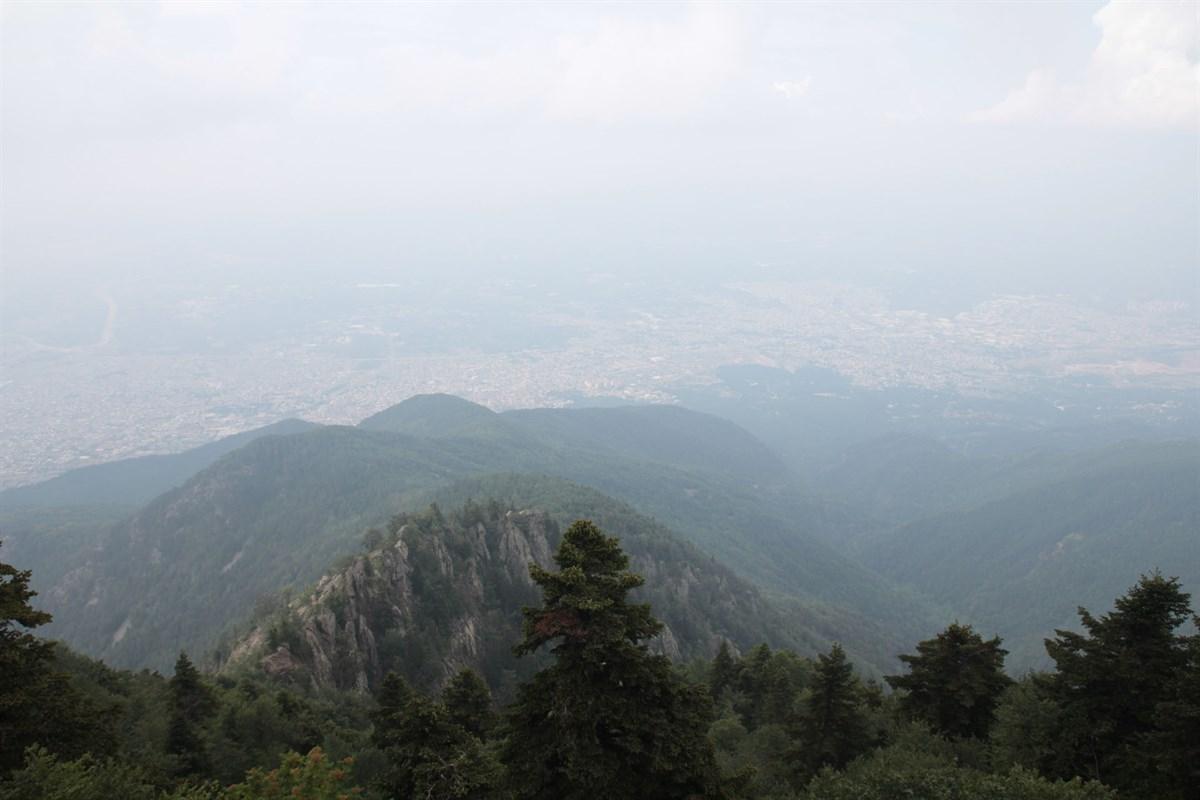
Uludağ is the highest mountain in the region, standing at 2,543 meters, located in the northwestern part of Türkiye within the Marmara Region and under the administrative boundaries of Bursa Province. Known in antiquity as Olympos Misios, the mountain has gained significance throughout history for its religious, natural, and cultural attributes. Today, Uludağ serves as one of Türkiye’s leading winter sports centers and is also recognized for its rich natural heritage, making it scientifically and ecologically valuable. It was declared a national park in 1961.
Uludağ is situated approximately 36 kilometers south of the city center of Bursa. It extends 40 kilometers in an east-west direction and measures 15–20 kilometers in width. Its highest point is Uludağtepe at 2,543 meters. On the northern slopes of the mountain lie plateaus such as Sarıalan, Kirazlıyayla, Kadıyayla, and Sobra. Geologically, Uludağ consists primarily of Paleozoic metamorphic rocks (gneiss, schist, quartzite), which are locally intruded by granite and serpentinite. Uludağ also forms a morphological boundary between the Bursa Plain and its mountain slopes.

Location of Uludağ (Bursa Governorship)
The climate of Uludağ varies with altitude. The lower slopes experience a Mediterranean climate, while higher elevations are dominated by humid continental climate features. The annual average temperature is 14.4 °C, relative humidity is 68.6%, and the average annual precipitation is 691.9 mm. Snow cover typically forms by the end of November and persists until May. This characteristic has made Uludağ one of Türkiye’s most important winter tourism destinations.
Uludağ is one of Türkiye’s most biologically rich high-mountain ecosystems. The mountain exhibits a high degree of endemism in its flora and is divided into five main vegetation zones:
Lauretum zone (0–350 m): Mediterranean maquis formation dominates. Species observed include Laurus nobilis, Erica arborea, Olea europaea, Arbutus unedo, Juniperus oxycedrus, and Quercus spp.
Castanetum zone (350–700 m): Mixed deciduous forests occur, particularly dominated by Castanea sativa (chestnut), along with Corylus avellana, Phillyrea latifolia, and Cistus creticus.
Fagetum zone (700–1500 m): Mixed forests are composed primarily of Fagus orientalis (oriental beech), alongside Quercus spp., Carpinus betulus, and Populus tremula.
Abietum zone (1500–2100 m): Uludağ Fir (Abies bornmulleriana) occurs here in pure stands or mixed with Pinus nigra, Juniperus communis, and Carpinus betulus.
Alpinetum zone (1900–2543 m): This zone includes high mountain meadows and rare turf areas, characterized by herbaceous and shrubby species such as Vaccinium myrtillus, Astragalus sp., Acanthalimon ulucium, and Festuca sp.
Abies bornmulleriana is an endemic fir species native to Türkiye, naturally occurring in Uludağ and the western Black Sea mountain ranges. This species can reach heights of 30–40 meters and is recognized by its narrow pyramidal crown, dark green needle-like leaves, and cylindrical cones measuring 15–20 cm in length. Its wood is white to yellowish, odorless, soft, and easy to work with. It is widely used in construction, furniture, and paper industries. Additionally, due to its aesthetic form, it is a preferred species in landscape architecture.
Uludağ was declared a national park in 1961 by Decree No. 196. The Uludağ National Park covers an area of approximately 12,762 hectares. The park functions as a multi-purpose natural conservation area due to its floristic diversity, faunal richness, geomorphological structure, hydrological resources, and recreational opportunities. Uludağ also faces significant tourism pressure from activities such as hiking, skiing, and mountaineering. Therefore, tourism and development activities in the region must be managed in accordance with the ecosystem’s carrying capacity.
Uludağ National Park is also an important area in terms of the ecosystem services it provides. A study conducted by Uzel and Gürlük (2023) estimated the recreational value of the park’s natural areas using the contingent valuation method, determining an annual total economic value of approximately 842 million Turkish Lira. This value reflects the perceived worth individuals assign to Uludağ’s ecological, aesthetic, and recreational attributes.
The primary ecosystem services provided by Uludağ include water production and regulation, carbon sequestration, air purification, landscape aesthetics, habitat provision, and cultural and educational services. In this context, Uludağ is not only a natural heritage site but also a natural capital that requires economic protection.
Uludağ is one of the earliest and most well-known centers for skiing and winter tourism in Türkiye. The Uludağ Ski Center, located on the northern slopes, benefits from a snow cover that typically lasts from late November to early May, enabling long-season skiing activities. This makes it one of Türkiye’s ski areas with the longest-lasting snow cover.

Skiing on Uludağ (Province of Bursa)
The ski center is situated between elevations of 1,750 and 2,543 meters, a vertical range that allows for the development of slopes with varying difficulty levels. Trails suitable for beginners, intermediate, and advanced skiers are available. Infrastructure including chairlifts, T-bars, and cable cars facilitates access for skiers and tourists.
The development of skiing on Uludağ dates back to the mid-20th century. Some of Türkiye’s first mountaineering and winter sports clubs were established and operated in this region. Today, Uludağ is heavily used by individual skiers and institutions offering ski instruction. Especially during semester breaks, the area attracts large numbers of visitors and also hosts other winter sports such as snowboarding, sledding, and snowmobiling.
The hotel and accommodation infrastructure in the region has been developed specifically to support ski tourism, complemented by ski schools, equipment rental services, and certified ski instructors. Additionally, some slopes are illuminated to allow for night skiing.
Advantages of Uludağ for skiing include high altitude, high-quality snow conditions, easy accessibility, and diverse facilities. Challenges include excessive development, occasional exceeding of carrying capacity, and environmental pressures. Therefore, it is essential that skiing activities are conducted in accordance with sustainability principles to preserve the natural ecosystem.
Uludağ has long held an important place in scientific research on Türkiye’s natural areas. The mountain offers a favorable environment for multidisciplinary studies due to its geomorphological structure, distinct climatic zones, rich vegetation zones, and high rate of endemism. It has frequently been used as a model site in research fields such as plant sociology, phytogeography, forest ecology, alpine ecosystems, landscape planning, climatology, and environmental management. The earliest comprehensive scientific investigations on Uludağ classified its vegetation according to altitude zones and identified characteristic plant species within each zone. These classifications have served as fundamental references for understanding the mountain’s vegetative structure. Particularly, rare and steppe-character species found in the alpine zone attract attention in both biogeography and conservation biology.
The climatic conditions that vary with altitude have also rendered Uludağ valuable for research on microclimate formation and the distribution of water resources. Studies conducted on climate, soil, moisture, and temperature gradients in the region have contributed to a better understanding of ecosystem processes. Additionally, relationships between geomorphological formations and vegetation distribution on the mountain have been examined in physical geography research. Certain tree species naturally occurring on Uludağ, especially those of significance in landscape architecture, are considered exemplary. Applied studies on their potential use in landscaping have enhanced the scientific and aesthetic value of the region. Plant diversity has become an essential consideration not only in scientific research but also in urbanization and landscape planning processes.
Today, Uludağ is frequently used for fieldwork, flora inventories, biodiversity monitoring projects, and nature-based learning activities for educational and research purposes. Furthermore, assessments of the monetary value of its ecosystem services emphasize Uludağ’s importance as natural capital and support the economic foundation of conservation policies. In this context, Uludağ continues to be one of Türkiye’s priority high-mountain ecosystems for both nature conservation and scientific research.
Accessed November 26, 2025.
Accessed November 26, 2025.
Accessed November 26, 2025.
Bursa Valiliği. "Zümrüt Yeşil, Kar Beyaz Zirvesi Uludağ." Bursa Valiliği Resmî Web Sitesi. Accessed June 1, 2025.
Culture and Tourism Ministry. "Bursa - Uludağ." T.C. Kültür ve Turizm Bakanlığı. Accessed June 1, 2025. https://www.ktb.gov.tr/EN-99234/bursa---uludag.html
Doğaner, S. 1993. "Uludağ’ın Fiziki Coğrafyası." Coğrafya Araştırmaları Dergisi 1: 1–26.
Karahan, F. 1998. Erzurum ve Çevresinde Alpin Bitkilerin Peyzaj Kullanım Olanakları. AÜ Fen Bilimleri Enstitüsü, Master's thesis.
Koç, M. 1977. "Uludağ Alpin Kuşağının İki Önemli Step Bitkisi." Tabiat ve İnsan 11(4): 19–26.
Ministry of Culture and Tourism. "Uludağ Millî Park." *Culture Portal*. Accessed June 1, 2025. https://www.kulturportali.gov.tr/turkiye/bursa/gezilecekyer/uludag-milli-parki
Osmangazi Kaymakamlığı Governorship. “Uludağ.” Osmangazi District Governorship Official Website. Accessed June 1, 2025. http://www.osmangazi.gov.tr/uludag
Seyidoğlu Akdeniz, N., and D. Yayım Yener. 2012. "Bursa, Uludağ and Fir." Kastamonu Üniv. Orman Fakültesi Dergisi, Özel Sayı: 256–258.
Uzel, G., and S. Gürlük. 2023. "Uludağ Milli Parkı'nın Ekosistem Hizmetlerinin Ekonomik Değeri." ÇOMÜ Ziraat Fakültesi Dergisi 11(2): 372–383.
Çepel, N. 1978. "Uludağ Vejetasyon Formasyonları ve Bu Formasyonların Ekolojik Karakterleri." İÜ Orman Fakültesi Dergisi 28(2): 122–140.
Çolak, A. H. 2020. "Uludağ’ın Vejetasyon Zonlarının Coğrafi Açıdan Değerlendirilmesi." Türkiye Coğrafyası Dergisi 74: 97–106.

Uludağ
Location | Osmangazi Bursa | ||||||||
|---|---|---|---|---|---|---|---|---|---|
Coordinate(s) | 40°04′14″N 29°13′19″E | ||||||||
Former Name(s) | Olympos Misios (Ancient Period) | ||||||||
Elevation(s) | 2543 m (Uludağtepe) | ||||||||
Climate(s) | Mediterranean-Continental Transitional Climate Snow Cover Duration: Late November – Early May Annual Average Precipitation: Approximately 690–700 mm Annual Average Temperature: 14.4 °C | ||||||||
Length / Width | Approximately 40 km Length, 15–20 km Width | ||||||||
Important Plant Species | Abies Bornmulleriana, Acantholimon Ulucium, Viola Oreades, Silene Olympica | ||||||||
Tourism | Ski Center, Hiking, Mountaineering, Flora-Fauna Observation, Hotel Zone, Sarıalan, Cable Car and Teleferik Systems | ||||||||
National Park Status | Declared a National Park in 1961, Area: Approximately 12762 Hectares | ||||||||
Location, Morphology, and Geological Structure
Climatic Characteristics
Vegetation Zones and Biodiversity
Uludağ Fir (Abies bornmulleriana)
Protection and National Park Status
Ecosystem Services and Economic Value
Skiing on Uludağ
Scientific Research and Significance