


This article was automatically translated from the original Turkish version.
+1 More
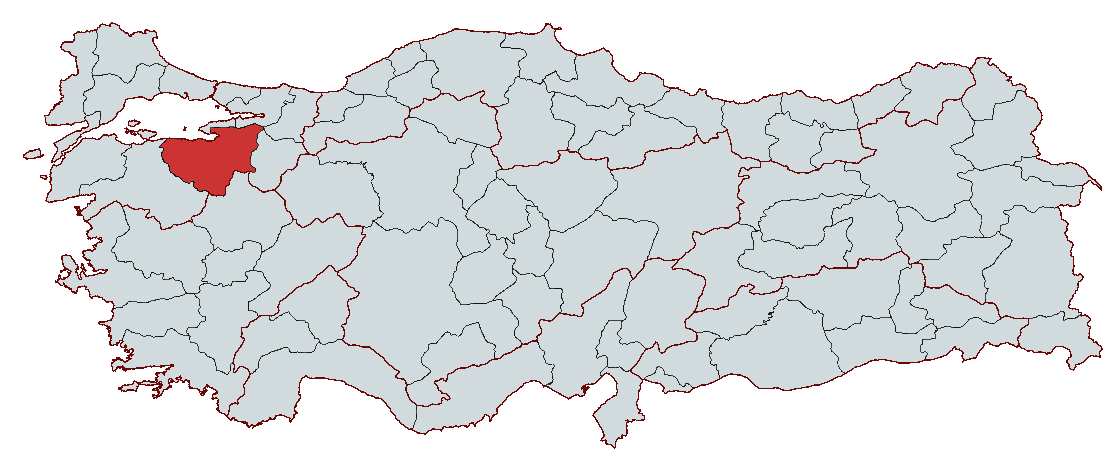
Bursa
Country | Türkiye | ||||||||
|---|---|---|---|---|---|---|---|---|---|
Region(s) | Marmara Region | ||||||||
Population | 3,238,618 | ||||||||
Area(s) | 10 811 km² | ||||||||
Climate(s) | Mediterranean Climate - Continental Climate | ||||||||
Governor(s) | Erol Ayyıldız | ||||||||
Area Code(s) | 224 | ||||||||
License Plate Code | 16 | ||||||||
Important Structure(s) | Muradiye Külliyesi Koza Han İznik Ayasofya Camii Yeşil Külliye ve Yeşil Türbe Ulu Camii | ||||||||
Bursa is a city located in the Marmara Region of Türkiye, situated at a strategically and economically historical position important center. In antiquity, Bursa belonged to the Kingdom of Bithynia and became a major center during the Byzantine and Ottoman periods. It was incorporated into Ottoman territory in 1326 and became the first capital of the empire. The early examples of Ottoman architecture, including külliyes, mosques, hans, and bazaars, have shaped the historical fabric of the city. Its geographical location at the foot of Uludağ and Sea of Marmara close provides the city with commercial and tourist advantages. Silk production and trade, which developed from the Ottoman period onward, became one of the defining elements of Bursa’s economy; today, Bursa has become one of Türkiye’s leading production centers in the automotive, textile and food industries such as. Moreover, with its thermal springs, natural beauty and cultural heritage listed on the UNESCO World World Heritage List, Bursa continues to maintain its significance within the process of modern urbanization.
Throughout history, Bursa has come under the rule of various civilizations and evolved into a culturally, economically and socially significant city. The earliest settlement traces in Bursa extend back to 8500 BCE. From the Ancient Era period onward, Bursa served as an important center under the Bithynian, Roman, Byzantine and Ottoman empires, and as the first capital of the Ottoman State, it played a key role in shaping the architectural, economic and political development of the empire. During the Republican era, Bursa became a center of industry and trade and continues to be one of Türkiye’s largest cities.
The oldest settlement traces in the Bursa region have been found at archaeological sites such as Akçalar Aktopraklık Höyüğü, Ilıpınar Höyüğü and Menteşe Höyüğü. Excavations in these areas have revealed that settlement dates back to the Neolithic Neolithic period (8500–6000 BCE). The Kingdom of Bithynia (377–74 BCE) was one of the most important political structures in the region and granted Bursa its status as a city. In antiquity, Bursa was known as Prusa ad Olympum, named after King Prusias I of Bithynia. According to some historians, the Carthaginian famous commander Hannibal, after his defeats in the wars against Rome, sought refuge in Bithynia and proposed to King Prusias the idea of founding a strategic city. As a result, the city of Prusa (Bursa) was established and surrounded by walls. The Roman period (74 BCE–395 CE) began with the abdication of the last Bithynian king, Nicomedes IV, who ceded his kingdom to Rome. During this period, Bursa was linked to Nicomedia (Izmit) and became a regional administrative center. Under the Roman Emperor Trajan (98–117 CE), Bursa was granted municipal status and began to develop. Thermal springs became popular during the Roman era, and the city gained recognition as a health resort.

In 395 CE, with the division of the Roman Empire into Western and West Rome, Bursa remained within the territory of the Eastern Roman (Byzantine) Empire. During the Byzantine era, the city developed as a spa and trade center, and silk production began.
In the 6th century, Byzantine Emperor Justinian I (527–565) recognized the importance of Bursa’s thermal springs and oversaw their restoration and the construction of new baths. During this period, the city became famous for the Pythia Thermal Springs (Çekirge Thermal Springs).
In the 7th and 10th centuries, Bursa and its surroundings were attacked by the Abbasids and Seljuks; in 1080, the Seljuks under Süleyman Shah captured Bursa, but in 1097 the Byzantines, with the aid of the Crusades, regained control of the region.
In the 8th century, following the Byzantine loss of power, raids intensified and Bursa changed hands repeatedly between the region Anatolia Seljuk State and the Byzantines. By the 14th century, Bursa remained one of the most important Byzantine fortresses in western Anatolia.
The founder of the Ottoman State, Osman Bey, captured Bursa in 1308, but this siege lasted long years. Osman Bey recognized the strategic importance of Bursa and made its conquest one of his primary objectives. However, he died in 1324 before witnessing its fall. His son, Orhan Gazi, captured Bursa on 6 April 1326. With the conquest of Bursa, the Ottoman center was moved from Bilecik and Yenişehir to Bursa, making it the first capital of the Ottoman State. The foundations of Ottoman architecture were laid here with the construction of the Orhan Gazi Mosque, madrasa, inn and baths, establishing Bursa as one of the earliest examples of Ottoman urban planning.

Bursa served as the administrative center of the Ottoman State from 1326 to 1363, witnessing rapid growth during this period. In 1363, Murad I moved the capital to Edirne, but Bursa retained its spiritual significance in the eyes of Ottoman sultans. During this time, Bursa became the economic center of the empire due to its silk production, thermal springs and location along major trade routes. As a city on the Silk Road, it served as a processing center for raw silk arriving from Iran and China.
During Fatih Sultan Mehmet (1451–1481), Bursa continued to grow as an important industrial and commercial hub, with commercial structures such as Koza Han, Emir Han and Bedesten being constructed. Under Bayezid II (1481–1512), the city became one of the wealthiest in the Ottoman Empire.
In the 16th century, Bursa became the center of silk production for the Ottoman Empire, with raw silk imported from Iran and China processed here and sent to the Imperial Palace.
In the 17th century, Bursa remained one of the largest cities of the Ottoman Empire, but its population declined due to the Celali rebellions, economic crises and plague outbreaks. The 1855 Bursa Earthquake caused severe damage to the city’s physical structure, destroying numerous mosques, hans and house. In the 19th century, with the impact of the Industrial Revolution, Bursa became one of the first Ottoman cities to establish modern textile factories.
Bursa was occupied by the Greek army on 8 July 1920, and the occupation lasted two years. The Grand National Assembly of Türkiye draped its podium in black covering in protest against the occupation, and the cloth remained until Bursa was liberated on 11 September 1922. After the proclamation of the Republic, Bursa became one of Türkiye’s leading cities in industry and trade. TOFAŞ automotive factories such as Renault were established, and with Uludağ University and Bursa Technical University, it became a major educational center. Today Bursa continues to develop as one of Türkiye’s largest cities in terms of industry, agriculture, tourism and cultural heritage.
Bursa is located in the northwestern part of Türkiye, in the Southern Marmara region of the Marmara Region, and possesses significant natural and human geography characteristics. The city lies between 40° north latitude and 28°–30° east longitude, bordered by Bilecik to the east, Kocaeli to the north, Yalova, Istanbul and the Sea of Marmara, Kütahya to the south, and Balıkesir to the west. With an area of 10,819 km², Bursa is one of Türkiye’s largest provinces and has an average elevation of approximately 155 meters above sea level. Although the city has a 135 km coastline, only 22 km of it is suitable for coastal use. Bursa’s topography is highly diverse, featuring mountains, plains, lakes and rivers.
Bursa’s surface features consist of a combination of mountainous and rugged areas with flat plains. The city begins with lowlands along the Sea of Marmara in the north and extends southward toward the rising peaks of Uludağ. The main Earth's surface features of Bursa can be classified as follows:
Approximately 35% of Bursa’s territory is covered by mountains. These mountains generally extend in an east-west direction. The main mountains include:
Bursa is covered by extensive plains with fertile agricultural land, accounting for approximately 17% of the city’s area. The main plains are:
Bursa Province contains both natural and artificial lakes. The main lakes include:

Numerous rivers and streams flow through Bursa. The main rivers include:
Bursa generally has a temperate climate, although climate conditions vary across different areas of the city.
Bursa’s annual average temperature is approximately 14–16°C, with the warmest months recorded as July–September and the coldest as February-March.
Winter months see heavy snow snowfall on Uludağ, while winters in the city center are mild and rainy.
Bursa is a province with a rich vegetation cover and is known as “Green Bursa.” A significant portion of its territory is covered by forests.
Bursa is rich in biodiversity. The main natural habitats include:
These areas are home to bears, wolf, foxes, rabbits, wild boars, deer, various water birds and eagles among other species.
Due to its proximity to the North Anatolian Fault Line, Bursa is among the provinces with high earthquake risk. A major earthquake occurred in 1855, causing serious damage to the city. The thermal water sources in the city indicate that the region is geothermally active. Bursa’s thermal springs are concentrated especially in the Çekirge, Kükürtlü and Oylat areas.
Bursa is Türkiye’s fourth largest province, with a total population of 3,214,571 as of 2023. The city has a dynamic demographic structure due to high levels of internal and external migration. The development of industry, agriculture and trade has made Bursa an important settlement center at both regional and national levels.
The most densely populated areas of Bursa are the districts of Osmangazi, Yıldırım and Nilüfer, which are also the most developed in terms of industry and trade. Rural population is concentrated in the districts of Büyükorhan, Keles and Harmancık.

Bursa has developed a multicultural structure through various migration movements throughout history.
Bursa is a city experiencing continuous population growth due to both internal and external migration.
Bursa is one of Türkiye’s cities with a high proportion of young population, although the elderly population is gradually increasing.
Bursa is an important economic center in terms of industry, agriculture and services.
Bursa has a high literacy writing rate and is an advanced city in terms of education due to its universities.
Bursa makes a significant contribution to Türkiye’s economy as one of its most important industrial, agricultural, commercial and tourism centers. As a city located along historic trade routes since the Ottoman period, it became renowned for silk production and has long served as the center of economic activity. Today, Bursa possesses a strong production infrastructure across multiple sectors, including automotive, textile, furniture and food industries.
Industry is one of the strongest sectors of Bursa’s economy. A large portion of Türkiye’s automotive production takes place in Bursa, where major automotive companies such as TOFAŞ, Renault and Karsan have factories. These companies, along with their supporting industries, have created extensive employment opportunities in Bursa, establishing it as Türkiye’s automotive center. In addition, Bursa is prominent in textile and ready-to-wear production. Silk production, which has continued since the Ottoman period, is now carried out in modern textile factories and contributes to economic growth as one of Türkiye’s key textile export centers. Furthermore, the district of İnegöl is one of Türkiye’s largest furniture production centers, exporting its products both domestically and internationally.

Bursa is also of great importance in terms of trade and logistics. Due to its proximity to Istanbul and its advanced transportation network, it is among Türkiye’s largest commercial centers. The Bursa Chamber of Commerce and Industry (BTSO), one of the country’s largest chambers, demonstrates leadership and guides commercial activities in the city. The Bursa Free Zone contributes to the development of international trade and offers significant advantages to exporting firms. Additionally, logistics centers and transportation infrastructure ensure the efficient and timely movement of industrial products.
The agricultural sector also holds an important place in Bursa’s economy. The province’s fertile soils and favorable climate conditions support the production of fruit and vegetables. Bursa is one of Türkiye’s leading producers of peach, black figs and olive, which enjoy strong demand in both domestic and international markets. In particular, Gemlik olives are renowned worldwide for their quality. Additionally, the districts of Mustafakemalpaşa and Karacabey are among Türkiye’s leading livestock regions for milk and meat production and contribute significantly to the province’s agricultural output.
Tourism has become an increasingly important sector in Bursa’s economy. As the first capital of the Ottoman Empire, the city attracts attention through its historical and cultural heritage. The Hanlar Region, Cumalıkızık and Ottoman sultan külliyes, listed on the UNESCO World Heritage List, have become prominent tourist attractions. In addition, the Uludağ Ski Center is one of Türkiye’s largest and most developed winter tourism destinations, welcoming thousands of domestic and foreign tourists annually. Bursa’s thermal springs are also of great significance for health tourism. The Çekirge and Kükürtlü thermal baths, long favored for healing since the Byzantine and Ottoman periods, now contribute to health tourism through modern thermal hotels.
Bursa’s energy and mining sectors also hold an important place in its economic structure. Investments in Wind and sun energy have positioned Bursa as a city notable for its renewable energy resources. The geothermal energy sources in the city are utilized for thermal tourism and energy production. Additionally, the province’s marble and mineral deposits provide raw materials for the construction and stone industries.
Employment in Bursa is largely based on the industrial sector. A significant portion of the working population is employed in industry and manufacturing, while the service sector provides extensive employment opportunities, particularly in tourism and retail. Agriculture plays a vital role in employment, especially in rural areas. Bursa is among Türkiye’s provinces with the highest per capita income, and its economic welfare level is very high due to industrial and commercial activities.
In conclusion, Bursa continues its economic growth as one of Türkiye’s strongest cities in industry, trade, agriculture and tourism. The automotive and textile industries serve as the locomotives of Bursa’s economy, while agriculture, tourism and logistics sectors support its economic structure. The city’s strong infrastructure, extensive industrial capacity and international trade potential continually reinforce its strategic position within the Turkish economy.
Bursa is one of Türkiye’s most important tourism centers due to its historical and cultural heritage, natural beauty, winter tourism, thermal springs and gastronomy. As the first capital of the Ottoman Empire, its commercial importance along the Silk Road, its structures on the UNESCO World Heritage List and its natural attractions continue to make it an attractive destination for both domestic and international tourists.
Bursa was inscribed on the UNESCO World Heritage List in 2014. Under this designation, the Hanlar Region, Sultan Külliyeleri and Cumalıkızık Village are protected by UNESCO.
Bursa houses the earliest mosques and külliyes of Ottoman architecture.
Bursa is an important center for both winter tourism and nature tourism due to its geographical location.
Bursa is one of Türkiye’s oldest thermal cities, renowned for its baths since the Byzantine and Ottoman periods. The city has numerous thermal spas and facility.
The thermal facilities in Bursa are of great importance for health tourism due to their effectiveness against rheumatic diseases, respiratory disorders and skin conditions.
Bursa, as the heir to the rich Ottoman cuisine, is one of Türkiye’s most important flavor stops.

Bursa cuisine has been shaped by the fusion of Ottoman palace cuisine and traditional Anatolian cuisine.
Bursa is also a rich city in terms of cultural events and festivals, hosting numerous national and international events annually.
These festivals contribute to promoting the city’s culture and serve as important filming points for tourists.
Bursa Büyükşehir Municipality. "Bursa Hakkında." Accessed February 10, 2025. https://www.gotobursa.com.tr/tr/sayfa/bursa-hakkinda-45/.
Bursa Valiliği. "Şehrimiz." Accessed February 10, 2025. http://www.bursa.gov.tr/sehrimiz.
Seyhan, Ertuğrul. "Bursa." *TDV İslâm Ansiklopedisi.* Accessed February 10, 2025. https://islamansiklopedisi.org.tr/bursa#2-bugunku-bursa.
Türkiye İstatistik Kurumu. "Cumhurbaşkanlığı İstatistik Portalı." Accessed February 10, 2025. https://cip.tuik.gov.tr/.
İnalcık, Halil. "Bursa." *TDV İslâm Ansiklopedisi.* Accessed February 10, 2025. https://islamansiklopedisi.org.tr/bursa#1.
Bursa
Country | Türkiye | ||||||||
|---|---|---|---|---|---|---|---|---|---|
Region(s) | Marmara Region | ||||||||
Population | 3,238,618 | ||||||||
Area(s) | 10 811 km² | ||||||||
Climate(s) | Mediterranean Climate - Continental Climate | ||||||||
Governor(s) | Erol Ayyıldız | ||||||||
Area Code(s) | 224 | ||||||||
License Plate Code | 16 | ||||||||
Important Structure(s) | Muradiye Külliyesi Koza Han İznik Ayasofya Camii Yeşil Külliye ve Yeşil Türbe Ulu Camii | ||||||||
History
Ancient Era: Kingdom of Bithynia and Roman Period
Byzantine Period (395–1326)
Ottoman Period (1326–1922)
Republican Period (1923–Present)
Geography
Landforms (Topography)
Mountains
Plains
Lakes and Wetlands
Rivers
Climate
Vegetation and Natural Life
Forests and Tree Species
Wildlife
Earthquakes and Geology
Bursa’s Demographic Structure
Population and Settlement Distribution
Migration and Ethnic Structure
Historical Migrations and Ethnic Distribution
Age, Gender and Population Dynamics
Age Distribution
Economic and Social Structure
Employment and Work Life
Education and Culture
Economy
Tourism
UNESCO World Heritage Sites
Mosques and Religious Structures
Historical Bridges and Fortresses
Nature and Winter Tourism
Uludağ and Winter Tourism
Nature and Ecotourism Areas
Thermal and Health Tourism
Gastronomy Tourism
Bursa’s Local Dishes
Festivals and Cultural Events
Main Festivals