This article was automatically translated from the original Turkish version.
+2 More
Construction | 1793–1794, Yusuf Paşa foundation | ||||||||
|---|---|---|---|---|---|---|---|---|---|
Material(s) | Rubble and cut stone | ||||||||
Plan | Four naves vaulted ceiling two courtyards | ||||||||
Minaret | Stone base, polygonal, single balcony | ||||||||
Ulukale Mosque, located in Ulukale Village of Çemişgezek District in Türkiye’s Tunceli Province, is a village mosque notable for its stone architecture, constructed in the late 18th century. The building, distinguished by its period-specific architectural features, its position on a sloping terrain, and its simple interior layout, was erected as a waqf of Yusuf Pasha. With its architectural plan and later additions, it is one of the typical examples of rural mosque architecture.
Ulukale Mosque (Anadolu Agency)
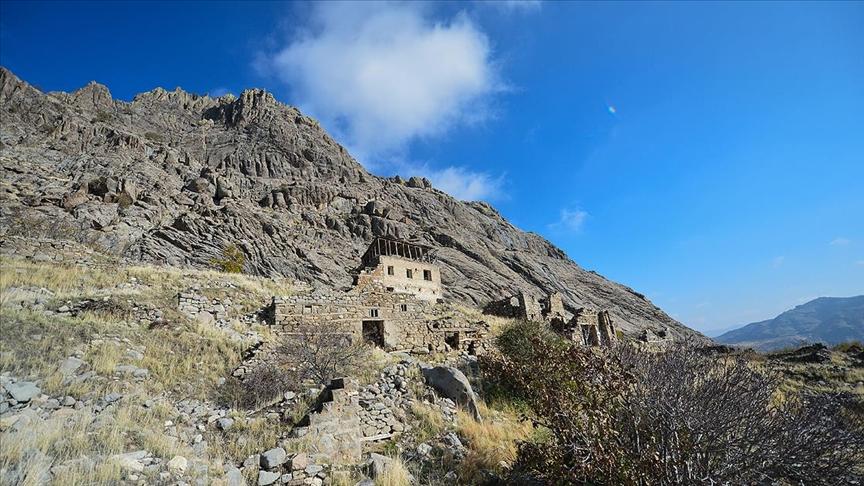
Ulukale Mosque was constructed in 1208 AH / 1793–1794 CE. According to historical sources, the mosque was built as a waqf of Yusuf Pasha, who served as governor of Diyarbakır. A final congregational space was added to the structure in the 19th century. The village of Ulukale, where the mosque is located, has since shifted its location; today, the mosque stands within the abandoned ruins of the former settlement.
Ulukale Mosque is constructed of rubble and cut stone and is built upon a sloping terrain. The main prayer hall is supported by three thick piers, which are connected to the east and west walls by arches. The structure is organized into four bays transversely and two bays along the qibla direction. The prayer hall is covered by a barrel vault, with a ribbed dome completing the section near the mihrab. The entrance door and the mihrab are shifted eastward from the building’s central axis due to the positioning of the central piers.
The minaret, situated in the northeast of the mosque, is a later addition and not physically attached to the main structure. It features a stone base and a polygonal shaft, with a single balcony and a simple design. The minaret preserves the rural architectural character of the mosque while adding a vertical emphasis. Thus, the building achieves a balanced architectural composition through both horizontal and vertical elements.

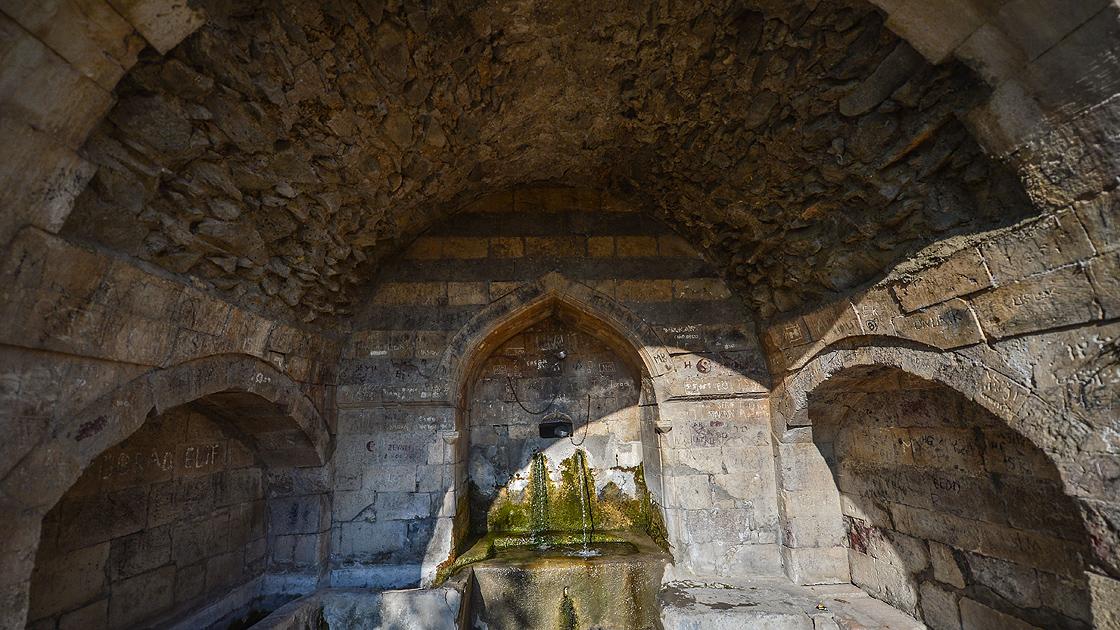
Ulukale Mosque (Türkiye Culture Portal)
Due to its location on sloping terrain, windows have been placed in the west wall, while the single window on the east wall is positioned higher. This arrangement is designed to maximize natural lighting within the interior space. The mosque’s plain exterior façade and simple interior layout reflect an unadorned, minimalist aesthetic.
The mosque is situated within the historic settlement area of old Ulukale Village, which was formerly the center of the village before its relocation. Today, alongside the mosque, various remains of adobe structures, a fountain, a mill, and a bathhouse are still present. The ruins of the old Ulukale settlement have become a site of interest for photographers and history enthusiasts.
Anadolu Ajansı. “Tunceli’nin Ulukale Köyü Ziyaretçilerini Tarihi Yolculuğa Çıkarıyor.” Anadolu Ajansı, June 12, 2021. Accessed June 24, 2025. https://www.aa.com.tr/tr/yasam/tuncelinin-ulukale-koyu-ziyaretcilerini-tarihi-yolculuga-cikariyor/2102940.
T.C.Tunceli İl Directorate of Culture and Tourism. "Cami ve Türbeler." Tunceli Kültür veTurizm Bakanlığı. Accessed June 24, 2025. https://tunceli.ktb.gov.tr/TR-57264/cami-ve-turbeler.html.
Türkiye Kültür Portalı. "Ulukale Camii." *Kültür Portalı*. Accessed June 24, 2025. https://www.kulturportali.gov.tr/turkiye/tunceli/gezilecekyer/ulukale-camii.

Construction | 1793–1794, Yusuf Paşa foundation | ||||||||
|---|---|---|---|---|---|---|---|---|---|
Material(s) | Rubble and cut stone | ||||||||
Plan | Four naves vaulted ceiling two courtyards | ||||||||
Minaret | Stone base, polygonal, single balcony | ||||||||
History
Architectural Features and Minaret
Lighting and Spatial Organization
Settlement Context and Current Condition