


This article was automatically translated from the original Turkish version.
U.S.-Ukraine Summit Meeting
History | 11 March 2025 | ||||||||
|---|---|---|---|---|---|---|---|---|---|
Place(s) | Jeddah Saudi Arabia | ||||||||
Participants | Saudi Arabia US Delegation Ukraine Delegation | ||||||||
The Jeddah Meeting was a diplomatic negotiation held on 11 March 2025 in Jeddah, Saudi Arabia, between delegations from Ukraine and USA. The primary objectives of the meeting were to address the ceasefire proposal regarding the Russia-Ukraine war, to restart U.S. military and intelligence support for Ukraine, and to strengthen Ukraine’s economic security. Additional agenda items included cooperation on the exchange of prisoners, the return of Ukrainian children, and strategic resources.

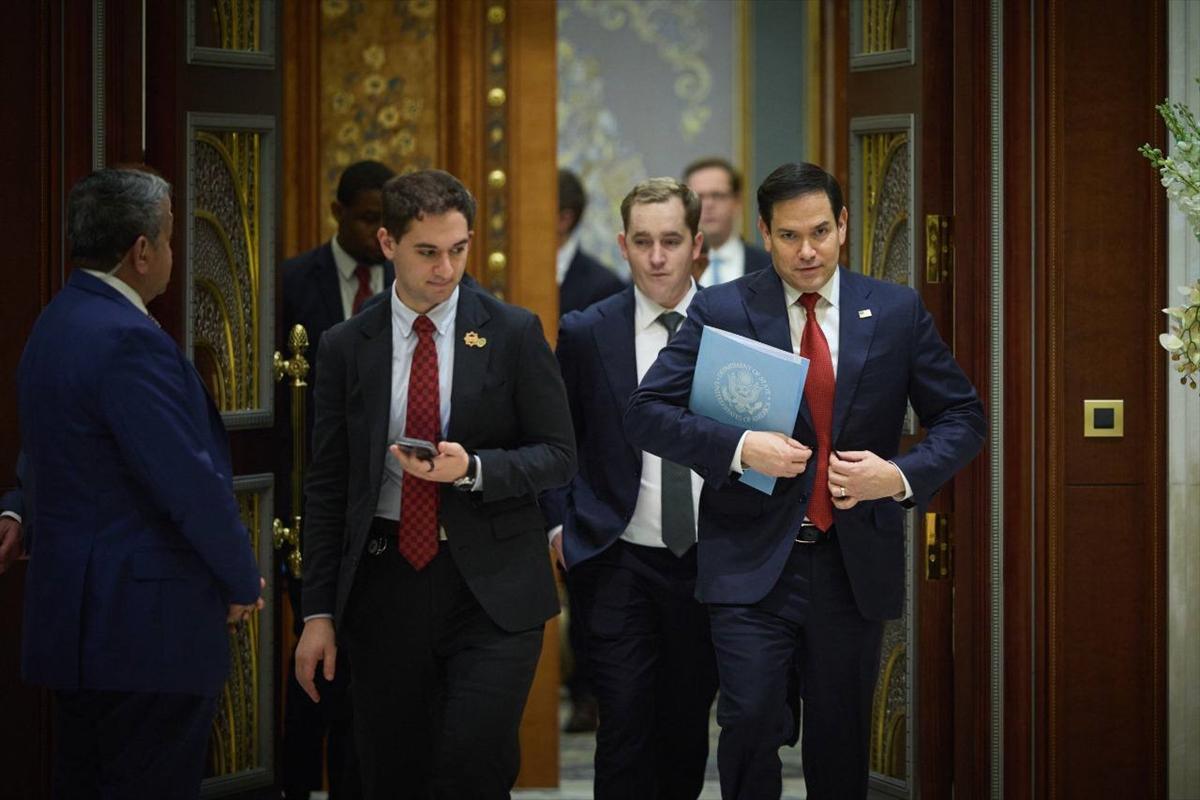
Meeting Between Ukrainian and U.S. Delegations in Jeddah, 11 March 2025 - Anadolu Ajansı
The Jeddah Meeting was convened following the administration of U.S. President Donald Trump suspending military aid to Ukraine and halting intelligence sharing with Kiev. Prior to this meeting, Washington’s renewed support for Ukraine had become a key topic due to Ukraine’s commitments to cooperation and proposed security agreements with the United States.
The Ukrainian delegation was led by Andriy Yermak, Head of the Office of the President, Foreign Minister Andrii Sybiha, Defense Minister Rüstem Umerov, and Deputy Head of the Presidential Office Pavel Palis. The U.S. delegation was represented by Secretary of State Marco Rubio and National Security Advisor Mike Waltz. Saudi Arabia, as the host of the meeting, acted as a diplomatic facilitator in the negotiations.

Meeting Between Ukrainian and U.S. Delegations in Jeddah, 11 March 2025 - Anadolu Ajansı
The 30-day temporary ceasefire proposal discussed at the Jeddah Meeting was presented by the United States to Ukraine and received support from the Kiev administration. The main aim of the proposal was to establish a temporary halt to hostilities across all front lines, facilitate diplomatic negotiations, and enable the accelerated delivery of humanitarian aid.
The 30-day temporary ceasefire proposal is structured to be extendable by mutual consent of the parties. Ukrainian President Volodimir Zelenskiy stated that his government viewed the proposal positively and emphasized that the ceasefire must cover not only air and sea operations but also land warfare.
Foreign Minister Andrii Sybiha stated that the temporary ceasefire was not intended to freeze the conflict but rather to provide a pathway to end the war in a just manner. Sybiha emphasized Ukraine’s stance on peace, saying, “This is by no means a frozen conflict. It is an effort to open the path to a just peace.”
Zelenskiy stated that the United States must persuade Russia to join the ceasefire, saying, “The United States needs to convince Russia as well. We are ready; if the Russians agree, the ceasefire will take effect immediately.”
In a joint statement with Ukraine, the United States announced the resumption of military assistance and intelligence sharing. Following the meeting, U.S. Secretary of State Marco Rubio confirmed that Ukraine had accepted the ceasefire proposal and that the offer would be conveyed to Russia. Rubio stated that “the ball is now in Russia’s court.”
National Security Advisor Mike Waltz announced that the Trump administration had decided to resume aid to Ukraine and that this decision would take effect immediately.
U.S. President Donald Trump, in remarks following the talks, characterized Ukraine’s acceptance of the ceasefire as “a significant development.” Trump added, “If we can get Russia to agree to this, it would be great. If we cannot, we continue, and people will keep dying—many people.”
The U.S. delegation also announced agreement on the urgent signing of a comprehensive pact to develop Ukraine’s critical mineral resources.
Saudi Arabia, as host of the Jeddah Meeting, acted as a diplomatic facilitator between the parties. Crown Prince Muhammad bin Salman, during his bilateral meeting with Zelenskiy, affirmed Saudi Arabia’s support for the peace process in Ukraine and pledged the continuation of Riyadh’s humanitarian aid efforts.

Bilateral meeting between Saudi Crown Prince Mohammed bin Salman and Ukrainian President Zelenskiy, 11 March 2025 - Anadolu Ajansı
The Jeddah Meeting was viewed by the Europe Union and the United Kingdom as a positive diplomatic advancement. European Commission President Ursula von der Leyen said, “We welcome the news from Jeddah today, including the U.S. proposal for a ceasefire and the resumption of intelligence sharing and military assistance to Ukraine.”
British Prime Minister Keir Starmer welcomed the agreement between the Ukrainian and U.S. delegations, stating, “This is a crucial moment for peace in Ukraine, and now we all need to double our efforts to achieve a lasting and secure peace as quickly as possible.”
Anadolu Ajansı. "Trump, Zelenskiy’yi Yeniden Beyaz Saray’a Davet Edeceğini Açıkladı." AA. Accessed March 11, 2025. https://www.aa.com.tr/tr/dunya/trump-zelenskiyyi-yeniden-beyaz-saraya-davet-edecegini-acikladi/3506793.
Anadolu Ajansı. "Ukrayna Dışişleri Bakanı Sybiha: Ateşkes Önerisi, Savaşı Sona Erdirmek İçin Yol Açacak." AA. Accessed March 11, 2025. https://www.aa.com.tr/tr/dunya/ukrayna-disisleri-bakani-sybiha-ateskes-onerisinin-savasi-sona-erdirme-yolunu-acacagini-belirtti/3506885.
Anadolu Ajansı. "Ukrayna, ABD’nin 30 Günlük Acil Ateşkes Teklifini Kabul Etmeye Hazır Olduğunu Açıkladı." AA. Accessed March 11, 2025. https://www.aa.com.tr//tr/dunya/ukrayna-abdnin-30-gunluk-acil-ateskes-teklifini-kabul-etmeye-hazir-oldugunu-acikladi/3506745?preview=1&r=5163656d-b152-432c-9b08-8cee843823e7.
BBC News. "Ukraine War Updates: Live Coverage of US, Russia, and Saudi Arabia Talks." BBC. Accessed March 11, 2025. https://www.bbc.com/news/live/c981p3dxnent.
CNN International. "Ukraine-US Talks in Saudi Arabia: Key Developments and Russia’s Reaction." CNN. Accessed March 11, 2025. https://edition.cnn.com/2025/03/11/world/ukraine-us-talks-saudi-arabia-intl/index.html.
Reuters. "US and Ukraine to Meet in Saudi Arabia After ‘Disastrous’ White House Talks." Accessed March 11, 2025. https://www.reuters.com/world/us-ukraine-meet-saudi-arabia-after-disastrous-white-house-talks-2025-03-11/.
The Guardian. "Ukraine Talks in Saudi Arabia: Live Updates on US, Russia, and Zelenskiy’s Stance." Accessed March 11, 2025. https://www.theguardian.com/world/live/2025/mar/10/volodymyr-zelenskyy-us-ukraine-talks-russia-saudi-arabia-europe-latest-news-live.
The Independent. "Ukraine War: US, Russia, and Saudi Arabia Discuss Peace Talks Amid Trump-Putin Tensions." Accessed March 11, 2025. https://www.independent.co.uk/news/world/europe/ukraine-war-russia-us-saudi-arabia-trump-putin-b2713020.html.

U.S.-Ukraine Summit Meeting
History | 11 March 2025 | ||||||||
|---|---|---|---|---|---|---|---|---|---|
Place(s) | Jeddah Saudi Arabia | ||||||||
Participants | Saudi Arabia US Delegation Ukraine Delegation | ||||||||
No Discussion Added Yet
Start discussion for "U.S.-Ukraine Summit Meeting (2025)" article
Background and Participants
Ceasefire Proposal and Ukraine’s Position
U.S. Approach and Commitments
Saudi Arabia’s Role
International Reactions and the European Approach