

This article was automatically translated from the original Turkish version.
+1 More
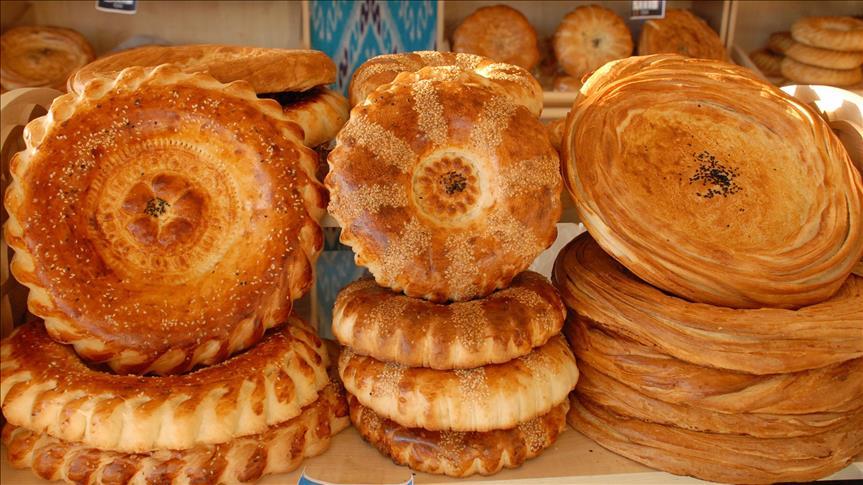
Uzbek bread, commonly known in Uzbek Turkish as non, is a traditional flatbread baked in a tandır. It is widely consumed across Central Asia, especially in Uzbekistan. Typically prepared in round or oval shapes, the center is relatively thicker and patterned while the edges are thinner. The dough is made from flour, water, salt, and yeast; in some varieties, milk or fat may be added. The shaped dough is pressed against the inner walls of a preheated tandır and baked quickly.
The 2003 Convention for the Safeguarding of the Intangible Cultural Heritage aims to protect practices, knowledge, and skills that reflect the cultural identity of communities. Uzbekistan became a party to this convention in 2006. In this context, non is considered an element of intangible cultural heritage due to its association with rituals, oral expressions, proverbs, and traditional craft knowledge.【1】
The most commonly used word in Uzbek Turkish to refer to Uzbek bread is non. In addition, various specific names exist for different types. Early dictionaries of the Turkic world record multiple terms for bread. In Uzbek Turkish, both general terms and specific names for particular varieties are used.
In Uzbekistan, varieties of non are mostly named after the region where they are produced or the method of preparation. Regional examples include Khorezm non, Samarkand non, Bukhara non, Kokand non, Namangan non, Tashkent non, and Fergana non. These names indicate the association of a particular bread type with a specific region. Such varieties may differ in fermentation method, shape, shelf life, and ingredients used.
Names based on preparation methods include abi non, made with wheat flour, yeast, and salt; gijde non, which is thicker; patır non, prepared with added fat; cizze non, made with tail fat; shirmoy non, prepared with milk; külçe non, small in size; çavdar non, made from barley; katlama, a layered type; şapati, a thin variety; tandır non, baked by sticking to the tandır wall; and yapgan non, sold fresh daily.
In various Uzbek Turkish dialects, local terms for bread are also used. In different regions, breads made with yeast are called hamırturuşlu non, köpken non, açıtkılı non, köptirme non, and ketariler/keldirme non. In some areas, non is also referred to as kömeç, mayda uşak, pelle, katırma, sümelek non, aliçe gülü, kökpatır, aykülçe, teşikkülçe, çörek, and similar names.

Özbek Ekmeği (Non) (Pxhere)
Uzbek non is produced by allowing dough made from flour, water, salt, and yeast to ferment for a specific period. Some varieties include milk or fat. The dough is typically kneaded by hand, and its consistency varies according to the gluten properties of the flour used. Fermentation time may differ depending on the practice. In villages, sour dough is sometimes used.
After fermentation, the dough is shaped into round or oval discs. The center of the discs is usually left thicker than the edges. Before baking, a metal tool is used to imprint patterns on the center of the dough. This process imparts a distinctive appearance and limits excessive rising during baking.
Non is baked by pressing the dough against the inner walls of a preheated tandır. The tandır reaches high temperatures, allowing the bread to bake quickly. It is also common to lightly moisten the surface of the dough before sticking it to the tandır. Baking time varies according to the thickness of the bread.
Physically, non is generally round or oval. Diameter and thickness vary depending on the production location and consumer preference. Examples exist in small, medium, and large sizes. The crust color ranges from light brown to dark brown. The interior structure may be slightly porous or more dense. Weight and density also vary according to size and production method.

Hamur Şekillendirmek İçin Kullanılan Çekiç (Yapay Zeka Tarafından Oluşturulmuştur.)
One of the distinguishing features of Uzbek non is the stamping and pattern-imprinting process applied to the center of the dough before baking. Special metal tools are used to press various motifs onto the central area of the shaped dough disc. This process defines the bread’s visual appearance and restricts excessive bulging in the center during baking.
The tool used for patterning is called çekiç in Uzbek Turkish. Historical sources also record the term tiküç for this tool.【3】 Additionally, some practices use stamping tools known as bosma, which leave regular geometric or botanical patterns on the bread’s surface.
Stamping is not merely an aesthetic practice. The patterns pressed onto the bread can sometimes identify the baker or family who prepared it. Today, especially with fatty bread varieties, identifying information such as a phone number is also stamped into the center using these tools.
Pattern imprinting is a regular step in the production process of non and is performed before baking in the tandır. This practice is regarded as one of the defining elements of Uzbek bread’s visual identity.
In Uzbek society, non is one of the fundamental elements of the table, known as desturhan. When setting the table, bread is placed first, followed by tea. Bread is typically arranged in even numbers on the table. The eldest person at the table breaks the bread into pieces using their right hand. This practice is called non sındırma in Uzbek Turkish. If the bread is placed far from the family elder, those seated nearby pass it to them.
According to table etiquette, bread should not be cut with a knife; it is torn by hand. Turning the bread over is considered inappropriate. Bread that falls to the floor is picked up, kissed, and placed on a high surface. The tablecloth is shaken in a suitable location to prevent bread crumbs from falling underfoot. Bread is never wasted; leftover pieces are repurposed.
Stale bread is used in various dishes. In non aş or non palov, dried bread is added to a mixture of boiled vegetables and meat; it can also be prepared without meat. The practice of cutting bread and adding it to soups or tea is called non tograma. Non kebap is made with meat, kurutlu non consists of dried curds placed on bread, kaymaklı non is prepared by spreading clotted cream on freshly baked bread, zençmiş is made by mixing warm bread with butter, and kara şorva is prepared by chopping bread into soup.
Eating bread crumbs is associated with abundance. Using leftover or stale bread in other dishes is an established part of table customs.

Özbek Ekmeği Yapan Adam (Yapay Zeka Tarafından Oluşturulmuştur.)
In Uzbek society, non plays a role in specific rituals during life transitions such as birth, marriage, and death. After childbirth, tuqqan non is baked and placed beside the baby’s cradle. On the fortieth day ceremony, çille non is prepared and distributed; when the child’s first tooth emerges, tiş non is made and shared. In these practices, bread serves both as an offering and a protective element.
During marriage rituals, including proposal and engagement, bread is presented. The expressions patır sındırmak or non sındırmak denote an engagement. Elders break bread over the heads of the couple. Bread-related customs are also observed during the wedding and when the bride enters her new home.
After death, an odd number of loaves are brought during visits. Bread is baked and distributed on the fortieth day and on the anniversary of the death. This practice is called non saçık.
A person embarking on a journey is given yol nonı. During long journeys or military send-offs, the bread is warmed and a bite is taken; the bitten piece is kept at home, often hung above the door. Upon return from travel or military service, the saved bread is chopped into soup and served to the person, symbolizing the completion of the journey and safe return.
Today, Uzbek non is produced both commercially and in households. In large cities and towns, tandır bread is prepared in specialized tandır ovens or small to medium-sized commercial establishments and sold directly. Production volume varies according to settlement size, and bread is typically sold in front of bakeries, at markets, or in local bazaars.
In rural areas, household production is common. Families living in villages either use ready-made flour or grind their own wheat in small-scale mills to produce flour for bread. The flour used in household production is mostly derived from local wheat. In commercial production, examples have been recorded where both local and imported wheat flours are used together.
[1]
Çetin Yıldız. “Somut Olmayan Kültürel Miras Unsuru Olarak Özbek Ekmeği.” Avrasya Uluslararası Araştırmalar Dergisi Özel Sayı: Yemek (2025): 54. Erişim tarihi 26.02.2026.https://dergipark.org.tr/en/download/article-file/4765600
[2]
A.e., syf 55,
[3]
A.e., syf 56,
[4]
A.e., syf 56-61,
[5]
A.e., syf 61-64,


Naming and Diversity【2】
Production and Physical Characteristics
Stamping and Decoration Practices
Table Culture and Consumption Patterns 【4】
Non in Life Transitions【5】
Contemporary Production Environments