

This article was automatically translated from the original Turkish version.
+1 More
Type of Geographical İndication | Signpost | ||||||||
|---|---|---|---|---|---|---|---|---|---|
Application Date | 26.09.2017 | ||||||||
Registration Number | 299 | ||||||||
Registration Date | 27.12.2017 | ||||||||
Product / Product Group(s) | Handicraft products other than carpets kilims and textiles | ||||||||
Province(s) | Samsun | ||||||||
Applicant/Registrant(s) | Vezirköprü Municipality | ||||||||
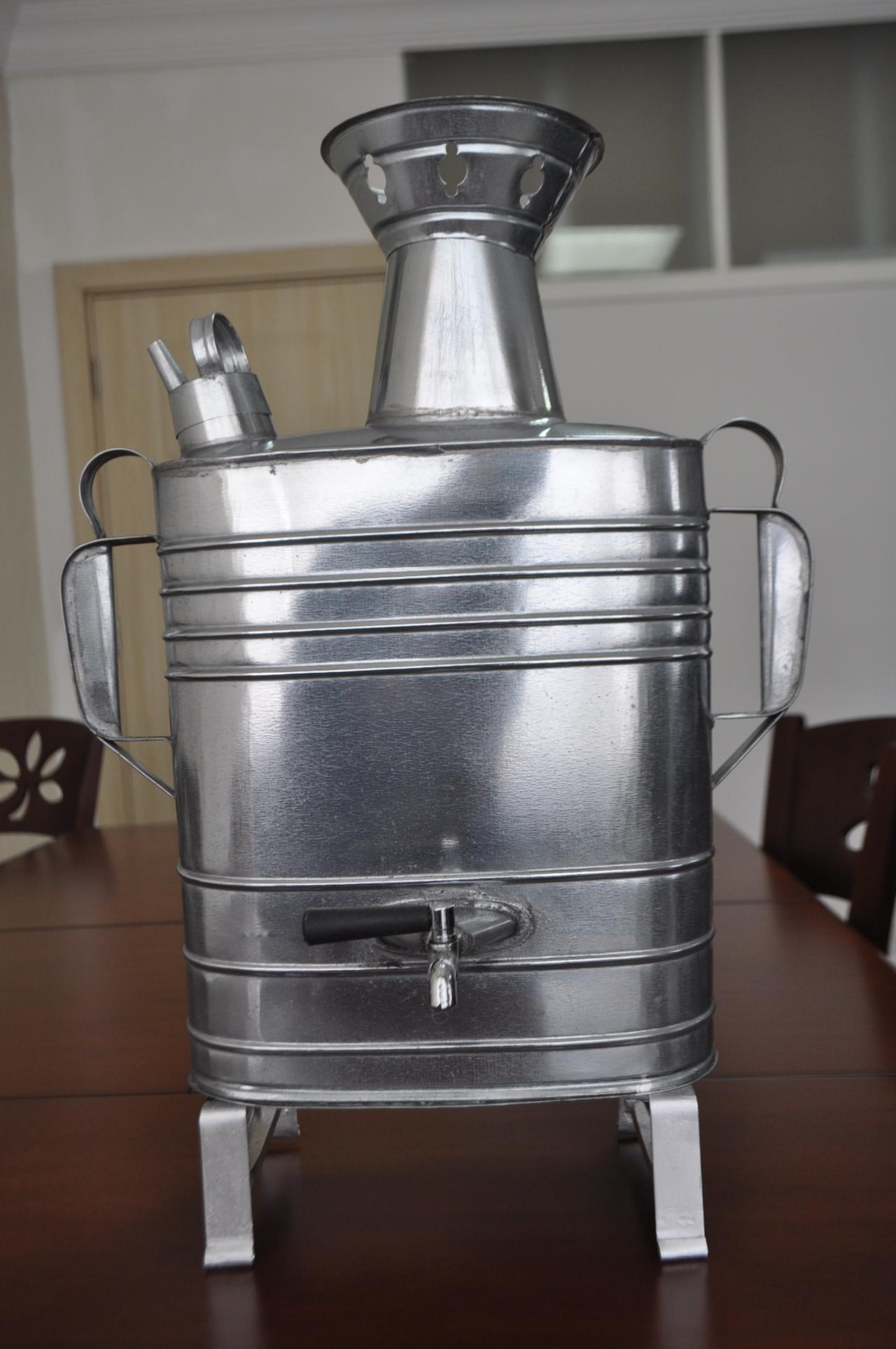
Vezirköprü Semaver is a traditional semaver produced as a handicraft in the Vezirköprü district of Samsun and constitutes an important part of Turkish tea culture. This product is registered as a geographical indication under the type of Mahreç İşareti and attracts attention for both its technical production process and its cultural heritage.
The semaver has become an indispensable element of tea preparation in Turkish culture. Its origins trace back to the 18th century in the Ural region of Russia. The term “semaver” derives from the Russian words “samo,” meaning “self,” and “varit,” meaning “to boil,” and was developed in the Tula region. It reached Anatolia with Tatar migrations and became widespread particularly in the Vezirköprü and Havza districts of Samsun. Vezirköprü emerged as a unique center for semaver production and has preserved this handicraft to the present day.【1】

Vezirköprü Semaverleri (Culture Portal)
The Vezirköprü Semaver features a flat-type design and is typically manufactured from materials such as galvanized sheet metal copper or brass. Production is carried out through the craftsmanship and meticulous work of master artisans. The making of the semaver is a complex process involving the assembly of multiple components. The body lid and chimney are joined through drilling and soldering. Handles are attached to the body by soldering two parts each composed of four papuçs. The base section known as “kulpuk” and consisting of six parts is assembled and mounted onto the semaver. The lokara section is drilled and prepared before being attached to the body. After the koltuk the koltuk back and lids are mounted the semaver is completed through polishing and buffing. In some cases a four-part dolitik component is added at the request of the workers.
During use water is poured into the water-filling compartment and coal or brushwood is placed in the fire chamber. Fire is lit beneath the body to boil the water. This traditional method reflects both the functionality and cultural value of the semaver.

Vezirköprü Semaverleri (Culture Portal)
The Vezirköprü Semaver was registered as a geographical indication under the Mahreç İşareti type on 27 December 2017 following an application submitted to the Turkish Patent and Trademark Office on 26 September 2017. The registration was carried out by the Vezirköprü Municipality. The geographical indication aims to preserve the connection of the product to the Vezirköprü district and its traditional production methods. The product may be marketed with the geographical indication name displayed in a visible area of the business or alongside its brand.
The production of the Vezirköprü Semaver is carried out in accordance with standards defined within its geographical boundaries. Monitoring is conducted periodically by the Vezirköprü Municipality the Vezirköprü Chamber of Tradesmen and Artisans the Vezirköprü Subgovernorship and individuals knowledgeable about the product. These inspections ensure that the semaver is produced using traditional methods and that its quality is maintained.
Culture Portal. "Vezirköprü Semaveri – Samsun." *Culture Portal – What to Buy?* Accessed July 15, 2025. https://www.kulturportali.gov.tr/turkiye/samsun/nealinir/semaver799439.
Geographical Indications Portal (Turkish Patent and Trademark Office). "Vezirköprü Semaveri." Geographical Indications Portal. Accessed July 15, 2025. https://ci.turkpatent.gov.tr/cografi-isaretler/detay/38374.
[1]
Kültür Portalı, “Vezirköprü Semaveri – Samsun,” Erişim 15 Temmuz 2025, https://www.kulturportali.gov.tr/turkiye/samsun/nealinir/semaver799439.

Type of Geographical İndication | Signpost | ||||||||
|---|---|---|---|---|---|---|---|---|---|
Application Date | 26.09.2017 | ||||||||
Registration Number | 299 | ||||||||
Registration Date | 27.12.2017 | ||||||||
Product / Product Group(s) | Handicraft products other than carpets kilims and textiles | ||||||||
Province(s) | Samsun | ||||||||
Applicant/Registrant(s) | Vezirköprü Municipality | ||||||||
No Discussion Added Yet
Start discussion for "Vezirköprü Semaveri" article
History and Origins
Production Process
Geographical Indication Registration
Monitoring and Cultural Significance