


This article was automatically translated from the original Turkish version.
+1 More
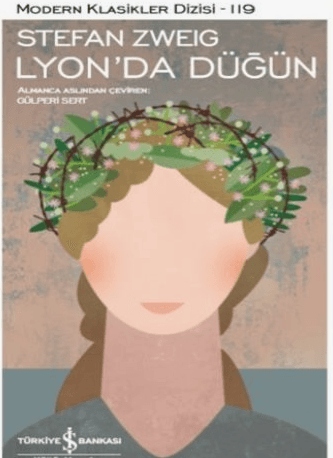
Wedding in Lyon (Book)
Author(s) | Stefan Zweig | ||||||||
|---|---|---|---|---|---|---|---|---|---|
Translator(s) | Gülperi Sert | ||||||||
Publisher(s) | İş Bankası Kültür Yayınları | ||||||||
First Publication Year | 2018 | ||||||||
Number of Pages | 56 | ||||||||
A Wedding in Lyon is a short story written by Stefan Zweig in 1927. Set during the Reign of Terror of the French Revolution, it depicts the final love between a couple imprisoned amid mass executions in Lyon. Zweig transforms historical reality into a dramatic human narrative, offering a poignant reflection on humanity, love, and death.
The story takes place in late 1793 in Lyon, a city under threat of destruction and massacre by order of the Revolutionary Convention. After the symbolic demolition of a mausoleum by Catholic priest Couthon with a hammer, the city is subjected to brutal executions following the arrival of Collot d’Herbois and Fouché. In a prison hall where detainees await their fate, a young woman who believed her fiancé had died years earlier experiences an unforgettable moment of love when she sees him face to face. In the presence of other prisoners, a priest performs a marriage ceremony; the couple spend their final nights together in a small, prepared room. The next morning they are executed and their bodies are thrown into the Rhône River.
Humanity and Hope: The story shows how love and humanity can become a beacon of hope even in the most desperate circumstances.
History and the Individual: Zweig incorporates real historical figures such as Couthon, Collot d’Herbois, and Fouché to draw a connection between revolutionary terror and individual fate.
Love and Death: The couple, reunited only to be separated by death, symbolize the power of love to redeem humanity even under the darkest conditions.
Zweig narrates the historical backdrop in a simple and effective style. Rather than detailed descriptions, he focuses on dramatic situations. Dialogue is limited, but the priest’s wedding scene and the silent solidarity among the prisoners create intense emotional depth. An objective narrative allows readers to clearly feel the characters’ emotions.
The Young Woman (Bride): Believing her fiancé had died in childhood, she is overcome with shock upon seeing him in the prison hall. This encounter forms the emotional core of the story.
Robert (Groom): A young officer who recognizes his former fiancée in prison, despite knowing her past. This moment enables them to spend their final nights together.
The Priest: A clergyman secretly performing duties in the prison hall, he becomes a symbol of hope for humanity by officiating the marriage ceremony among the prisoners.
The Prisoners: They stand in silent solidarity beside the young couple, arrange a small room for them, and ensure their final nights are spent in peace.
Revolutionary Officials (Couthon, Collot d’Herbois, Fouché): Though not developed as characters in the narrative, they are the architects of the massacre process leading to the prison hall.
Zweig, Stefan. Lyon’da Düğün. Çev. Gülperi Sert. Türkiye İş Bankası Kültür Yayınları, 2018.

Wedding in Lyon (Book)
Author(s) | Stefan Zweig | ||||||||
|---|---|---|---|---|---|---|---|---|---|
Translator(s) | Gülperi Sert | ||||||||
Publisher(s) | İş Bankası Kültür Yayınları | ||||||||
First Publication Year | 2018 | ||||||||
Number of Pages | 56 | ||||||||
No Discussion Added Yet
Start discussion for "Wedding in Lyon (Book)" article
Summary
Themes
Style
Key Characters