

 Recently Added:
This article was automatically translated from the original Turkish version.
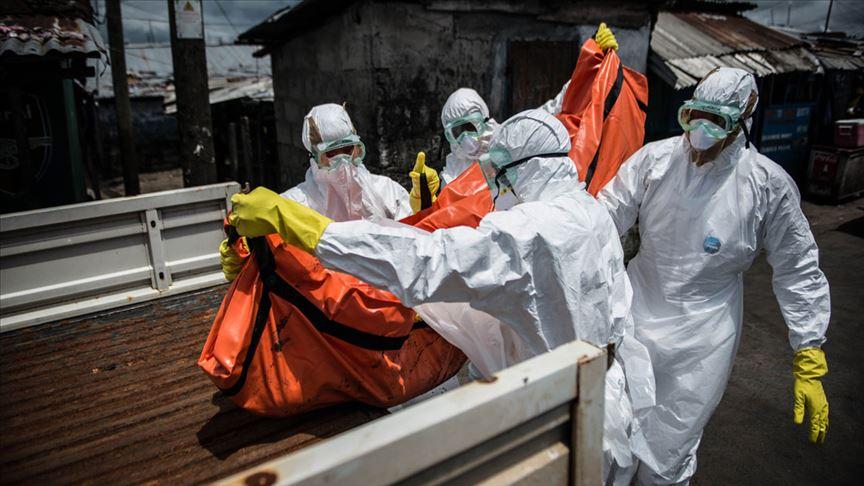
World Health Organization (WHO) has declared the recent Ebola outbreak in the Democratic Republic of the Congo (DRC) and Uganda a Public Health Emergency of International Concern.
The outbreak was first identified in the Ituri province of eastern Democratic Republic of the Congo. According to data from the Africa Centres for Disease Control and Prevention, the outbreak has rapidly led to hundreds of suspected cases and dozens of deaths. Authorities have reported that the outbreak is concentrated in areas near the borders with Uganda and South Sudan.
The origin of the outbreak has been traced to the Mongwalu region, where intensive mining activities are carried out. The virus’s spread has been accelerated as infected individuals traveled to different areas seeking medical care. Inadequate health infrastructure, population mobility, and the activities of armed groups have made containment of the outbreak particularly challenging.
Democratic Republic of the Congo’s Minister of Health, Samuel-Roger Kamba, announced that the first case involved a nurse who presented to a health center in Bunia on 24 April with symptoms resembling Ebola.
Laboratory-confirmed Ebola cases linked to the Democratic Republic of the Congo have also been reported in Uganda. One person has died in the capital, Kampala. Health authorities have warned that cross-border movement poses a risk of the outbreak acquiring regional dimensions.
Cross-border human mobility, trade routes, and irregular crossings have been assessed as factors complicating outbreak control. Security challenges in the region have also been noted to limit the capacity of health teams to respond effectively.
The Ebola virus was first identified in 1976 near the Ebola River within what is now the territory of the Democratic Republic of the Congo. Bats are believed to be the natural reservoir of the virus. Transmission occurs through direct contact with blood, vomit, bodily fluids, or contaminated materials.
Symptoms of Ebola infection include fever, vomiting, diarrhea, severe fatigue, muscle pain, and in advanced cases, internal and external bleeding. The incubation period is estimated to range from two to 21 days.
The current outbreak is caused by the “Bundibugyo” strain, first identified in Uganda in 2007. Authorities have stated that no approved vaccine or specific treatment exists for this variant. Minister Kamba noted that the fatality rate for this strain can reach up to 50 percent.
The World Health Organization declared a Public Health Emergency of International Concern after the outbreak crossed the borders of the Democratic Republic of the Congo into Uganda and cases were linked to major population centers such as Kinshasa. This status is defined as the second-highest alert level under WHO’s International Health Regulations.
WHO Director-General Tedros Adhanom Ghebreyesus stated that neighboring countries are at high risk and that new transmission is likely due to population mobility. The organization has recommended enhancing contact tracing, border screening, and rapid isolation measures rather than closing borders.
WHO has also acknowledged significant uncertainties regarding the true scale of the outbreak and noted that epidemiological links have not yet been fully established.
Since the discovery of the Ebola virus in 1976, the Democratic Republic of the Congo has experienced more outbreaks than any other country. At least 17 Ebola outbreaks have been recorded in the country to date.
The outbreak between 2018 and 2020, which resulted in approximately 2,300 deaths, remains the deadliest Ebola outbreak in the country’s history. Dozens of people have also died in other outbreaks in recent years. Since the discovery of the Ebola virus, approximately 15,000 deaths have been reported across Africa.
Armed groups operating in eastern Democratic Republic of the Congo have been identified as a major factor complicating the response to the outbreak. In particular, ongoing security issues in Ituri province have hindered health teams’ access to certain areas.
United Nations and WHO reports have emphasized that the humanitarian crisis in the region, inadequate health infrastructure, high population mobility, and informal health facilities have increased the risk of outbreak spread. Additionally, the security environment created by armed groups such as M23 and ADF has negatively impacted health operations.
Al Jazeera. "WHO Declares Ebola Outbreak in DRC, Uganda a Global Emergency: What to Know." Accessed May 18, 2026. https://www.aljazeera.com/news/2026/5/17/who-declares-ebola-outbreak-in-drc-uganda-a-global-emergency-what-to-know
Associated Press. "WHO Declares Ebola Outbreak in Congo and Uganda a Global Emergency." Accessed May 18, 2026. https://apnews.com/article/ebola-congo-ituri-africa-virus-d59a194e6032e1783b6085b56d84b0f0
BBC Türkçe. "DSÖ, Kongo Demokratik Cumhuriyeti ve Uganda’daki Ebola Salgını İçin Küresel Acil Durum İlan Etti." Accessed May 18, 2026. https://www.bbc.com/turkce/articles/c4g4kzrxn73o
TRT Haber. "Dünya Sağlık Örgütü Ebola İçin Küresel Acil Durum İlan Etti." Accessed May 18, 2026. https://www.trthaber.com/haber/dunya/dunya-saglik-orgutu-ebola-icin-kuresel-acil-durum-ilan-etti-945413.html
World Health Organization (WHO). "Epidemic of Ebola Disease in the Democratic Republic of the Congo and Uganda Determined a Public Health Emergency of International Concern." Accessed May 18, 2026. https://www.who.int/news/item/17-05-2026-epidemic-of-ebola-disease-in-the-democratic-republic-of-the-congo-and-uganda-determined-a-public-health-emergency-of-international-concern

The World Health Organization (WHO) declared the Ebola outbreak spreading in the Democratic Republic of the Congo and Uganda a “public health emergency of international concern.” It was reported that approximately 90 people had died in the outbreak caused by the Bundibugyo strain of the Ebola virus, with hundreds of suspected cases identified. As laboratory-confirmed cases were also detected in Uganda, authorities warned of the risk of cross-border transmission, and the WHO called on neighboring countries to take urgent preventive measures.
No Discussion Added Yet
Start discussion for "World Health Organization's Declaration of 'Global Emergency' for Ebola" article
May 18, 2026
Origin and Spread of the Outbreak