


This article was automatically translated from the original Turkish version.
+1 More
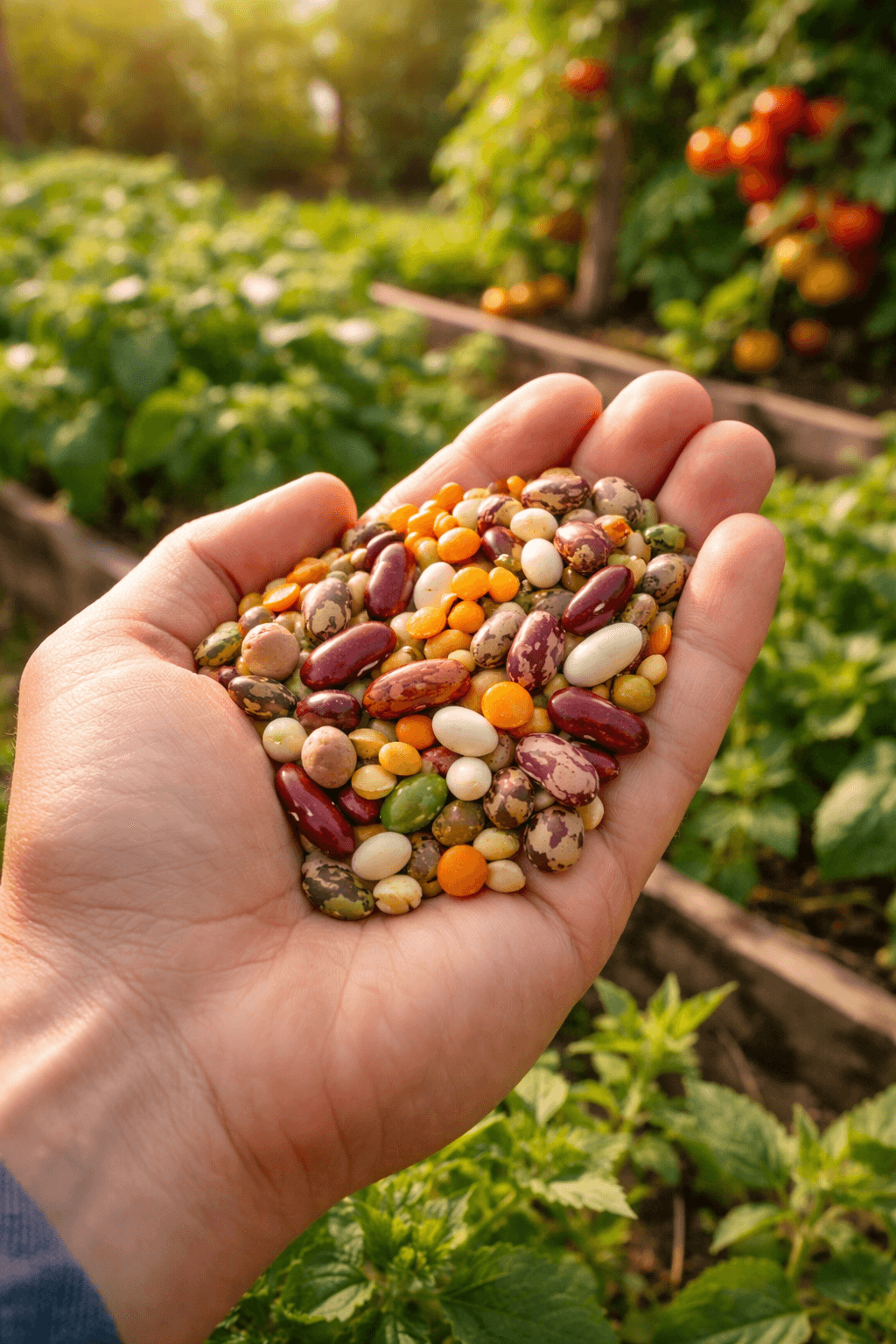
World Pulses Day (Generated by Artificial Intelligence.)
Diğer | Events at national and international levels The role of pulses in human nutrition, agricultural production and food systems | ||||||||
|---|---|---|---|---|---|---|---|---|---|
Foundation | 2016 International Year of Pulses (FAO) | ||||||||
Historical | 10 February | ||||||||
World Pulses Day is an international day aimed at raising awareness about the role of pulses in human nutrition and agricultural production systems. The United Nations General Assembly has designated 10 February as World Pulses Day. The day is observed each year on 10 February and, in some applications, on the days following this date through various events.
The declaration of World Pulses Day is based on the initiatives carried out in 2016 by the United Nations Food and Agriculture Organization (FAO) under the International Year of Pulses. Following this initiative, the role of pulses in food systems nutrition and agricultural production gained international prominence.
The United Nations General Assembly (UNGA) designated 10 February as World Pulses Day based on the outcomes of the International Year of Pulses. The declaration process included initiatives led by the International Pulse Confederation before the United Nations.
World Pulses Day is observed under the coordination of FAO, with participation from member countries public institutions the private sector and relevant stakeholders. Throughout the day various international events and awareness campaigns are conducted focusing on pulse production consumption and their role in food systems.
Pulses refer to the edible seeds of leguminous plants cultivated for food and feed. Major pulse crops include chickpea lentil dry bean pea and broad bean. Pulses are among the most widely produced and consumed agricultural products globally.
Nutritionally pulses are characterized by high levels of plant protein carbohydrates fiber vitamins and minerals. It is noted that a significant portion of plant protein comes from pulses and that they serve as a source of energy and nutrients for both human and animal nutrition. Some data indicate that pulses provide 22 percent of plant protein and 7 percent of carbohydrates in human diets.【1】
Agriculturally pulses have the ability to fix atmospheric nitrogen into the soil. This trait contributes to maintaining soil fertility and improving soil structure. Pulses play a role in crop rotation systems by reducing fallow land and enhancing the sustainability of agricultural production. They are also considered among crops adaptable to diverse climatic and ecological conditions.

Pulses (Generated by Artificial Intelligence.)
Pulses occupy a significant position in agricultural production both as crop products and components of food systems. Globally pulses grown for food and feed are among the second most important field crops after cereals in many countries. In Türkiye pulse production is widespread across regions though certain types are concentrated in specific areas.
Agriculturally pulses can be integrated into crop rotation systems. This feature helps reduce fallow land. Additionally their ability to fix atmospheric nitrogen into the soil is linked to preserving soil fertility and structure. This aspect is often discussed in relation to reducing chemical fertilizer use.
In terms of environmental impacts pulses are noted for their low water requirements and adaptability to diverse climatic conditions. Some international texts highlight pulses as key crops for environmental sustainability and climate resilience in agriculture. Pulse production is also considered in relation to greenhouse gas emissions and natural resource use.
Within the framework of sustainability pulses are linked to food supply security continuity of agricultural production and rural livelihoods. International and national assessments emphasize the role of pulses in sustainable agricultural practices and food systems.
Türkiye is among the countries where pulse production is widespread. Production is primarily concentrated in the Southeastern Anatolia Region the Central Anatolia Region and the southern part of the Marmara Region. Red lentils are mainly grown in Southeastern Anatolia green lentils in Central Anatolia broad beans in the Aegean and Southern Marmara regions and chickpeas and dry beans across multiple regions.
Within total edible pulse production chickpea red lentil dry bean and green lentil each hold different shares. It has been reported that pulse cultivation areas in Türkiye have declined since 1990 resulting in a corresponding decrease in production. However it has been announced that between 2016 and 2024 pulse production increased following initiatives launched after the declaration of the International Year of Pulses in 2016.
According to official data in recent years production volumes of certain pulse types notably chickpeas and lentils have risen. It is noted that chickpea production has exceeded 600 thousand tons in certain years and increases have also been recorded in green and red lentil and dry bean production.【2】 Nevertheless it is stated that for some pulse types domestic demand is not fully met resulting in supply gaps.
Globally Türkiye ranks among the top producers of certain pulses. It is noted that Türkiye is among leading countries in global rankings for chickpea and lentil production and with increasing output has become a net exporter particularly of chickpeas. It is indicated that a significant portion of pulse processing and export activities are concentrated in specific provinces a factor linked to Türkiye’s position in global pulse trade.
Since 2018 the Soil Products Office (TMO) has included pulses in its mandate and implemented a purchase guarantee system. This initiative aims to ensure market stability for pulses and enhance producers’ marketing opportunities. TMO’s pulse procurement and stock management activities are linked to maintaining supply and price balance in the domestic market. It is also noted that certain pulse stocks held by TMO are made available to consumers through retail channels.
Statements by the Turkish Union of Chambers of Agriculture (TZOB) indicate that over many years cultivation areas and production volumes of pulses have declined. However in recent years increased support measures and producer efforts have led to a rise in production. The same statements acknowledge that supply gaps persist for some pulse types and that imports continue.
Within institutional approaches the role of pulses in crop rotation systems their contribution to soil fertility and their importance for food security are emphasized. Official statements show that policies aimed at increasing pulse production are linked to goals of supporting domestic production and reducing dependence on imports.
In Türkiye World Pulses Day is commemorated through various events organized by national and local institutions. These activities involve participation from public institutions professional organizations local governments trade exchanges and educational institutions.
National-level announcements include press releases issued by the Ministry of Agriculture and Forestry the Soil Products Office and the Turkish Union of Chambers of Agriculture. These releases share information on pulse production consumption support policies and market data. It is observed that current assessments on production volumes cultivation areas export figures and support mechanisms are provided during World Pulses Day events.
At the local level events include programs organized by trade exchanges and local institutions. At an event hosted by the Mersin Chamber of Commerce presentations featured dishes prepared from various pulse types and addressed the production processing marketing and export dimensions of the pulse sector. Such programs share information on pulse processing facilities industrial clusters and export activities.
In some cities World Pulses Day is observed as a week-long series of events beginning on 10 February. Within this framework educational activities awareness campaigns and institutional information sessions are organized. These national and local activities demonstrate that World Pulses Day is interpreted and implemented in diverse ways by different stakeholders.
Under the framework of World Pulses Day various international projects and initiatives focus on pulse production consumption and their role in food systems. Among these the city-level applications under the European Union-supported Horizon 2020 Food Trails Project stand out.
Under the Food Trails Project pilot initiatives promoting pulse consumption and pulse-based diets were implemented in Birmingham Funchal and Milan. In Birmingham educational activities and events were organized as part of holiday programs for children and youth to increase pulse intake. The program operated through clubs active during summer holidays and educational materials on pulses were developed.
Activities in Funchal focused on food literacy and sustainable nutrition. World Pulses Day was used as a platform for educational events with informational materials and campaigns developed for students and other target groups. Additionally pulse-based activities were integrated into the city’s food strategy.
In Milan an innovative educational format for children was developed. Activities featuring pulse-based recipes combined education cooking workshops and evaluation processes. These initiatives were connected to institutional efforts related to school meals and food education.
Under World Pulses Day specific themes have been designated in certain years. In 2022 the theme focused on the role of pulses in sustainable agricultural food systems and the role of youth within these systems. This thematic approach jointly assessed the economic social and environmental dimensions of pulse production and consumption alongside the position of the youth population in agriculture food and innovation processes.
Thematic years and special focus areas provide a framework for examining different aspects of pulses in nutrition agricultural production environmental impacts and their role in food systems.
Food and Agriculture Organization of the United Nations. "10 February World Pulses Day." FAO. Accessed February 9, 2026. https://openknowledge.fao.org/server/api/core/bitstreams/8c4290af-1cdd-4531-9a31-825c29833d56/content
Food and Agriculture Organization of the United Nations. “World Pulses Day| 10 February”. *FAO.* Accessed February 9, 2026. https://www.fao.org/world-pulses-day/en
Milan Urban Food Policy Pact. "Celebrating International World Pulses Day: Three best practices from Food Trails cities." Milan Urban Food Policy Pact. Accessed February 9, 2026. https://www.milanurbanfoodpolicypact.org/celebrating-international-world-pulses-day-three-best-practices-from-food-trails-cities/
Ministry of Agriculture and Forestry. “Minister Pakdemirli Issues a Message on World Pulses Day.” *tarimorman.gov.tr.* Accessed February 9, 2026. https://www.tarimorman.gov.tr/Haber/4361/Bakan-Pakdemirli-Dunya-Bakliyat-Gunu-Dolayisiyla-Bir-Mesaj-Yayinladi
T.C. Mersin Valiliği. “Vali Ali Hamza Pehlivan, Dünya Bakliyat Günü Vesilesiyle Düzenlenen Programa Katıldı”. mersin.gov.tr. Accessed February 9, 2026. https://www.mersin.gov.tr/vali-ali-hamza-pehlivan-dunya-bakliyat-gunu-vesilesiyle-duzenlenen-programa-katildi
Toprak Mahsulleri Ofisi. “Dünya Bakliyat Günü.” TMO. Accessed February 9, 2026. https://www.tmo.gov.tr/kamuoyu-duyurulari/231/dunya-bakliyat-gunu
Türkiye Ziraat Odaları Birliği. "10 Şubat Dünya Bakliyat Günü." TZOB. Accessed February 9, 2026. https://www.tzob.org.tr/10-subat-dunya-bakliyat-gunu/
İstanbul Gelişim Üniversitesi Sağlık Bilimleri Fakültesi. “10 Şubat Dünya Bakliyat Günü: Sağlık, Beslenme ve Sürdürülebilirlik.” sbf.gelisim.edu.tr. Accessed February 9, 2026. https://sbf.gelisim.edu.tr/tr/akademik-bolum-beslenme-ve-diyetetik-haber-10-subat-dunya-bakliyat-gunu-saglik-beslenme-ve-surdurulebilirlik
[1]
Tarım ve Orman Bakanlığı, “Bakan Pakdemirli Dünya Bakliyat Günü Dolayısıyla Bir Mesaj Yayımladı,'' tarimorman.gov.tr, Son erişim tarihi: 9 Şubat 2026, https://www.tarimorman.gov.tr/Haber/4361/Bakan-Pakdemirli-Dunya-Bakliyat-Gunu-Dolayisiyla-Bir-Mesaj-Yayinladi
[2]
Tarım ve Orman Bakanlığı, “Bakan Pakdemirli Dünya Bakliyat Günü Dolayısıyla Bir Mesaj Yayımladı,'' tarimorman.gov.tr, Son erişim tarihi: 9 Şubat 2026, https://www.tarimorman.gov.tr/Haber/4361/Bakan-Pakdemirli-Dunya-Bakliyat-Gunu-Dolayisiyla-Bir-Mesaj-Yayinladi

World Pulses Day (Generated by Artificial Intelligence.)
Diğer | Events at national and international levels The role of pulses in human nutrition, agricultural production and food systems | ||||||||
|---|---|---|---|---|---|---|---|---|---|
Foundation | 2016 International Year of Pulses (FAO) | ||||||||
Historical | 10 February | ||||||||
Declaration Process and International Framework
Definition Nutritional and Agricultural Characteristics of Pulses
Agricultural Production Environmental Impacts and Sustainability
Pulse Production in Türkiye and Global Position
Pulse Policies and Institutional Approaches in Türkiye
National and Local Level Activities
International Projects and Implementation Examples
Thematic Years and Special Focus Areas